The U.S. Department of War is developing a new approach to autonomous warfare that would bring military operators, technology developers and procurement decisions closer together. Under Project Agincourt, Pentagon leaders want operational performance, affordability and rapid adaptation to determine which unmanned systems receive wider adoption.
In an open letter published on October 23, 2026, Project Agincourt leaders Owen West and Max Strasiser outlined a model that places greater emphasis on solving battlefield problems than completing traditional acquisition milestones. The initiative is also intended to prepare for the establishment of a four-star Autonomous Warfare Command, known as AUTOWARCOM, by October 1, 2027.
The proposed command would coordinate autonomous warfare across the joint force, while Project Agincourt continues the existing work of the Direct Reporting Portfolio Manager for Unmanned Systems, or DRPM-UxS.
The central question is whether the Pentagon can turn this organizational change into a faster, more affordable process for developing, testing and fielding systems that military units can actually use.
A new procurement model puts battlefield performance first
Project Agincourt’s leadership is challenging an acquisition approach that has often favored sophisticated, expensive military platforms over the large-scale availability of lower-cost autonomous systems.
In their October 23 letter, West and Strasiser argued that inexpensive drones have changed the economics and pace of warfare. They want the United States to respond by improving its ability to develop, manufacture and deploy autonomous capabilities at scale.
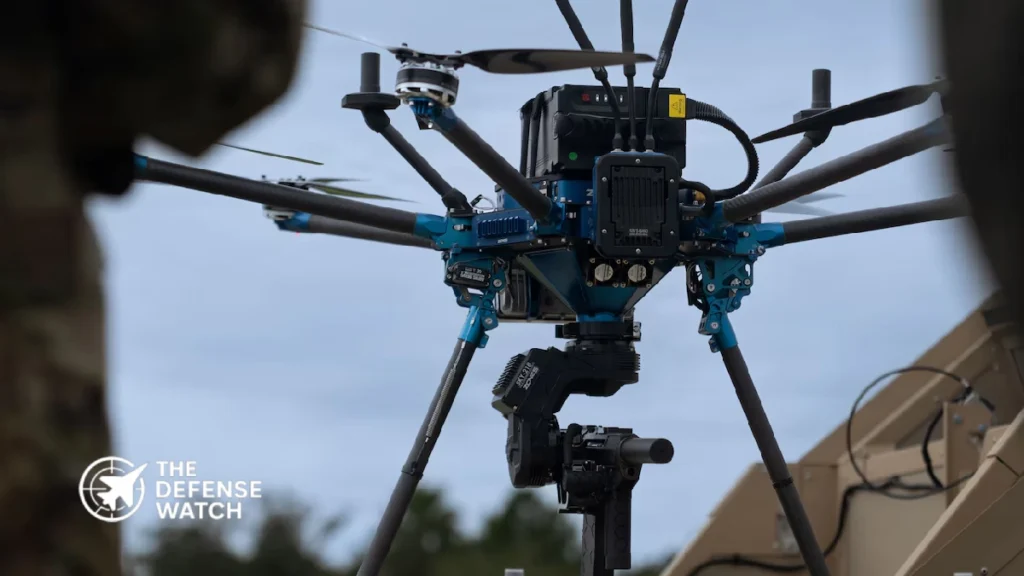
Under the proposed approach, operational units would work more directly with developers and manufacturers. Equipment would be tested against practical military requirements, with results helping determine whether a system should receive further investment.
The leaders identified competitions, exercises and combat performance as important measures for deciding which systems should expand and which should be discontinued.
This differs from a procurement model in which program milestones and development schedules can become the primary measures of progress. Project Agincourt instead seeks to shorten the distance between identifying an operational problem and fielding a workable solution.
The approach does not mean that testing, safety or technical discipline will become less important. West and Strasiser explicitly warned that urgency must not replace precision, and said evidence should guide decisions.
For defense contractors, this could place greater emphasis on demonstrable performance, production capacity, adaptability and cost. Companies that can deliver usable systems quickly may have an advantage, although the Pentagon has not published a comprehensive set of selection criteria or contract awards under the new model.
What Project Agincourt is responsible for
Project Agincourt has two linked responsibilities.
Prepare the Autonomous Warfare Command
Develop the organizational pathway for a proposed four-star functional combatant command responsible for advancing autonomous warfare across the joint force.
Reform unmanned systems acquisition
Continue the DRPM-UxS mission while developing a procurement approach that connects operational units with technology developers and speeds up practical evaluation.
The Pentagon assigned West and Strasiser leadership roles in the initiative. Their stated objective is to combine operational experience with development and acquisition decisions, rather than treating those activities as separate stages.
However, Project Agincourt and AUTOWARCOM should not be treated as interchangeable. Project Agincourt is the effort preparing the way for the proposed command. The planned command would provide a longer-term organizational framework for coordinating autonomous warfare.
The exact division of authority between AUTOWARCOM, the military services and existing acquisition organizations remains an important implementation question.
Why affordable autonomous systems matter
The operational case for autonomous warfare extends beyond replacing individual crewed platforms with drones.
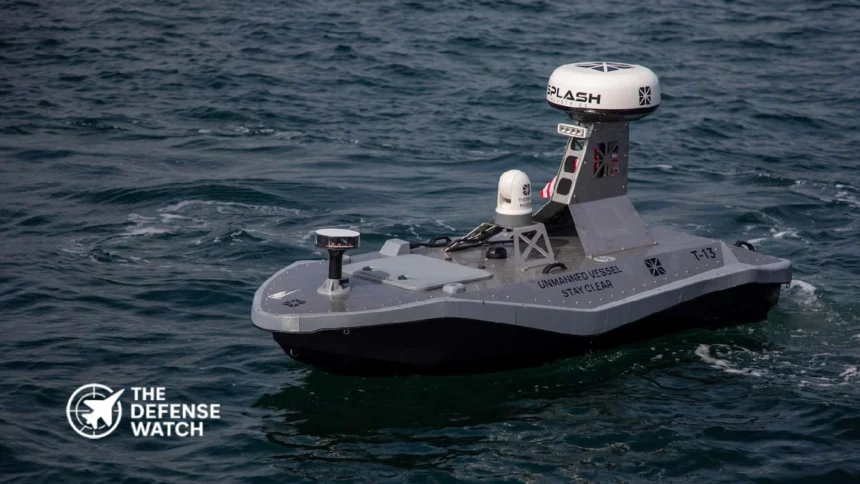
Unmanned aircraft, surface vessels, underwater vehicles and ground robots can perform different tasks, including reconnaissance, resupply, surveillance, mine countermeasures and selected strike missions. Depending on their design, these systems can also reduce the need to expose personnel to dangerous environments.
Their potential value depends on more than the purchase price. A military force must be able to manufacture them in sufficient numbers, maintain them, train operators, update software and sustain communications in contested environments.
The Pentagon’s challenge is to balance the cost of individual systems against their military usefulness and the resources required to deploy them.
In a contested environment, inexpensive platforms may allow commanders to distribute risk across more systems instead of relying entirely on a limited number of high-cost assets. But low acquisition costs alone do not establish that a system is effective. Reliability, navigation, communications, resistance to electronic warfare and performance against enemy countermeasures remain important considerations.
Project Agincourt’s emphasis on operational testing could help the department identify which designs deliver useful capabilities under realistic conditions.
The initiative’s leaders have also framed spending in terms of reducing the cost of engaging targets and the risk to friendly forces. That is a stated policy objective, not evidence that the new procurement model has already achieved those savings.
A joint-force command would connect different military domains
AUTOWARCOM is intended to coordinate autonomous warfare across the services rather than focus exclusively on aerial drones.
That broader mission matters because unmanned systems increasingly operate as parts of larger military networks. An aerial reconnaissance drone, an unmanned surface vessel and an underwater vehicle may perform different missions, but their operational value can depend on how they exchange information and support the same force.
The Department of War has already described autonomous capabilities as a priority across the Army, Navy, Air Force, Marine Corps and Space Force.
At the Association of the United States Army’s annual meeting on October 14, Secretary of War Pete Hegseth said the planned command would help bring together autonomous capabilities across multiple domains. Army officials also discussed their own organizational efforts to centralize autonomous systems activities and improve coordination.
That creates a coordination challenge. Each service has distinct operational requirements, acquisition programs and technical constraints. A system developed for maritime operations may not be suitable for a land campaign, while the communications and navigation requirements of operations in the Indo-Pacific may differ from those in Europe.
Project Agincourt’s proposed model recognizes those differences by emphasizing solutions tailored to operational needs rather than assuming that one standard set of platforms will suit every theater.
The challenge will be to preserve that flexibility while ensuring that systems can operate together when missions require joint-force coordination.
Industry faces a different test
The initiative gives defense companies a clearer indication of the outcomes Pentagon leaders want, but it does not yet establish a complete procurement roadmap.
Manufacturers developing autonomous aircraft, robotics, unmanned vessels, sensors, software and supporting communications technologies will need to demonstrate that their products can meet military requirements. They will also need to show that production can expand without undermining quality or reliability.
The model could create opportunities for smaller technology companies whose products can be adapted quickly to meet operational needs. Established defense contractors may also benefit from their manufacturing capacity, engineering resources and experience integrating complex military systems.
Neither outcome is guaranteed. Faster evaluation does not automatically mean that a company will receive a contract, and successful demonstrations do not necessarily translate into large-scale production.
The Pentagon will also need to determine how it evaluates competing systems, protects sensitive information, handles intellectual property and sustains equipment after initial fielding.
Those issues are particularly important when commercial technology is adapted for military use. A prototype can demonstrate a capability without proving that it is suitable for sustained operations, large-scale production or use in environments where communications and positioning systems are disrupted.
Project Agincourt’s stated reliance on testing and evidence provides a framework for addressing these questions. Its practical value will depend on how consistently that framework is applied across services and programs.
The October 2027 deadline remains a major milestone
The Department of War is targeting October 1, 2027, for AUTOWARCOM to become operational. That date remains a planning objective, not confirmation that the command has already been established with its final authorities and resources.
Legal and organizational questions also remain. A September 2026 analysis by Greenberg Traurig noted that the proposed command’s intended budget and acquisition powers could require additional congressional action. The final structure and division of responsibilities will therefore matter as much as the target date.
The Pentagon must also show that a central organization can accelerate development without creating another layer of bureaucracy. If services retain their own procurement processes with limited coordination, the proposed command could struggle to deliver the intended efficiencies. If responsibilities become clearer and testing results inform funding decisions, the new structure could help reduce duplication and direct resources toward systems with demonstrated operational value.
For now, the clearest evidence of progress will come from specific decisions: how quickly operational units receive equipment for evaluation, how test results influence procurement, whether production expands, and whether fielded systems deliver measurable benefits.
Project Agincourt’s immediate task is to establish that model while preparing for a broader autonomous warfare command. Its long-term importance will depend on whether the Pentagon can make rapid adaptation a routine part of military development, rather than an initiative limited to selected programs.