Ukraine’s October drone strikes against Russian technology infrastructure have brought a new category of target into the country’s war with Moscow: the commercial data centers that support online services, financial transactions and artificial intelligence development.
- Five reported strikes target three major technology companies
- Why commercial data centers matter in wartime
- Damage to AI computing capacity could take longer to repair
- Russia’s digital sovereignty strategy faces a physical security test
- The attacks form part of a wider campaign against digital infrastructure
- What the strikes do, and do not, establish
Facilities associated with Yandex, Sberbank and VKontakte were struck between October 7 and October 18, according to reporting by the Associated Press and the Centre for Eastern Studies, a Polish research institution. The attacks have disrupted some digital services, while damage to computing hardware could complicate Russia’s efforts to expand its AI capabilities. The full financial and technical consequences remain uncertain.
The attacks also expose a vulnerability in Russia’s approach to digital sovereignty. Moscow has sought to keep domestic data and computing infrastructure within its borders, but concentrating those resources inside the country can create physical points of failure that are difficult to protect and replace.
Five reported strikes target three major technology companies
The reported attacks unfolded across several Russian regions over less than two weeks.
Sasovo, Ryazan region
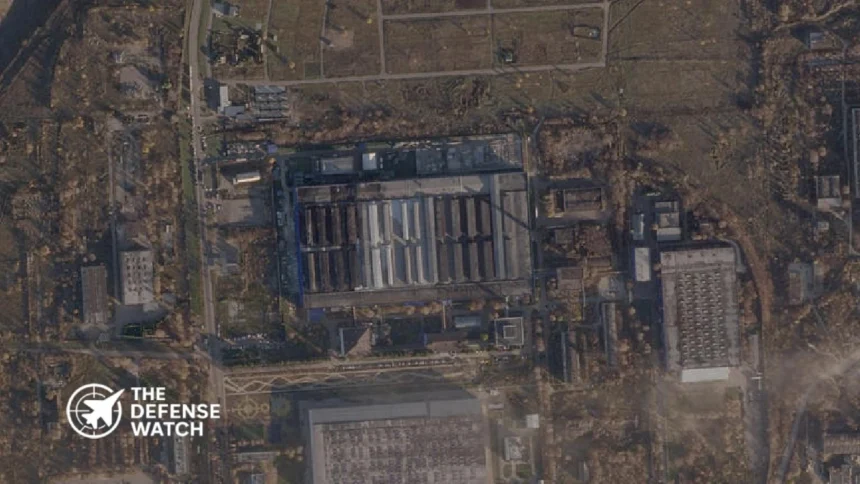
A Yandex data center was struck. The facility reportedly contained computing infrastructure used in the company’s AI development.
Kaluga region
A second Yandex facility was hit, with reporting indicating damage and partial disruption to operations.
Vladimir region
A third Yandex facility came under attack, expanding the reported campaign against the company’s infrastructure.
Balakovo, Saratov region
A data center associated with Sberbank was struck.
Leningrad region
A facility used by VKontakte, Russia’s major social networking platform, was reportedly attacked.
The distinction between an attack and a lasting loss of capability is important. The Centre for Eastern Studies reported that Yandex suspended operations at two affected facilities, in Sasovo and Vladimir, while its Kaluga site was also hit. The same assessment said Sberbank and VK confirmed strikes on their facilities but maintained that their systems continued to operate without disruption.
These differences suggest that the operational consequences were not identical across all five sites. The available evidence does not establish that every facility was destroyed or that all services associated with the three companies became unavailable.
Why commercial data centers matter in wartime
Data centers are not simply warehouses containing computer servers. They combine computing hardware, networking equipment, storage systems, electrical distribution and industrial cooling. Damage to any of these components can interrupt service, even if much of the building remains intact.
Fire and smoke can be particularly damaging. Heat can destroy electronic components, while soot and contamination can affect equipment that has not been directly struck. Electrical faults or damage to cooling systems can also force operators to shut down otherwise functional servers.
This creates a different challenge from attacking an oil depot or a conventional military installation. A data center’s importance depends on the services it supports, the availability of backup capacity and the speed with which operators can move workloads elsewhere.
The strikes against Yandex illustrate that problem. Its infrastructure supports consumer services as well as cloud computing and AI development. Disruption can therefore spread beyond one physical site to businesses and users that rely on the company’s digital platforms.
Reuters reported that the October 8 strike on Yandex’s Sasovo facility caused a fire and forced operations to stop at the site. The company said the center housed tens of thousands of servers. A subsequent attack affected its Kaluga infrastructure.
The reported outages show how damage to commercial infrastructure can produce effects well beyond the immediate strike location. However, public reporting has not provided a complete, independently verified inventory of damaged servers, lost data or the duration of every service interruption.
Damage to AI computing capacity could take longer to repair
The potential impact on Russian artificial intelligence development is one of the most consequential aspects of the reported attacks.
Yandex operates large-scale computing infrastructure used to train and develop AI models. Its systems have relied on Nvidia A100 processors, according to Reuters reporting. Access to comparable hardware is complicated by Western export restrictions and supply-chain constraints.
AI development depends on more than the number of servers a company owns. Training advanced models requires large clusters of accelerators, high-speed networking, reliable power and cooling, and software capable of distributing workloads across the system. Losing a major computing site can interrupt experiments, delay training schedules and force developers to move workloads onto less suitable infrastructure.
Replacing damaged equipment is not necessarily a straightforward purchase. Operators must obtain compatible processors, networking components and power equipment, then install and configure them before returning a facility to service. Sanctions and restrictions on access to advanced computing hardware could make that process more difficult for Russian companies.
The Centre for Eastern Studies assessed that the strikes may have damaged some of Russia’s largest supercomputers, including systems used for AI development. However, the precise condition of the affected computing clusters and the amount of lost processing capacity have not been publicly established.
It would therefore be premature to conclude that the attacks have permanently set back Russian AI development by a specific period. The scale of any delay will depend on the hardware that survived, available backup capacity, equipment replacement and the ability to transfer workloads to other facilities.
Russia’s digital sovereignty strategy faces a physical security test
Russia has spent years building a more self-contained domestic internet infrastructure. Data localization requirements and policies intended to preserve national control over digital services have encouraged companies to maintain infrastructure inside the country.
That approach has strategic advantages. Domestic hosting can give authorities greater control over data, reduce dependence on foreign service providers and support continuity when international technology access is restricted.
It also creates risks when infrastructure becomes concentrated in a limited number of large facilities.
The Centre for Eastern Studies noted that attacks against several Yandex sites affected a significant share of the company’s publicly known data center infrastructure. Its analysis also described disruptions to search, transportation, navigation and payment services.
Geographic dispersion alone does not guarantee resilience. A company can operate several data centers and still face serious disruption if they depend on common power systems, networking links, software platforms or specialized hardware.
Effective resilience requires independent backup sites, tested recovery procedures, replicated data and sufficient spare computing capacity. Moving workloads between facilities must also be possible without creating unacceptable security or performance problems.
The Russian experience demonstrates the difference between keeping data inside national borders and ensuring that digital services can withstand physical attacks. A nationally controlled network can remain vulnerable if its most important computing resources are concentrated in a small number of exposed locations.
The attacks form part of a wider campaign against digital infrastructure
The Russian and Ukrainian campaigns against digital infrastructure have developed alongside attacks on energy facilities, logistics networks and industrial sites.
Russian strikes have also damaged Ukrainian data centers. The supplied reporting identifies a major Datagroup facility in Kyiv that was destroyed on October 19, followed by damage to another Kyiv facility the next day.
Separately, Reuters reported on October 23 that Ukrainian Prime Minister Sergiy Koretskyi said Russian forces had struck 10 data centers in Kyiv during the previous month. That figure was attributed to the Ukrainian official and should not be treated as an independently verified count of destroyed facilities.
Ukraine has responded by moving significant amounts of data to servers in European countries, according to the supplied report. Distributing information and services across different jurisdictions can reduce the risk that a single physical attack will disable an entire system.
However, relocation introduces its own challenges, including network latency, regulatory requirements, cybersecurity risks and dependence on foreign providers. It also cannot eliminate the need to protect local telecommunications infrastructure and essential services.
The pattern suggests that data centers are increasingly relevant to wartime infrastructure planning. They support commercial activity, government operations and the information systems on which modern economies depend. Their disruption can impose economic costs without producing a conventional battlefield result.
What the strikes do, and do not, establish
The reported attacks demonstrate that commercial computing infrastructure can be vulnerable to relatively small physical strikes when critical equipment is concentrated in a limited number of sites.
They also raise questions about how effectively Russia can protect infrastructure that supports both its domestic digital economy and its ambitions in artificial intelligence.
Three limits remain important.
First, the full extent of the physical damage has not been disclosed. Second, service interruptions do not automatically mean that underlying data has been permanently lost. Third, damage to computing facilities does not by itself establish the long-term effect on Russia’s AI research or military capabilities.
The strikes may force Russian technology companies to spend more on redundancy, backup capacity and physical protection. They could also encourage greater use of distributed computing resources outside Russia, despite Moscow’s preference for domestic control over data and digital services.
For defense planners, the central lesson is that digital infrastructure has become part of the physical infrastructure of national power. Protecting it requires more than cybersecurity measures. It also requires air defense where warranted, physical security, geographically separated facilities and recovery systems that continue functioning when individual sites are disabled.
The lasting strategic impact of Ukraine’s campaign will depend less on the number of facilities hit than on whether Russia can restore their capabilities, replace specialized hardware and prevent further disruptions.