
- Home
- Defense Systems
- Missiles & Precision Weapons
- Glide Vehicle
- Missiles & Precision Weapons
- Xingkong‑2 Hypersonic Glide Vehicle
Xingkong‑2 Hypersonic Glide Vehicle
Defense Systems Full Specifications
1. General Information
| Name / Designation | Xingkong‑2 (Starry Sky‑2) |
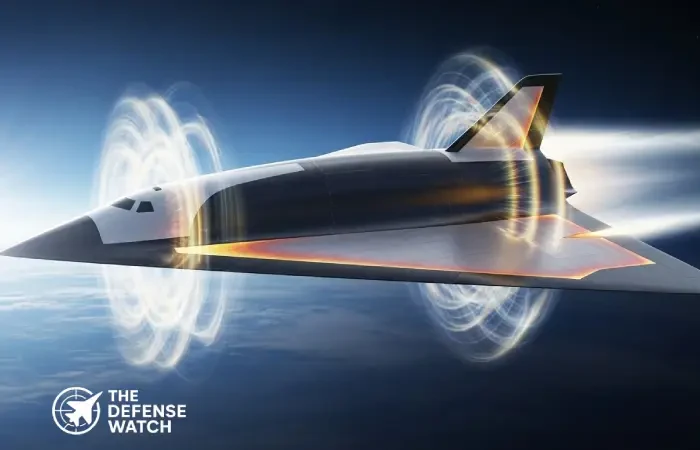
| Type | Hypersonic waverider / glide vehicle |
| Manufacturer | China Academy of Aerospace Aerodynamics (CAAA) / CASC |
| Country of Origin | China |
| Role / Purpose | Hypersonic strike vehicle — regional strike / anti‑ship / potential nuclear strike / kinetic kill |
| Operational Status | Experimental / prototype / test phase |
2. Physical Characteristics
| Length | Not publicly disclosed |
| Body Design | Wedge-shaped “waverider” airframe for shockwave lift |
| Material | Presumed high-temperature composites and heat-resistant alloys |
| Launch Platform | Rocket booster / multistage solid-fuel rocket |
| Payload Capacity | Not publicly disclosed — conventional or nuclear potential |
3. Propulsion & Performance
| Propulsion Type | Rocket booster for launch; aerodynamic gliding during flight |
| Speed | Mach 5.5–6 (test‑verified) |
| Range | Estimated 660–720 km glide range |
| Maneuverability | High — capable of large-angle turns and trajectory adjustments |
| Flight Profile | Boost phase via rocket, separation, then hypersonic atmospheric glide |
4. Navigation & Guidance
| Guidance System | Not publicly disclosed; likely inertial navigation system |
| Terminal Guidance | Unknown / unverified |
| Accuracy (CEP) | Not publicly disclosed |
| Counter-Jamming | Unknown — no verified data on electronic protection |
5. Warhead & Payload
| Warhead Type | Potential conventional or nuclear payload; kinetic kill capability possible |
| Explosive Yield | Not publicly disclosed |
| Penetration Ability | High-speed kinetic impact may penetrate defenses, unverified |
6. Survivability & Defensive Features
| Thermal Protection | Advanced heat-resistant composites for hypersonic flight |
| Stealth Features | Not publicly disclosed |
| Anti-Interception Ability | High: unpredictable glide path, extreme speed, altitude maneuvers complicate missile defense |
PROS
- Sustained hypersonic speed (Mach 5.5–6) for extended glide — greatly reduces reaction time for adversaries.
- Highly maneuverable glide trajectory, complicating interception by existing missile‑defense systems.
- Waverider design uses shockwaves for lift, improving aerodynamic efficiency at hypersonic speeds.
- Potential to carry conventional or nuclear payload — versatile deployment options.
- Compact glide‑vehicle form factor allows flexible integration with various rocket boosters or missile systems.
CONS
- Publicly available data on payload capacity, warhead specifics, and guidance accuracy remain limited or unverified.
- Hypersonic flight generates extreme thermal stress — challenging materials and thermal-protection systems.
- Range (estimated 660–720 km) remains limited compared with intercontinental ballistic missiles (ICBMs).
- Deployment and operational status remain uncertain — likely still in experimental/test phase.
- Integration risk: real-world performance (reliability, accuracy, survivability) under combat conditions remains unproven.
The Xingkong-2 — known in English as “Starry Sky‑2” — represents a leap in hypersonic glide‑vehicle (HGV) technology, combining shock‑wave generated lift with extreme speed and maneuverability to challenge current missile defenses. Designed by the China Academy of Aerospace Aerodynamics (CAAA) under the auspices of China Aerospace Science and Technology Corporation (CASC), this experimental waverider showcases China’s ambition to field a next‑generation strike vehicle.
Launched via a rocket booster, Xingkong‑2 separates at high altitude, then transitions to a hypersonic glide profile — using its wedge-shaped “waverider” design to ride shockwaves and sustain lift at extreme speeds. During its first publicly acknowledged test in August 2018, the vehicle ascended to approximately 30 km altitude and sustained Mach 5.5 to Mach 6 for several minutes, reaching speeds of roughly 7,344 km/h.
Although official details remain limited, analysts project a glide range of roughly 660–720 km for Xingkong‑2 under certain conditions — enough for regional strike or anti-ship missions. Its maneuverable flight path, high speed, and atmospheric glide profile make interception by traditional missile‑defense systems extremely challenging.
In future operational use, Xingkong‑2 could carry either conventional or nuclear payloads, or serve as a kinetic‑kill vehicle — enhancing its versatility in a variety of strike scenarios.
Xingkong‑2 Glide Vehicle Price
Because Xingkong-2 is a military weapon system developed and maintained by the Chinese state, it is not available commercially for sale — hence there is no public “price” in the United States or global defense market.
Disclaimer Note
The information provided on TheDefenseWatch.com is for general informational purposes only. While we strive to ensure the accuracy, completeness, and timeliness of our content regarding defense and aerospace products, technologies, and specifications, we cannot guarantee that all information is 100% accurate or up-to-date due to the evolving nature of military technology and classified data.TheDefenseWatch.com does not warrant the reliability, suitability, or availability of the information for any specific purpose. Users are advised to consult official sources, such as manufacturers, government publications, or defense agencies, for precise and verified data before making decisions based on our content.We are not affiliated with any defense manufacturers, governments, or military organizations mentioned. Opinions, reviews, and ratings reflect expert analysis but are subjective and should not be considered endorsements. TheDefenseWatch.com is not responsible for any errors, omissions, or consequences arising from the use of this website’s content.External links are provided for convenience and do not imply endorsement. TheDefenseWatch.com reserves the right to update or modify content without prior notice. By using this website, you agree to our Privacy & Cookies Policy.
New Arrivals












Popular Comparisons
-
 J-10C vs JF-17 Thunder: Which Fighter Is More Capable?
View Comparison →
-
Tejas vs Gripen: Key Differences and Capabilities
View Comparison →
-
Tejas vs MiG-21 Bison: How India Replaced Its Iconic Supersonic Fighter
View Comparison →
-
F-35 vs F-16: Stealth, Sensors and Combat Roles
View Comparison →
-
Tejas Fighter Jet vs F-16 Fighting Falcon: Capability Compared
View Comparison →
-
Rafale Fighter Jet vs F-16 Fighting Falcon : Which Fighter Has the Edge?
View Comparison →
-
Su-57 Fighter Jet vs J-20 Fighter Jet: Stealth and Air Combat Compared
View Comparison →
-
Mirage 2000 vs Tejas Mk1A: Legacy Combat Power vs Indigenous Modernization
View Comparison →
-
Rafale Fighter Jet vs F-22 Raptor: Which Air Dominance Fighter Has the Edge?
View Comparison →
-
Tejas Fighter Jet vs. Rafale Fighter Jet: India’s Indigenous Fighter Meets France’s Proven Multirole Combat Aircraft
View Comparison →


- Pratt & Whitney Begins $100 Million Polish Expansion for F-35 Engine Parts

- Northrop Grumman Wins $43.9 Million Contract for Trident II Rocket Motor Facilities
- Ukraine Drone Strikes Disrupt Russian Data Centers, Raising Questions About AI Infrastructure Security
- Lockheed Martin Wins $114.6 Million Contract to Redesign F-35 Navigation Systems
- Project Agincourt Pushes Pentagon to Speed Up Autonomous Weapons Fielding
- Northrop Grumman Factory Expansion Aims to Increase B-21 Raider Production
- France Orders Four More SAMP/T NG Air Defense Systems
- France and UAE Revive Rafale F5 Fighter Development Partnership
- P-800 Oniks Missile: Range, Speed and BrahMos Comparison
- Ukrainian Drone Unit Caused 70% of Simulated U.S. Brigade Casualties in Germany Exercise



Fighter Jets
-
 F-100 Super Sabre
-
North American F-86 Sabre
-
Northrop YF-23 Fighter
-
Rafale F5 Fighter
-
SU-57 Felon Stealth Fighter
-
Boeing F/A-XX Fighter
-
JF-17 Thunder Fighter Jet
-
F-47 Fighter Jet
-
MIG-31 Fighter Jet
-
J-10CE Fighter Jet
-
Chengdu J-10 Fighter Jet
-
Chengdu J-10C Fighter Jet
-
Gripen E Fighter Jet
-
Tejas Mk1A Fighter Jet
-
Tejas Mk‑2 Fighter Jet
-
F-16V Viper Block 70 Fighter Jet
-
F-15EX Eagle II Fighter
-
F-15E Strike Eagle Fighter
-
F/A-18E/F Super Hornet Fighter Jet
-
Saab Gripen F Fighter Jet
-
JAS 39E/F Gripen Fighter Jet
-
JAS 39 Gripen Fighter Jet
-
F-35A Lightning II Fighter Jet
-
F/A-18F Super Hornet







Recent Compares
-
J-10C vs JF-17 Thunder: Which Fighter Is More Capable?
View Comparison →
-
Tejas vs Gripen: Key Differences and Capabilities
View Comparison →
-
Tejas vs MiG-21 Bison: How India Replaced Its Iconic Supersonic Fighter
View Comparison →
-
F-35 vs F-16: Stealth, Sensors and Combat Roles
View Comparison →
-
Tejas Fighter Jet vs F-16 Fighting Falcon: Capability Compared
View Comparison →
Latest Defense Systems
10 Compares Defense Systems
-
J-10C vs JF-17 Thunder: Which Fighter Is More Capable?
View Comparison →
-
Tejas vs Gripen: Key Differences and Capabilities
View Comparison →
-
Tejas vs MiG-21 Bison: How India Replaced Its Iconic Supersonic Fighter
View Comparison →
-
F-35 vs F-16: Stealth, Sensors and Combat Roles
View Comparison →
-
Tejas Fighter Jet vs F-16 Fighting Falcon: Capability Compared
View Comparison →
-
Rafale Fighter Jet vs F-16 Fighting Falcon : Which Fighter Has the Edge?
View Comparison →
-
Su-57 Fighter Jet vs J-20 Fighter Jet: Stealth and Air Combat Compared
View Comparison →
-
Mirage 2000 vs Tejas Mk1A: Legacy Combat Power vs Indigenous Modernization
View Comparison →
-
Rafale Fighter Jet vs F-22 Raptor: Which Air Dominance Fighter Has the Edge?
View Comparison →
-
Tejas Fighter Jet vs. Rafale Fighter Jet: India’s Indigenous Fighter Meets France’s Proven Multirole Combat Aircraft
View Comparison →
- Pratt & Whitney Begins $100 Million Polish Expansion for F-35 Engine Parts
- Northrop Grumman Wins $43.9 Million Contract for Trident II Rocket Motor Facilities
- Ukraine Drone Strikes Disrupt Russian Data Centers, Raising Questions About AI Infrastructure Security
- Lockheed Martin Wins $114.6 Million Contract to Redesign F-35 Navigation Systems
- Project Agincourt Pushes Pentagon to Speed Up Autonomous Weapons Fielding