
- Home
- Defense Systems
- Attack & Multirole Drones (UAVs)
- MQ-1 Predator Drone
MQ-1 Predator Drone
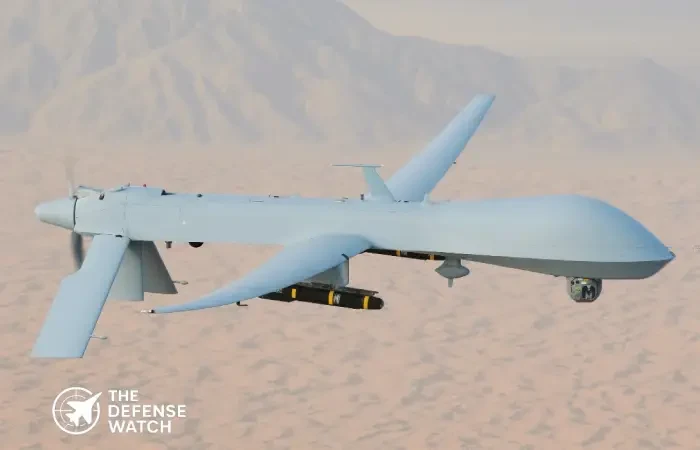
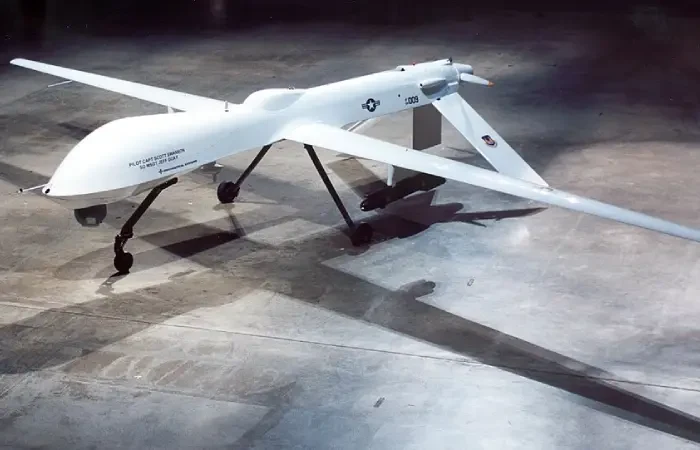
Defense Systems Full Specifications
1. General Information
| Name | MQ-1 Predator |
| Manufacturer | General Atomics Aeronautical Systems |
| Country of Origin | United States |
| Type / Role | ISR / Light Attack UAV |
| First Flight / Introduced | 1994 / 1995 |
| Status | Retired USAF / Export Use |
| Unit Cost | USD 4–5 Million (Approx.) |
2. Performance
| Maximum Speed | 217 km/h |
| Cruise Speed | 130 km/h |
| Operational Range | 1,100 km |
| Endurance | 24 hours |
| Service Ceiling | 25,000 ft |
| Rate of Climb | 5 m/s |
3. Dimensions
| Length | 8.22 m |
| Wingspan | 16.84 m |
| Height | 2.1 m |
| Maximum Takeoff Weight (MTOW) | 1,020 kg |
4. Payload & Armament
| Payload Capacity | 204 kg |
| Hardpoints | 2 |
| Weapons | AGM-114 Hellfire Missiles |
| Sensors | EO/IR, SAR, Laser Designator |
| Avionics | GPS/INS, Satellite Link, Onboard Processing |
5. Propulsion
| Engine Type | Rotax 914F |
| Engine Power | 115 hp |
| Propeller Type | 3-Blade |
6. Communication & Control
| Control Type | Remote / Semi-Autonomous |
| Data Link Range | 200 km LOS / Satellite BLOS |
| Navigation | GPS / INS |
| Ground Control Station | Portable or Fixed Facility |
7. Operational Use
| Primary Users | USAF, CIA, Italy, Turkey |
| Combat Proven | Yes |
| Notable Operations | Afghanistan, Iraq, Pakistan, Yemen |
PROS
- Long endurance ideal for persistent ISR.
- Low operating and maintenance cost.
- Proven precision-strike capability with Hellfire missiles.
- Extensive combat history and reliability.
- Advanced sensor suite for real-time intelligence.
CONS
- Limited speed and maneuverability.
- Vulnerable to air defenses due to low altitude and slow speed.
- Relatively small payload capacity.
- Non-stealth airframe detectable by radar.
- Retired from USAF frontline service.
MQ-1 Predator: U.S. Long-Endurance Strike UAV
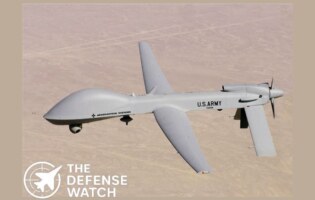
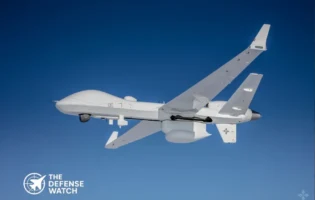
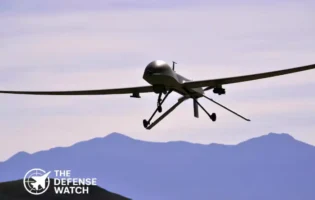
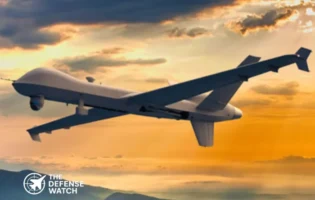
The MQ-1 Predator stands as one of the most recognizable unmanned aerial systems in modern U.S. military history, having shaped two decades of remotely piloted warfare. Developed by General Atomics Aeronautical Systems, the Predator was originally designed as a long-endurance surveillance platform before evolving into an armed strike drone, enabling real-time intelligence gathering and precision engagement in complex combat environments.
Introduced in the mid-1990s and widely operational by the early 2000s, the MQ-1 quickly proved indispensable for U.S. forces conducting counterterrorism and ISR missions across Afghanistan, Iraq, and multiple theaters worldwide. Its combination of low operating cost, excellent endurance, and precision-guided weapons—most notably the AGM-114 Hellfire missile—made it a reliable asset for persistent overwatch and targeted operations.
Powered by a Rotax piston engine, the MQ-1 Predator can cruise for more than 24 hours, carrying an advanced sensor suite that includes electro-optical/infrared cameras, synthetic aperture radar, and laser designation systems. While not fast or heavily armored, its strength lies in its ability to loiter quietly over targets, maintain continuous surveillance, and relay high-fidelity intelligence through satellite-linked communication systems.
The aircraft’s lightweight airframe and 55-ft wingspan contribute to its impressive endurance and fuel efficiency, making it ideal for border patrol, reconnaissance, and precision strike roles. Though retired from U.S. Air Force service in 2018, the MQ-1 Predator remains in operational use with several U.S. agencies and international partners.
MQ-1 Predator Price
The MQ-1 Predator had an approximate unit cost ranging from USD 4–5 million depending on configuration and payload. Although no longer in frontline U.S. Air Force procurement, support and training packages for foreign military users can vary significantly by system integration and mission requirements.
Disclaimer Note
The information provided on TheDefenseWatch.com is for general informational purposes only. While we strive to ensure the accuracy, completeness, and timeliness of our content regarding defense and aerospace products, technologies, and specifications, we cannot guarantee that all information is 100% accurate or up-to-date due to the evolving nature of military technology and classified data.TheDefenseWatch.com does not warrant the reliability, suitability, or availability of the information for any specific purpose. Users are advised to consult official sources, such as manufacturers, government publications, or defense agencies, for precise and verified data before making decisions based on our content.We are not affiliated with any defense manufacturers, governments, or military organizations mentioned. Opinions, reviews, and ratings reflect expert analysis but are subjective and should not be considered endorsements. TheDefenseWatch.com is not responsible for any errors, omissions, or consequences arising from the use of this website’s content.External links are provided for convenience and do not imply endorsement. TheDefenseWatch.com reserves the right to update or modify content without prior notice. By using this website, you agree to our Privacy & Cookies Policy.


New Arrivals




Popular Comparisons
-
 Tejas vs Gripen: Key Differences and Capabilities
View Comparison →
-
Tejas vs MiG-21 Bison: How India Replaced Its Iconic Supersonic Fighter
View Comparison →
-
F-35 vs F-16: Stealth, Sensors and Combat Roles
View Comparison →
-
Tejas Fighter Jet vs F-16 Fighting Falcon: Capability Compared
View Comparison →
-
Rafale Fighter Jet vs F-16 Fighting Falcon : Which Fighter Has the Edge?
View Comparison →
-
Su-57 Fighter Jet vs J-20 Fighter Jet: Stealth and Air Combat Compared
View Comparison →
-
Mirage 2000 vs Tejas Mk1A: Legacy Combat Power vs Indigenous Modernization
View Comparison →
-
Rafale Fighter Jet vs F-22 Raptor: Which Air Dominance Fighter Has the Edge?
View Comparison →
-
Tejas Fighter Jet vs. Rafale Fighter Jet: India’s Indigenous Fighter Meets France’s Proven Multirole Combat Aircraft
View Comparison →
-
F-22 Raptor vs. F-35 Joint Strike Fighter: Which Fifth Generation Fighter Has the Edge?
View Comparison →


- US Military Weighs MOAB for Potential Future Strikes on Iran, CNN Reports

- Saab Wins $120 Million Order for New Gripen Flight Control Computer
- L3Harris Delivers First VAMPIRE Counter-Drone Systems to U.S. Army
- Lockheed Martin Invests $300 Million in Texas Munitions Expansion, Plans 6,000 U.S. Jobs
- Lockheed Martin Taps Avio for ER GMLRS and PrSM Rocket Motor Production
- Lockheed Martin Wins $16.1 Million Contract Modification for F-35 Processor Support
- Lockheed Martin Wins $74.3 Million Contract Modification for AN/SLQ-32(V)6 Electronic Warfare Systems
- Hegseth Says Autonomous Warfare Has Long Been the Pentagon’s End Goal
- US Rejects Automatic Body Camera Activation for ICE Officers
- Iron Dome Architect Develops New Counter-Swarm Drone Defense System






Fighter Jets
-
 MIG-31 Fighter Jet
-
J-10CE Fighter Jet
-
Chengdu J-10 Fighter Jet
-
Chengdu J-10C Fighter Jet
-
Gripen E Fighter Jet
-
Tejas Mk1A Fighter Jet
-
Tejas Mk‑2 Fighter Jet
-
F-16V Viper Block 70 Fighter Jet
-
F-15EX Eagle II Fighter
-
Boeing F/A-XX Fighter
-
F-15E Strike Eagle Fighter
-
F/A-18E/F Super Hornet Fighter Jet
-
Saab Gripen F Fighter Jet
-
JAS 39E/F Gripen Fighter Jet
-
JAS 39 Gripen Fighter Jet
-
F-35A Lightning II Fighter Jet
-
F/A-18F Super Hornet
-
J-50 Fighter Jet
-
Spanish EF-18 Hornet Fighter
-
F-47 Fighter Jet
-
F-35i Adir Fighter Jet
-
F-16 Fighting Falcon
-
AIDC T-5 Brave Eagle
-
F-CK-1 Ching-Kuo Fighter








Recent Compares
-
Tejas vs Gripen: Key Differences and Capabilities
View Comparison →
-
Tejas vs MiG-21 Bison: How India Replaced Its Iconic Supersonic Fighter
View Comparison →
-
F-35 vs F-16: Stealth, Sensors and Combat Roles
View Comparison →
-
Tejas Fighter Jet vs F-16 Fighting Falcon: Capability Compared
View Comparison →
-
Rafale Fighter Jet vs F-16 Fighting Falcon : Which Fighter Has the Edge?
View Comparison →
Latest Defense Systems
10 Compares Defense Systems
-
Tejas vs Gripen: Key Differences and Capabilities
View Comparison →
-
Tejas vs MiG-21 Bison: How India Replaced Its Iconic Supersonic Fighter
View Comparison →
-
F-35 vs F-16: Stealth, Sensors and Combat Roles
View Comparison →
-
Tejas Fighter Jet vs F-16 Fighting Falcon: Capability Compared
View Comparison →
-
Rafale Fighter Jet vs F-16 Fighting Falcon : Which Fighter Has the Edge?
View Comparison →
-
Su-57 Fighter Jet vs J-20 Fighter Jet: Stealth and Air Combat Compared
View Comparison →
-
Mirage 2000 vs Tejas Mk1A: Legacy Combat Power vs Indigenous Modernization
View Comparison →
-
Rafale Fighter Jet vs F-22 Raptor: Which Air Dominance Fighter Has the Edge?
View Comparison →
-
Tejas Fighter Jet vs. Rafale Fighter Jet: India’s Indigenous Fighter Meets France’s Proven Multirole Combat Aircraft
View Comparison →
-
F-22 Raptor vs. F-35 Joint Strike Fighter: Which Fifth Generation Fighter Has the Edge?
View Comparison →
- US Military Weighs MOAB for Potential Future Strikes on Iran, CNN Reports
- Saab Wins $120 Million Order for New Gripen Flight Control Computer
- L3Harris Delivers First VAMPIRE Counter-Drone Systems to U.S. Army
- Lockheed Martin Invests $300 Million in Texas Munitions Expansion, Plans 6,000 U.S. Jobs
- Lockheed Martin Taps Avio for ER GMLRS and PrSM Rocket Motor Production