

Executive Summary:
Russia launched 216 drones across Ukraine overnight after a temporary U.S.-brokered ceasefire expired, according to Ukrainian officials. The attacks targeted residential areas, energy infrastructure, and public facilities, underscoring the continued role of mass drone warfare in the conflict and the fragile state of diplomatic efforts.
Russia Drone Attacks Ukraine Intensify After Ceasefire Ends
Russia launched one of its largest overnight drone attacks in recent weeks just hours after a three-day ceasefire brokered by U.S. President Donald Trump expired at midnight Monday, according to Ukrainian officials.
Ukraine’s air force said Russia deployed 216 drones across the country beginning at approximately 6 p.m. Monday. Ukrainian air defense units reportedly intercepted or neutralized 192 of the incoming drones during overnight operations.
The strikes nevertheless caused damage across multiple regions, hitting residential buildings, transportation infrastructure, and civilian facilities. Ukrainian President Volodymyr Zelenskyy described the renewed assault as a deliberate decision by Moscow to “end the partial silence that had lasted for several days.”
The attacks highlight how drone warfare continues to shape operational tempo in the Russia-Ukraine conflict, particularly as both sides rely increasingly on long-range unmanned systems to pressure infrastructure and civilian logistics networks.
Residential Areas And Infrastructure Targeted
In the Dnipropetrovsk region, regional military administration head Oleksandr Ganzha said Russian forces attacked five districts more than 20 times using drones, artillery, and aerial bombs. One civilian was killed and at least four others were injured during the strikes.
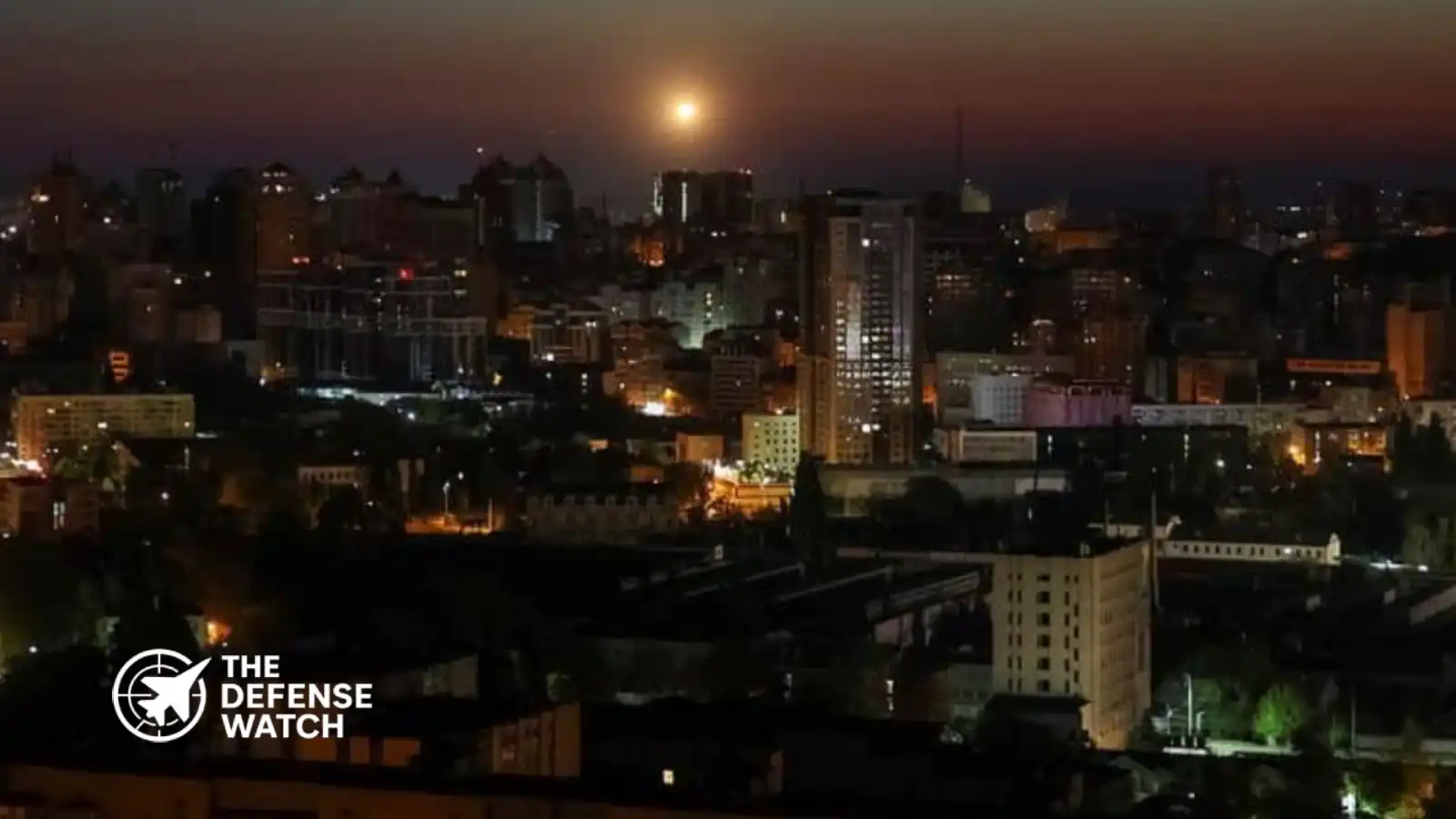
In Kyiv, a Russian drone struck a 20-storey residential building, according to local officials. Damage was also reported in the nearby Fastiv region, where a kindergarten, a four-storey residential building, and two private homes were hit.
Ukrainian authorities additionally reported more than 80 aerial bombs and over 30 air strikes nationwide during the same period.
The scale of the overnight assault reflects Russia’s continued emphasis on saturation attacks designed to overwhelm Ukrainian air defenses. Since late 2023, Moscow has steadily expanded combined drone and missile strike packages, integrating Iranian-designed Shahed-type drones alongside domestically produced systems.
Ukraine Air Defense Remains Under Pressure
Despite Ukraine’s reported interception rate, the volume of drones launched demonstrates the sustained pressure facing the country’s air defense network.
Ukraine’s layered defense architecture, built around Western-supplied systems including Patriot Missile System batteries and other short-range interceptors, has proven effective against many incoming threats. However, Ukrainian officials have repeatedly warned that Russia’s strategy increasingly relies on mass launches intended to exhaust interceptor inventories and force defensive dispersal.
The latest attacks also underscore the growing importance of low-cost unmanned systems in modern conflict. Drone warfare has become central to operational planning for both Russia and Ukraine, allowing long-range strikes without committing manned aircraft deep into contested airspace.
Military analysts note that Russia’s expanding drone production capacity has enabled more frequent large-scale attacks targeting energy grids, transportation hubs, and urban infrastructure. Ukraine, meanwhile, continues investing heavily in electronic warfare systems and mobile interception teams to counter the threat.
Ceasefire Breakdown Raises Questions Over Diplomatic Efforts
The renewed strikes came immediately after the expiration of the temporary ceasefire initiative reportedly brokered by the United States. While the pause had reduced large-scale attacks for several days, no long-term agreement was reached between Moscow and Kyiv.
The rapid return to high-intensity drone operations illustrates the limited durability of short-term ceasefire arrangements without broader political negotiations or enforcement mechanisms.
For Washington and its allies, the collapse of the temporary truce reinforces concerns that the conflict is entering another prolonged phase of attritional warfare dominated by drones, artillery, and long-range strikes.
The latest escalation may also intensify discussions among NATO members regarding additional air defense assistance and interceptor production capacity for Ukraine, particularly as Russia maintains pressure through sustained aerial campaigns.
Strategic Implications Of Russia’s Drone Campaign
Russia’s ability to launch more than 200 drones in a single overnight operation signals continued industrial adaptation despite sanctions and export restrictions.
The increasing frequency of these attacks suggests Moscow views drone saturation tactics as a cost-effective method to strain Ukrainian defenses while sustaining pressure on civilian infrastructure and public morale.
For Ukraine, maintaining interception rates while protecting critical infrastructure remains a major operational challenge. Air defense effectiveness depends not only on advanced missile systems but also on radar coverage, electronic warfare integration, and the availability of interceptor munitions.
As the conflict evolves, unmanned aerial systems are likely to remain one of the defining features of the battlefield, shaping both military operations and geopolitical calculations across Europe.
