

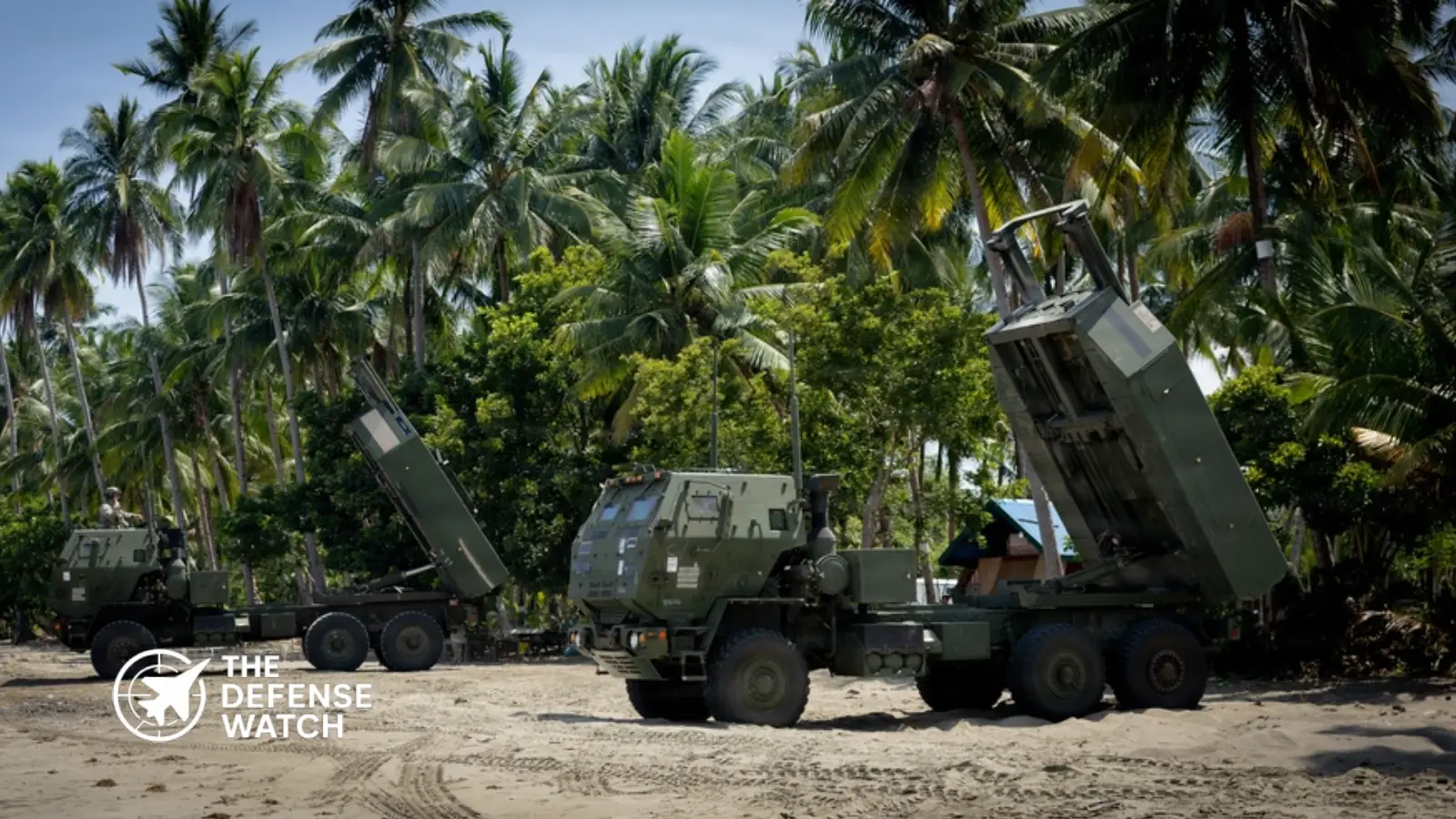
Lockheed Martin HIMARS Contract Expands Global Precision Strike Capacity
The HIMARS production contract awarded to Lockheed Martin marks a significant expansion of precision artillery capabilities for both U.S. forces and allied nations. The U.S. Department of Defense confirmed a not to exceed $1.13 billion undefinitized contract action covering Full Rate Production Lot 17 of the M142 High Mobility Artillery Rocket System.
- Lockheed Martin awarded up to $1.13 billion contract for HIMARS full rate production Lot 17.
- Contract supports U.S. Army, Marine Corps, and Foreign Military Sales customers.
- Partner nations include Australia, Canada, Estonia, Sweden, and Taiwan.
- Work will be assigned per order, with completion expected by April 30, 2028.
- Contract reflects continued demand for precision long range rocket artillery systems.
The award supports urgent operational requirements for the U.S. Army, U.S. Marine Corps, and multiple Foreign Military Sales partners, including Australia, Canada, Estonia, Sweden, and Taiwan. The contract was issued by Army Contracting Command at Redstone Arsenal, Alabama, according to official DoD contract announcements.
Growing Demand For Mobile Precision Fires
The HIMARS production contract reflects sustained global demand for highly mobile, precision strike systems capable of delivering long range fires in contested environments. The M142 HIMARS has become a central component of modern artillery doctrine, offering rapid deployment, high accuracy, and compatibility with a range of guided munitions.
Its operational relevance has been reinforced by recent conflicts, where long range precision fires have proven decisive in targeting logistics hubs, command centers, and high value assets. Defense analysts note that HIMARS combines mobility with survivability, allowing forces to strike and relocate quickly, reducing exposure to counter battery threats.
Strategic Importance For U.S. Allies
The inclusion of multiple allied nations under the HIMARS production contract highlights a broader shift toward interoperability and shared capabilities among U.S. partners. Countries such as Estonia and Sweden are strengthening deterrence posture in Europe, while Taiwan continues to prioritize asymmetric defense capabilities amid regional tensions.
Australia and Canada, both key NATO aligned partners, are also investing in long range fires to enhance expeditionary and joint force operations. The system’s standardized platform and integration with U.S. command networks enable coordinated multinational operations.
This trend aligns with U.S. defense strategy emphasizing distributed lethality and allied burden sharing, particularly in Indo Pacific and European theaters.
Contract Structure And Production Outlook
The HIMARS production contract is structured as an undefinitized contract action, allowing rapid initiation of work while final terms are negotiated. This mechanism is often used to accelerate procurement timelines in response to urgent operational needs.
Work locations and funding allocations will be determined on a per order basis, offering flexibility to adjust production volumes based on evolving requirements. The estimated completion date of April 2028 suggests sustained production throughput over the next several years.
Lockheed Martin, the prime contractor for HIMARS, continues to scale manufacturing capacity to meet growing demand. The company has previously indicated efforts to increase output rates for both launchers and associated munitions.
Operational Impact And Future Outlook
The expansion of HIMARS under this contract is expected to significantly enhance long range precision strike capacity across multiple theaters. For U.S. forces, it supports modernization priorities focused on multi domain operations and rapid response capabilities.
For allied nations, the system provides a proven, combat tested solution that integrates seamlessly with existing U.S. platforms and doctrine. This interoperability is increasingly critical in coalition operations where speed and coordination are key.
As global security dynamics evolve, the HIMARS production contract underscores the central role of precision artillery in modern warfare. Continued investment in such systems reflects a broader shift toward high mobility, networked, and precision driven combat capabilities.

