

Executive Summary:
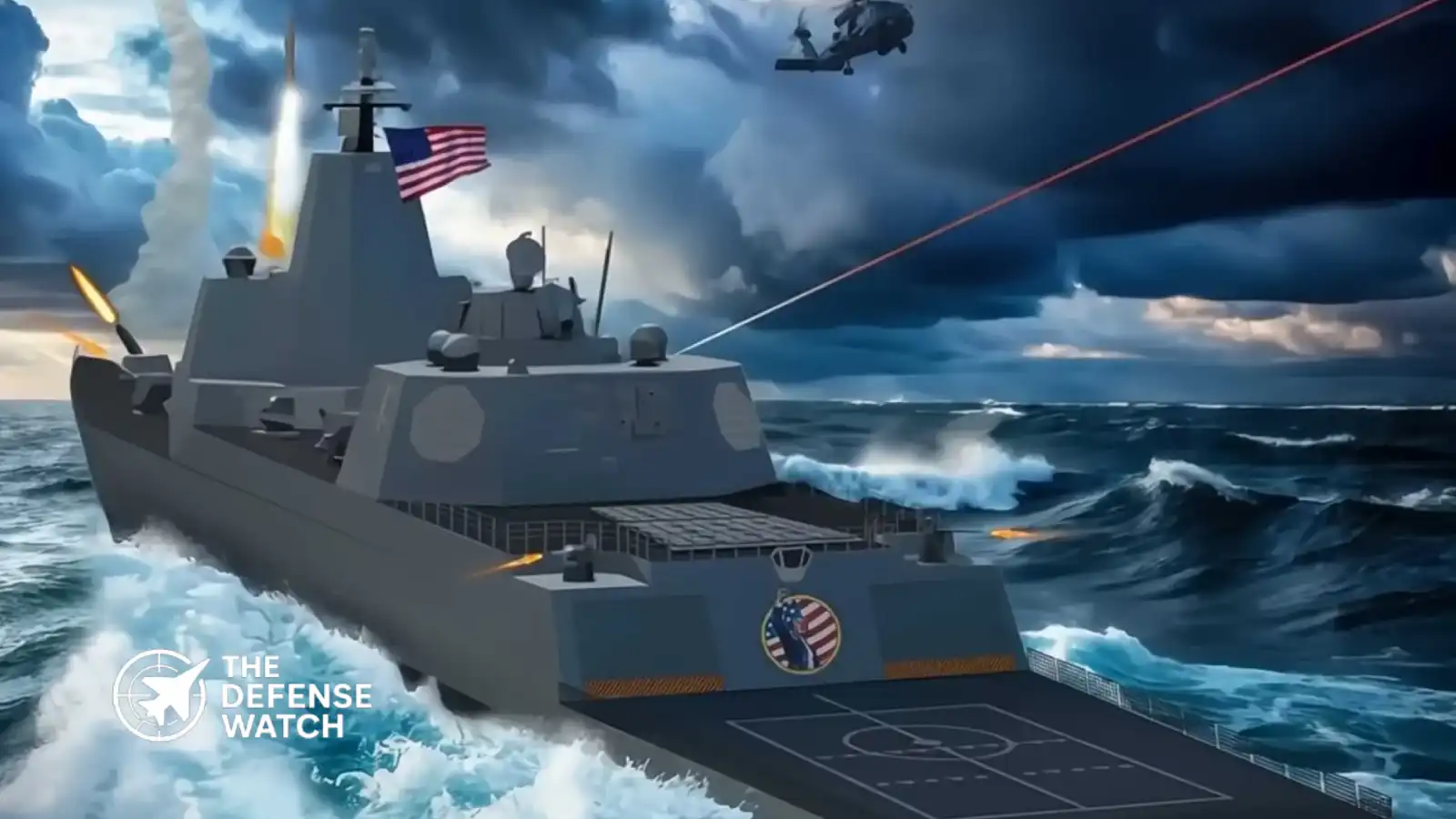
A proposed US Navy Trump-class battleship concept is generating debate after estimates suggested the program could cost up to $700 billion. The proposal highlights growing discussions inside the defense community over future naval firepower, survivability, and nuclear-powered surface combatants.
Trump-Class Battleship Concept Revives Debate Over Future Naval Warfare
The proposed Trump-class battleship concept has reignited discussion about the future direction of US naval modernization. The speculative program could require as much as $700 billion if developed into a full operational fleet.
The concept reportedly envisions a new generation of heavily armed, nuclear-powered surface combatants designed for long-range strike operations, missile defense, and sustained maritime presence in contested regions such as the Indo-Pacific.
While the idea remains conceptual and outside the official US Navy shipbuilding plan, it reflects broader debates within Washington over how the Navy should adapt to increasingly capable Chinese and Russian anti-ship missile threats.
Nuclear Power And Heavy Firepower At The Center Of The Proposal
The Trump-class battleship proposal reportedly combines characteristics of legacy battleships with modern naval warfare technologies. Concepts discussed in defense circles include advanced radar systems, integrated missile launch cells, directed-energy weapons, and large-scale power generation for future combat systems.
Nuclear propulsion is viewed as central to the idea because it would allow sustained deployments without traditional fuel limitations. Similar advantages already exist aboard the Nimitz-class aircraft carrier and Gerald R. Ford-class aircraft carrier fleets.
Supporters of large nuclear-powered surface combatants argue that future naval warfare may require ships capable of carrying significantly larger missile inventories and power-intensive defensive systems. These include high-energy lasers and electronic warfare systems designed to counter hypersonic missiles and drone swarms.
However, critics question whether such massive warships would remain survivable in modern combat environments dominated by precision-guided munitions, long-range anti-ship missiles, and satellite tracking capabilities.
Budget Concerns Could Limit Any Future Battleship Revival
The estimated $700 billion figure has become a central point of criticism. Analysts note that the US Navy is already facing pressure from rising shipbuilding costs, submarine production delays, and maintenance demands across the existing fleet.
Programs such as the Columbia-class submarine, the Virginia-class submarine, and the Constellation-class frigate are already consuming substantial portions of future naval procurement budgets.
At the same time, the Navy continues investing in unmanned systems, distributed maritime operations, and long-range missile integration. Defense planners increasingly favor dispersing combat power across larger numbers of platforms instead of concentrating capability into a small number of extremely expensive ships.
This strategic shift has become especially important as the Pentagon evaluates potential conflict scenarios in the Pacific, where survivability, logistics, and operational flexibility are viewed as critical factors.
Strategic Messaging Reflects Broader US-China Naval Competition
Even though the Trump-class battleship remains hypothetical, the attention surrounding the proposal underscores how rapidly naval competition is evolving.
China continues expanding the fleet of the Type 055 destroyer while also increasing aircraft carrier production and anti-ship missile capabilities. Meanwhile, the US Navy is pursuing a combination of submarines, carrier strike groups, unmanned platforms, and next-generation destroyers to maintain maritime superiority.
The discussion around heavily armed nuclear-powered battleships also reflects concerns about missile magazine depth. Recent conflicts and war games have highlighted how quickly modern naval forces can exhaust missile inventories during high-intensity operations.
Some defense analysts argue that larger surface combatants with expanded vertical launch capacity could help address that challenge. Others contend that survivability concerns make distributed fleets and autonomous systems a more realistic long-term solution.
Future Of The Concept Remains Unclear
No official US Navy acquisition program currently exists for a Trump-class battleship. The concept instead appears to function as a broader discussion point within defense media and strategic commentary regarding the future balance between survivability, firepower, and procurement costs.
Still, the scale of the projected investment and the symbolic return of the battleship concept have ensured continued debate across defense policy circles.
As naval competition intensifies in the Indo-Pacific and global maritime security environments become more contested, discussions surrounding the next generation of American sea power are likely to continue.
