(adsbygoogle = window.adsbygoogle || []).push({});Executive Summary:
Thales UK, in partnership with Teledyne e2v, has successfully tested an upgraded RapidDestroyer radio-frequency directed energy weapon (RFDEW) that neutralized 80 drones during counter-unmanned aerial system (C-UAS) trials at Pershore, Gloucestershire, in April 2026. The tests highlight progress in providing a low-cost, electronic hard-kill option for close-range drone defense. This development strengthens the British Army’s layered approach to countering increasingly dense and coordinated drone threats on modern battlefields.
The British Army continues to refine its counter-drone capabilities with the latest trials of Thales UK’s RapidDestroyer radio frequency weapon. The system demonstrated its effectiveness by neutralizing 80 drones in individual engagement scenarios, marking another milestone in the UK’s directed energy program.
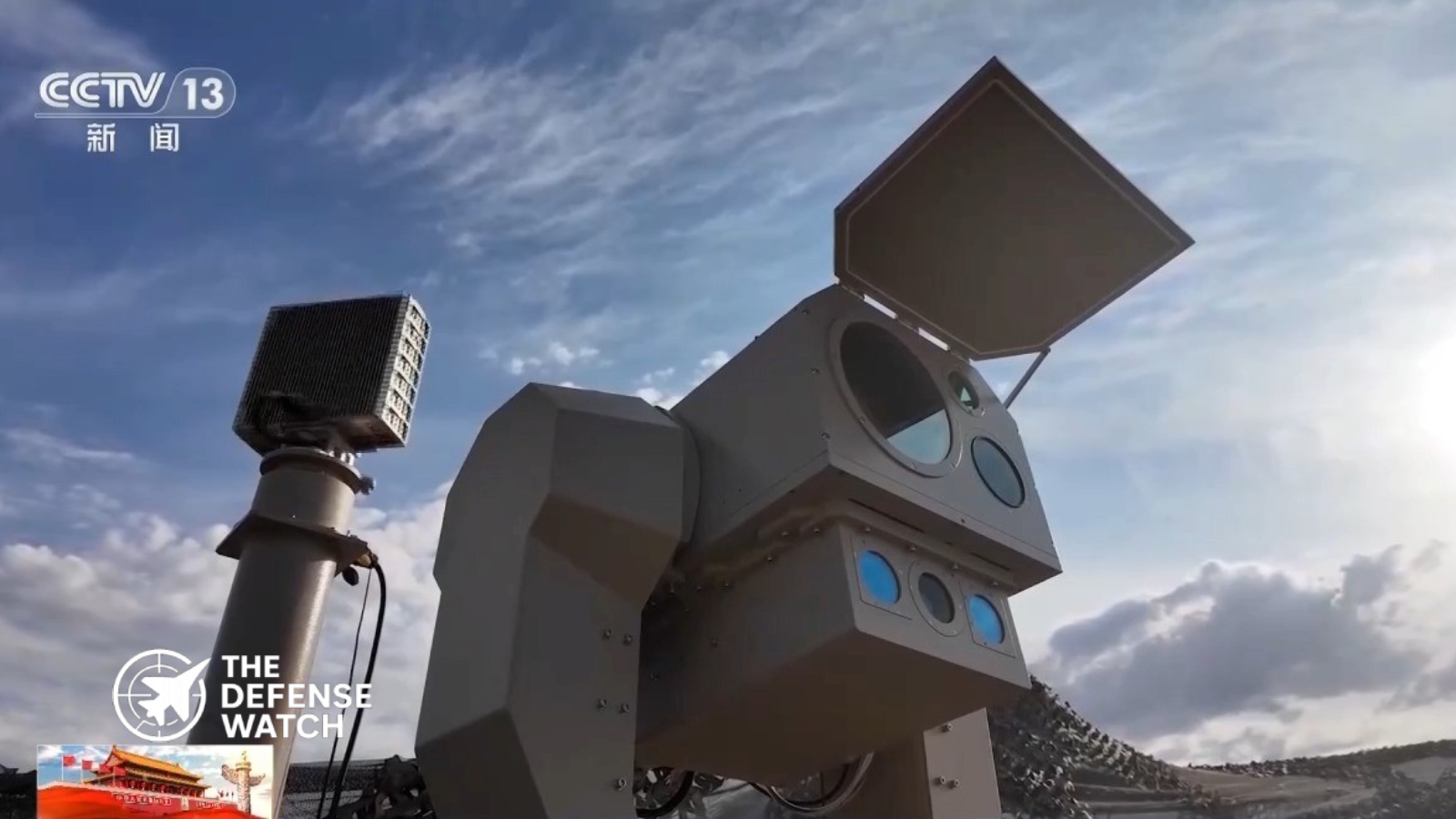
RapidDestroyer uses high-power radio-frequency energy to disrupt or damage critical electronic components inside unmanned aerial vehicles (UAVs), such as flight controllers, receivers, and power systems. Unlike traditional jamming, it aims for a permanent “hard kill” effect, causing drones to malfunction or crash rather than simply losing command links.
Trial Details and System Upgrades
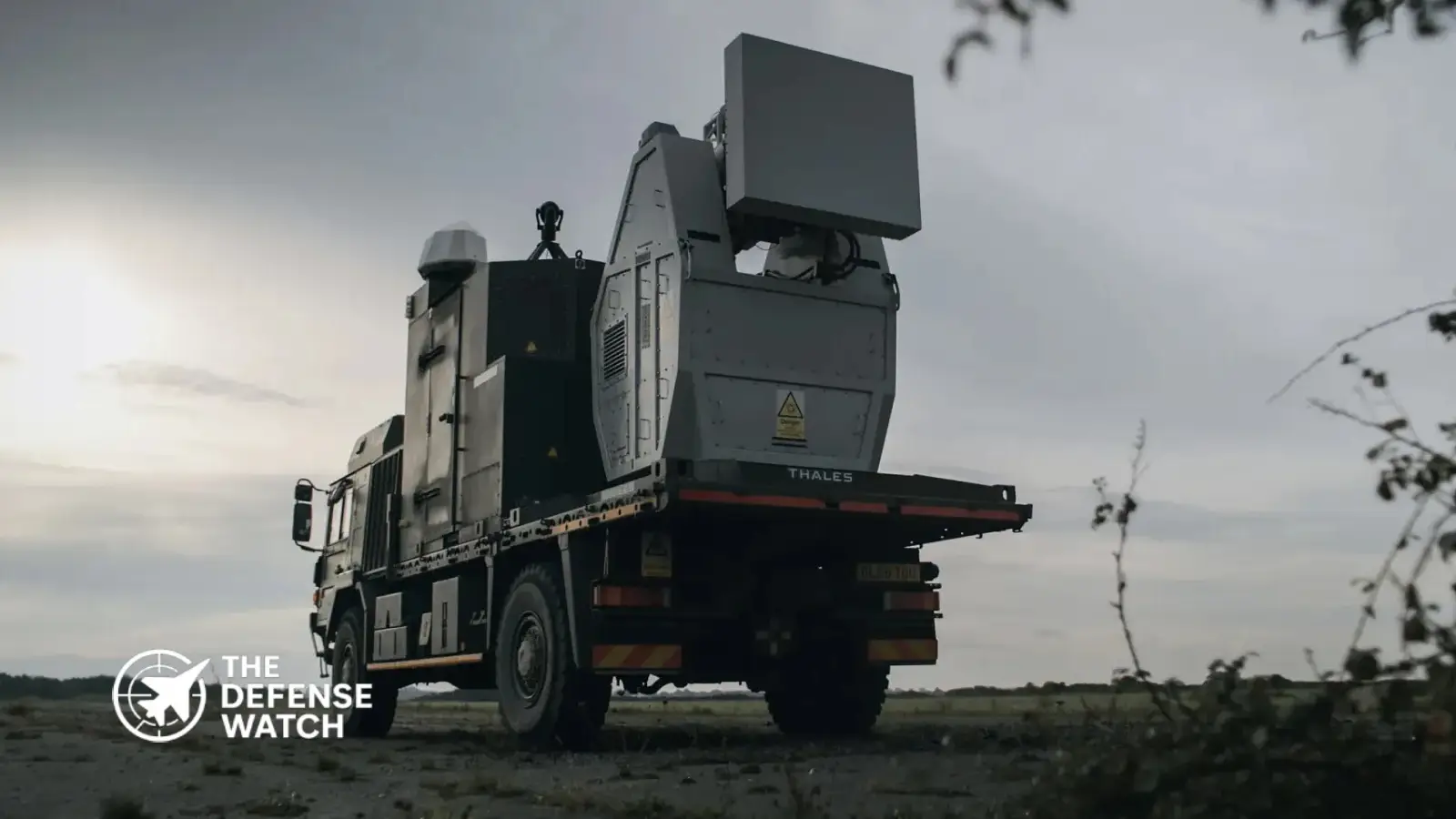
Conducted in April 2026 at Pershore, the trials featured an upgraded four-panel effector developed with Teledyne e2v. This configuration concentrates more energy on targets, improves beam focus, and extends effective range compared to earlier versions. Thales reported consistent, near-immediate defeats, reducing the likelihood of drones re-engaging.
These results build directly on prior testing. In 2024–2025 trials at locations including Manorbier range in Wales, the system tracked and defeated over 100 drones, including two swarms in a single engagement. The demonstrator, mounted on a truck chassis, was operated by British Army personnel from units like the Royal Artillery.
Public details on exact power levels, frequency bands, or specific drone types remain limited for security reasons. However, earlier Ministry of Defence statements noted engagement ranges up to approximately 1 km at a very low estimated cost of around 10 pence per shot—offering a significant economic advantage over expendable munitions for high-volume threats.
(adsbygoogle = window.adsbygoogle || []).push({});Strategic Context and Operational Role
Drone swarms and low-cost UAVs have proliferated in recent conflicts, challenging traditional air defenses. Systems like RapidDestroyer provide an inner-layer capability, complementing kinetic interceptors (missiles and guns), electronic warfare jamming, and longer-range sensors within integrated air and missile defense architectures.
Analysis: In an era of contested electromagnetic environments and massed low-altitude attacks, RF directed energy weapons address vulnerabilities that pure jamming cannot. Autonomous or frequency-hopping drones with inertial backups may shrug off signal denial, but a focused RF pulse can degrade onboard electronics directly. This makes RapidDestroyer a valuable addition to a multi-effector “kill web,” potentially preserving more expensive missiles for higher-value threats while handling volume attacks economically.
The UK’s investment aligns with broader NATO and allied efforts to modernize against peer and near-peer adversaries emphasizing unmanned systems. While not a standalone solution, pairing RFDEW with radars, command systems, and other effectors like those in Thales’ ForceShield concept enhances overall resilience. Limitations persist—such as potential reduced effectiveness against heavily shielded military-grade drones or in adverse weather—but iterative testing is closing performance gaps.
(adsbygoogle = window.adsbygoogle || []).push({});Development Background
RapidDestroyer stems from Project Ealing and the Team Hersa consortium, involving Thales UK, QinetiQ, Teledyne e2v, and Horiba Mira, supported by the UK Ministry of Defence’s Defence Equipment & Support (DE&S) and Defence Science and Technology Laboratory (Dstl). It represents over £40 million in prior investment and supports skilled jobs in the UK defense sector.
The system is positioned as both a standalone C-UAS tool and an integrable component in broader air defense setups. Further maturation could lead to deployment on mobile platforms for expeditionary forces or fixed-site protection of critical assets.
Implications for UK and Allied Defense
These trials underscore the UK’s commitment to technological edge in electronic warfare and directed energy. As global militaries observe drone tactics in ongoing conflicts, cost-per-engagement and magazine depth become critical metrics. RapidDestroyer’s approach offers high “depth of fire” against swarms without depleting physical munitions.
For U.S. readers and defense planners, the program provides insights into allied C-UAS innovation. American programs like the Army’s Indirect Fire Protection Capability and various DEW initiatives share similar goals of balancing kinetic and non-kinetic options. Transatlantic collaboration could accelerate fielding of complementary systems.
Feature Image Suggestion: High-resolution render or photo of the RapidDestroyer four-panel effector deployed in field trials, with drone targets in background if available, emphasizing mobility and technology.
Conclusion
The successful neutralization of 80 drones in the latest RapidDestroyer trials represents tangible progress in the UK’s counter-UAS strategy. While development continues, the system demonstrates the potential of radio-frequency directed energy as a practical, affordable layer in defending against evolving aerial threats. The British Army and Thales UK are advancing capabilities that could shape future operational concepts for NATO forces.