U.S. Air Force Completes Operational Testing Of Anduril’s YFQ-44A Autonomous Drone Wingman
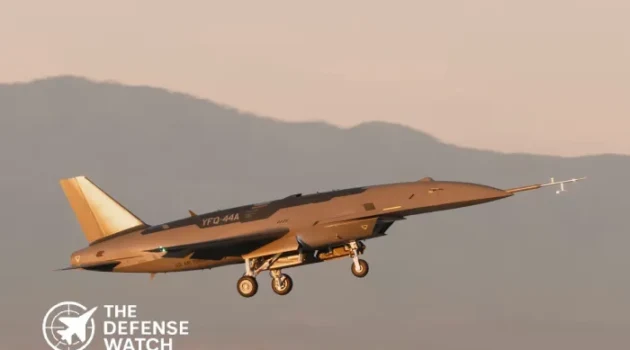
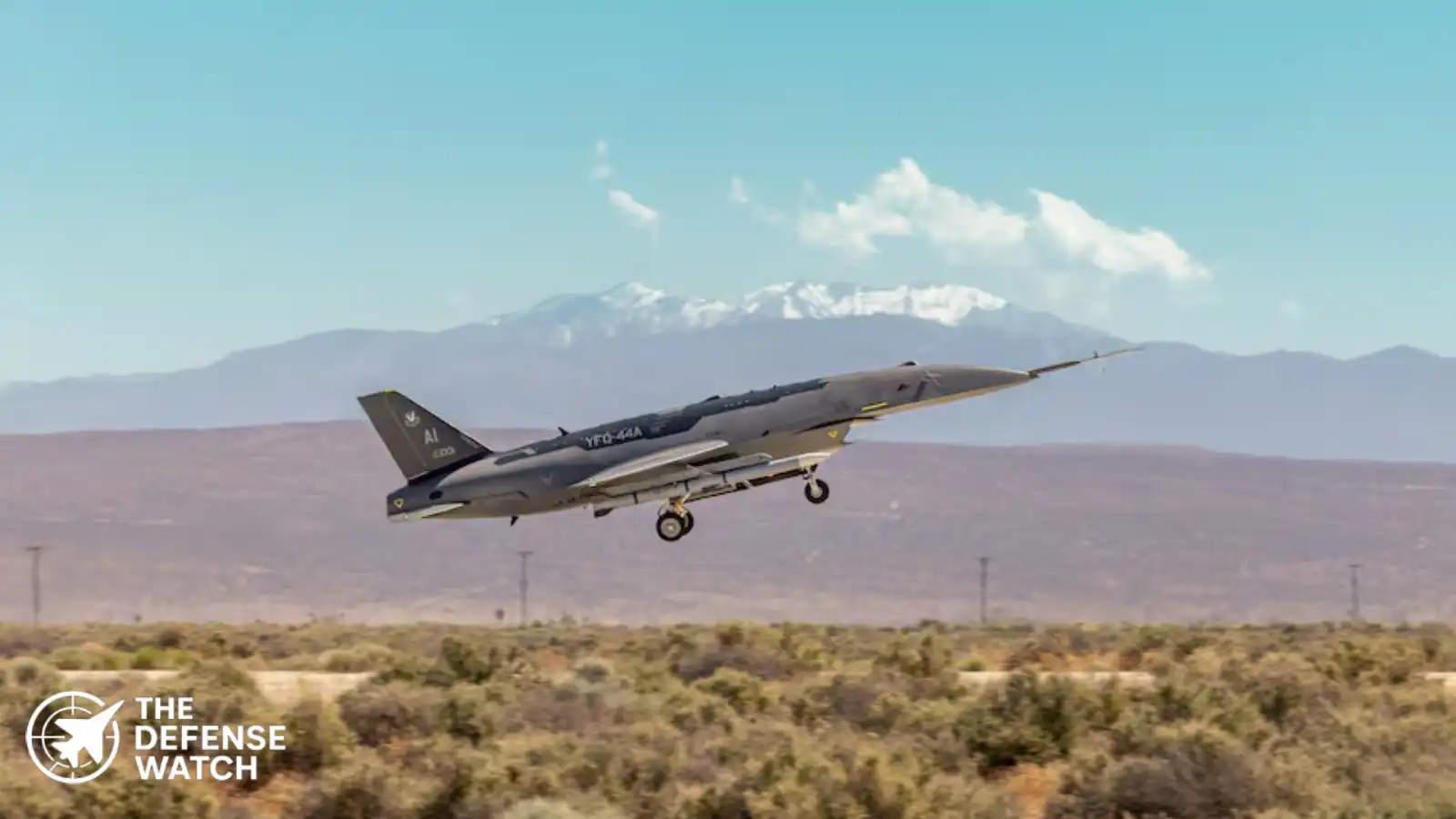
The U.S. Air Force has completed a significant operational test of Anduril’s YFQ-44A Fury — a semiautonomous, jet-powered Collaborative Combat Aircraft (CCA) — marking one of the most concrete demonstrations yet of the service’s push toward autonomous warfighting capabilities.
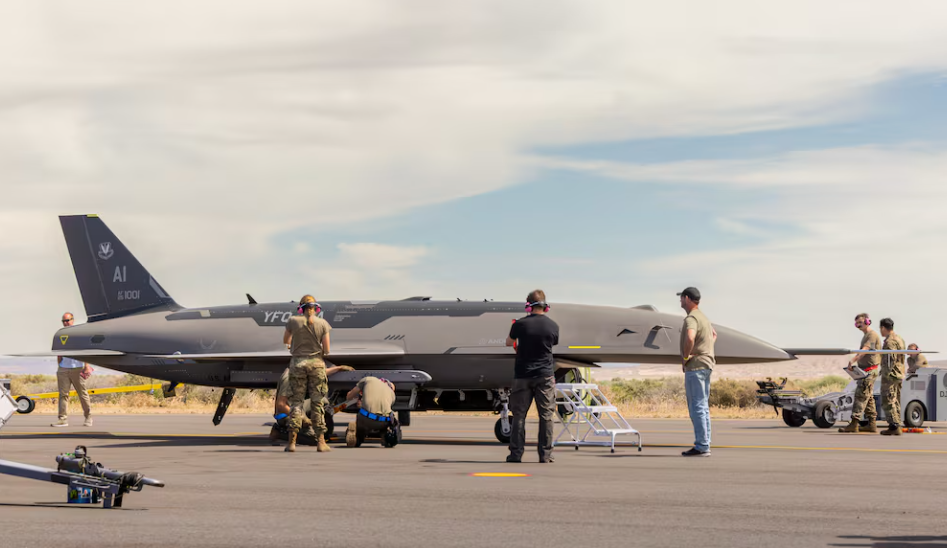
The Air Force’s Experimental Operations Unit (EOU), working alongside Air Force Materiel Command’s 412th Test Wing, conducted the exercise at Edwards Air Force Base, California, during the week of April 14, 2026. The test was confirmed in an official Air Force release on April 17 and corroborated by Anduril Vice President of Autonomous Airpower Mark Shushnar via social media.
- The U.S. Air Force’s Experimental Operations Unit conducted live sorties with Anduril’s YFQ-44A Fury semiautonomous combat drone at Edwards Air Force Base, California, in mid-April 2026.
- Operators used a ruggedized laptop — eliminating the need for fixed base infrastructure — to upload mission plans, initiate autonomous taxi and takeoff, and manage in-flight tasking.
- The YFQ-44A requires no traditional stick-and-throttle operator; the aircraft operates semiautonomously once mission parameters are uploaded.
- A small crew of EOU maintainers — with only a couple days of training — turned the aircraft between multiple sorties, demonstrating rapid-deployment potential.
- The Air Force has stated a goal of fielding a fleet of at least 1,000 Collaborative Combat Aircraft for strike, operational, and manned-unmanned teaming missions.
The exercise is more than a routine test flight. It represents a deliberate strategic and doctrinal shift in how the U.S. military intends to fight and sustain air combat operations in future high-threat environments.
No Stick. No Throttle. No Fixed Base Required.
Perhaps the most operationally significant aspect of the test was how it was executed: entirely without a traditional remote pilot.
“There is no operator with a stick and throttle flying the aircraft behind the scenes,” Jason Levin, Anduril’s Senior Vice President of Engineering for Air Dominance and Strike, stated in an October 2025 company release. That philosophy was put into practice at Edwards AFB.
EOU operators used a ruggedized laptop to upload mission plans, initiate autonomous taxi and takeoff, assign in-flight tasks to the aircraft, and handle post-flight data collection. The portable command setup eliminates the need for the large, established infrastructure that has historically anchored unmanned operations to fixed bases — a critical advantage if the United States ever faces a peer adversary capable of striking forward installations.
The implications are significant. A force that can launch, operate, and recover semiautonomous combat aircraft from austere or expeditionary environments dramatically changes the calculus for contested airspace operations against adversaries such as China or a reconstituted regional power.
Small Crew, Fast Turnaround
Another element of the test that drew attention was the YFQ-44A’s ease of maintenance and rapid turnaround between sorties.
Shushnar noted that a handful of EOU maintainers, with only a few days of training, successfully turned the aircraft between sorties — a notable contrast to the complex, crew-intensive logistics traditionally associated with unmanned combat aircraft.
The YFQ-44A Fury was specifically designed for low logistics burden. This quality is central to the Air Force’s vision of deploying CCAs in large numbers across distributed, potentially austere locations in the Pacific theater or other contested regions where traditional air support chains may be degraded or disrupted.
What Is The Collaborative Combat Aircraft Program?
The CCA program is one of the Air Force’s highest-priority modernization efforts. Conceived as a drone wingman concept, CCAs are intended to fly alongside crewed fighters — including the F-22, F-35, and the newly revealed F-47 — to extend their reach, absorb risk, and multiply combat mass without placing additional human pilots in harm’s way.
The Air Force announced in April 2024 that Anduril Industries and General Atomics had each been selected to develop competing CCA designs under the program’s initial increment. Anduril began flight testing its YFQ-44A in October 2025 and moved into production announcements in March 2026. General Atomics, competing with its own design, began ground testing in May 2025.
The service has stated a long-term objective of fielding at least 1,000 CCAs. These aircraft are envisioned to serve in a range of roles: conducting strike missions autonomously, executing suppression of enemy air defenses, carrying electronic warfare payloads, and flying in coordinated formations with manned aircraft.
However, the Air Force has indicated it may ultimately select only one of the two competing designs for the full production phase. That decision is expected sometime in 2026.
A New Acquisition Model: Operators First
Beyond the technology itself, the April exercise reflected a broader cultural and institutional shift in how the Air Force is approaching acquisition.
Col. Timothy Helfrich, Portfolio Acquisition Executive for Fighters and Advanced Aircraft, stated in the official release that embedding operators with acquisition professionals creates “a tight feedback loop that lets us trade operational risk with acquisition risk in real-time.”

This approach — termed the Warfighting Acquisition System — places front-line operators at the center of the development and testing process rather than treating them as end-users who receive a finished product. The EOU was designed precisely for this role: to inject warfighter feedback into programs while they are still actively being developed and refined.
By executing the entire exercise — from pre-flight checks and weapons loading to autonomous flight tasking and post-flight data review — EOU airmen effectively stress-tested both the aircraft and the operational doctrine surrounding it simultaneously. This compressed feedback loop is intended to accelerate the pace at which capable systems reach operational units.
Strategic Context: Autonomous Airpower And The Pacing Threat
The timing of these tests is not incidental. The United States Air Force is under sustained pressure to modernize faster, particularly in light of China’s rapid fielding of advanced combat aircraft and its own investments in unmanned systems.
The People’s Liberation Army Air Force has significantly expanded its inventory of advanced fighters and is actively developing its own loyal wingman and unmanned combat air vehicle programs. In this environment, the Air Force’s ability to field a large, affordable, expendable combat mass — represented by platforms like the YFQ-44A — is seen as a strategic hedge against a numerically and geographically challenging adversary.
CCAs are not intended to replace manned fighters. Rather, they serve as force multipliers: expanding the sensor coverage, strike range, and survivability of crewed aircraft while absorbing attrition that would otherwise reduce the irreplaceable human talent within the force.
What Comes Next
With sorties now under the EOU’s belt, the Air Force is expected to accelerate the CCA development timeline. The service’s decision on which company — Anduril or General Atomics — advances to the production phase remains the central near-term milestone.
Anduril’s March 2026 production announcement and the recent operational testing give the company visible momentum. However, General Atomics’ experience with platforms such as the MQ-9 Reaper and its established Air Force relationships make any outcome competitive.
The broader Collaborative Combat Aircraft program, meanwhile, is being closely watched by allied nations. Australia has expressed interest in similar autonomous wingman concepts through its own Loyal Wingman program — now known as the MQ-28 Ghost Bat — developed with Boeing. The U.S. Air Force’s CCA advances may further shape interoperability requirements with key Indo-Pacific partners.