

(adsbygoogle = window.adsbygoogle || []).push({});Executive Summary:
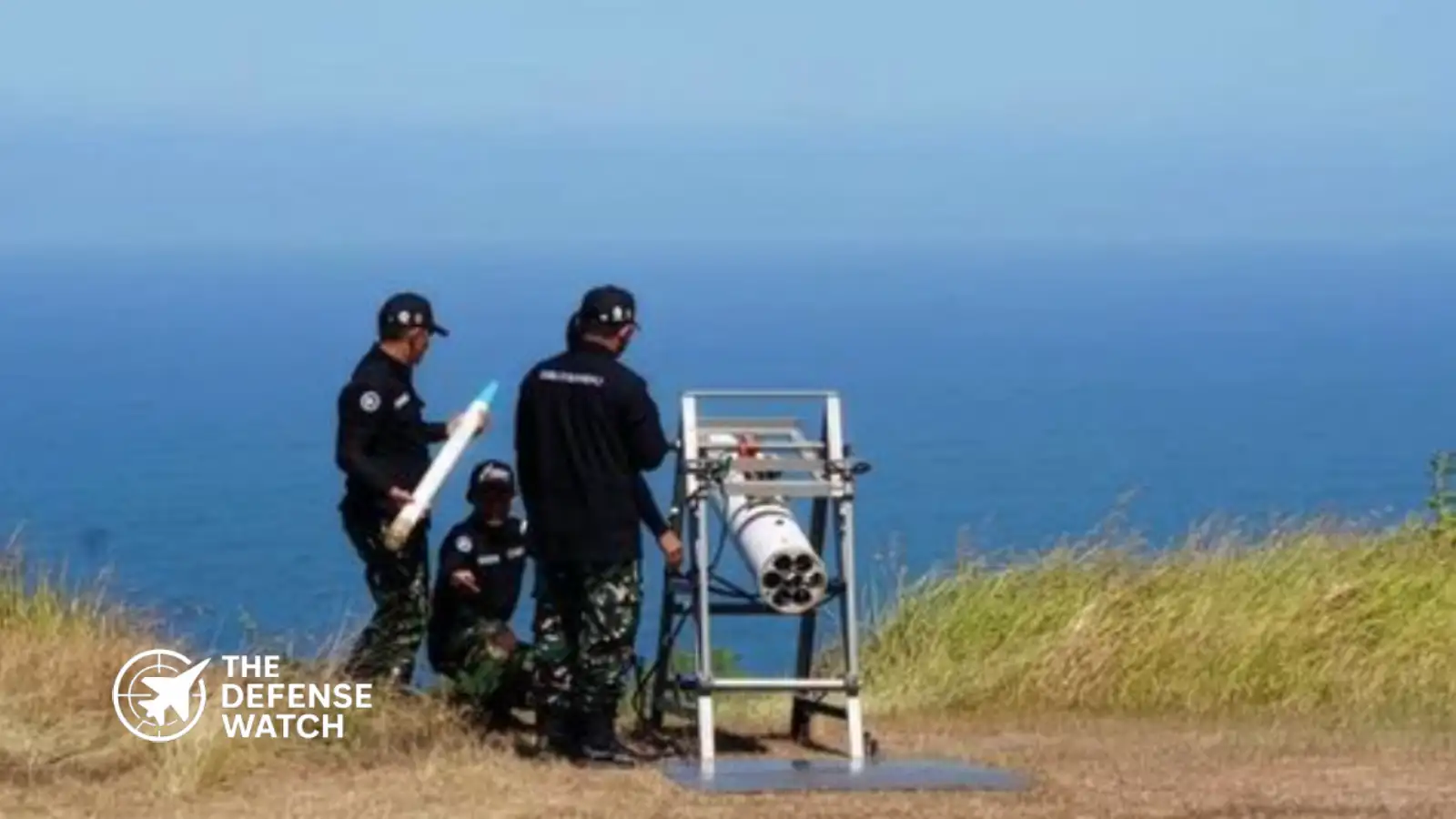
The Indonesian Air Force (TNI AU) conducted a successful test firing of the domestically produced Wrap Around Fin Aerial Rocket (WAFAR) RD-702 on June 18, 2026, at the Nanggala Shooting Range in East Java. Developed by PT Dirgantara Indonesia (PTDI), the 70mm unguided rocket supports the service’s Research and Development Directorate in evaluating launch reliability, flight characteristics, and system effectiveness as part of national certification efforts. This trial underscores Indonesia’s ongoing push toward defense industrialization and reduced reliance on foreign munitions under its broader military modernization objectives.
The Indonesian Air Force has test-fired the WAFAR RD-702 rocket, a key milestone in the development of indigenous air-launched munitions by PT Dirgantara Indonesia.
The test, announced by the TNI AU on June 29, 2026, involved personnel from the service’s Research and Development Directorate (Dislitbangau) and focused on a practice variant of the 70mm caliber rocket. It aligns with Indonesia’s long-term strategy to build self-sufficient defense capabilities amid regional security dynamics in Southeast Asia.
Test Details and Objectives
According to official statements, the firing demonstration at Nanggala Range assessed critical performance parameters, including launch reliability, in-flight stability, and overall system effectiveness.
Dislitbangau officials emphasized safety protocols and thorough documentation, with results slated for evaluation to inform subsequent development phases. The WAFAR RD-702 is designed for high flexibility and integration with various aerial platforms, including attack helicopters and fighter aircraft operated by the TNI AU.
Technical Context: WAFAR vs. Traditional FFAR
PTDI has a decades-long history with 70mm rockets, beginning licensed production of Folding Fin Aerial Rockets (FFAR) from Belgium’s Forges de Zeebrugge (FZ) in the 1980s. The company has delivered tens of thousands of units, including Mk 40 and Mk 4 variants.
WAFAR designs, such as the RD-702, feature wrap-around fins that deploy sideways upon launch, differing from traditional forward-folding fins. This configuration, similar to aspects of the U.S. Hydra 70 family, typically provides improved spin stabilization and compatibility with modern launchers while maintaining a compact profile for pod or tube integration.
Specific performance data for the RD-702, including exact range, warhead options, or potential guidance features, remain undisclosed by PTDI and the TNI AU. Earlier related motor certifications (e.g., RD-702 motor in 2021) indicate ongoing maturation of the propulsion system.
atOptions = { ‘key’ : ‘e7d18db8b7513fb2a224cf4c3f18bbf0’, ‘format’ : ‘iframe’, ‘height’ : 90, ‘width’ : 728, ‘params’ : {} };Key Characteristics of PTDI 70mm Rocket Family (Based on Available Data):
- Caliber: 70 mm (2.75 inch)
- Variants: Includes FFAR (e.g., RD-701 series) and WAFAR (RD-702, RD-7011)
- Platforms: Helicopters and fixed-wing aircraft
- Heritage: Licensed FZ technology with increasing domestic content (TKDN 20-40%)
Strategic Importance for Indonesian Defense Modernization
This test occurs within Indonesia’s Minimum Essential Force (MEF) framework, which seeks to develop credible conventional deterrence for an archipelagic nation. While MEF targets have faced delays due to budget constraints, domestic industry involvement remains a priority for technology transfer and self-reliance.
For the TNI AU, which operates a mixed fleet including F-16 variants, Su-27/30 family aircraft, Hawk trainers, and various helicopters (such as H225M and NAS 332), affordable, locally supported air-to-ground munitions enhance operational flexibility for maritime security, counter-insurgency, and territorial defense roles.
Operational Implications:
- Cost and Logistics: Domestic production reduces dependency on imports and simplifies sustainment.
- Export Potential: PTDI has marketed 70mm rockets regionally, including to Malaysia for CN-235 platforms.
- Force Multiplication: Unguided rockets provide volume fire support complementary to precision-guided munitions in lower-intensity scenarios.
Analysis: Implications for U.S. and Regional Defense Posture
From a U.S. perspective, Indonesia’s progress in indigenous munitions development reflects broader trends in Southeast Asian states seeking diversified supply chains. While not directly competing with advanced U.S. systems like the Hydra 70 or APKWS guided rockets in high-end capabilities, it strengthens a key partner nation in the Indo-Pacific.
Indonesia’s archipelagic geography demands robust air and maritime patrol capabilities. Reliable, integrable rockets for existing platforms can improve close air support without immediate requirements for expensive new weapon systems. However, challenges remain in achieving consistent precision, warhead lethality, and integration with modern fire-control systems—areas where further collaboration with established partners could accelerate progress.
This development also signals maturing synergies between Indonesia’s state-owned aerospace sector (PTDI) and the armed forces, potentially positioning the country as a modest exporter of basic aerial ordnance in the region.
Future Outlook
Results from the Nanggala test will guide refinements ahead of potential full operational certification and integration. Continued investment in guided derivatives, as hinted in broader PTDI portfolios (e.g., Merah Putih guided rockets), could mark the next evolution.
As Indonesia pursues post-MEF goals toward more optimal force structures, such incremental advancements in conventional weapons bolster overall deterrence and industrial resilience.
