

Executive Summary:
Ukraine launched a large-scale overnight drone offensive against Russian energy infrastructure after a temporary ceasefire expired. Russian authorities said 286 drones were intercepted, but several strategic gas and oil facilities still suffered fires and operational disruptions.
The attacks highlight Kyiv’s expanding long-range strike capability and its growing focus on economic and energy targets deep inside Russian territory.
Ukraine Drone Attacks Russia After Ceasefire Breakdown
Ukraine drone attacks on Russia intensified Wednesday as Kyiv resumed long-range strikes against Russian energy infrastructure following the expiration of a three-day ceasefire proposed by U.S. President Donald Trump.
Russia’s Ministry of Defense said air defenses intercepted and destroyed 286 Ukrainian drones overnight across multiple regions and over the Black Sea. Despite the large interception count, several energy-related facilities reported fires or damage after debris and possible direct impacts.
The renewed strikes mark one of the largest coordinated Ukrainian drone operations against Russian territory in recent months and signal a continuation of Kyiv’s strategy of targeting critical economic infrastructure far from the front lines.
Astrakhan Gas Processing Plant Hit
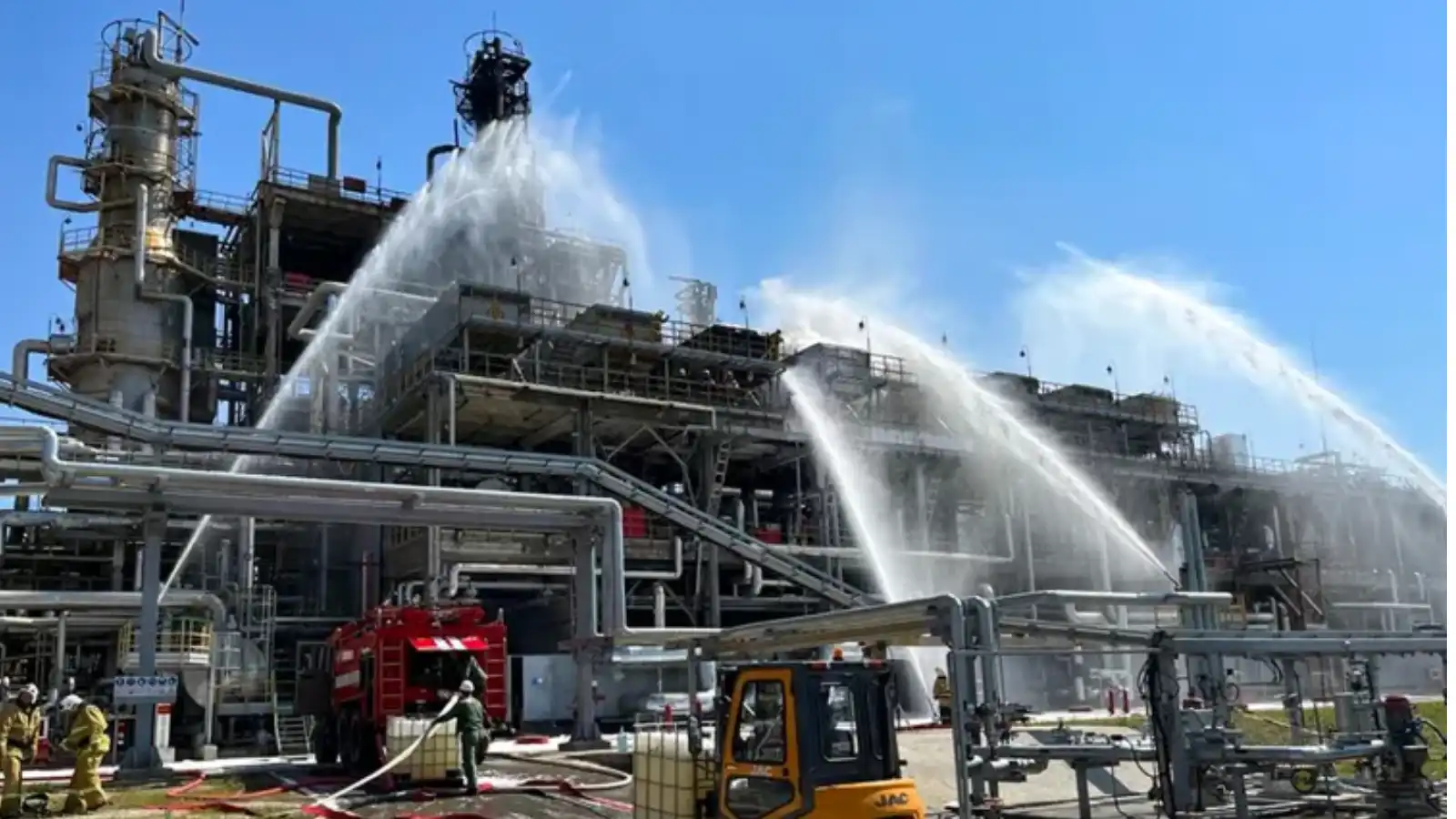
One of the most significant incidents occurred in Russia’s Astrakhan region, where debris from intercepted drones reportedly caused a fire at the Astrakhan gas processing plant operated by Gazprom.
The facility is one of Russia’s largest sulfur production sites and plays a role in the country’s broader gas processing network. Regional authorities stated there were no casualties.
The plant sits roughly 1,000 kilometers from the Ukrainian border and has previously been targeted during the conflict. A September 2025 drone strike reportedly forced a temporary suspension of fuel production operations for several weeks.
The repeated targeting of the same facility suggests Ukraine is focusing not only on symbolic strikes, but also on degrading infrastructure linked to Russia’s energy export and industrial capacity.
Orenburg Strike Demonstrates Expanded Reach
Ukraine also struck a gas industry facility in Russia’s Orenburg Oblast, located more than 1,500 kilometers from Ukrainian territory.
Ukrainian President Volodymyr Zelensky publicly confirmed the attack during an evening address, describing the operation as part of a “mirror response” strategy against Russian strikes on Ukrainian infrastructure.
According to Zelensky, the operation demonstrated that Ukrainian long-range drone systems can reach strategic targets deep inside Russia’s interior.
The strike is notable because Orenburg lies far beyond the areas traditionally vulnerable to short-range cross-border attacks. The operation reflects continued improvements in Ukraine’s domestically developed unmanned strike systems, including longer-range drones capable of bypassing layered Russian air defenses.
Additional Fires Reported In Krasnodar And Bashkortostan
Russian regional officials also reported fires near the Taman port area in Krasnodar Krai and at a Transneft-linked oil transport facility in Bashkortostan.
Authorities did not immediately confirm whether those fires resulted directly from drone impacts or falling debris from interceptions.
The Taman area is strategically important because of its proximity to Black Sea export routes and energy logistics infrastructure. Meanwhile, Transneft facilities are critical to Russia’s domestic and export oil transport network.
Although the full operational impact remains unclear, repeated attacks on dispersed energy nodes increase pressure on Russian repair capacity, air defense allocation, and infrastructure resilience.
Ukraine Expands Strategic Drone Warfare
The latest Ukraine drone attacks reflect a broader shift in Kyiv’s military strategy toward sustained deep-strike operations.
Over the past year, Ukraine has increasingly relied on domestically produced long-range drones to target oil depots, refineries, gas facilities, logistics hubs, and military airfields inside Russia.
These attacks serve several objectives:
- Disrupting fuel and logistics supply chains
- Raising the economic cost of the war for Moscow
- Forcing Russia to disperse air defense systems
- Demonstrating Ukraine’s ability to strike strategic targets at long distances
Unlike cruise missiles, long-range drones are cheaper to produce and can be deployed in large numbers simultaneously, complicating defensive interception efforts.
The reported 286-drone barrage indicates Ukraine is now capable of conducting saturation-style operations designed to overwhelm Russian air defense networks through volume and geographic dispersion.
Russian Air Defenses Face Persistent Pressure
Russia continues to claim high interception rates against Ukrainian drones, but the frequency of successful strikes suggests vulnerabilities remain in protecting widely distributed infrastructure.
Defending energy facilities across Russia’s vast territory presents a major operational challenge. Critical oil and gas sites are often located far from primary military defense zones, requiring Moscow to stretch radar coverage and interceptor systems across multiple regions.
The growing range of Ukrainian drones also reduces Russia’s strategic depth advantage, allowing attacks on targets previously considered relatively secure.
Military analysts increasingly view the long-range drone campaign as an economic warfare effort intended to gradually erode Russia’s industrial and energy resilience rather than achieve immediate battlefield gains.
Ceasefire Collapse Signals Renewed Escalation
The latest strikes came shortly after the expiration of a temporary ceasefire initiative proposed by U.S. President Donald Trump.
The collapse of the pause in hostilities appears to have triggered a rapid return to long-range attacks by both sides.
Ukraine’s framing of the strikes as “long-range sanctions” underscores Kyiv’s intent to use drone warfare not only for military effect, but also as a strategic pressure mechanism against Russia’s wartime economy.
With both countries continuing to expand drone production and long-range strike capabilities, infrastructure attacks are likely to remain a defining feature of the conflict throughout 2026.
