Executive Summary:
Huntington Ingalls Industries Fleet Support Group has received a $220.6 million U.S. Navy contract modification to provide engineering maintenance support for aircraft carriers and west coast surface ships. The award strengthens fleet readiness efforts as the Navy continues to sustain high operational demands across global deployments.
Huntington Ingalls Secures Major Navy Maintenance Contract
Huntington Ingalls Industries subsidiary Huntington Ingalls Industries Fleet Support Group (HII-FSG) has been awarded a $220,654,563 cost-plus-fixed-fee contract modification by the Naval Sea Systems Command to support maintenance operations for U.S. Navy aircraft carriers and surface combatants.
The modification expands work under a previously awarded indefinite-delivery/indefinite-quantity contract, identified as N00024-21-D-4114. The agreement covers engineering maintenance assist teams supporting overhaul, repair, and maintenance planning activities tied to critical Navy systems and equipment.
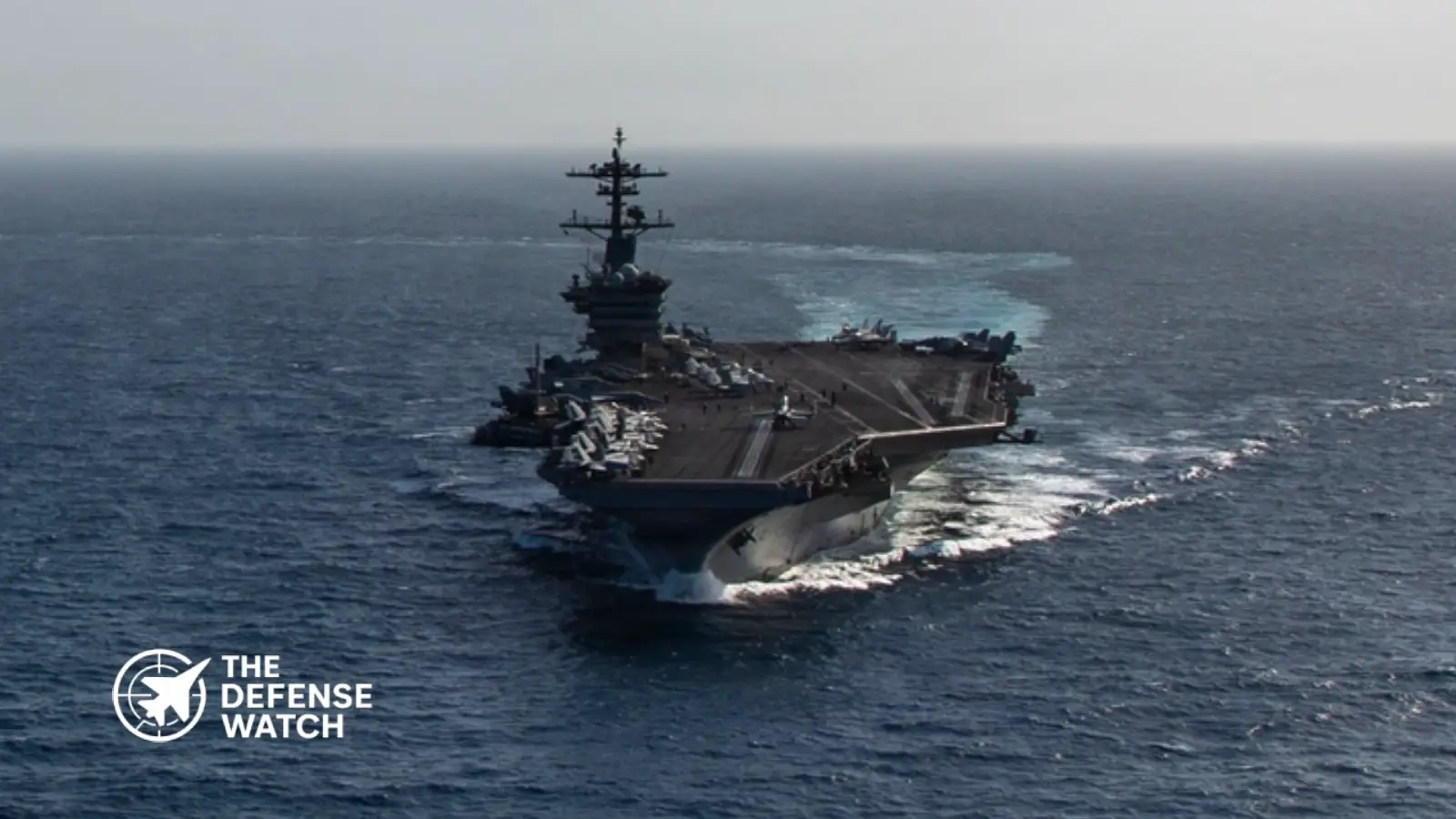
According to the Department of Defense contract announcement, the work will support Navy aircraft carriers operating both within and outside the continental United States, including forward-deployed operational areas.
The contract is expected to run through February 2027.
Focus On Aircraft Carrier And Surface Fleet Readiness
The Huntington Ingalls Navy contract highlights the growing importance of sustainment and readiness across the U.S. carrier fleet. While public attention often centers on new shipbuilding programs and next-generation naval weapons, maintenance availability remains one of the most decisive factors affecting operational readiness.
The contract specifically supports engineering maintenance assist teams for both aircraft carriers and west coast Navy surface ships. These teams provide technical expertise during overhaul periods, troubleshoot complex shipboard systems, and assist in long-term maintenance planning.
Aircraft carriers remain among the most maintenance-intensive assets in the U.S. military inventory. Nuclear propulsion systems, catapults, arresting gear, radar suites, combat systems, and aviation support infrastructure require continuous inspection and modernization cycles to maintain deployment readiness.
The Navy has faced persistent challenges in recent years related to delayed maintenance availabilities at public shipyards, workforce shortages, and increasing operational demand in both the Indo-Pacific and Middle East regions. Expanding contractor-based maintenance support helps alleviate pressure on Navy infrastructure while accelerating repair timelines.
Strategic Importance Of Fleet Sustainment
The Huntington Ingalls Navy contract also reflects a broader Pentagon focus on sustainment as a core element of naval strategy.
The U.S. Navy is attempting to balance force expansion goals with the realities of maintaining an aging fleet under elevated deployment tempos. Carrier strike groups continue to operate at high frequency across multiple theaters, including deterrence missions in the Indo-Pacific and maritime security operations in the Red Sea and Persian Gulf.
Engineering support contracts such as this one are increasingly critical because maintenance delays can directly affect force availability. Several Navy vessels in recent years have experienced extended shipyard periods that reduced operational capacity and strained deployment schedules.
By supporting maintenance planning and technical execution, HII-FSG will help the Navy sustain operational tempo while improving long-term fleet readiness.
Huntington Ingalls’ Expanding Role In Naval Sustainment
Huntington Ingalls Industries is already one of the central industrial players supporting the U.S. Navy’s carrier and surface warfare fleet.
The company is best known as the builder of America’s nuclear-powered aircraft carriers through its Newport News Shipbuilding division, the only U.S. shipyard capable of constructing and refueling nuclear aircraft carriers. Beyond shipbuilding, Huntington Ingalls has steadily expanded its sustainment and lifecycle support operations across multiple Navy platforms.
Its Fleet Support Group provides technical services ranging from engineering assistance and maintenance planning to logistics and modernization support.
This latest award reinforces the company’s position within the Navy’s long-term sustainment ecosystem, particularly as the service prioritizes fleet availability amid growing strategic competition with China and continued global maritime commitments.
Contract Structure And Funding Details
The Navy structured the award as a cost-plus-fixed-fee indefinite-delivery/indefinite-quantity modification. Under this model, specific work assignments and funding obligations are issued incrementally through individual task orders.
No funds were obligated at the time of the award announcement, according to the Department of Defense.
This contracting approach gives the Navy flexibility to allocate maintenance support resources based on operational priorities, deployment schedules, and evolving fleet requirements.
Work under the contract will take place aboard Navy aircraft carriers across domestic bases, overseas locations, and forward-deployed operating areas.
Why The Contract Matters
The Huntington Ingalls Navy contract underscores a growing reality for modern naval forces: fleet sustainment is becoming as strategically important as new platform procurement.
As the Navy pushes to maintain a credible global presence against increasingly capable rivals, maintaining carrier strike groups and surface fleets at high readiness levels has become essential to deterrence operations.
Maintenance contracts may receive less public attention than ship launches or weapons acquisitions, but they directly determine how many vessels are available for combat operations at any given time.
For the Navy, improving readiness rates through sustained engineering support could prove just as important as expanding fleet size over the coming decade.