

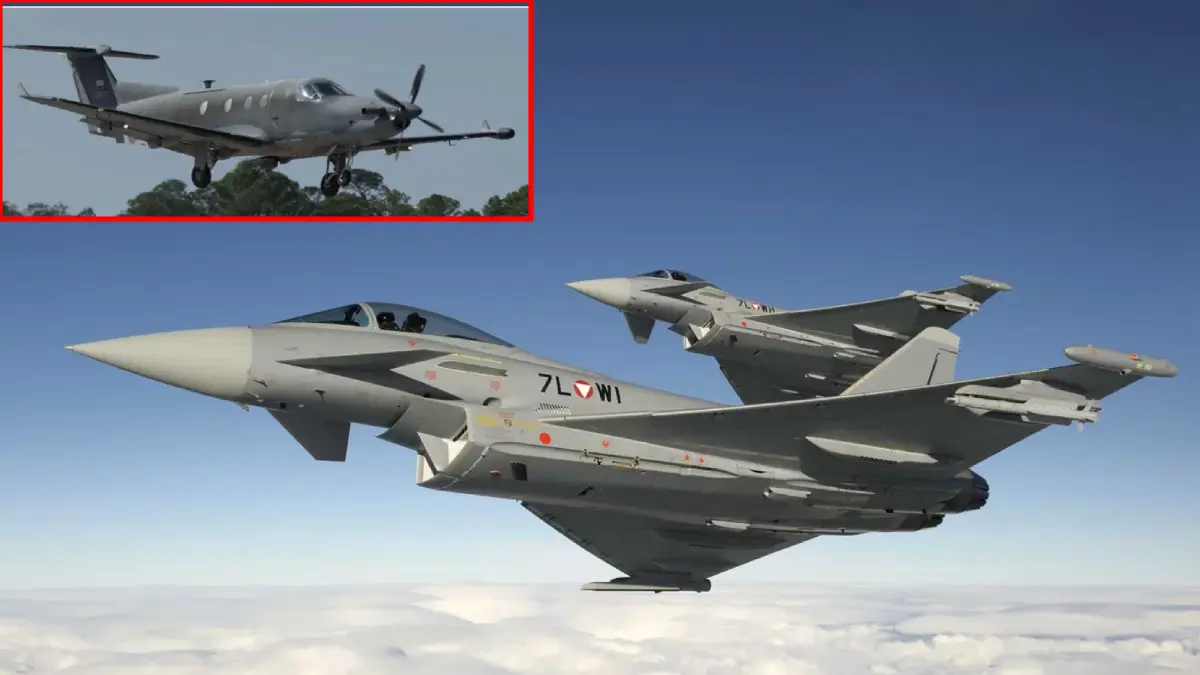
Executive Summary:
RS-Intercept has expanded its intelligence, surveillance, and reconnaissance fleet through the acquisition of former U.S. Air Force U-28A Draco and PC-12 aircraft. The move highlights growing demand for adaptable ISR platforms capable of supporting government, defense, and special mission operations.
RS-Intercept Expands ISR Fleet With USAF U-28A Draco And PC-12 Aircraft
RS-Intercept’s acquisition of former USAF U-28A Draco and PC-12 aircraft marks another step in the growing secondary market for proven intelligence, surveillance, and reconnaissance platforms. The aircraft, previously associated with U.S. Air Force special operations missions, are expected to support a range of airborne ISR and special mission roles.
The U-28A Draco is a militarized variant of the Pilatus PC-12 aircraft and has long served within U.S. Special Operations Command. The aircraft is widely recognized for supporting intelligence gathering, battlefield surveillance, target tracking, and personnel recovery missions in contested and remote operating environments.
The acquisition reflects a broader trend in which private defense aviation companies increasingly seek retired military ISR aircraft to support government agencies, partner nations, and contractor-operated missions.
Why The U-28A Draco Remains Relevant
The U-28A Draco remains one of the most versatile light ISR aircraft in service history. Operated primarily by the U.S. Air Force Special Operations Command (AFSOC), the platform gained prominence during operations in the Middle East, Africa, and other irregular warfare environments.
Unlike larger surveillance aircraft, the U-28A combines low operating costs with the ability to deploy rapidly from austere airfields. The aircraft can carry advanced electro-optical and infrared sensor systems, secure communications equipment, and mission-specific surveillance payloads.
Its endurance and flexibility made it particularly valuable during counterterrorism operations, where persistent airborne surveillance was required without deploying larger and more expensive aircraft.
The PC-12 platform itself has established a strong reputation globally for reliability, long endurance, and operational flexibility. Multiple military and law enforcement organizations use modified PC-12 aircraft for border security, maritime patrol, ISR, and transport missions.
Growing Demand For Contractor-Operated ISR Aircraft
RS-Intercept’s expansion comes at a time when contractor-operated ISR services are becoming increasingly important across defense and security sectors.
Governments and military organizations are seeking cost-effective ISR solutions that can be deployed quickly without requiring large force structures. As a result, retired military aircraft with established operational records are attracting renewed interest.
Aircraft such as the U-28A Draco offer several advantages in this environment:
- Proven operational performance
- Existing logistics and maintenance knowledge
- Compatibility with ISR mission systems
- Lower procurement costs compared to new-build platforms
- Flexibility for both domestic and overseas missions
The transfer of former military aircraft into the commercial defense aviation market also reflects changing operational priorities. Many nations are focusing on persistent surveillance, border monitoring, maritime security, and irregular warfare support rather than relying solely on high-end combat aviation assets.
ISR Aircraft Continue To Shape Modern Operations
The demand for airborne ISR platforms has accelerated due to evolving security challenges, including regional instability, unmanned systems proliferation, and transnational threats.
Light surveillance aircraft remain particularly effective because they can sustain long-duration missions while operating at significantly lower costs than larger jet-powered ISR aircraft.
Platforms derived from civilian aircraft designs, including the Pilatus PC-12, are increasingly favored for missions requiring discretion, endurance, and operational efficiency.
Industry analysts note that the reuse of retired military ISR aircraft also shortens deployment timelines. Operators can integrate mission systems into proven airframes rather than waiting years for newly manufactured aircraft deliveries.
For RS-Intercept, the addition of the U-28A Draco and PC-12 aircraft likely strengthens its ability to support intelligence collection, airborne surveillance, training, and specialized aviation missions across multiple operational environments.
Strategic Significance Of The Acquisition
The acquisition underscores how ISR capabilities continue to play a central role in modern defense planning. Surveillance aircraft are now essential not only during major conflicts, but also in peacetime security operations, border enforcement, disaster response, and counter-smuggling missions.
Former U.S. military ISR aircraft remain especially attractive due to their combat-proven reliability and established mission pedigree.
The U-28A Draco, in particular, represents a platform with years of operational experience supporting special operations forces in demanding theaters. Its continued use outside direct military service demonstrates the long-term value of adaptable ISR aircraft in today’s security environment.
