Executive Summary:
The United Kingdom and France are advancing a multinational naval coalition to secure commercial shipping through the Strait of Hormuz amid rising regional tensions. Australia has confirmed support for the mission with an E-7A Wedgetail surveillance aircraft, while Britain is deploying HMS Dragon to the Middle East.
UK And France Expand Strait Of Hormuz Naval Mission
The Strait of Hormuz naval mission moved closer to operational deployment this week as the United Kingdom and France hosted a multinational defense meeting focused on protecting commercial shipping in the Gulf region.
British Defence Secretary John Healey and French Armed Forces Minister Catherine Vautrin jointly led the virtual conference, which included representatives from more than 40 countries discussing military contributions for a European-led maritime coalition.
The initiative comes amid increasing concern over shipping security in the Strait of Hormuz, a strategic chokepoint that handles a significant portion of global oil and liquefied natural gas exports. Iranian officials have warned against expanded foreign naval activity in the area, increasing geopolitical pressure around the proposed mission.
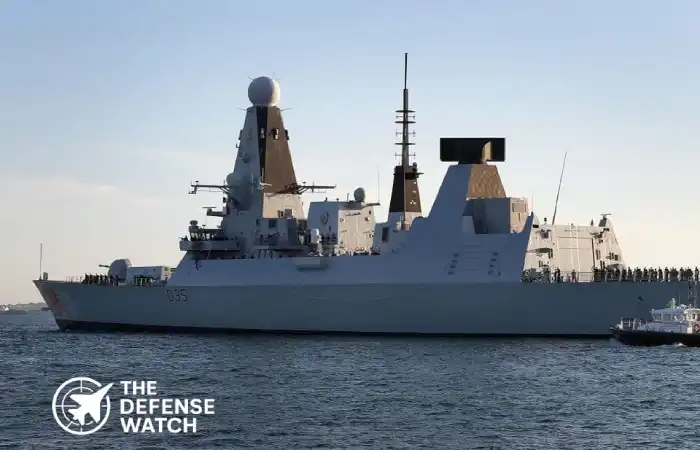
Britain confirmed that the Royal Navy will deploy the Type 45 destroyer HMS Dragon to the Middle East as part of advance planning for coalition operations. According to the UK Ministry of Defence, the deployment is intended to ensure readiness for future escort, surveillance, and maritime protection missions once coalition conditions are finalized.
Australia Commits E-7A Wedgetail Support
Australia formally joined the emerging coalition on Wednesday, adding airborne surveillance capability to the operation.
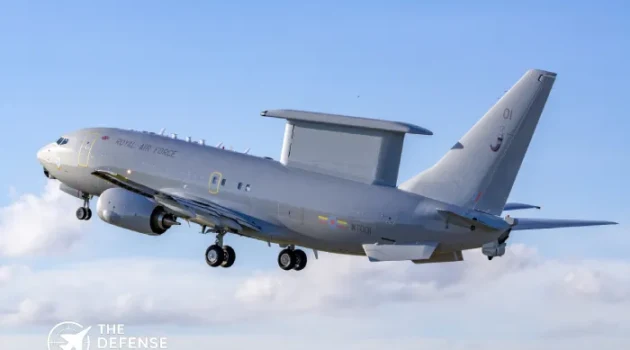
Australian Defence Minister Richard Marles confirmed that Canberra would support the mission using an Boeing E-7A Wedgetail aircraft already operating in the region.
The E-7A Wedgetail provides airborne command-and-control, long-range radar surveillance, and maritime tracking capabilities. Its inclusion strengthens the coalition’s ability to monitor commercial shipping traffic and detect potential threats across busy Gulf transit corridors.
Australia’s participation also highlights growing coordination between Indo-Pacific and European security partners on maritime stability issues beyond their immediate regions. Canberra has increasingly expanded its defense engagement in Middle Eastern maritime security operations over the past decade, particularly in support of freedom of navigation and commercial shipping protection.
European-Led Coalition Reflects Strategic Shift
The coalition effort originated during an April 17 summit in Paris hosted by French President Emmanuel Macron and British Prime Minister Keir Starmer.
At that meeting, leaders from 51 countries discussed establishing what officials described as an independent and strictly defensive multinational maritime mission. The stated objectives included:
- Protecting merchant shipping
- Reassuring commercial operators
- Conducting mine countermeasure operations
- Supporting maritime surveillance
Unlike previous U.S.-led Gulf security frameworks, the new initiative positions European powers as the central organizing force behind maritime protection efforts in the Strait of Hormuz.
That distinction carries strategic significance. European governments appear increasingly focused on demonstrating autonomous security coordination capabilities while maintaining operational interoperability with NATO partners and regional allies.
The mission’s defensive framing is also notable. Officials from both London and Paris have emphasized that the coalition is intended to prevent escalation while preserving international shipping access through one of the world’s most strategically sensitive waterways.
HMS Dragon Deployment Signals Operational Readiness
The deployment of HMS Dragon provides the coalition with advanced air-defense and maritime surveillance capability at an early stage.
The Type 45 destroyer is equipped with the Sea Viper air-defense system, designed to intercept aircraft and missile threats at long range. The platform also supports maritime security operations, escort missions, and integrated coalition command tasks.
For the Royal Navy, the deployment demonstrates Britain’s continued focus on maintaining a persistent maritime security presence east of Suez, particularly in areas affecting global trade and energy markets.
Operationally, naval escorts and airborne surveillance assets such as the Wedgetail are likely to become central components of coalition activity if tensions around Gulf shipping continue to rise.
The mission may also require mine countermeasure vessels, maritime patrol aircraft, and intelligence-sharing infrastructure to sustain long-term operations in the region.
Maritime Security Concerns Continue To Grow
The Strait of Hormuz remains one of the world’s most strategically important maritime chokepoints. Roughly one-fifth of globally traded petroleum passes through the narrow waterway connecting the Persian Gulf to the Arabian Sea.
Any disruption to commercial traffic can rapidly affect global energy prices, shipping insurance costs, and regional military stability.
Western governments have increasingly prioritized maritime domain awareness and convoy protection following repeated incidents involving commercial tankers and regional proxy activity in Gulf waters over recent years.
The latest coalition effort reflects a broader trend toward multinational maritime security frameworks designed to deter interference with commercial shipping while avoiding direct escalation with regional actors.
Defense analysts also note that the growing use of surveillance aircraft, drones, and networked naval operations highlights how maritime security missions are evolving into highly integrated multinational operations combining air, sea, and intelligence assets.
Strategic Implications For NATO And Regional Security
The UK-France initiative demonstrates how European powers are seeking greater leadership roles in maritime security operations beyond the European theater.
For NATO members, the operation offers an opportunity to strengthen coalition interoperability while addressing a critical global trade security issue. It also reinforces Britain and France’s status as Europe’s leading expeditionary naval powers following years of increased investment in carrier strike groups, maritime surveillance, and regional force projection.
Australia’s participation further broadens the coalition’s geopolitical footprint and underscores deepening security alignment between European and Indo-Pacific partners.
As planning continues, the coalition’s next challenge will be translating political commitments into a sustainable operational structure capable of maintaining persistent maritime security coverage in a high-risk environment.