Executive Summary:
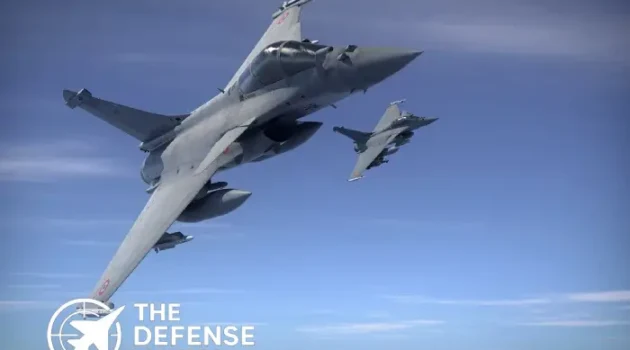
France has successfully demonstrated the first operational targeting trial in which the NAMIB unmanned aerial vehicle detected hostile radar emissions and transmitted targeting data to a Rafale F4 fighter conducting a Suppression of Enemy Air Defenses (SEAD) mission. The test marks an important milestone in French efforts to integrate unmanned electronic warfare systems with manned combat aircraft for future high-intensity operations.
French NAMIB Drone Demonstrates New SEAD Capability With Rafale F4
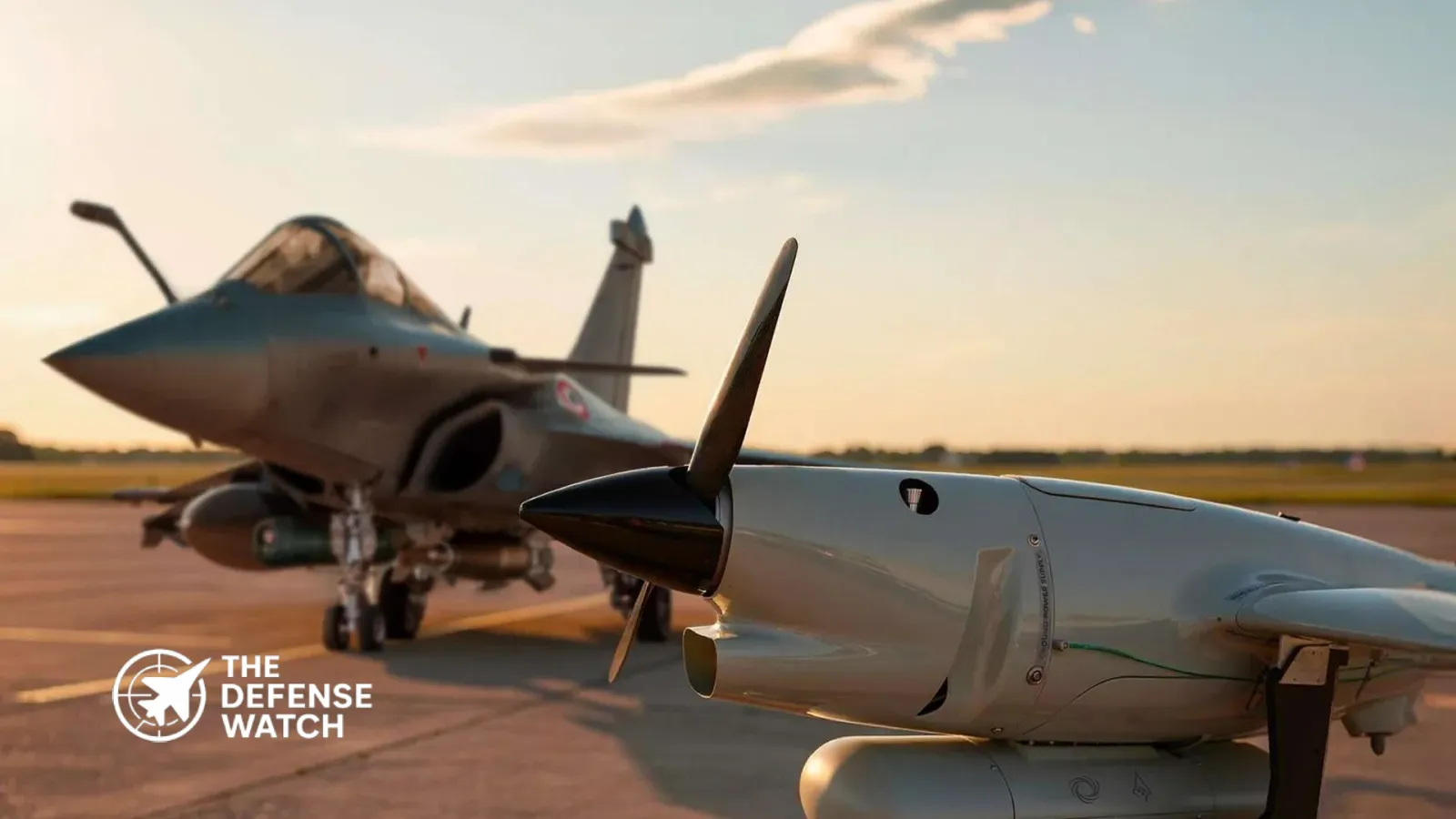
France’s French NAMIB drone has completed its first successful Suppression of Enemy Air Defenses (SEAD) targeting demonstration alongside a Rafale F4 fighter, showcasing a new level of cooperation between unmanned electronic warfare assets and frontline combat aircraft.
- French NAMIB Drone Demonstrates New SEAD Capability With Rafale F4
- Demonstrating Cooperative Electronic Warfare
- How The NAMIB System Supports SEAD Missions
- Rafale F4 Gains Greater Networked Combat Capability
- Why Passive Radar Detection Matters
- Strategic Importance For French Air Power
- Broader Implications For NATO And Allied Operations
- Technical Assessment
- Looking Ahead
The demonstration, announced by French defense industry participants and reported by Army Recognition, showed the NAMIB unmanned system detecting hostile radar emissions, accurately geolocating the source, and transmitting targeting information directly to the Rafale F4. The aircraft then used the data to simulate engagement of the enemy air defense site without exposing the drone or the fighter to unnecessary risk.
The trial forms part of France’s broader modernization effort to improve collaborative combat capabilities for future air operations in heavily defended environments.
Demonstrating Cooperative Electronic Warfare
Modern integrated air defense systems rely heavily on radar networks that can detect, track, and engage aircraft at long ranges. Neutralizing those radars remains one of the first priorities during any air campaign.
Instead of requiring the fighter aircraft to search for hostile emitters independently, the NAMIB drone performed the initial detection task. Operating forward of the manned aircraft, it identified radar emissions, determined their location, and securely relayed the information to the Rafale F4.
This distributed approach allows the fighter to remain farther from the threat while receiving real-time targeting data generated by an unmanned platform.
The demonstration represents an important evolution from traditional reconnaissance missions toward collaborative sensing and targeting.
How The NAMIB System Supports SEAD Missions
SEAD operations are among the most demanding missions conducted by modern air forces. Enemy surface-to-air missile systems frequently employ multiple radar types, mobility, and electronic countermeasures to complicate detection.
According to available information, the NAMIB system is designed to perform passive electronic intelligence functions by monitoring radio frequency emissions without actively transmitting radar signals itself.
Its principal mission includes:
Capability Operational Benefit Passive radar detection Reduces risk of revealing drone position Radar emitter geolocation Identifies precise enemy radar locations Real-time data sharing Provides immediate targeting information Cooperative targeting Supports fighter aircraft engagement decisions Distributed sensing Expands battlefield awareness Because passive sensors do not emit detectable signals, they are generally more difficult for adversaries to locate than active surveillance platforms.
Rafale F4 Gains Greater Networked Combat Capability
The Rafale F4 standard represents France’s latest enhancement of the multirole fighter, emphasizing connectivity, sensor fusion, and collaborative operations.
Unlike earlier fighter concepts that relied primarily on onboard sensors, Rafale F4 is increasingly designed to receive and process information from external platforms including drones, airborne warning aircraft, and other combat assets.
The successful integration with NAMIB highlights several capabilities:
- Improved sensor sharing across multiple platforms
- Faster targeting cycles
- Reduced pilot workload
- Enhanced survivability during operations against advanced air defenses
- Better situational awareness throughout the battlespace
These improvements align with broader trends across NATO air forces toward network-centric operations.
Why Passive Radar Detection Matters
Modern air defense systems are becoming increasingly difficult to defeat.
Advanced systems frequently employ:
- Multiple engagement radars
- Long-range surveillance radars
- Mobile launchers
- Electronic counter-countermeasures
- Networked command-and-control systems
A passive electronic warfare drone can detect these emitters without revealing its own position through active transmissions.
This enables commanders to build an electronic picture of the battlefield before committing expensive fighter aircraft into contested airspace.
The ability to continuously monitor enemy emissions also improves target confirmation and reduces the likelihood of engaging incorrect or decoy targets.
Strategic Importance For French Air Power
The NAMIB demonstration reflects France’s growing emphasis on manned-unmanned teaming, an operational concept becoming central to future air combat.
Rather than replacing fighter aircraft, drones increasingly serve as force multipliers capable of conducting high-risk missions ahead of manned platforms.
For the French Air and Space Force, this approach offers several operational advantages:
- Lower risk to pilots during initial penetration missions
- Expanded reconnaissance coverage
- More efficient allocation of expensive fighter aircraft
- Improved survivability against layered air defenses
- Greater operational flexibility during coalition operations
The demonstration also complements France’s broader investment in next-generation combat aviation technologies while supporting incremental capability improvements before future combat aircraft enter service.
Broader Implications For NATO And Allied Operations
The successful trial mirrors a wider trend among NATO members toward integrating unmanned systems into electronic warfare and strike missions.
Across Europe and the United States, defense programs increasingly focus on collaborative combat aircraft, autonomous sensing platforms, and distributed battlefield networks capable of sharing targeting data in real time.
For coalition operations, systems like NAMIB could contribute to:
- Faster detection of hostile air defense networks
- Shared electronic intelligence among allied forces
- More resilient targeting architectures
- Reduced dependence on single high-value airborne assets
As adversaries continue investing in advanced integrated air defense systems, distributed sensing platforms may become essential components of future suppression campaigns.
Technical Assessment
The demonstration is significant because it validates more than a single drone platform. It demonstrates a complete operational chain involving passive detection, electronic intelligence processing, secure communications, and rapid targeting.
Successfully integrating each stage is technically challenging. Data must be transmitted with minimal latency while maintaining accurate geolocation and protecting communications from jamming or interception.
If matured into operational service, this capability could shorten the sensor-to-shooter timeline during SEAD missions, allowing fighters to engage radar threats more rapidly while remaining outside the most dangerous engagement zones.
The trial also reinforces the growing importance of software-defined architectures and secure tactical networking. As future combat environments become increasingly contested, the effectiveness of military aircraft will depend not only on their onboard sensors but also on how efficiently they exchange information across distributed forces.
Looking Ahead
The first successful cooperation between the NAMIB drone and Rafale F4 represents another step toward integrating unmanned electronic warfare systems into French air operations.
Although additional testing and operational validation are expected before widespread deployment, the demonstration indicates that France is steadily advancing collaborative combat capabilities designed for modern contested environments.
As NATO members continue modernizing their air forces, unmanned sensing platforms capable of supporting SEAD missions are likely to become increasingly important components of future multinational operations.