
- Home
- Defense Systems
- Compare
- F-35 vs. Saab Gripen E: Which Fighter Jet Has the Edge in Modern Air Combat?
F-35 vs. Saab Gripen E: Which Fighter Jet Has the Edge in Modern Air Combat?
Executive Summary / Tactical Overview
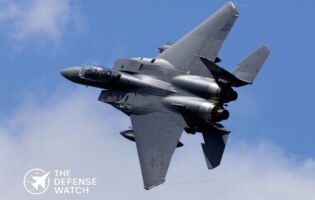
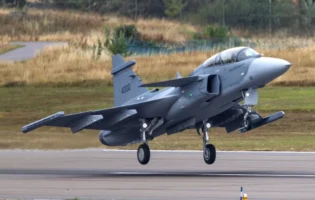
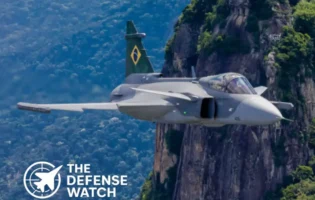
The F-35 Lightning II and Saab Gripen E embody two distinct approaches to modern air warfare. The F-35 prioritizes stealth, sensor fusion, and network-centric operations, enabling it to penetrate heavily defended airspace and dominate the information environment. In contrast, the Gripen E focuses on affordability, operational flexibility, advanced electronic warfare, and rapid deployment, offering a highly capable multirole fighter for nations seeking maximum effectiveness at lower operating costs.
Technical Specifications Table
| Metric | F-35A Lightning II | Saab Gripen E |
|---|---|---|
| Generation | 5th Generation | 4.5 Generation |
| Max Speed | Mach 1.6 | Mach 2.0 |
| Combat Radius | ~1,239 km | ~1,300 km |
| Internal Payload | 4 × AIM-120 AMRAAM (stealth configuration) | No internal weapons bay |
| Maximum Payload | ~8,160 kg | ~7,200 kg |
| Primary Radar | AN/APG-81 AESA | Raven ES-05 AESA |
| Engine | Pratt & Whitney F135 | General Electric F414G |
| Hardpoints | 10 | 10 |
| Electronic Warfare Suite | AN/ASQ-239 | Integrated EW Suite with Arexis |
| Crew | 1 | 1 |
Key Capability Pillars
Stealth & Survivability
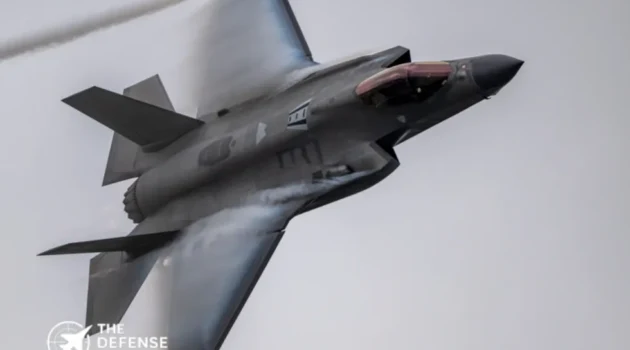
The F-35 was designed from the outset as a stealth aircraft, incorporating radar-absorbent materials, internal weapons bays, aligned surfaces, and a reduced radar cross-section. These features allow it to operate deep inside contested airspace while minimizing detection risk.
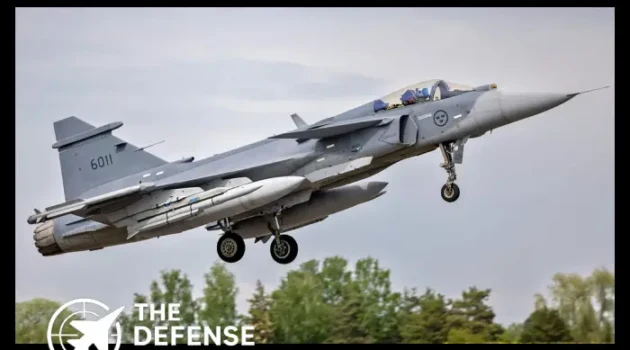
The Gripen E lacks true stealth characteristics but compensates with a sophisticated electronic warfare suite, advanced jamming capabilities, and a smaller visual and radar signature than many legacy fighters. While highly survivable, it cannot match the F-35’s low-observable design.
Avionics & Sensor Fusion
One of the F-35’s greatest advantages is its sensor fusion architecture. The aircraft integrates data from the AN/APG-81 AESA radar, Distributed Aperture System (DAS), Electro-Optical Targeting System (EOTS), and off-board assets into a single tactical picture. This provides pilots with unmatched situational awareness and a comprehensive 360-degree view of the battlefield.
The Gripen E features the Raven ES-05 AESA radar, Infrared Search and Track (IRST), and advanced datalink systems. Its avionics are highly capable and designed for collaborative operations, but they do not achieve the same level of automated sensor fusion as the F-35.
Payload & Mission Profiles
The F-35 can carry weapons internally to preserve stealth or utilize external hardpoints in “Beast Mode” when low observability is less critical. This flexibility allows it to switch between penetrating strike missions and high-capacity air support operations.
The Gripen E relies entirely on external stores but can carry a wide range of air-to-air missiles, precision-guided bombs, anti-ship weapons, and reconnaissance pods. Its mission flexibility and lower operating costs make it particularly attractive for sustained peacetime and wartime operations.
4. Strategic Verdict
The F-35 Lightning II is the superior choice for operations in heavily defended anti-access/area-denial environments where stealth, sensor fusion, and first-look, first-shot capabilities are critical. Its ability to gather, process, and share battlefield information gives it a decisive advantage against advanced air defense systems and modern fighter threats.
The Saab Gripen E excels in cost-effective airpower, rapid deployment, dispersed operations, and electronic warfare-heavy environments. For nations seeking a highly capable multirole fighter with lower acquisition and sustainment costs, the Gripen E offers exceptional value.
In a direct comparison, the F-35 remains the more capable combat platform overall, while the Gripen E stands out as one of the most efficient and capable non-stealth fighters currently in production.
| |
| Price | |
| Our Rating | |
| Manufacturer | Lockheed Martin Saab |
| Category | Fighter Jets Fighter Jets |
General Information
| Name | F-35 Lightning II JAS 39E Gripen (Gripen E) |
| Manufacturer | Lockheed Martin Saab AB |
| Country of Origin | United States Sweden |
| Type / Role | Multirole Stealth Fighter Multirole Fighter Jet |
| Generation | 5th 4.5 |
| Status | In Service In Production / Active Service |
| First Flight | December 15, 2006 June 15, 2017 |
| Introduction / In Service Since | 2015 2023 |
| Number Built | 1,200+ (as of 2025) 60+ (Orders in progress) |
| Operators | USA, UK, Japan, Israel, Italy, Australia, and others Sweden, Brazil |
Dimensions & Structure
| Length | 51.2 ft (15.6 m) 15.2 m (49.8 ft) |
| Wingspan | 35 ft (10.7 m) 8.6 m (28.2 ft) |
| Height | 14.4 ft (4.38 m) 4.5 m (14.7 ft) |
| Wing Area | 460 sq ft (42.7 m²) 30 m² |
| Empty Weight | 29,300 lb (13,300 kg) 8,000 kg |
| Maximum Takeoff Weight (MTOW) | 70,000 lb (31,800 kg) 16,500 kg |
| Internal Weapons Bay | 2 (up to 5,700 lb payload) None |
| External Hardpoints | 6–10 (up to 18,000 lb total) 10 |
Performance
| Maximum Speed | Mach 1.6 Mach 2.0 |
| Range | 1,380 mi (2,220 km) 1,600 km |
| Combat Radius | ~670 mi (1,080 km) 800 km |
| Service Ceiling | 50,000 ft (15,240 m) 50,000 ft (15,240 m) |
| Rate of Climb | 45,000 ft/min 15,000 m/min |
| Thrust-to-Weight Ratio | 0.87 0.97 |
| G Limits | +9 +9 / -3 |
Powerplant
| Engine Type | Pratt & Whitney F135-PW-100 GE F414G afterburning turbofan |
| No. of Engines | 1 1 |
| Thrust (each) | 43,000 lbf 22,000 lbf (98 kN) |
| Thrust Vectoring | Yes (on F-35B variant) No |
| Fuel Capacity | ~18,500 lb internal 3,400 kg (internal) |
Armament
| Gun | GAU-22/A 25mm cannon (F-35A) 27 mm Mauser BK-27 cannon |
| Missiles (Air-to-Air) | AIM-120 AMRAAM, AIM-9X Meteor, IRIS-T, AIM-9, AIM-120 AMRAAM |
| Missiles (Air-to-Ground) | AGM-154 JSOW, AGM-158 JASSM RBS-15, AGM-65 Maverick |
| Bombs | JDAM, Paveway II/III, SDB I/II Paveway II/III, JDAM, Mk 82/83/84 |
| Hardpoints | 6 external + 2 internal 10 |
| Payload Capacity | ~18,000 lb 6,000 kg (13,200 lb) |
Avionics & Systems
| Radar | AN/APG-81 AESA Selex ES Raven ES-05 AESA |
| Radar Range | ~150+ km 160+ km |
| Electronic Warfare (EW) System | AN/ASQ-239 suite Saab Arexis Integrated EW Suite |
| Targeting System | EOTS (Electro-Optical Targeting System) IRST + Litening Targeting Pod |
| Helmet Display | HMDS Gen III Targo II HMD |
| Navigation | GPS/INS with terrain-following GPS/INS Hybrid |
| Autopilot / AI Assistance | Advanced flight management Yes (Advanced Digital Flight Control) |
| Communication | MADL & Link 16 secure data links Link 16, Secure Datalink, SATCOM |
Stealth & Technology
| Radar Cross Section (RCS) | ~0.001 m² Reduced, non-stealth (~1 m² class) |
| Stealth Features | RAM coating, internal weapons bay, edge alignment Radar-absorbent materials and design |
| Infrared Signature Reduction | Yes Yes |
| Sensor Fusion | Full 360° data integration Full 360° sensor fusion system |
| Networking Capabilities | Distributed data-sharing with allied units Network-Centric Warfare, Link 16, SwAF Data Link |
Variants
| Special Export Versions | F-35I (Israel), F-35A (Japan), etc. Brazilian Gripen F with local avionics |
Operational History
| Major Conflicts / Deployments | Middle East operations (Iraq, Syria) None (peace-time operational) |
| Notable Operators | USAF, USN, USMC, RAF, IDF Sweden, Brazil |
| Combat Proven? | Yes Not yet |
| Mission Types | Air superiority, strike, SEAD, ISR Air Superiority, Strike, Reconnaissance, Maritime Patrol |
Cost & Program
| Unit Cost | $80–100 million (variant-dependent) $85 million (approximate) |
| Development Cost | ~$400 billion (program total) $2+ billion |
| Program Name | Joint Strike Fighter (JSF) Gripen E/F Program |
| Funding Countries | USA, UK, Italy, Netherlands, Canada, Australia, etc. Sweden, Brazil |
Additional Information
| Upgrades Planned | Block 4, Tech Refresh 3 Enhanced EW, AI-assisted avionics, new weapon integration |
| Future Replacement | NGAD (2035+) Swedish next-generation stealth fighter (FCAS concept) |
| Export Restrictions | U.S. FMS approval required Moderate |
| Notable Achievements | Widest global fighter program in history Lowest operational cost in 4.5-gen class |
| Competitors | Su-57, J-20, Tempest, KF-21 Dassault Rafale, F-16V, Tejas Mk1A, JAS 39C/D |
|
Disclaimer Note
The information provided on TheDefenseWatch.com is for general informational purposes only. While we strive to ensure the accuracy, completeness, and timeliness of our content regarding defense and aerospace products, technologies, and specifications, we cannot guarantee that all information is 100% accurate or up-to-date due to the evolving nature of military technology and classified data.TheDefenseWatch.com does not warrant the reliability, suitability, or availability of the information for any specific purpose. Users are advised to consult official sources, such as manufacturers, government publications, or defense agencies, for precise and verified data before making decisions based on our content.We are not affiliated with any defense manufacturers, governments, or military organizations mentioned. Opinions, reviews, and ratings reflect expert analysis but are subjective and should not be considered endorsements. TheDefenseWatch.com is not responsible for any errors, omissions, or consequences arising from the use of this website’s content.External links are provided for convenience and do not imply endorsement. TheDefenseWatch.com reserves the right to update or modify content without prior notice. By using this website, you agree to our Privacy & Cookies Policy.
New Arrivals












Popular Comparisons
-
 J-10C vs JF-17 Thunder: Which Fighter Is More Capable?
View Comparison →
-
Tejas vs Gripen: Key Differences and Capabilities
View Comparison →
-
Tejas vs MiG-21 Bison: How India Replaced Its Iconic Supersonic Fighter
View Comparison →
-
F-35 vs F-16: Stealth, Sensors and Combat Roles
View Comparison →
-
Tejas Fighter Jet vs F-16 Fighting Falcon: Capability Compared
View Comparison →
-
Rafale Fighter Jet vs F-16 Fighting Falcon : Which Fighter Has the Edge?
View Comparison →
-
Su-57 Fighter Jet vs J-20 Fighter Jet: Stealth and Air Combat Compared
View Comparison →
-
Mirage 2000 vs Tejas Mk1A: Legacy Combat Power vs Indigenous Modernization
View Comparison →
-
Rafale Fighter Jet vs F-22 Raptor: Which Air Dominance Fighter Has the Edge?
View Comparison →
-
Tejas Fighter Jet vs. Rafale Fighter Jet: India’s Indigenous Fighter Meets France’s Proven Multirole Combat Aircraft
View Comparison →


- USA vs China Military: Comparing Global Military Power in 2026

- USA vs UK Army: How U.S. and British Ground Forces Compare in 2026
- Saab Wins SEK 2 Billion Contract to Equip Sweden’s Four New FDI Frigates
- F-47 Fighter May Fly With Interim Engine as Next-Generation Propulsion Program Falls Behind Schedule
- UK Says F-35 Agreement Guarantees Access to U.S. Support System
- Pakistan and Tajikistan Conclude Dosti-III Counterterrorism Exercise at Cherat
- Lockheed Martin Self-Funds Five Vectis Collaborative Combat Aircraft
- Lockheed Martin Accelerates Orion Production for NASA’s Artemis Missions
- Lockheed Martin Advances PAC-3 MSE Integration for Naval Defense
- Spain Advances F-110 Frigate Program With Aegis and SPY-7 Radar



Fighter Jets
-
 F-47A Fighter Jet
-
F-100 Super Sabre
-
North American F-86 Sabre
-
Northrop YF-23 Fighter
-
Rafale F5 Fighter
-
SU-57 Felon Stealth Fighter
-
Boeing F/A-XX Fighter
-
JF-17 Thunder Fighter Jet
-
F-47 Fighter Jet
-
MIG-31 Fighter Jet
-
J-10CE Fighter Jet
-
Chengdu J-10 Fighter Jet
-
Chengdu J-10C Fighter Jet
-
Gripen E Fighter Jet
-
Tejas Mk1A Fighter Jet
-
Tejas Mk‑2 Fighter Jet
-
F-16V Viper Block 70 Fighter Jet
-
F-15EX Eagle II Fighter
-
F-15E Strike Eagle Fighter
-
F/A-18E/F Super Hornet Fighter Jet
-
Saab Gripen F Fighter Jet
-
JAS 39E/F Gripen Fighter Jet
-
JAS 39 Gripen Fighter Jet
-
F-35A Lightning II Fighter Jet











Recent Compares
-
J-10C vs JF-17 Thunder: Which Fighter Is More Capable?
View Comparison →
-
Tejas vs Gripen: Key Differences and Capabilities
View Comparison →
-
Tejas vs MiG-21 Bison: How India Replaced Its Iconic Supersonic Fighter
View Comparison →
-
F-35 vs F-16: Stealth, Sensors and Combat Roles
View Comparison →
-
Tejas Fighter Jet vs F-16 Fighting Falcon: Capability Compared
View Comparison →
Latest Defense Systems
10 Compares Defense Systems
-
J-10C vs JF-17 Thunder: Which Fighter Is More Capable?
View Comparison →
-
Tejas vs Gripen: Key Differences and Capabilities
View Comparison →
-
Tejas vs MiG-21 Bison: How India Replaced Its Iconic Supersonic Fighter
View Comparison →
-
F-35 vs F-16: Stealth, Sensors and Combat Roles
View Comparison →
-
Tejas Fighter Jet vs F-16 Fighting Falcon: Capability Compared
View Comparison →
-
Rafale Fighter Jet vs F-16 Fighting Falcon : Which Fighter Has the Edge?
View Comparison →
-
Su-57 Fighter Jet vs J-20 Fighter Jet: Stealth and Air Combat Compared
View Comparison →
-
Mirage 2000 vs Tejas Mk1A: Legacy Combat Power vs Indigenous Modernization
View Comparison →
-
Rafale Fighter Jet vs F-22 Raptor: Which Air Dominance Fighter Has the Edge?
View Comparison →
-
Tejas Fighter Jet vs. Rafale Fighter Jet: India’s Indigenous Fighter Meets France’s Proven Multirole Combat Aircraft
View Comparison →
- USA vs China Military: Comparing Global Military Power in 2026
- USA vs UK Army: How U.S. and British Ground Forces Compare in 2026
- Saab Wins SEK 2 Billion Contract to Equip Sweden’s Four New FDI Frigates
- F-47 Fighter May Fly With Interim Engine as Next-Generation Propulsion Program Falls Behind Schedule
- UK Says F-35 Agreement Guarantees Access to U.S. Support System