U.S. Air Power Plan Signals New Focus On Deep Strike
The U.S. air power plan worth roughly $102 billion highlights Washington’s push to strengthen deep strike capacity and maintain air superiority against rising challenges from China and Russia. The spending profile, aligns with broader Pentagon modernization priorities focused on stealth aircraft, long range weapons, survivable networks, and next generation combat aviation.
- U.S. funding package centers on long range strike and future air superiority programs.
- Major priorities include stealth bombers, advanced fighters, weapons, and support networks.
- Strategy reflects rising concern over Chinese force growth and Russian combat aviation threats.
- Investment scale signals multi year modernization rather than a one year surge.
- The central goal is to preserve U.S. ability to strike first, survive, and sustain operations.
The Big Picture
Airpower remains central to U.S. military strategy. It enables rapid response, precision strike, intelligence collection, airlift, and deterrence across Europe, the Indo Pacific, and the Middle East.
That advantage is no longer uncontested. China has expanded fighter production, long range missile forces, airborne sensors, and integrated air defenses. Russia, despite combat losses in Ukraine, still fields a capable tactical aviation force and layered air defense architecture. For U.S. planners, the era of automatic air dominance is over.
The result is a shift from counterinsurgency era fleets toward systems built for heavily defended battlespace.
What’s Happening
The reported U.S. air power plan allocates major resources toward several categories:
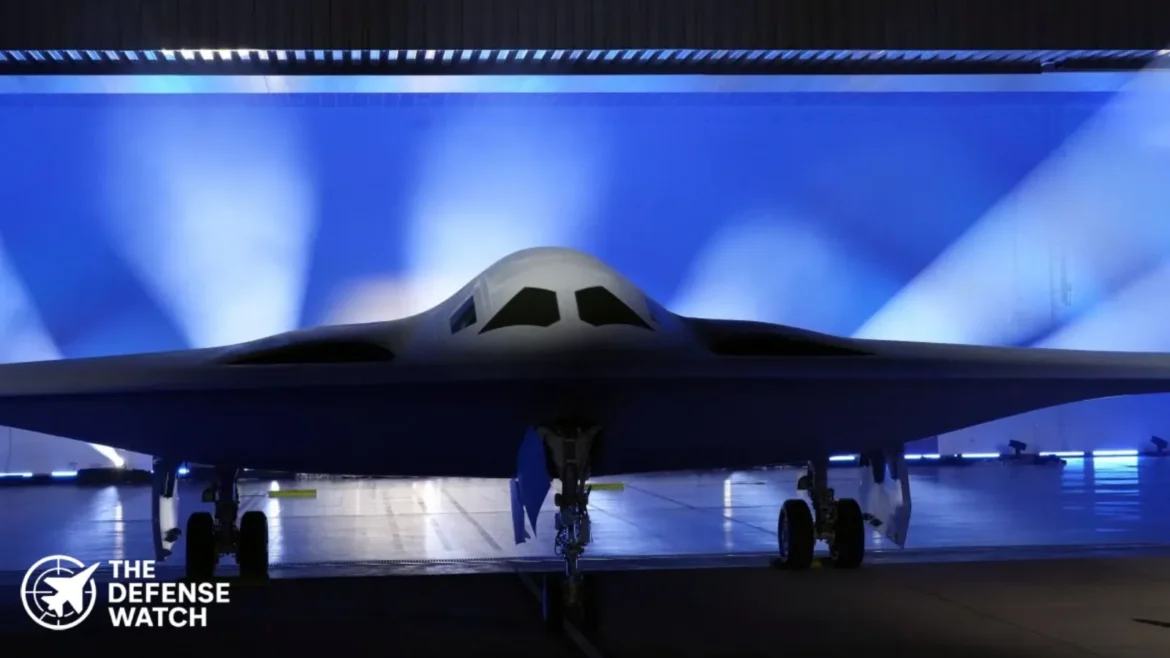
- Stealth bomber procurement, led by the B-21 Raider
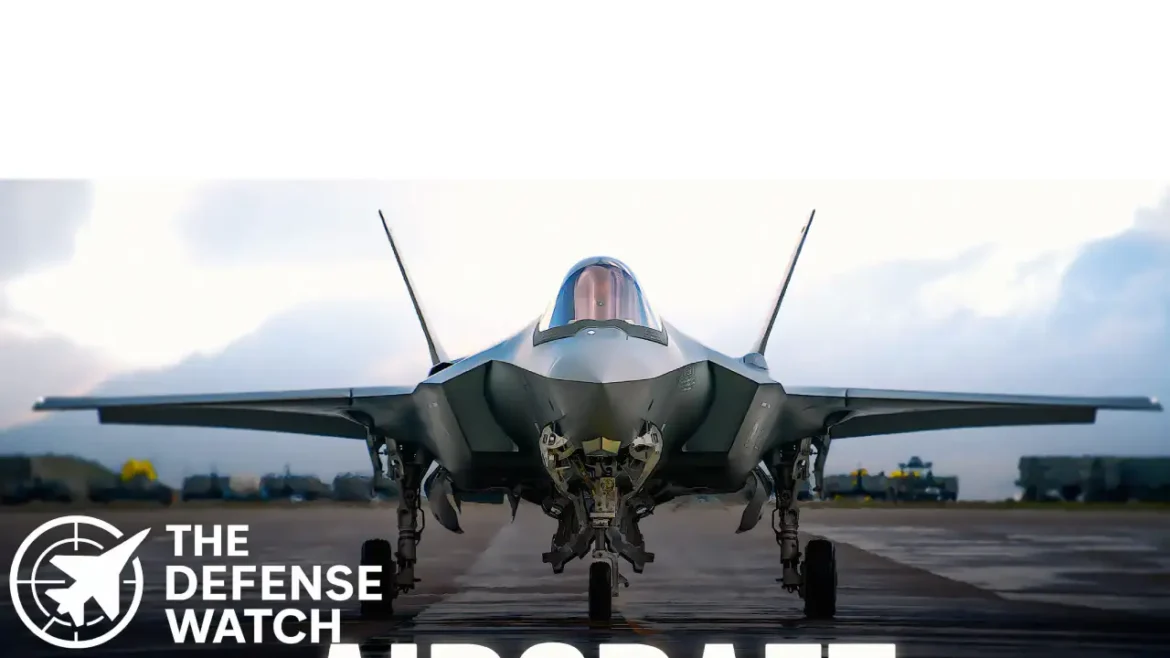
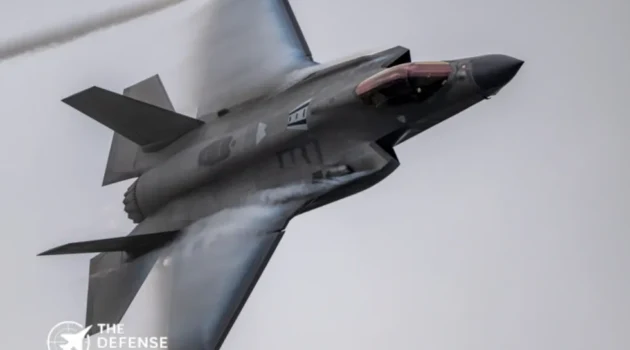
- Tactical fighter modernization, including F-35A Lightning II fleets
- Future air dominance programs, including sixth generation concepts
- Precision munitions and stand off strike weapons
- Tankers, command and control, and support infrastructure
- Research into collaborative autonomous aircraft and networked warfare systems
This reflects a force design built for penetrating defended airspace and sustaining long range campaigns rather than short duration permissive operations.
Why It Matters
Modern air warfare depends on more than fighters. Aircraft need tankers, electronic warfare support, resilient communications, munitions stockpiles, and distributed bases.
That is why the U.S. air power plan matters. It suggests Washington understands that advanced adversaries will target airfields, satellites, fuel logistics, and command networks early in any conflict.
Buying aircraft without fixing those enablers would leave gaps. Funding both strike platforms and supporting architecture is strategically more credible.
Strategic Implications
For the Indo Pacific, range is the defining challenge. Distances are vast, bases are exposed, and resupply could be contested. Long range bombers and survivable tankers become essential.
For Europe, readiness and mass matter more. NATO would need rapid sortie generation, missile defense integration, and sustained combat power if facing Russian escalation.
In both theaters, airpower is tied directly to deterrence. If adversaries believe U.S. forces can penetrate defenses and keep fighting after initial attacks, the threshold for aggression rises.
Competitor View
China is likely to read this investment as confirmation that the U.S. intends to preserve power projection inside the first and second island chains. That may reinforce Beijing’s own spending on missiles, sensors, fighters, and counter space tools.
Russia will likely view the plan through a NATO lens, especially if paired with more rotational deployments and precision strike capacity in Europe.
Neither competitor is standing still, which means procurement speed may matter as much as total dollars.
Capability Gap The Plan Aims To Close
The most serious U.S. weakness is not pilot skill or technology quality. It is the combination of aging fleets, limited production rates, fragile logistics chains, and insufficient munition depth for a prolonged high end war.
The U.S. air power plan appears designed to close four gaps:
- Range against distant targets
- Survivability in contested airspace
- Mass after early attrition
- Sustainment over long campaigns
A realistic limitation remains industrial capacity. Even large budgets cannot instantly produce engines, airframes, chips, or trained maintainers.
What To Watch Next
Watch these indicators over the next 12 to 24 months:
- Annual procurement numbers for bombers and fighters
- Progress on next generation air dominance programs
- Missile stockpile expansion
- New tanker and dispersal basing concepts
- Defense industry production timelines
- Congressional support during budget negotiations
If funding turns into timely deliveries, the plan gains real weight. If programs slip, strategic value falls quickly.
The Bottom Line
The $102 billion push shows the United States is investing not just in aircraft, but in restoring credible air dominance for a more contested era.

United States Commands Largest Fighter Fleet Globally
The United States maintains the world’s largest fighter fleet with 1,790 aircraft, according to Global Firepower’s 2025 rankings. This substantial numerical advantage reflects decades of sustained investment in airpower and represents more than a third larger than China’s fighter inventory. The U.S. fighter fleet spans all service branches—Air Force, Navy, and Marine Corps—creating an integrated aerial combat capability unmatched by any rival power.
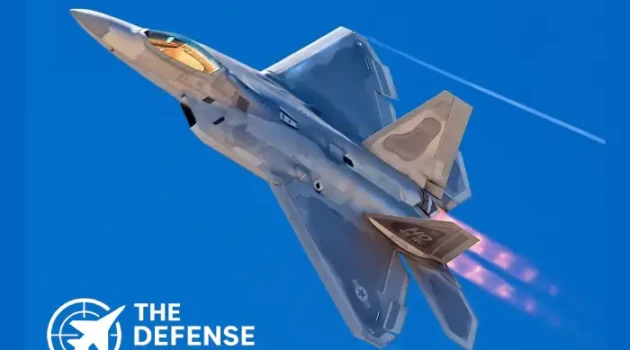
(adsbygoogle = window.adsbygoogle || []).push({});American fighter squadrons include approximately 2,651 aircraft across all services, though operational fighter numbers specifically total 1,790 when counting dedicated air superiority and multirole platforms. The U.S. Air Force operates nearly 2,000 of these jets, with the F-22 Raptor maintaining air superiority while the F-35 Lightning II has become the backbone of American tactical aviation. The Navy’s carrier-based F/A-18 Super Hornets and F-35Cs, along with the Marine Corps’ vertical-landing F-35Bs, ensure American power projection anywhere on the globe.
The technological sophistication of the U.S. fleet sets it apart from numerical competitors. While countries like China and Russia field larger overall military aircraft inventories, American fighters benefit from advanced sensors, networking systems, and stealth capabilities that multiply their effectiveness. The Next Generation Air Dominance program promises to maintain this qualitative edge well into the 2030s.
China Rapidly Closes Gap with 1,212 Fighters
China ranks second globally with 1,212 fighter aircraft, representing the People’s Liberation Army Air Force’s dramatic modernization over the past two decades. This fleet size reflects Beijing’s strategic imperative to challenge American airpower in the Indo-Pacific region and protect expanding Chinese interests worldwide.
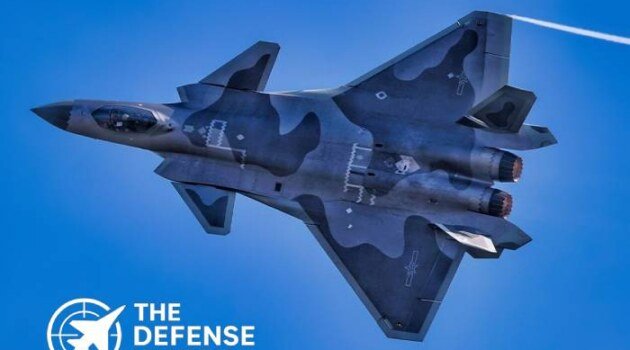
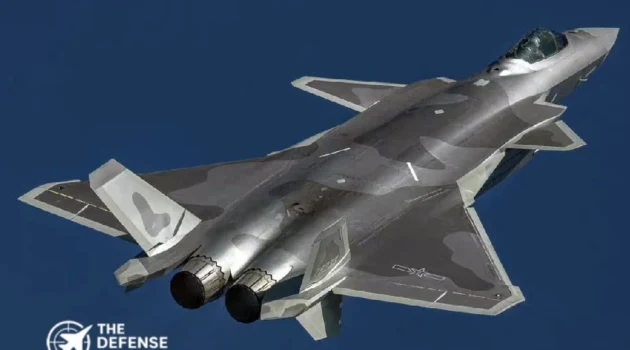
(adsbygoogle = window.adsbygoogle || []).push({});The centerpiece of China’s fleet is the J-20 Mighty Dragon, a stealth fighter often compared to the American F-22. Supporting the J-20 are domestically produced designs like the J-10, a lightweight single-engine fighter optimized for air defense missions, and the J-11 and J-16, which are derivatives of Russian Sukhoi designs manufactured under license and subsequently improved with Chinese technology.
China’s fighter production capacity has accelerated dramatically. The country now produces advanced jets at scale, with indigenous engines replacing earlier reliance on Russian powerplants. This industrial base enables the PLAAF to replace aging Soviet-era aircraft while simultaneously expanding overall fleet size. Chinese naval aviation is also expanding with carrier-capable fighters, as new carriers make China’s Navy the world’s second most capable after the United States.
Russia Maintains Third Place Despite Losses
Russia fields 833 fighter aircraft, securing third position in global rankings despite significant combat losses in Ukraine. The ongoing conflict has exposed vulnerabilities in Russian air combat doctrine and revealed maintenance challenges across an aging fleet, though Moscow still operates substantial quantities of capable fighters.
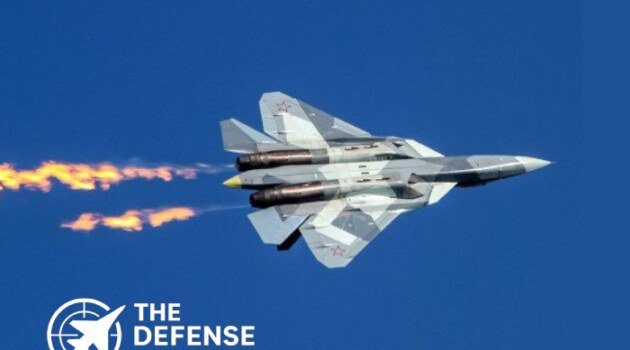
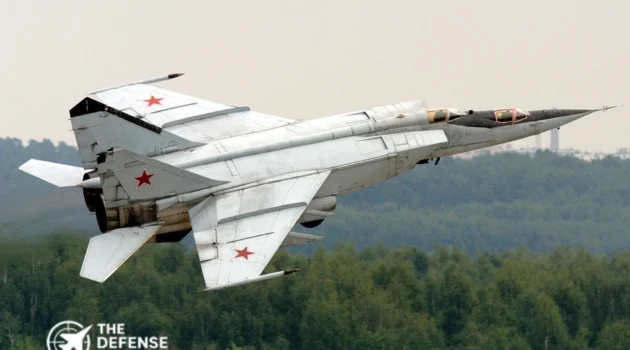
(adsbygoogle = window.adsbygoogle || []).push({});The Sukhoi Su-35, Su-30, and Su-34 make up the backbone of Russia’s modern fighter force. The Su-57 Felon, Russia’s fifth-generation stealth fighter, has entered limited production but remains rare with only a handful operational. Older platforms like the MiG-29 and Su-27 continue serving widely despite their age, while the MiG-31 Foxhound remains in service as a long-range interceptor.
Russia’s air operations in Ukraine have shown heavy losses and limited effectiveness, raising questions about actual combat readiness despite nominal fleet numbers. Parts shortages, maintenance backlogs, and training deficiencies appear more severe than previously assessed by Western intelligence agencies.
India Ranks Fourth with 513 Aircraft
India operates 513 fighter jets, making the Indian Air Force the fourth-largest fighter operator globally. India’s fleet represents a diverse mix of Russian, French, and increasingly indigenous aircraft as New Delhi pursues strategic autonomy in defense production.
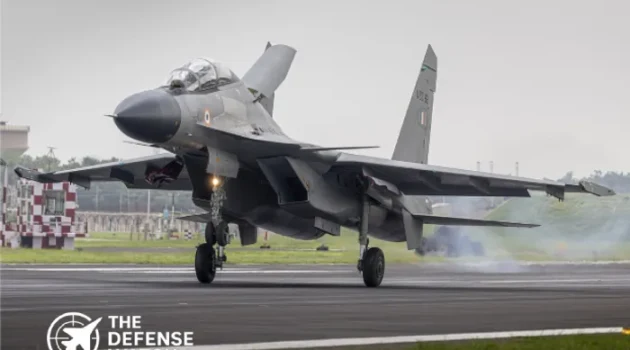
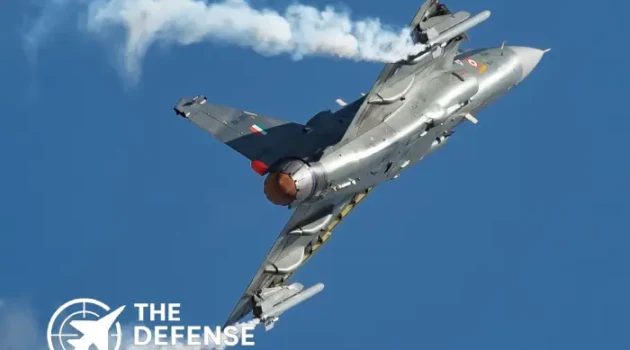
The Russian Sukhoi Su-30MKI forms the IAF’s heavy fighter backbone, with over 260 in service. The Dassault Rafale, built in France, represents the IAF’s newest and most advanced fighter. India also operates Mirage 2000s, MiG-29s, Jaguar strike aircraft, and the domestically developed HAL Tejas light fighter.
Recent border tensions and aerial clashes with Pakistan have pushed India to modernize its air force faster. The country is developing an upgraded Tejas Mark 1A, investing in a Super Sukhoi program to modernize existing jets, and considering future purchases including potentially the F-35. The retirement of the aging MiG-21 Bison in 2025 marks the end of an era and the start of a more capable, homegrown Indian Air Force.
North Korea’s Aging Fleet Holds Fifth Position
North Korea operates 368 fighter aircraft placing fifth globally by sheer numbers. However, the Korean People’s Army Air Force fleet consists largely of obsolete aircraft from the Soviet era and Chinese variants, with questionable operational readiness due to maintenance challenges and fuel shortages.
(adsbygoogle = window.adsbygoogle || []).push({});The majority of North Korean fighters are outdated MiG-21s, MiG-23s, and MiG-29s, along with Chinese-built J-7s. While numerically significant, these aircraft would face severe disadvantages against modern fighters equipped with advanced radar, missiles, and electronic warfare systems. North Korea’s fighter force serves primarily as a deterrent and point defense asset rather than an offensive capability.
Despite its size, analysts consider the North Korean air force largely ineffective in modern combat scenarios. Limited flight training hours, aging airframes, and isolation from global supply chains severely constrain operational effectiveness.
Pakistan Fields 328 Fighters in Regional Balance
Pakistan operates 328 fighter aircraft, ranking sixth worldwide. The Pakistan Air Force maintains this fleet specifically to counter Indian airpower and protect the country’s borders, with aircraft optimized for this regional strategic requirement.
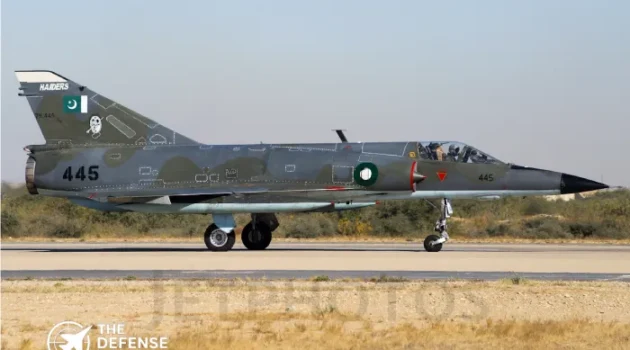
Pakistan’s fleet includes American F-16 Fighting Falcons, Chinese JF-17 Thunder fighters jointly developed with Pakistan, and French Mirage III/5 aircraft. The JF-17 program represents Pakistan’s most significant indigenous aerospace achievement, with over 130 jets delivered and active export marketing to other countries.
The PAF emphasizes training and tactical proficiency to offset India’s numerical advantages. Pakistan’s fighter pilots maintain high readiness levels, and the force demonstrated its capabilities during the 2019 aerial engagement with India over Kashmir.
South Korea Deploys 315 Advanced Fighters
South Korea operates 315 fighter jets, placing seventh globally with one of the most technologically advanced air forces in Asia. The Republic of Korea Air Force has systematically modernized its fleet to counter North Korean threats while contributing to regional stability.
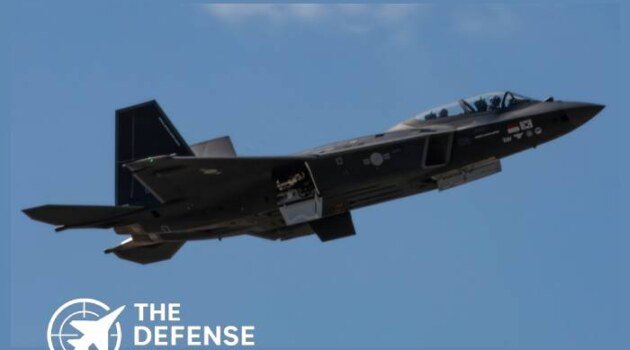
South Korea has begun replacing its aging air force with a new Korean-made aircraft, the KF-21 Boramae. The KF-21 represents Seoul’s ambition to develop indigenous defense technology and reduce dependence on foreign suppliers. The ROKAF also operates F-35A Lightning IIs, F-15K Slam Eagles, and KF-16 Fighting Falcons.
In 2024, South Korea announced that it would begin mass-producing the KF-21 to fill the vacuum created by the retirement of its older aircraft. These jets will likely be sold to other East Asian nations, including potentially the Philippines and Indonesia.
Taiwan Maintains 285 Fighters Against Chinese Pressure
Taiwan operates 285 fighter aircraft, ranking eighth globally as the Republic of China Air Force maintains a credible deterrent force despite constant pressure from Beijing. Taiwan’s fighter fleet represents one of its most critical defense assets given the island’s strategic vulnerability.
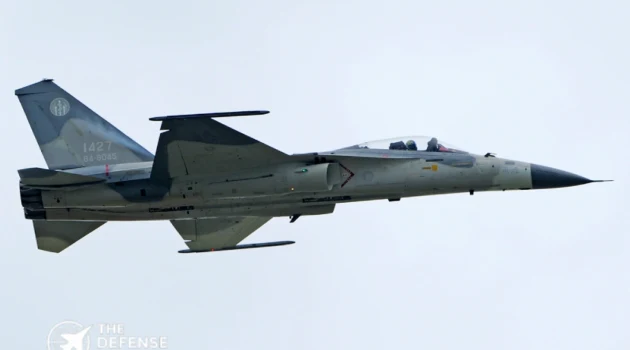
The ROCAF operates upgraded F-16V Fighting Falcons, indigenous F-CK-1 Ching-Kuo fighters, and Mirage 2000-5 aircraft. Taiwan has invested heavily in modernizing existing F-16A/B models to the advanced F-16V standard, incorporating active electronically scanned array radars and modern avionics. The island has also ordered 66 new-build F-16V aircraft from the United States, with deliveries ongoing.
(adsbygoogle = window.adsbygoogle || []).push({});Taiwan’s fighters face the daunting challenge of defending against numerically superior Chinese airpower while operating from a limited number of airbases vulnerable to missile attack. The ROCAF emphasizes quick-reaction alert postures and regular combat air patrols to intercept Chinese aircraft probing Taiwan’s air defense identification zone.
Saudi Arabia Fields 283 Fighters with Western Technology
Saudi Arabia operates 283 fighter jets, placing ninth globally with one of the best-equipped air forces in the Middle East. The Royal Saudi Air Force has invested heavily in Western fighter technology, creating a force optimized for regional power projection and coalition operations.
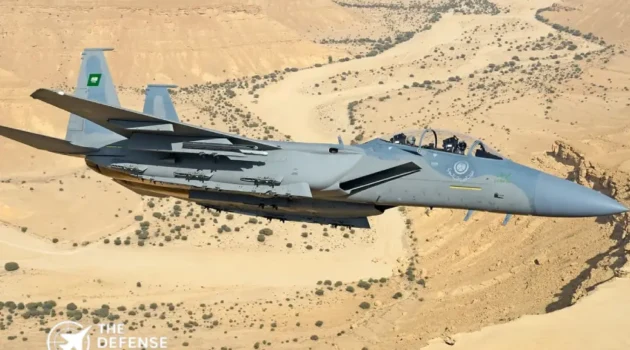
Saudi Arabia’s fleet centers on American F-15 Strike Eagles and F-15SA advanced variants, complemented by Eurofighter Typhoons. The kingdom maintains high operational standards with extensive training programs, often conducted in partnership with U.S. and European forces.
The Saudi fighter fleet has seen combat operations in Yemen and regional counterterrorism missions. The kingdom continues modernizing, with interest in advanced platforms including potential future acquisition of F-35s pending U.S. government approval.
Israel Rounds Out Top Ten with 240 Elite Fighters
Israel operates 240 fighter aircraft completing the top ten with one of the most combat-experienced air forces globally. The Israeli Air Force emphasizes quality over quantity, fielding aircraft with advanced indigenous upgrades and maintaining aircrew proficiency through regular operations.
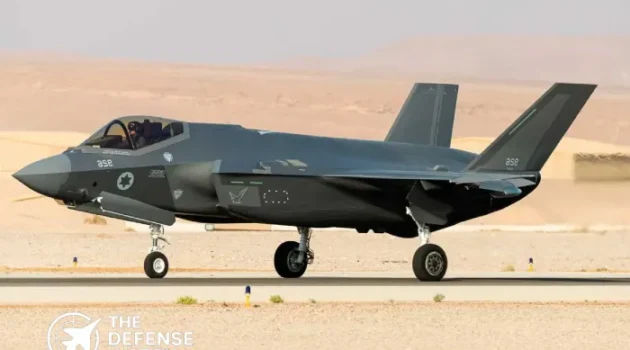
Israel operates F-35I Adir stealth fighters, F-15I Ra’am strike fighters, and F-16I Sufa multirole aircraft. All Israeli fighters incorporate domestically developed avionics, weapons, and electronic warfare systems, giving them capabilities distinct from export models. The IAF maintains the world’s highest operational tempo, conducting frequent strikes against threats in Syria, Lebanon, and other regional locations.
The Israeli fighter fleet has proven itself in multiple conflicts, with pilots and planners continuously incorporating lessons learned. Israel’s defense industry provides ongoing upgrades ensuring its fighters remain at the technological cutting edge despite relatively small fleet size.
Analysis: Beyond Numbers to Combat Capability
While raw fighter numbers provide a baseline for assessing airpower, actual combat effectiveness depends on numerous additional factors. Training, maintenance, logistics, sensor integration, and networking capabilities often matter more than simple aircraft counts.
The U.S. fighter advantage extends beyond its numerical lead. American pilots typically fly 180-240 hours annually—double or triple the training time available to pilots in many competing nations. U.S. fighters benefit from extensive support infrastructure including aerial refueling tankers, airborne early warning aircraft, and sophisticated command and control systems.
Technology also multiplies effectiveness. The F-22 Raptor maintains air superiority, though it is slowly being phased out in favor of next-generation aircraft being developed under the Next Generation Air Dominance program. The F-35 provides information superiority, functioning as an airborne sensor node that shares data across joint forces.
Stealth capabilities increasingly define modern air superiority. Only three countries currently field fifth-generation fighters: the United States (F-22, F-35), China (J-20), and Russia (Su-57). Three countries produce fifth-generation fighter jets: the United States with the F-35 Lightning II, China with the J-20 Mighty Dragon, and Russia with the Su-57 Felon.
The world seems set to produce over 500 and possibly 600 advanced fighter jets in 2024 with the United States and China accounting for most global production. This industrial capacity will shape future airpower balances as older aircraft retire and new capabilities enter service.
Geopolitical factors also influence fighter effectiveness. Numbers alone don’t decide modern air wars; smaller forces equipped with stealth, advanced sensors, and unmanned support can now pose serious threats to even the biggest air fleets. The integration of unmanned systems, directed energy weapons, and hypersonic missiles may transform air combat faster than fleet numbers change.
Regional contexts matter significantly. India’s 513 fighters face different challenges than Israel’s 240, operating across vastly different geographic scales against different threat arrays. Saudi Arabia’s 283 fighters serve coalition roles, while Taiwan’s 285 must defend a confined area against overwhelming nearby Chinese airpower.
(adsbygoogle = window.adsbygoogle || []).push({});The competition for air superiority continues evolving. The race for air supremacy is no longer just about how many planes a nation has, but how smartly they can fight together—crewed or uncrewed—in the skies of the future . Countries investing in advanced training, networking, and next-generation technologies may achieve decisive advantages despite smaller fleet sizes.
Looking forward, fighter fleets will continue modernizing. Lockheed expects to deliver 90-100 F-35s in 2024, and as many as 180 in 2025, potentially elevating this aircraft to become the most widely operated advanced fighter globally. China’s production lines continue accelerating, while Russia faces production constraints due to sanctions and economic pressures.
The United States retains its position as the world’s preeminent air power, but sustained investment and technological innovation remain essential to maintaining this advantage as peer competitors narrow capability gaps and numerical disparities persist.
Ranking the Top 10 Fighter Jet Fleets
Global Firepower’s 2025 assessment ranks nations by total active fighter and interceptor aircraft, drawing from open-source intelligence on operational units. The list reveals a concentration of power among major economies and regional powers, with the top five nations accounting for over 70% of the tracked global inventory.
Here is the complete top 10 in Table:
(adsbygoogle = window.adsbygoogle || []).push({});Rank Country Fighter/Interceptor Aircraft 1 United States 1,790 2 China 1,212 3 Russia 833 4 India 513 5 North Korea 368 6 Pakistan 328 7 South Korea 315 8 Taiwan 285 9 Saudi Arabia 283 10 Israel 240 FAQs
Which country has the most fighter jets in 2025?The United States has the most fighter jets with 1,790 aircraft across all military branches, according to Global Firepower 2025 rankings.
How many fighter jets does China have compared to the U.S.?China operates 1,212 fighter aircraft, making it the second-largest fighter force but still significantly behind the United States’ 1,790 fighters.
What makes a fighter jet “fifth-generation”?Fifth-generation fighters incorporate stealth technology, advanced avionics, sensor fusion, and supercruise capability. Only the U.S. F-22/F-35, Chinese J-20, and Russian Su-57 qualify.
Does having more fighter jets guarantee air superiority?No. Training, maintenance, technology, support systems, and pilot proficiency often matter more than raw numbers in determining actual combat effectiveness.
Which countries produce their own fighter jets?The United States, China, Russia, France, the United Kingdom, Sweden, South Korea, India, and Turkey all produce indigenous fighter aircraft, though at varying capability levels.

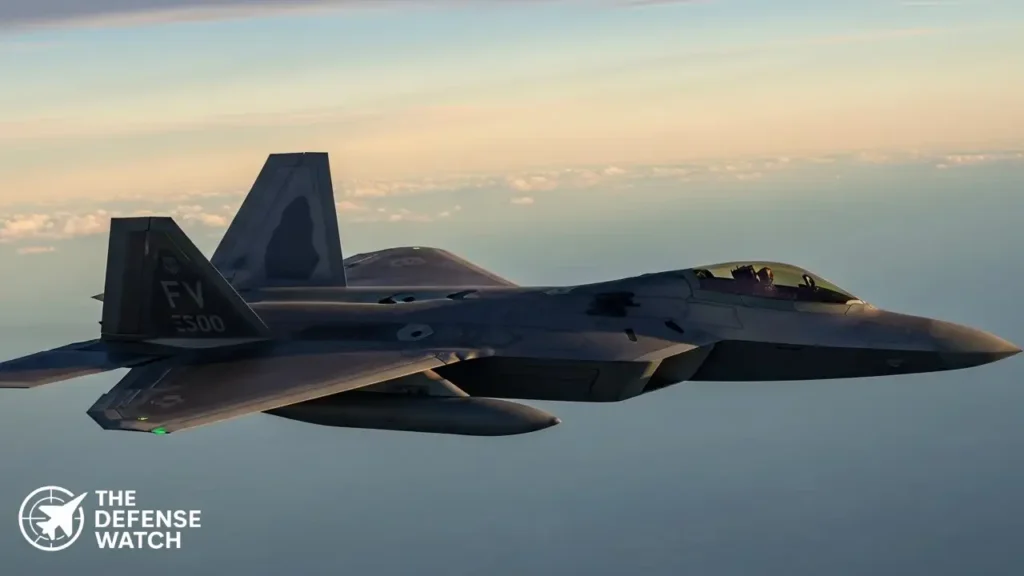
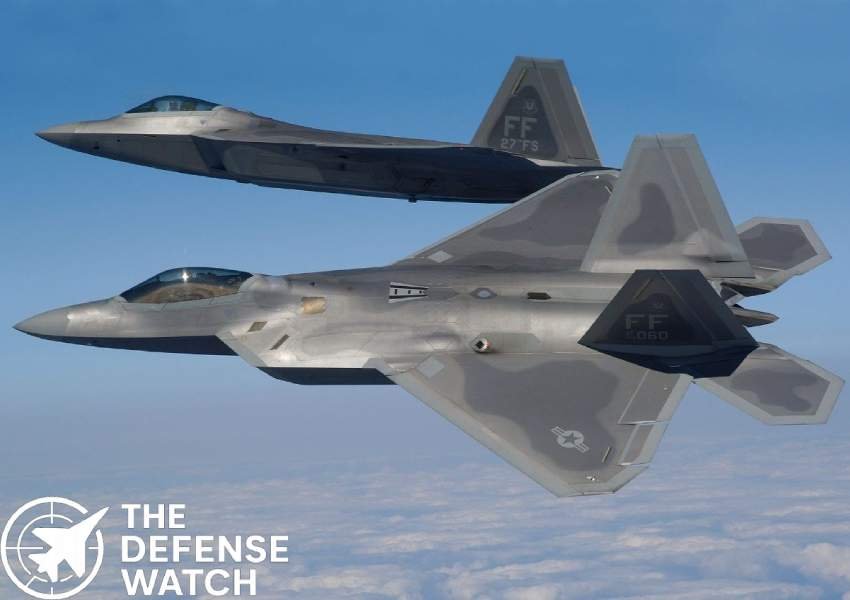
The F-22 Raptor remains central to U.S. air superiority doctrine — and under the newly elevated “F-22 Super” upgrade plan, the Raptor is being readied with enhanced sensors, stealth refinements and extended-range capabilities that seek to preserve its dominance until the next generation arrives. The “F-22 Super” upgrade — the focus of growing congressional and service support — reflects an emerging consensus that modernization of existing stealth assets is essential to sustain “first look, first shot, first kill” advantage in contested airspaces.
With the Next Generation Air Dominance (NGAD) family of systems still several years from full deployment, upgrading the F-22 is viewed by many as a cost-effective and prudent way to maintain edge amid evolving threats from near-peer competitors.
What Is the “F-22 Super” Upgrade
Upgrade Scope and Key Technologies
Under the proposed FY 2026 budget, the U.S. Air Force has earmarked approximately $90 million to begin what it calls a “viability package” for the F-22.
Key components of the upgrade package include:
- A new Infrared Defensive System (IRDS), to improve missile-launch detection and warning.
- Provision for pod-mounted Infrared Search and Track (IRST), enhancing passive detection of threats — especially valuable in contested electromagnetic (EW) environments.
- Sensor and avionics refresh: updated radar, open-architecture data fusion, cryptographic upgrades and other “future-proofing” to allow better integration with other platforms (e.g., NGAD, F-35 Lightning II).
- Improved electronic warfare capabilities and updated threat-warning receivers, under what the Air Force refers to as “Project Keystone.”
- Extended-range fuel tanks and low-drag pylons (the “Low Drag Tanks and Pylons,” LDTP), enabling longer missions — including potentially supersonic ferry or deployment flights — while minimizing radar signature when tanks are mounted.
- A helmet-mounted display (HMD) for pilots, a long-requested capability that provides off-boresight weapon cueing and improved situational awareness.
Together, these improvements are intended to transform the F-22 into a more resilient, networked, and flexible sensor-shooter — sometimes described as a “fifth generation plus” or “F-22 Super” configuration.
Why the Upgrades Are Gaining Renewed Support
NGAD Delays and Capability Gap Risk
The overarching driver behind the push for the F-22 upgrade is the reality that NGAD — slated to succeed the Raptor — remains years away from full operational deployment. Recent public reporting notes that the older jets of the fleet have begun to show their age, and reactivating non-combat-coded airframes requires substantial investment.
By investing in upgrades now, the U.S. Air Force hedges against a capability gap should NGAD face further delays, or if the initial NGAD fleet is limited in size. Maintaining a credible stealth-air superiority force with F-22 “Super” modifications buys critical time.
Evolving Threat Environment
Advances in adversary air-to-air missiles, infrared search-and-track systems, and radar/infrared hybrid detection platforms — particularly by near-peer competitors — have heightened the risk to legacy stealth aircraft which rely primarily on low observable radar signature and limited passive threat detection tools. The F-22’s planned IRDS/IRST and EW upgrades directly address those vulnerabilities.
In addition, range limitations have long hampered Raptor deployments in theaters such as the vast Indo-Pacific region, where long-range reach is critical. The LDTP initiative addresses those concerns, extending the Raptor’s reach while preserving stealth and speed advantages.

Cost-Effectiveness Compared to New-Build Programs
Restarting production of F-22 airframes or accelerating NGAD procurement comes with high cost and risk. By contrast, upgrading existing airframes draws on established maintenance/logistics chains, and avoids the industrial, training, and supply-chain burdens of fielding a completely new fleet. This makes the “Super” upgrade a more economical bridge strategy until NGAD matures.
The Role of “F-22 Super” in the NGAD Era and U.S. Air Dominance
Bridging to NGAD
With the NGAD program still in development, the F-22 Super acts as a “bridge” — preserving critical stealth-air superiority capability while NGAD’s manned sixth-generation fighters, loyal-wingman drones, and sensor-shooter architectures are finalized.
By integrating NGAD-derived technologies (sensors, data fusion, EW, avionics) into the F-22, the Air Force aims to ensure interoperability across legacy and future platforms — a key consideration for joint operations.
Enhancing Force Flexibility and Deterrence Posture
A modernized F-22 fleet — refreshed, sensor-upgraded, and extended in range — supports rapid response, long-range deployment, and forward-deployed deterrence concepts. Some reports describe a “Rapid Raptor” model: a small group of F-22 Supers capable of deploying globally within 24 hours, carrying advanced missiles or even hypersonics, with integrated links to joint force networks.
This flexibility remains valuable even once NGAD becomes operational: a mixed force of NGAD fighters, loyal-wingman drones, and upgraded F-22s would maximize coverage, offering both quantity and quality across different mission sets.
Challenges & Constraints
While the F-22 Super plan offers clear advantages, it is not without hurdles:
- Fleet size constraints: The legacy fleet is limited — only a fraction of the original ~185 Raptors remain combat-coded, and some older Block-20 jets are slated for retirement or reactivation only with major investment.
- Maintenance and sustainment burden: Stealth coatings, low observable materials, and complex avionics make sustainment resource-intensive — reactivation and upgrade of older airframes will require careful logistics and parts supply.
- Budget and prioritization pressure: With NGAD and other modernization programs consuming significant funding, balancing investment between upgrading legacy platforms and funding next-generation systems remains politically and strategically challenging.
- Technological limits: Even upgraded, the F-22 will remain a 5th-generation airframe. Some envisioned NGAD capabilities — such as optionally crewed operations, integrated loyal-wingman drone control, advanced sensor-to-shooter kill chains — may be beyond retrofit scope.
Analysis: What “F-22 Super” Means for U.S. Air Dominance
The renewed push for “F-22 Super” upgrades reflects a pragmatic recalibration of U.S. air dominance strategy. Rather than banking solely on generations-ahead platforms like NGAD, the Air Force seems increasingly focused on maintaining — and optimizing — existing capabilities to reduce risk and cost.
In the near to mid-term, the upgraded Raptor fleet can provide credible deterrence and warfighting capability in contested zones, especially in regions like the Indo-Pacific or Europe where adversaries field improving stealth, IRST, and long-range missile threats.
In the longer term, pairing a modernized F-22 with NGAD and other new systems offers a layered force architecture — combining proven fighters with next-gen platforms and drone-enabled mass. That architecture could offer both flexibility and formidable redundancy: if NGAD faces delays, cost overruns, or initial limited basing, the F-22 Super ensures the core air-superiority mission remains covered.
Still, this approach is not a substitute for NGAD’s ambition. The F-22 Super should be seen as a bridge — but a strategically vital one.
FAQs
Will the F-22 production ever restart?There is no public indication that full-scale F-22 production will restart. The current “Super” upgrades focus on existing airframes. Restarting production would be costly, and past cost estimates for hundreds of new Raptors ran into tens of billions of dollars.
How long will upgraded F-22s remain in service?With the Super upgrades, F-22s could remain relevant well into the 2030s and even 2040s — effectively bridging the gap until NGAD and other future platforms are fully operational.
Does the upgrade include new weapons or just sensors/avionics?The upgrade package emphasizes sensors, avionics, defense systems and endurance enhancements. However, the new open-architecture avionics could facilitate integration of modern weapons, long-range missiles, and future munitions.
How does the F-22 Super compare to NGAD capabilities?NGAD is expected to deliver a fundamentally new generation of capabilities — optionally crewed aircraft, loyal-wingman drones, advanced networking and sensor-fusion architecture. The F-22 Super is not a replacement, but a bridging upgrade: a 5th-generation “plus” that borrows NGAD-derived sensors and avionics to remain effective until the new generation arrives.
Why not simply rely on the F-35 fleet instead of upgrading the F-22?The F-35 serves a complementary but different role: multi-role strike, close air support, and networked operations. The F-22’s unique combination of stealth, supercruise, maneuverability and range — particularly after Super upgrades — is irreplaceable for dedicated air superiority and first-look, first-shot engagements in contested environments.
Conclusion
The “F-22 Super” upgrade is gaining traction not as a nostalgic effort to preserve Cold War-era airframes, but as a deliberate, strategic investment in sustaining U.S. air superiority through a complex transition period. As NGAD and associated sixth-gen programs press forward — but remain years away from full deployment — the Air Force appears to be hedging its bets: modernizing and extending the life of proven platforms while simultaneously preparing for the future.
In an era of rapidly evolving air and missile threats, contested electromagnetic environments and near-peer adversaries fielding advanced stealth, IRST and long-range missiles, that dual-track strategy may be the most realistic path to preserving U.S. global air dominance.
In the high-stakes arena of modern aerial warfare, the best fighter jets in 2025 represent a fusion of cutting-edge stealth, supersonic speeds, and networked intelligence that redefine air dominance. As geopolitical tensions simmer from the Indo-Pacific to Eastern Europe, nations are investing heavily in these flying fortresses to secure strategic edges. This ranking draws on the latest assessments from defense analysts, production updates, and operational deployments as of November 2025, highlighting how these aircraft balance multirole versatility with raw combat prowess. Whether it’s penetrating enemy defenses undetected or engaging in beyond-visual-range dogfights, the top 15 best fighter jets in 2025 underscore a shift toward fifth-generation platforms that integrate AI-driven sensors and hypersonic threats.
The global fighter jet landscape has evolved rapidly this year, with over 5,000 active units across major powers, according to Global Firepower’s 2025 assessments. Production ramps for stealth models like China’s J-20 have surged, while U.S. exports of the F-35 continue to bolster alliances. Yet, challenges persist: escalating costs and supply chain disruptions amid U.S.-China tech rivalries could slow sixth-generation transitions.
The Pinnacle of Stealth and Versatility: Top 5 Best Fighter Jets in 2025
1. Lockheed Martin F-35 Lightning II (United States)
The F-35 Lightning II claims the top spot among the best fighter jets in 2025, thanks to its unmatched sensor fusion and global proliferation. With over 1,000 units delivered by mid-year, this fifth-generation multirole platform excels in air-to-air, air-to-ground, and electronic warfare missions. Its radar cross-section (RCS) of just 0.0015 square meters—smaller than a golf ball—allows it to evade detection while its AN/APG-81 AESA radar locks onto targets at 150 miles. Powered by the Pratt & Whitney F135 engine, it achieves Mach 1.6 speeds and carries up to 18,000 pounds of munitions internally for stealthy strikes.
In 2025, the F-35’s Block 4 upgrades have integrated AI-assisted targeting, enhancing its role in joint operations. Nations like Israel and Japan have leveraged it for real-world intercepts, proving its edge in contested environments. At around $80 million per unit (down from prior years due to economies of scale), it’s a cornerstone of NATO’s airpower balance.
2. Lockheed Martin F-22 Raptor (United States)
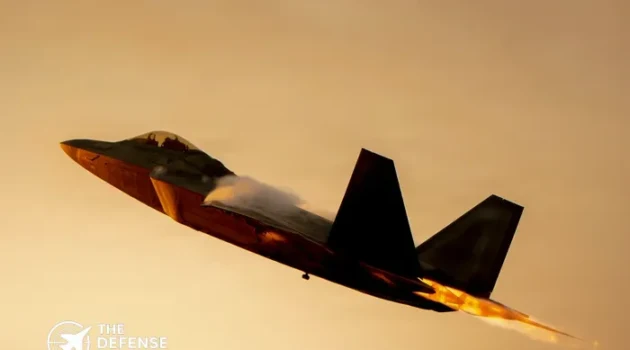
No discussion of the best fighter jets in 2025 omits the F-22 Raptor, the stealth benchmark with an RCS akin to a marble (0.0001 square meters). This air superiority specialist boasts a 1.26 thrust-to-weight ratio for supermaneuverability and supercruise at Mach 1.8 without afterburners, outpacing most adversaries. Armed with six AIM-120 AMRAAMs internally, it dominates beyond-visual-range engagements.
Though production ended in 2011, 2025 sustainment programs have extended its lifespan through digital upgrades, including helmet-mounted displays for 360-degree awareness. The U.S. Air Force’s 178 active Raptors remain elite, often paired with F-35s for “loyal wingman” tactics that amplify force multiplication.
3. Chengdu J-20 Mighty Dragon (China)
China’s J-20 has solidified its place among the top best fighter jets in 2025, with production exceeding 300 units amid the People’s Liberation Army Air Force’s expansion. This twin-engine stealth interceptor features a 24,000-pound internal weapons bay and WS-15 engines enabling supercruise at Mach 2. Its electro-optical targeting system and long-range PL-15 missiles make it a formidable counter to U.S. carriers in the South China Sea.
Recent 2025 deployments highlight its evolution from prototype to operational mainstay, with enhanced avionics for network-centric warfare. At an estimated $100 million per aircraft, the J-20 embodies Beijing’s push for regional air denial, though engine reliability issues linger.
4. Sukhoi Su-57 Felon (Russia)
The Su-57 Felon rounds out the top four best fighter jets in 2025, prized for its supermaneuverability via 3D thrust-vectoring nozzles and a thrust-to-weight ratio of 1.20. Russia’s fifth-generation entry carries 22,000 pounds of ordnance, including hypersonic Kinzhal missiles, and reaches Mach 2 with an RCS reduced to 0.1 square meters through composite materials.
By late 2025, over 30 Su-57s are combat-tested in Ukraine, showcasing resilience in electronic warfare-heavy skies. Priced at $50 million, it offers cost-effective stealth, though sanctions have hampered full-scale production.
5. Boeing F-15EX Eagle II (United States)
The F-15EX Eagle II, the heaviest hitter among the best fighter jets in 2025, hauls 29,500 pounds of weapons—enough for 22 air-to-air missiles—while hitting Mach 2.5, the fastest in U.S. service. Lacking full stealth, it compensates with the Eagle Passive/Active Warning Survivability System for threat evasion and digital fly-by-wire controls for precision.
Entering full-rate production this year, the F-15EX bridges fourth- and fifth-generation gaps, with 20 units delivered to the Air Force. Its interoperability with F-35s positions it as a high-volume missile truck in large-scale conflicts.
Proven Workhorses: Ranks 6-10 in the Best Fighter Jets of 2025
6. General Dynamics F-16 Fighting Falcon (United States)
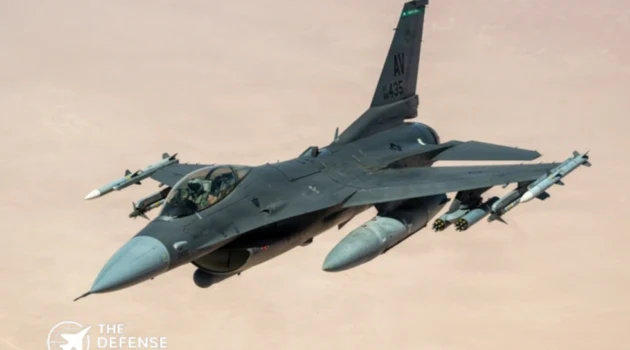
The ubiquitous F-16 remains a staple among the best fighter jets in 2025, with 2,200+ active worldwide. This lightweight multirole jet, upgraded to Block 70/72 standards, features AESA radars and conformal fuel tanks for extended range up to 2,000 nautical miles. It tops out at Mach 2 and integrates seamlessly with NATO munitions.
Ongoing modernizations, including conformal low-drag wings, ensure its relevance; Taiwan’s 2025 deliveries underscore its export appeal in countering regional threats.
7. Sukhoi Su-35 Flanker-E (Russia)
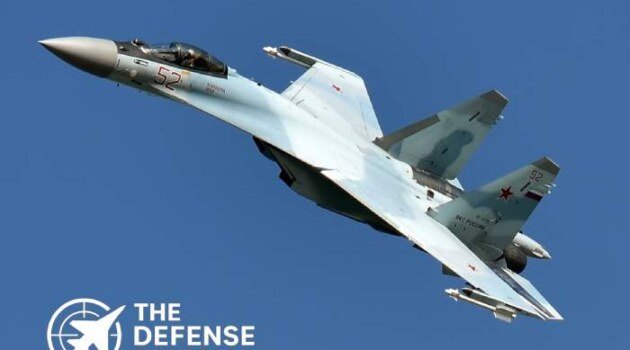
Russia’s Su-35 excels as one of the best fighter jets in 2025 for close-quarters combat, with 2D thrust vectoring yielding a 1.15 thrust-to-weight ratio and Mach 2.25 speeds. Its Irbis-E radar detects stealth targets at 250 miles, and it lugs 17,600 pounds of payload over 1,900-mile ranges.
Export successes to Algeria and Iran in 2025 highlight its dogfighting prowess, though maintenance demands limit fleet growth.
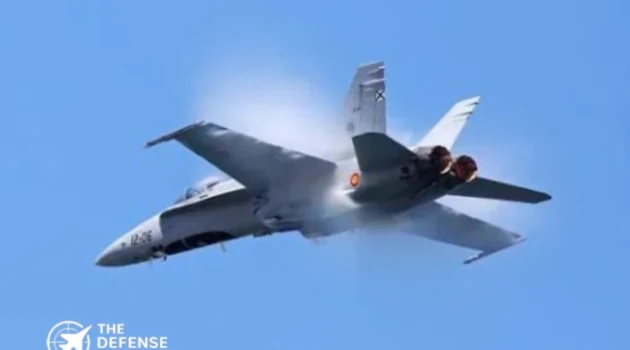
8. Eurofighter Typhoon (Multinational: UK, Germany, Italy, Spain)
The Typhoon’s agility—1.15 thrust-to-weight and Mach 2 capability—secures its spot in the top best fighter jets in 2025. With 20,000 pounds of weapons and supercruise at Mach 1.5, Tranche 4 upgrades add Captor-E radars for beyond-visual-range kills.
European operators logged 500+ sorties in 2025 exercises, affirming its role in collective defense.
9. Boeing F/A-18E/F Super Hornet (United States)
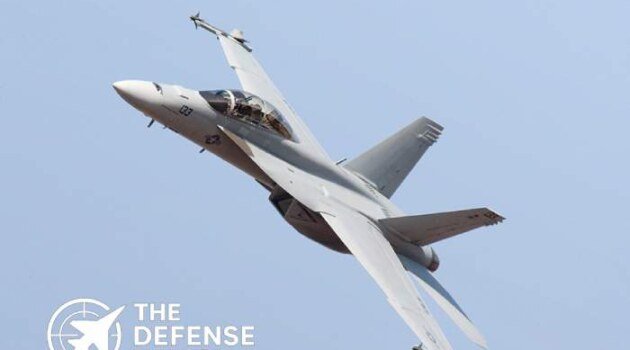
Carrier-capable and rugged, the Super Hornet ranks high among best fighter jets in 2025 with 17,750 pounds of ordnance and Mach 1.8 performance. EA-18G variants enhance electronic attack, while Block III upgrades include infrared search-and-track systems.
The U.S. Navy’s 800+ fleet supports Pacific pivots, with Australia integrating them into AUKUS frameworks.
10. Dassault Rafale (France)
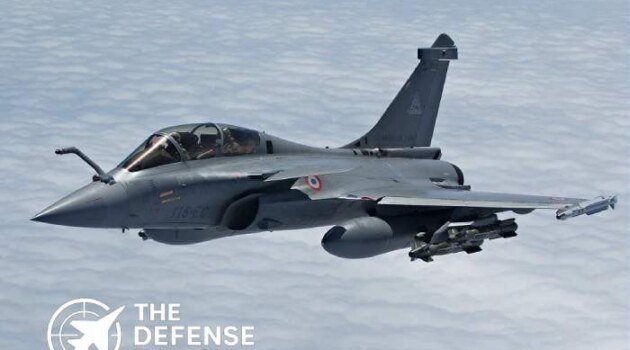
France’s Rafale, an omnirole marvel, features in the best fighter jets in 2025 with 20,900-pound payloads and SPECTRA electronic warfare suites that jam stealth radars. Its 1.10 thrust-to-weight ratio and Mach 1.8 speed shine in export markets like India and Egypt.
F4-standard aircraft delivered in 2025 boost sensor fusion, making it a neutral ally’s go-to for balanced capabilities.
Emerging Contenders: Ranks 11-15 Best Fighter Jets in 2025
11. Sukhoi Su-30SM (Russia/India)
The Su-30SM’s multirole flexibility, with 17,600-pound loads and Mach 2 speeds, earns it a nod among best fighter jets in 2025. Thrust vectoring and Bars radar enable superior endurance for maritime patrols.
India’s 2025 upgrades integrate BrahMos missiles, enhancing Indo-Pacific deterrence.
12. Saab JAS 39 Gripen E (Sweden)
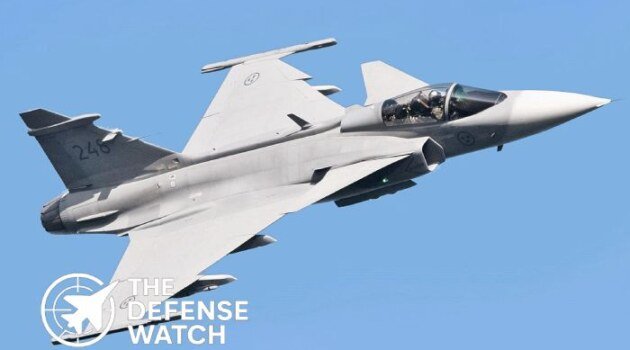
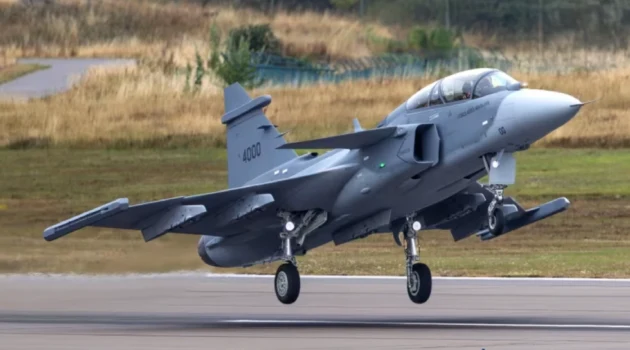
Cost-effective at $85 million, the Gripen E offers AESA radar and Mach 2 agility in the best fighter jets in 2025 rankings. Its 15,000-pound payload and quick-turnaround basing suit expeditionary ops.
Brazil’s full squadron activation this year validates its neutral export model.
13. Shenyang J-16 (China)
China’s J-16, a 4.5-generation strike fighter, carries 12,000 pounds over Mach 2 ranges, with advanced ECM for suppression of enemy air defenses.
PLAAF’s 2025 expansions target Taiwan scenarios, rivaling Western multiroles.
14. KAI KF-21 Boramae (South Korea/Indonesia)
The KF-21 debuts in best fighter jets in 2025 with Mach 1.8 speeds and 9,700-pound payloads, bridging to sixth-gen with modular avionics.
Initial operational capability achieved in Q3 2025, bolstering Seoul’s autonomous defenses.
15. HAL Tejas Mk1A (India)
India’s indigenous Tejas Mk1A rounds out the list with AESA radar and Mach 1.6 performance for 11,000-pound loads.
2025 deliveries to the IAF emphasize lightweight agility in contested Himalayan skies.
Strategic Implications: How These Best Fighter Jets Shape 2025 Geopolitics
The dominance of U.S. platforms like the F-35 in the top best fighter jets in 2025 reflects Washington’s alliance-building strategy, with exports to 20 nations fostering interoperability. Conversely, Sino-Russian models signal a multipolar challenge, where quantity meets quality in hybrid threats. Analysts predict that by 2030, AI integration could widen gaps, urging mid-tier powers to adopt collaborative programs like GCAP.
Export dynamics further complicate the field: While the F-35’s software locks limit tech transfer, affordable options like the Gripen democratize access, potentially shifting airpower balances in Africa and Southeast Asia.
Ranking Methodology and Why This Order in 2025
The 2025 ranking of the world’s best fighter jets is based on a weighted composite score that reflects current operational realities rather than theoretical potential alone. Five core criteria were evaluated on a 100-point scale: (1) Stealth & Survivability (30%), (2) Sensor Fusion & Situational Awareness (25%), (3) Kinematic Performance & Maneuverability (20%), (4) Weapons Load, Range & Versatility (15%), (5) Proven Combat Record, Production Maturity & Sustainability (10%).
Data was cross-referenced from open-source intelligence, 2025 Global Firepower indices, U.S. Congressional Research Service reports, Janes Defense, and official ministry disclosures up to November 2025. For example, the F-35 scored 94/100 due to its near-undetectable RCS, Block 4 sensor suite, and 1,000+ airframes in active service across 20 air forces. The F-22 followed at 91 despite superior kinematics because its fleet is capped at 178 and lacks the F-35’s multirole flexibility and software-upgrade tempo. The J-20 (87) and Su-57 (84) trail primarily on proven stealth validation and global combat experience, while the F-15EX (82) surges ahead of pure fourth-generation jets because its 2025 digital architecture and massive payload make it the most lethal non-stealth platform in high-intensity scenarios. This methodology explains why raw top speed or thrust-vectoring alone no longer guarantees a top-five slot—survivability and information dominance now decide who rules contested skies.
Why These Jets Matter in 2025
- They influence global airpower balance, shaping deterrence and alliance strategies.
- Their capabilities (stealth, payload, range) reflect evolving doctrines — from high-intensity conflict to regional power projection.
- The proliferation and export potential of jets like the F-35 and KF-21 carry long-term political and economic implications.
FAQs
What makes the F-35 the best fighter jet in 2025?Its stealth, sensor fusion, and multirole adaptability allow seamless integration in joint operations, outpacing rivals in networked warfare.
How do fifth-generation best fighter jets in 2025 differ from fourth-generation?They prioritize internal weapons for low observability, supercruise, and advanced avionics over raw speed, enabling survival in high-threat zones.
Which country leads in best fighter jets in 2025 production?The United States, with the F-35 program delivering 150+ units annually, though China is closing the gap via J-20 ramps.
Are there any new entrants to the top 15 best fighter jets in 2025?Yes, the KF-21 Boramae enters operational service, offering affordable 4.5-gen capabilities for emerging powers.
What role do best fighter jets in 2025 play in unmanned teaming?They serve as “quarterbacks,” directing drone swarms for extended strikes, as seen in U.S. Air Force trials.
What Is a Fighter Jet?
A fighter jet is a high-performance military aircraft designed primarily for air-to-air combat, interception, and securing air superiority. In modern warfare, these aircraft serve as the backbone of national air forces, providing rapid response, deterrence, and offensive capability. Fighter jets remain essential because control of the skies often determines the outcome of conflicts, shaping everything beneath—from ground operations to naval movements.
Today’s fighter jets combine speed, stealth, avionics, and precision weapons to engage both airborne and ground threats. From the F-35 and F-22 to the Rafale, J-20, and Gripen, they reflect a nation’s technological capability and defense priorities.
What Defines a Fighter Jet?
1. Designed for Air Superiority
The primary mission of any fighter jet is to defeat enemy aircraft. Air-to-air missiles, high-G maneuverability, advanced radar, and electronic warfare systems make this possible.
2. High-Speed, High-Altitude Capability
Modern fighters routinely operate at speeds above Mach 1 and at altitudes exceeding 50,000 ft. This provides tactical advantage and battlefield dominance.
3. Advanced Sensors and Avionics
Fighter jets carry powerful radars, infrared sensors, data-links, and cockpit displays that fuse information, giving pilots a real-time view of the battlefield.
4. Multi-Role Flexibility
Most current-generation fighters are multirole, able to conduct:
- Air-to-air combat
- Precision strikes
- Close air support
- Reconnaissance
- Maritime operations
This flexibility reduces the need for separate aircraft types.
Why Fighter Jets Matter in Modern Warfare
1. Securing Air Superiority
Nations must protect their airspace. Fighter jets intercept and neutralize hostile aircraft before they reach critical areas. Without air superiority, ground forces and naval fleets remain vulnerable.
2. Deterrence and Strategic Signaling
A capable fighter fleet serves as a deterrent, signaling to adversaries that any aggression will face a rapid and effective military response.
3. Precision Strike Capability
Modern fighters can engage ground targets using guided bombs, cruise missiles, and stand-off weapons. This allows nations to strike with accuracy while minimizing collateral damage.
4. Rapid Reaction and Global Reach
Fighter jets can deploy within minutes, project power across long distances, and reinforce allies as part of international coalitions.
5. Technology Leadership
Advances in stealth, sensors, hypersonic weapons, and AI-driven warfare are closely tied to fighter jet development. Nations leading in airpower often lead in overall military innovation.
Generations of Fighter Jets: A Quick Overview
Early Jets (1st–2nd Generation)
- Subsonic or early supersonic
- Basic radar
- Primitive missiles and gun combat
3rd–4th Generation
- High maneuverability
- Advanced air-to-air missiles
- Multi-role capabilities
4.5 Generation
- AESA radars
- Electronic warfare suites
- Network-centric operations
5th Generation
- Stealth shaping
- Sensor fusion
- Supercruise
- Example: F-22, F-35, J-20
6th Generation (In Development)
- AI copilots
- Directed energy weapons
- Loyal wingman drones
- Adaptive engines
How Fighter Jets Work: Key Systems
1. Propulsion
Most fighters use afterburning turbofan engines, enabling supersonic flight. New engines focus on lower fuel burn and higher thrust.
2. Stealth Technology
Shaping, radar-absorbent materials, and internal weapon bays reduce detection by enemy radar.
3. Weapons
Typical armament includes:
- Short- and long-range air-to-air missiles
- Precision-guided bombs
- Anti-ship missiles
- Internal cannons
4. Avionics
Fighters carry advanced avionics such as:
- AESA radar
- Infrared search and track (IRST)
- Helmet-mounted displays
- Electronic countermeasures
Global Competition: Why Nations Invest in Fighter Jets
Airpower is a symbol of national strength. Countries like the U.S., China, India, France, and Russia invest heavily in fighter programs to maintain strategic advantage.
Rising tensions—from the Indo-Pacific to Eastern Europe—have renewed global demand. Joint fighter programs like the F-35, GCAP, and AUKUS aviation initiatives show how fighter jets have become diplomatic tools as well as military assets.
Strategic Analysis: The Future of Fighter Jets
Air combat is evolving. Pilots now rely on AI, drones, and long-range missiles more than close-range dogfighting. Future fighters will emphasize stealth, electronic warfare, hypersonic weapons, and loyal wingman drones.
Despite emerging technologies, fighter jets will remain central to military strategy because speed, reach, and air dominance are irreplaceable.
FAQs
What is a fighter jet?A fighter jet is a high-performance military aircraft designed for air combat, interception, and securing airspace.
Why are fighter jets important?They provide air superiority, deterrence, rapid response capability, and precision strike options.
What makes modern fighter jets different from older ones?Stealth, advanced sensors, network-centric warfare, and multirole capability distinguish modern fighters.
Which countries operate the most advanced fighter jets?The United States, China, Russia, France, the UK, and several NATO/Asian partners field advanced fleets.
Will drones replace fighter jets?Drones will complement—not replace—manned fighters. Future jets will operate alongside autonomous wingmen.


New imagery released by Chinese social platforms on 3 November 2025 reveals significant updates to China sixth-generation fighter prototypes, signaling an uncommonly rapid pace toward a formal test campaign. According to reports, the heavy tailless jet associated with Chengdu Aircraft Corporation now sports angular two-dimensional exhausts and a distinctive three-engine layout, raising pressures on the United States’ counterpart development effort under the Next Generation Air Dominance (NGAD) umbrella.
Background
The race for air superiority among peer rivals has moved firmly into the sixth-generation fighter domain—aircraft designed beyond the fifth-generation features of stealth, supersonic cruise and advanced sensors. China has long invested in stealth fighters such as the Chengdu J‑20 and is now advancing a next step, while the U.S., through its NGAD initiative, seeks to field a “family of systems” centred around a new manned fighter plus unmanned wing-mates.
In that context, any visible jump in China’s prototyping can disturb existing expectations about timing, capability-parity and strategic deterrence.Latest Developments
The 4 November 2025 report by Army Recognition states that Chinese images show a second prototype of the heavy tailless design tied to Chengdu. This version adds a three-engine configuration and “angular, two-dimensional style” exhausts—changes from earlier sightings.
That speed of change—about ten months after the first public sightings—suggests China is accelerating toward full-scale testing.
A separate analysis notes that China’s broader move into sixth-generation systems reflects a shift toward high-end manufacturing, domestic supply-chains, and self-sufficiency in key technologies such as advanced propulsion and sensors.
On the U.S. side, a recent market-report document highlights that the Navy’s prospective sixth-generation fighter, the F/A‑XX, was already facing budget constraints and shifting priority lines in 2025 — and can affect the broader NGAD timeline.
Taken together, observers note that the U.S. may be under pressure not only to deliver capability, but to maintain schedule and quantity of fighters in a contested environment.Expert/Policy Perspective
While neither side has officially confirmed many of the design details of the Chinese prototype, Western analysts interpret the visible changes—three-engine layout, tailless heavy design, advanced exhausts—as indicative of a focus on high thrust, low observable signature, and high survivability in contested airspace. The deployment of such aircraft could affect the air-dominance calculus in the Indo-Pacific region.
From a U.S. policy view, senior airpower officials have publicly acknowledged concerns about an “air superiority gap” should adversary platforms mature faster than current U.S. ones.
Analyst commentary suggests that while China may still lag in operational readiness, the symbolic effect of accelerated testing means U.S. planners may have to reassess timelines, force-structure assumptions and allied integration.Implications and What’s Next
The acceleration of China’s sixth-generation fighter development raises several implications:
- If China indeed fields a viable sixth-generation fighter ahead of the U.S., the balance of air superiority in the Asia-Pacific could tilt, at least in perception.
- The U.S. might need to hasten its NGAD fighter and associated unmanned-wingman systems, or invest even more in existing fifth-generation platforms as bridge capabilities.
- Allies in the region may adjust procurement strategies, basing decisions and air-defence posture to account for rapidly shifting threat vectors.
- The industrial base in both countries may become contested: advanced materials, propulsion, sensors, avionics and manufacturing pipelines will be critical bottlenecks.
For China, the next visible step will be a formal prototype test campaign—public sightings, flight-test activity and perhaps release of state-media footage. For the U.S., budget decisions and contract awards for NGAD and related systems in the coming fiscal years will indicate how seriously the pressure is being addressed.
Closing
In the evolving air-superiority race, the visible progress of China’s sixth-generation fighter places the United States’ next-generation jet development under sharper scrutiny. As both nations mobilize advanced aerospace technologies, the timelines, cost commitments and strategic assumptions of air-dominance may be entering a new era of competition and urgency.
Rise of the Challenge: China Gains Momentum
A recent warning from retired Air Force Colonel John Venable — formerly a U.S. fighter pilot — has put a spotlight on the growing concern that the United States Air Force (USAF) may be losing its longstanding air dominance edge. In remarks delivered at the Air & Space Forces Association conference in September, he argued that in terms of capacity, capability and readiness, the U.S. now “falls short, woefully short.”
While the USAF still fields more than 2,000 fighters, only a fraction are considered mission-capable, and readiness metrics are lagging. Meanwhile, the People’s Liberation Army Air Force (PLAAF) is rapidly reequipping with fourth- and fifth-generation platforms, expanding pilot training hours and increasing production rates of airframes.
Key Metrics: Where the Gap Is Widest
Shrinking U.S. Fleet and Aging Airframes
The USAF’s fighter and bomber fleet has decreased sharply since the Cold War. A recent report by the Mitchell Institute for Aerospace Studies found that the force is now the smallest, arguably the oldest, and least ready in its history. For example, USAF pilot flying hours have dropped from 18-20 hours/month to 6-8 hours/month in some units.
China’s Production and Training Advantage
China is reportedly producing fighters at a rate of roughly 1.2 for every 1 made by the U.S. Venable noted the PLAAF now has some 1,100 fighters able to sortie over Taiwan without aerial refueling. Meanwhile, Chinese pilots average around 200 flight hours per year, compared with approximately 110 for U.S. counterparts.
Strategic Geography: Indo-Pacific Pressure
One of the greatest vulnerabilities is geography. In a conflict scenario over the Taiwan Strait, U.S. forces would operate over extended distances, while China can exploit near-home advantage. U.S. fleets based farther from the battle zone face longer sortie times, more logistic strain and potentially diminished readiness.
Analysis: What This Means for U.S. Defense
The shift in balance carries significant strategic implications:
1. Reduced margin for error. The U.S. has long relied on its air superiority as a foundational enabler for joint operations, expeditionary warfare, and deterrence. As that margin narrows, operational risk rises — miscalculations or initial setbacks could prove more costly.
2. Peer-competition era demands new readiness. The era of counter-insurgency and low-intensity conflict allowed force structures tuned to irregular operations. But the emerging competition with China demands near-peer readiness — high sortie rates, survivable dispersed basing, resilient logistics and integrated multi-domain operations. Venable highlighted the mismatch: “we have not 4,000 fighters but 2,000… They average not 8 years old but 28 years old.”
3. Indo-Pacific and allied posture under stress. The PLAAF’s growing capacity and readiness puts additional pressure on U.S. forward posture, allied basing and regional deterrence. If China can deny or delay U.S. access in the first island chain, the whole campaign dynamic changes.
4. Modernization and industry tempo become critical. The USAF’s “divest to invest” strategy, which retires older systems to fund advanced platforms, may succeed only if new systems arrive at the promised scale and on schedule. Delays and reductions—such as planning to buy only 24 F-35s in FY2026—erode future capacity.
5. Allies and partners matter more than ever. As capacity tightens, the U.S. will rely increasingly on the integration of allied air forces, distributed basing and cooperative logistics. Delays in readiness across the force multiply risk.
Conclusion & Forward Outlook
The warning from Colonel Venable is clear: America’s historic airpower edge is no longer assured. If China continues its aircraft production, pilot training and readiness surge — while the U.S. fleet shrinks and ages — the balance of air power in the Indo-Pacific may shift.
Looking ahead, we should expect the U.S. Air Force to accelerate initiatives around distributed operations, increased sortie generation, advanced unmanned systems, enhanced training tempo and closer coordination with allies. Whether these reforms can close the gap in time remains the central question. The coming decade will reveal whether the U.S. can re-establish its overmatch or whether the air superiority margin becomes contested.
In the early 1990s, the F‑117 Nighthawk represented a pioneering leap in stealth technology for tactical operations. Fast-forward two decades and the F‑22 Raptor entered service, heralding a new era of fifth-generation stealth fighters. This article examines how fighter jet stealth evolved from the F-117 to the F-22, highlighting design, capabilities and operational context. We’ll also provide expert analysis of how this evolution shapes future air-combat dynamics.
The F-117 Nighthawk – Birth of Operational Stealth
Development and Role
The F-117 Nighthawk, developed by Lockheed Skunk Works, entered service in 1983 and became the first operational U.S. stealth aircraft. Its mission was essentially one-dimensional: penetrate the densest enemy air defences, deliver precision strike ordnance and exit without detection.
While often called a “fighter”, its role was ground attack — it lacked air-superiority weapons such as air-to-air missiles, and no guns. The skunk-works design team employed a radically faceted geometry to deflect radar energy and early radar-absorbing materials (RAM) to reduce radar cross-section (RCS).
Limitations in Capability
Although revolutionary, the F-117 had several limitations:
- It was subsonic and aerodynamically compromised due to stealth-shaping.
- It carried a modest payload (typically two laser/GPS-guided bombs) and lacked internal sensor suites for air-to-air combat.
- Maintainability was high: stealth coatings required frequent upkeep and were sensitive to environmental conditions like rain.
- Its stealth advantage, while considerable at the time, began to erode as adversaries improved air-defence radars and passive detection. The notable shoot-down of an F-117 in 1999 over Serbia demonstrated vulnerabilities.
In short: the F-117 delivered a quantum jump in stealth, but it was a first-generation system with clear trade-offs.
The F-22 Raptor – Stealth Meets Air Superiority
Program and Design Evolution
The F-22 Raptor emerged from the U.S. Air Force’s Advanced Tactical Fighter (ATF) programme and entered service in December 2005. It was designed not only for stealth but for air-superiority — meaning air-to-air and air-to-ground missions, with advanced sensors, high speed (including super-cruise capability) and full sixth-generation readiness features.
Where the F-117 was subsonic and focused on attack, the F-22 can super-cruise at Mach 1.6–1.7 without afterburner, even reaching near Mach 2 in afterburner. Its stealth measures include improved RAM coatings, internal weapon bays, optimized engine inlet/exhaust design, and much greater sensor and avionics integration.
Stealth & Survivability Advances
Compared to the F-117, the Raptor brought major stealth and survivability improvements:
- The aircraft uses smoother, blended wing-body shapes rather than faceted surfaces, reducing edge-wave scattering of radar energy.
- RAM coatings and their application were made more robust and less maintenance-intensive.
- Internal weapons carriage reduces external reflections.
- Avionics fusion, sensor networking and electronic warfare (EW) capability become integral to stealth operations, not just airframe shaping.
- The F-22 is capable of both air superiority and precision strike, merging roles long separated.
In short, the Raptor represents stealth matured into a fully-featured fighter-platform rather than a niche attack tool.
Key Differences: F-117 vs F-22
Feature F-117 Nighthawk F-22 Raptor Primary Role Stealth attack aircraft (ground strike) Air-superiority fighter with strike capability Speed / Performance Subsonic, optimized for stealth Supersonic with super-cruise (Mach 1.6+) Stealth Design Faceted surfaces, early RAM Blended surfaces, advanced RAM, internal bays Payload / Weapons Limited bombs, no air-to-air armament Full internal weapon bays: AAMs, precision bombs Sensor/Avionics Suite Basic navigation/targeting only Full sensor fusion, EW suite, datalink network Maintainability High upkeep required Improved coatings and sustainment systems Vulnerabilities Shot-down in 1999, limited survivability Far greater resilience against modern defences These differences reflect the leap from a specialized first-generation stealth platform to a full-featured fifth-generation fighter.
Why Stealth Evolved — Operational and Technological Drivers
Emerging Threat Environments
In the 1980s-90s the primary threat was radar-guided SAMs and fixed air-defence systems. The F-117 proved valuable in that era, especially during Gulf War. However, by the 2000s adversaries had deployed more advanced radars, integrated SAM networks, passive sensors and infrared search-and-track (IRST) systems. Stealth aircraft needed to evolve accordingly.
Broader Mission Demands
The nature of aerial combat changed: air superiority fighters needed stealth to penetrate enemy airspace, conduct air-to-air engagements and still strike ground targets. The F-22 addresses that need, whereas the F-117 was restricted in mission scope.

Technology Maturation
Advances in materials science (RAM), computational modelling (to optimise shapes and scattering), engine / inlet design, sensor and EW systems all matured significantly from the 1970s/80s to the 2000s. For example, the F-117 tested mirror-like coatings for IR signature reduction that later fed into F-22 developments.
Edge-treatment techniques, serpentine engine inlet ducts and more advanced RAM took hold.
These technological leaps enabled stealth aircraft to achieve greater mission flexibility and survivability.What This Means for Airpower & Future Platforms
Multi-Domain and Networked Operations
Stealth is no longer just about shape and coating — it’s about sensor fusion, data links, EW capability and integration into a wider networked force. The F-22 exemplifies that shift. Future platforms (for example, the F‑35 Lightning II and sixth-generation systems) will further push these dimensions.
Stealth vs. Detection Arms-Race
As stealth improves, so do detection systems (e.g., low-frequency radars, passive tracking, IRST). The evolution from F-117 to F-22 is not a one-time leap — rather part of a continuous arms-race between stealth technology and counters. Analysts often note that the F-117’s limitations became more acute as adversaries adapted.
Sustaining Fleet Viability
The move from a specialist stealth bomber (F-117) to a multi-role stealth fighter (F-22) reflects shift in budget, doctrine and learnings from combat operations. The U.S. had to invest in sustainment, training, upgrades and tactics for stealth fleets. The future likely emphasises modularity, upgradeability and digital warfare integration rather than pure air-frame stealth alone.
Conclusion
From the first operational stealth aircraft in the F-117 Nighthawk to the fully networked, high-performance F-22 Raptor, stealth fighter technology has undergone a fundamental transformation. What began as a ground-strike specialist has evolved into a high-end air-superiority and strike platform. For defence planners, this evolution matters: future air-combat scenarios will demand platforms that combine stealth, speed, sensor fusion and adaptability. The F-22 stands on the shoulders of the F-117 — and the next generation will stand on the shoulders of the Raptor.
FAQs
Why is the F-117 still called a “fighter” if it primarily did ground attack?The F-117 was designated as a fighter (“F”) largely for secrecy and programme classification. In practice its mission was strike operations and it lacked air-to-air armament.
What was the major stealth breakthrough of the F-117?It introduced operational use of faceted geometry, RAM coatings and signature-management tactics (night operations, specific routing) to reduce detection risk. It proved the concept of stealth in combat.
What key features make the F-22 more advanced in stealth than the F-117?The F-22 uses blended wing-body shapes (versus faceted), improved RAM materials, internal carriage of weapons, super-cruise, sensor-fusion, full avionics integration and lower signatures (radar, IR).
Does this mean the F-117 is obsolete?While the F-117 proved foundational, its design limitations (subsonic speed, limited payload, no air-to-air capability, maintenance demands) made it less viable in modern contested air environments. The transition to platforms like the F-22 reflects that shift.
How does this evolution affect future fighter design?Future designs focus not only on invisibility to radar, but on emissions management, network integration, multi-role flexibility and digital warfare domains. Stealth remains vital but is just one pillar among many.
In an age where control of the skies remains a cornerstone of national defense, advanced fighter jets continue to define the balance of power. As of 2025, the roster of front-line combat aircraft includes stealth platforms, sensor-rich multirole fighters, and upgraded 4th/4.5-generation workhorses. Here, we survey the top 10 fighter jets in the world today, highlighting their strengths, trade-offs, and strategic significance. We also examine how U.S. airpower stacks up against global competitors.
(adsbygoogle = window.adsbygoogle || []).push({});Top 10 Fighter Jets in the World (2025)
Below is a synthesized, consensus-based list (drawing on recent rankings) of the premier fighter aircraft in service today. Rankings depend on a blend of stealth, avionics/sensor fusion, weapons capacity, survivability, upgrade potential, and operational deployment.
(adsbygoogle = window.adsbygoogle || []).push({});Rank Fighter Jet Top Speed (Mach) Ferry Range (km) Payload Capacity (kg) RCS (m², frontal est.) Key Strengths & Notes 1 Lockheed Martin F-35 Lightning II 1.6 2,200 8,160 0.001 As the world’s most proliferated 5th-generation fighter, the F-35 combines stealth, sensor fusion, networked operations, and multirole flexibility. 2 Lockheed Martin F-22 Raptor 2.25 2,960 8,390 0.0001 While fewer in number, the F-22 remains a gold standard in air superiority, especially in air-to-air combat, thanks to its stealth, supercruise, and agility. 3 Chengdu J-20 Mighty Dragon 2.0 3,400 10,000 0.05 China’s flagship 5th-gen stealth platform, designed for long-range, contested-airspace penetration, represents Beijing’s push to contest U.S. dominance. 4 Sukhoi Su-57 “Felon” 2.0 3,500 10,000 0.1–1.0 Russia’s stealth / multirole design with emphasis on agility, sensor suite, and electronic warfare. Still incremental in deployment scale. 5 KAI KF-21 Boramae 1.8 2,900 7,700 0.5 A next-gen South Korean/Indonesian project with stealth features and modular growth potential, representing a shift in Asian aerospace ability. 6 F-15EX Eagle II 2.5 2,400 13,380 25 The modern evolution of the F-15 line, packed with advanced radar, heavy payload capacity, and multirole adaptability. 7 Eurofighter Typhoon 2.0 3,790 7,500 0.5 A high-performing 4.5-generation jet with good agility, multirole flexibility, and strong European alliance backing. 8 Dassault Rafale 1.8 3,700 9,500 1 France’s versatile combat aircraft with excellent track record in combat, strong avionics, and export success. 9 Boeing F/A-18E/F Super Hornet / EA-18G Growler 1.6 3,300 8,050 1 A proven and upgradeable platform, especially when augmented with electronic warfare capabilities (EA-18G). 10 Sukhoi Su-35S 2.25 3,600 8,000 3 Among the best non-stealth “4++” fighters, prized for agility, thrust-vectoring, and weapon load. Notes on ordering:
- The exact ordering among the top few (F-35, F-22, J-20, Su-57) is subject to debate, depending on weighting of stealth versus raw maneuverability or sensor systems.
- Some emergent designs, such as Chinese FC-31 derivatives or upgrades to existing jets, may shift rankings in coming years.
How the U.S. Ranks — Strengths, Gaps & Trends
U.S. Airpower: Deep but Imperfect
The U.S. continues to lead in sheer depth and integration of fighter capability. The F-35 remains the backbone of next-generation U.S. airpower, while the F-22 remains unmatched in certain pure air dominance roles. Upgraded legacy platforms like the F-15EX and advanced F-16 blocks extend U.S. competitiveness in cost-effective roles.
However, U.S. jets must increasingly face contested anti-access/area-denial (A2/AD) environments — meaning survivability, data fusion, electronic warfare, and unmanned teaming are now at least as critical as raw performance.
Challenges & Strategic Pressure
- Scale vs saturation: U.S. aircraft must contend with massed adversary systems (e.g. integrated air defenses, drones, missile salvos).
- Next-generation development: The Pentagon’s Next Generation Air Dominance (NGAD) program aims to field a sixth-generation fighter (or a family of systems) by the 2030s to replace or complement F-22/F-35 roles. (Note: as of 2025, the F-47 designation has been used in some reporting for an NGAD successor).
- Export & interoperability burden: U.S. jets must serve both domestic defense and export customers; balancing security, performance, and affordability is nontrivial.
In sum, the U.S. remains at or near the top, but cannot be complacent — rising challengers like China’s J-20 and Russia’s Su-57 are narrowing the margin.
(adsbygoogle = window.adsbygoogle || []).push({});Context & Outlook: What to Watch in Coming Years
- Stealth vs counter-stealth: As passive and active sensors evolve, fighters must adapt with low-observability, electronic attack, and signature management.
- Networked teaming & drones: Future air combat may see crewed fighters directing swarms of unmanned platforms, shifting the paradigm of “fighter.”
- Emerging entrants: Programs like China’s J-35, upgraded FC-31 derivatives, Turkey’s KAAN, or Indian indigenous fighters could expand the competitive field.
- Upgradability & lifecycle cost: A less capable but upgradeable aircraft might outperform a “flashier” model if it can evolve cost-effectively over 30 years.
FAQs
(adsbygoogle = window.adsbygoogle || []).push({});Why is the F-35 frequently ranked #1 despite not being the fastest?Because its strength is in stealth, sensor fusion, network integration, and multirole flexibility — not raw speed. These qualities give it an edge in first-look, first-shot engagements in contested airspace.
Does the U.S. truly “lead” in fighter jets?Yes, in terms of depth, operational experience, global basing, and integrated systems. But rivals are rapidly advancing in stealth, EW, and integration.
Can 4th or 4.5-generation jets still matter?Absolutely. Platforms like the F-15EX, Su-35S, Rafale, or upgraded Typhoons remain viable in less-denied environments, or as “attritable” assets complementing stealth assets.
When might the U.S. field a 6th-gen fighter?Current projections suggest in the 2030s via the NGAD program, possibly as a manned-unmanned system rather than a single monolithic jet.
Source : Simple Flying | af.mil
In 2025, NATO intensified its emphasis on airpower with a series of large-scale joint air and missile defense exercises. These exercises—ranging from integrated live-fire maneuvers to strategic reconnaissance deployments—highlight the Alliance’s commitment to maintaining air superiority amid evolving threats. This article explores the key exercises conducted and their significance for NATO’s global air dominance.
Key NATO Air Exercises in 2025
Formidable Shield (May 1–10, Northern Norway)
NATO conducted one of its largest at-sea live-fire exercises, Formidable Shield, across the North and Norwegian Seas. Hosted by the U.S. 6th Fleet and STRIKFORNATO, the drills focused on integrated air and missile defense (IAMD) capabilities. Around 2,500 personnel from ten countries practiced joint operations using NATO command-and-control structures.Lively Sabre (Part of Swift Response 25, Southern Finland)
Under the broader Swift Response 25 within the Defender series, Lively Sabre simulated realistic airfield seizure and recapture scenarios. Finnish and Polish forces trained to defend and retake strategic airfields, mirroring potential threats posed by Russian aggression.Atlantic Trident 25 (June–July, Finland)
This exercise saw the deployment of NATO’s RQ-4D Phoenix remotely piloted ISR aircraft to Finland—the first operation of its kind on Finnish soil. The deployment significantly enhanced situational awareness and interoperability between Finnish and NATO forces.Strategic Significance of NATO’s Air Drills
Preserving Air Superiority & Integrated Defense
Exercises like Formidable Shield underscore NATO’s ability to neutralize aerial and missile threats through coordinated force projection—a critical component in sustaining air superiority.Enhancing Interoperability & Deterrence
Joint drills not only refine tactical readiness but also strengthen interoperability across different platforms and national forces. These capabilities boost deterrence by presenting a unified, credible defense posture.Leveraging New Technologies
The deployment of advanced ISR systems like the RQ-4D Phoenix reflects NATO’s increasing reliance on intelligence-driven operations to achieve air superiority in complex environmentsBroader Context & Analysis
While these exercises bolster NATO’s deterrent capacity, they also signal a shift in airpower dynamics. Rapid asset deployment, live-fire readiness, and distributed ISR highlight NATO’s adaptability amid strategic uncertainty. As air and missile threats become more sophisticated, these drills ensure the Alliance stays ahead of adversaries and preserves dominance in the air domain.
Conclusion
NATO’s 2025 air exercises—from Formidable Shield and Lively Sabre to Atlantic Trident 25—demonstrate the Alliance’s focus on integrated defense, technological edge, and regional agility. As airspace competition intensifies, NATO’s continued investment in joint airpower exercises will be vital in maintaining global air superiority.
FAQs
What is Formidable Shield?Formidable Shield is NATO’s large-scale live-fire exercise that focuses on integrated air and missile defense, involving naval, air, and land forces in realistic combat scenarios.
What made Lively Sabre significant?Lively Sabre simulated the rapid recapture of airfields and involved Finnish and Polish forces, enhancing joint response to potential incursions or siege scenarios.
Why deploy RQ-4D Phoenix drones to Finland?The deployment strengthened NATO’s ISR capabilities by providing real-time surveillance, improving situational awareness, and reinforcing Finland’s defense posture.
How do these exercises support air superiority?They build interoperability, validate defense doctrines, integrate command structures, and ensure readiness to respond swiftly to air and missile threats.
What broader trend do these exercises reflect?They reflect NATO’s strategic shift toward forward defense, rapid mobilization, technological integration, and deterrence under a more contested security environment.