KEY FACTS AT A GLANCE
| Specification | Detail |
|---|---|
| Manufacturer | Korea Aerospace Industries (KAI), Sacheon, South Korea |
| Generation | 4.5 / Pre-5th Gen (Block III targets full stealth) |
| First Flight | 19 July 2022 |
| Combat Suitability | Final approval granted 7 May 2026 (DAPA) |
| Powerplant | 2× Hanwha/GE F414-GE-400K (~98 kN / 22,000 lbf each) |
| Max Speed | Mach 1.81 (~2,223 km/h) |
| Service Ceiling | ~16,700 m (54,800 ft) |
| Combat Radius | ~900–1,000 km (Block I, clean config) |
| Ferry Range | ~2,900 km (with external tanks) |
| Key Radar | APY-016K AESA — ~1,000 T/R modules, 150–200 km detection, 20+ simultaneous tracks |
| EW Suite | ALQ-200K (indigenous) |
| Primary Armament | 4× MBDA Meteor (semi-recessed) + 2× IRIS-T + 20 mm cannon |
| Max Payload | ~7,700 kg across 10 hardpoints |
| Unit Cost (est.) | USD ~65–70 M (Block I) |
| ROKAF Order | 40 Block I; 80 Block II planned; 120+ total by early 2030s |
| IOC Target | September 2026 |
Executive Summary
On 7 May 2026, South Korea’s Defense Acquisition Program Administration (DAPA) granted Final Combat Suitability approval to the KF-21 Boramae — formally certifying Korea Aerospace Industries’ twin-engine 4.5-generation fighter as ready for real-world combat operations. The announcement, coming barely six weeks after the first serial production aircraft rolled out of KAI’s Sacheon factory on 25 March 2026 and completed its maiden flight just 22 days later on 15 April 2026, marks the definitive transition of the KAI KF-21 Boramae from an ambitious national programme into a frontline weapon system.
The road to this moment covered more than two decades of sustained investment. Six prototypes flew approximately 1,600 accident-free sorties and validated over 13,000 individual test conditions between July 2022 and January 2026 — a campaign DAPA closed two months ahead of schedule. With an initial batch of 40 Block I aircraft under contract and ROKAF deliveries commencing in September 2026, the boramae kf 21 is now entering a decade of progressive capability expansion that will eventually see it evolve into a genuine stealth fighter. This report provides the definitive technical and strategic analysis for defence professionals tracking one of the Indo-Pacific’s most consequential aviation programmes.
Airframe & Low-Observable Design
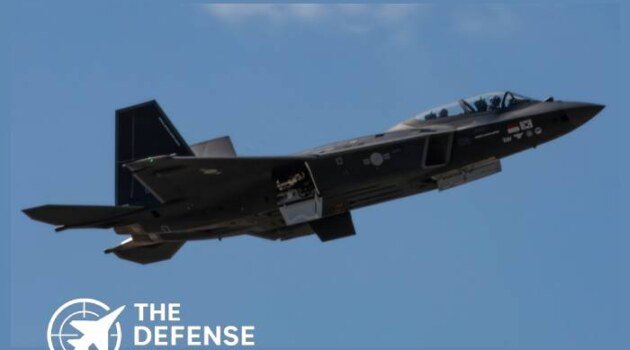
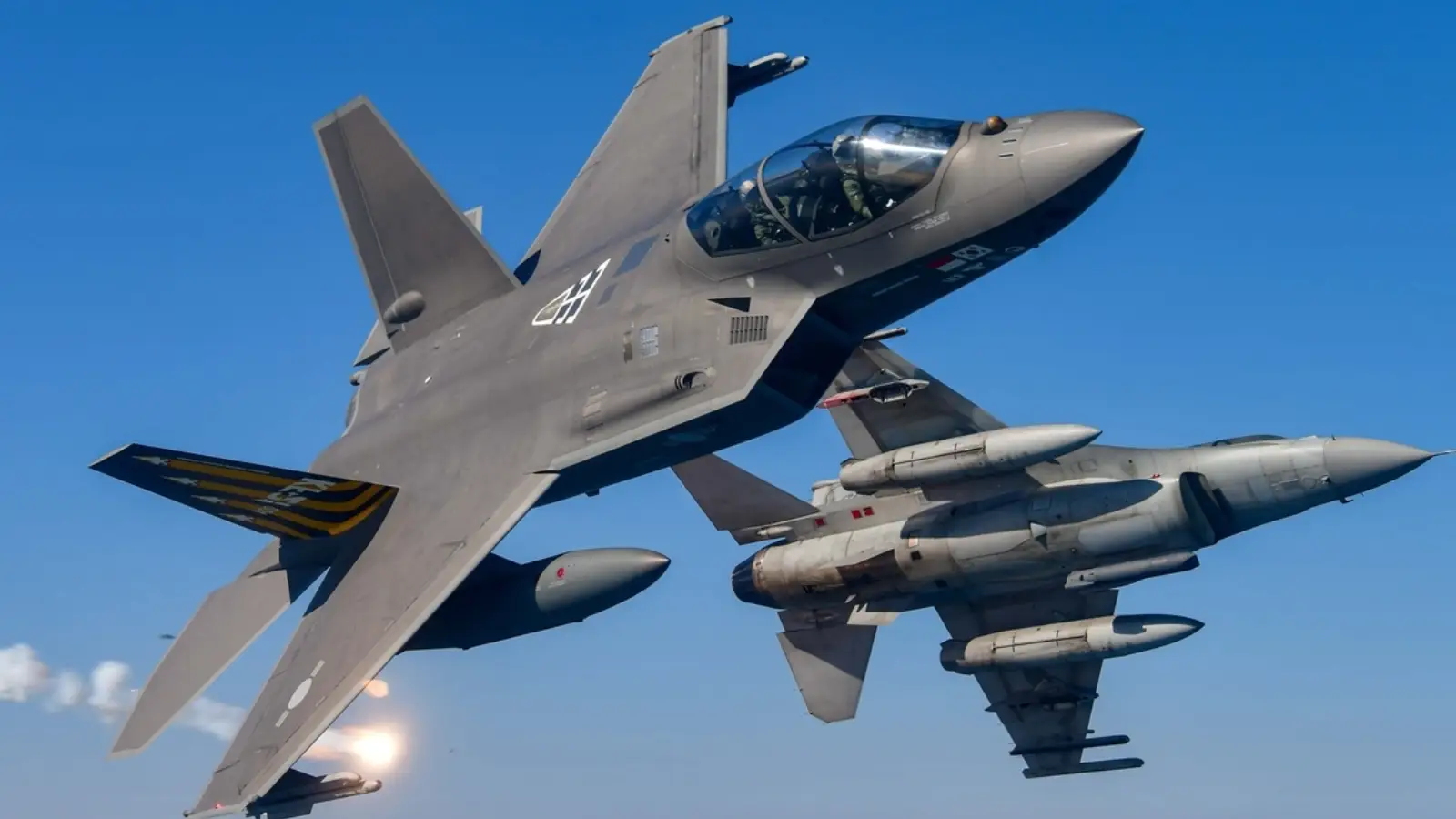
The KF-21 Boramae airframe blends a cranked-arrow delta wing with a canted twin tail and carefully sculpted bifurcated intake ramps, producing a planform clearly optimised for reduced frontal radar cross-section. At 16.9 m in length and 11.2 m wingspan, the aircraft sits in the medium class — broadly comparable to the Dassault Rafale — but is substantially heavier at a maximum take-off weight approaching 25,600 kg, reflecting the fuel and payload margins demanded by ROKAF’s long-range patrol requirements over the Korean Peninsula and East Sea.
Block I does not incorporate a full Radar Absorbent Material (RAM) coating or an internal weapons bay. Instead, KAI engineered four semi-recessed fuselage stations positioned along the centreline for Meteor missiles. This arrangement dramatically reduces the frontal RCS penalty compared to conventional external pylons while stopping short of true internal carriage — a deliberate cost-and-schedule trade-off for the initial variant. Intake edge alignment, exhaust shaping, and canopy frame design all draw from low-observable engineering principles, providing a stealth signature that independent analysts broadly place well below legacy fourth-generation platforms such as the F-15 or F-16 but above F-35-class levels.
The Block III roadmap — sometimes designated KF-21EX in DAPA documentation — targets the full stealth package: internal weapons bays, broadband RAM coating, and an indigenous next-generation engine. DAPA has already launched the Advanced Aviation Engine Development Project to produce a domestic turbofan generating 16,000 lb dry and 24,000 lb afterburning thrust, approximately 25% more power than the current F414-GE-400K, fully eliminating propulsion dependence on foreign suppliers.
Avionics, Sensors & Sensor Fusion
APY-016K AESA Radar
The centrepiece of the KF-21’s mission system architecture is the domestically developed APY-016K Active Electronically Scanned Array radar, produced by Hanwha Systems. The first mass-produced unit rolled off Hanwha’s line on 5 August 2025. Equipped with approximately 1,000 transmit-receive (T/R) modules, the APY-016K delivers target detection at ranges of 150–200 km and can simultaneously track more than 20 contacts. Its Low Probability of Intercept (LPI) emission modes reduce the aircraft’s electromagnetic signature during tactical engagements — a critical attribute in Northeast Asian threat environments saturated with Russian and Chinese-derived electronic warfare assets.
Electro-Optical Targeting Pod & IRST
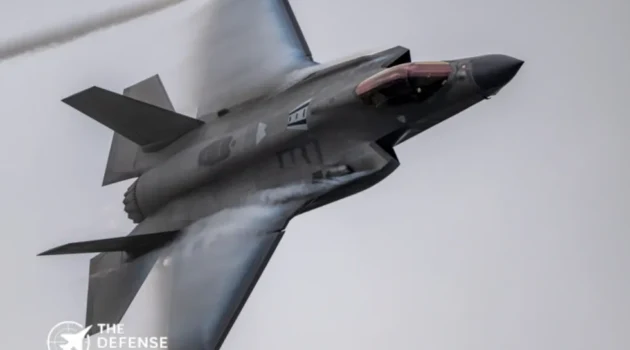
A chin-mounted indigenous Electro-Optical Targeting Pod (EO TGP), also developed by Hanwha Systems, occupies a dedicated hardpoint below the right engine intake. Positioning the targeting sensor here preserves all ten primary hardpoints for weapons and fuel, while providing a passive Infra-Red Search and Track (IRST) channel that operates silently — detecting heat signatures without any radar emission. This dual role mirrors the philosophy behind the F-35’s EOTS installation.
Electronic Warfare Suite
The ALQ-200K Electronic Warfare System — an indigenous development integrating radar warning receivers, missile approach warning sensors, and active countermeasures — is designed specifically for the dense electromagnetic environment of Korean Peninsula air combat. The suite feeds threat-geolocation data directly into the mission computer, enabling automated countermeasure responses and pilot cueing within milliseconds of a radar lock-on.
Sensor Fusion & Mission Computer
A high-throughput domestic mission computer fuses AESA radar tracks, IRST bearings, EW threat data, and tactical data-link feeds from the ROKAF network into a single integrated tactical picture. The cockpit features a wide-angle HUD, colour multi-function displays, and a voice-and-HOTAS interface designed to reduce cognitive load during high-g engagements. This fusion architecture is the foundation upon which Block II strike capabilities and Block III collaborative engagement with Unmanned Loyal Wingman assets will be layered.
Propulsion & Performance Envelope
Each KF-21 Boramae is powered by two Hanwha/General Electric F414-GE-400K turbofans, each producing approximately 98 kN (22,000 lbf) with afterburner — a combined plant equivalent to roughly 110,000 hp. The F414 family traces its lineage to the F/A-18E/F Super Hornet’s powerplant, providing a mature, combat-proven reliability baseline that materially reduced development risk during the KF-X programme. The “K” suffix denotes the Korean-specific variant, with Hanwha Aerospace licensed to produce and maintain the engines domestically.
The twin-engine configuration delivers:
Parameter Performance Maximum Speed Mach 1.81 (~2,223 km/h) at altitude First Supersonic Flight 17 January 2023 — Mach 1+ at 40,000 ft Service Ceiling ~16,700 m (54,800 ft) Combat Radius ~900–1,000 km (clean, Block I) Ferry Range ~2,900 km (external tanks) Internal Fuel ~6,000 kg The twin-engine layout also provides an important survivability advantage over single-engine alternatives in overwater and deep-penetration scenarios — a key ROKAF requirement when operating over the East Sea or across the demilitarized zone.
Armament & Weapons Integration
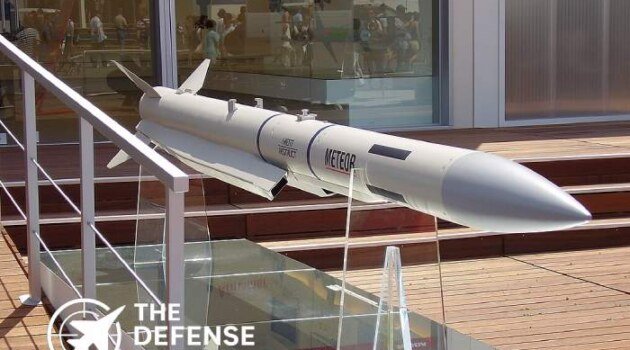
Block I is optimised for the Beyond Visual Range (BVR) air superiority role. The primary loadout exploits four semi-recessed stations for MBDA Meteor active-radar BVRAAMs — the world’s most capable beyond-visual-range missile, with a no-escape zone reported to exceed that of the AIM-120 AMRACON by a substantial margin. This is complemented by Diehl IRIS-T infrared short-range missiles on inner wing pylons for close-in combat.
Block II (targeting entry around early 2027, some 18 months ahead of the original schedule per DAPA’s August 2025 announcement) will certify the full strike toolkit:
- Korea Air-Launched Cruise Missile (KALCM) for stand-off land attack
- Indigenous Korean Guided Bomb Units (KGBUs) for precision strike
- JDAM-compatible tail kits for GPS-aided delivery
- Anti-ship missile integration
- Air-to-air refuelling probe (already validated in prototype testing)
The 10-hardpoint configuration — four semi-recessed fuselage stations plus six wing pylons — provides flexibility to balance fuel tanks, air-to-air missiles, and future strike weapons across a wide range of mission profiles.
Strategic & Export Outlook
The Block Development Roadmap
Block IOC Key Capability Aircraft Qty Block I Sep 2026 BVR air-to-air; APY-016K AESA; Meteor/IRIS-T 40 (contracted 2024) Block II Early 2027 Full A2G multirole; KALCM; guided bombs; refuelling 80 aircraft; ROKAF total ~120 Block III / KF-21EX 2030s+ Internal bays; full RAM; domestic engine; CCA; true 5th-gen TBD — export variant likely International Export Prospects
Beyond Indonesia, countries in Southeast Asia, the Middle East, and Africa have been linked to potential interest, including the Philippines, Malaysia, Poland, and the UAE. South Korea’s growing credibility as a defence exporter, built on recent sales of the K9 howitzer, K2 tank, FA-50 light fighter, and T-50 trainer, has strengthened the Boramae’s export prospects.
Key prospective customers include:
- Philippines — Active contender for PAF Multi-Role Fighter programme
- Indonesia — Jane’s reported in January 2026 that Indonesia is interested in purchasing sixteen KF-21 Block II.
- Malaysia — The Royal Malaysian Air Force is reportedly considering the KF-21 Boramae for its Multi-Role Combat Aircraft programme; the RMAF Chief of Air Force visited KAI in February 2025 to inspect the production line.
- UAE — Confirmed interest reports; financing discussions reportedly active
- Poland — High interest as part of the broader South Korean arms relationship
- Peru — KAI signed an MoU with SAMAN for domestic KF-21 component manufacture
At an estimated USD 65–70 million per Block I aircraft — roughly half the cost of an F-35A — the kai kf 21 boramae offers a compelling proposition for air forces requiring genuine 4th+ generation capability with a credible upgrade path, without US foreign military sales policy constraints.
Programme Milestones: Key Dates
Date Milestone Mar 2001 KF-X programme first announced Dec 2015 Full-scale development contract signed with KAI Apr 2021 Prototype No. 1 unveiled at Sacheon rollout 19 Jul 2022 Maiden flight of Prototype No. 1 17 Jan 2023 First supersonic flight — Mach 1+ at 40,000 ft Jul 2024 Serial production contract signed; 40 Block I aircraft 5 Aug 2025 First mass-produced APY-016K AESA radar delivered by Hanwha Systems 8 Aug 2025 DAPA confirms Block II A2G capability accelerated by 18 months 13 Jan 2026 DAPA announces completion of full 1,600-sortie flight-test campaign — 2 months ahead of schedule 25 Mar 2026 First serial production KF-21 Boramae rollout ceremony; President Lee Jae-myung presides 15 Apr 2026 First serial aircraft completes maiden flight — 22 days after rollout 7 May 2026 DAPA grants Final Combat Suitability approval — Block I certified for combat operations Sep 2026 First ROKAF deliveries scheduled (Initial Operating Capability) 2027 Block II full multirole capability; 31 aircraft planned for delivery that year 2028 47 aircraft delivery target; Full Operational Capability reached 2030s+ Block III / KF-21EX — full stealth variant with domestic engine Conclusion
The KF-21 Boramae has crossed every threshold that separates a national prestige project from a credible operational weapon system. The Final Combat Suitability approval granted by DAPA confirms that the aircraft can conduct missions in actual combat, with the agency stating that South Korea has fully secured independent fighter jet development capabilities. With the first serial production aircraft rolled out on 25 March 2026 and the production facility at Sacheon planning to deliver 31 aircraft in 2027 and 47 overall in 2028, the programme is ahead of schedule across every major metric.
For regional air power, the implications are significant. A ROKAF fleet of 120+ aircraft equipped with Meteor BVRAAMs, a domestically sovereign AESA radar, and an accelerated path to Block II multirole strike capability forces adversary planners to account for an entirely new South Korean kill-chain — one no longer dependent on foreign technology transfer approval for sustainment or upgrade. As Block III matures toward internal weapons bays, full RAM, and an indigenous turbofan, the kai kf-21 boramae will close the capability gap with fifth-generation platforms at a fraction of their lifecycle cost.
South Korea has joined a very small group of nations — the United States, Russia, China, France, the United Kingdom, Sweden, and Japan — capable of designing, testing, industrialising, and fielding an advanced supersonic combat aircraft through sovereign means. The kf 21 boramae is not merely a fighter jet. It is the proof of concept for an entire generation of Korean defence industrial capability — and its most consequential chapters are still being written.