
















@2026 – All Right Reserved. TheDefenseWatch.com
- Home
- Defense Systems
- Bombers & Strategic Aircraft
- Boeing VC-25A Presidential Aircraft
Boeing VC-25A Presidential Aircraft


Defense Systems Full Specifications
1. General Information
| Name | VC-25A |
| Manufacturer | Boeing |
| Country of Origin | United States |
| Introduction / In Service Since | 1990 |
| Status | Active |
| Category | Presidential Strategic Airlift Aircraft |
| Crew | Approx. 26 |
| Unit Cost | Approx. $325 million |
2. Dimensions & Structure
| Length | 231 ft 10 in |
| Wingspan | 195 ft 8 in |
| Height | 63 ft 5 in |
| Wing Area | 5,500 sq ft |
| Empty Weight | Approx. 416,000 lb |
| Maximum Takeoff Weight (MTOW) | 833,000 lb |
3. Performance
| Maximum Speed | 630 mph |
| Range | 7,800+ miles |
| Combat Radius | Not applicable |
| Service Ceiling | 45,100 ft |
| Rate of Climb | Approx. 2,500 ft/min |
4. Powerplant
| Engine Type | 4 × GE CF6-80C2B1 turbofans |
| Thrust (per engine) | 56,700 lbf |
| Total Thrust | 226,800 lbf |
5. Payload & Armament
| Internal Payload Capacity | Classified |
| Weapons Bay | None |
| Compatible Weapons | None |
| Hardpoints | None |
6. Avionics & Systems
| Radar System | Military-grade navigation radar |
| Navigation | Advanced GPS and inertial navigation |
| Electronic Warfare (EW) | Missile warning and countermeasure systems |
| Stealth Features | Limited infrared and electronic protection |
7. Operational History
| Primary Operator | United States Air Force |
| Conflict Usage | Gulf War, post-9/11 operations |
| Notable Missions | Presidential global transport missions |
8. Additional Information
| Variants | VC-25A |
| Successor / Future Replacement | VC-25B |
PROS
- Advanced secure communications systems
- Long range global transport capability
- Aerial refueling support
- High survivability and defensive systems
- Functions as airborne command center
CONS
- Very high operating costs
- Aging 747-200 airframe platform
- Complex maintenance requirements
- Limited fleet size of only two aircraft
- Large logistical support footprint
Boeing VC-25A Air Force One Strategic Airlift Aircraft
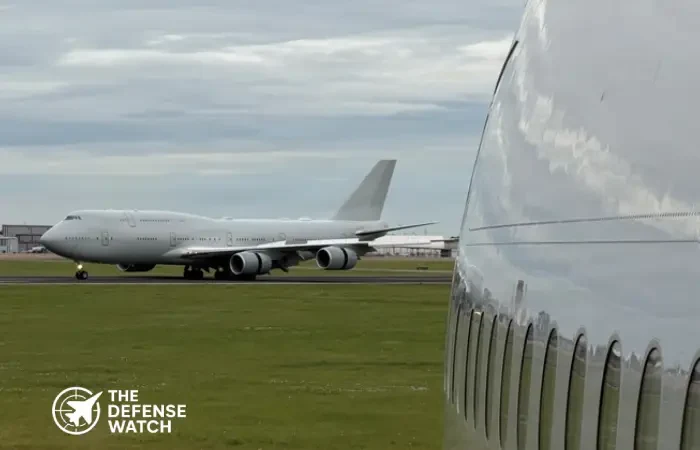
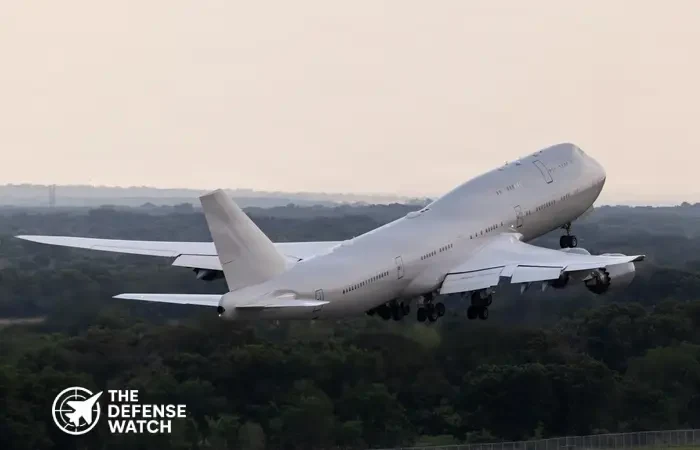
The VC-25A is one of the most recognizable military aircraft in the world, serving as the primary presidential air transport platform for the United States. Commonly known by the radio callsign Air Force One when carrying the U.S. president, the aircraft is a heavily modified version of the Boeing 747-200B commercial airliner designed for secure global travel, command and control operations, and national continuity missions.
The aircraft combines long range performance, advanced communications systems, and survivability upgrades. Its role extends beyond VIP transport, functioning as an airborne command center capable of operating during national emergencies. The VC-25A fleet entered service in 1990 and remains a critical component of U.S. strategic mobility.
Manufacturer
The VC-25A was developed and manufactured by Boeing in partnership with the U.S. Air Force. The aircraft was built in the United States and customized extensively with military-grade avionics, encrypted communications, aerial refueling capability, and defensive countermeasure systems.
Two VC-25A aircraft are operated by the Presidential Airlift Group under the 89th Airlift Wing stationed at Joint Base Andrews.
Speed and Range
Powered by four General Electric CF6-80C2B1 turbofan engines, the VC-25A can reach a maximum speed of approximately 630 mph (Mach 0.92). The aircraft has an operational range exceeding 7,800 miles without refueling, allowing nonstop intercontinental travel.
One of its most important capabilities is aerial refueling, which theoretically allows the aircraft to remain airborne for extended durations during crisis operations.
Cost / Price
The estimated procurement cost of each VC-25A aircraft exceeded $325 million at the time of acquisition in the late 1980s. Including modernization, communications infrastructure, and mission equipment, the overall program value is substantially higher today.
The aircraft is expected to be replaced in the coming years by the newer VC-25B platform based on the Boeing 747-8 airframe.
Disclaimer Note
The information provided on TheDefenseWatch.com is for general informational purposes only. While we strive to ensure the accuracy, completeness, and timeliness of our content regarding defense and aerospace products, technologies, and specifications, we cannot guarantee that all information is 100% accurate or up-to-date due to the evolving nature of military technology and classified data.TheDefenseWatch.com does not warrant the reliability, suitability, or availability of the information for any specific purpose. Users are advised to consult official sources, such as manufacturers, government publications, or defense agencies, for precise and verified data before making decisions based on our content.We are not affiliated with any defense manufacturers, governments, or military organizations mentioned. Opinions, reviews, and ratings reflect expert analysis but are subjective and should not be considered endorsements. TheDefenseWatch.com is not responsible for any errors, omissions, or consequences arising from the use of this website’s content.External links are provided for convenience and do not imply endorsement. TheDefenseWatch.com reserves the right to update or modify content without prior notice. By using this website, you agree to our Privacy & Cookies Policy.
New Arrivals
Popular Comparisons
-
 Tejas Fighter Jet vs F-16 Fighting Falcon: Capability Compared
View Comparison →
Tejas Fighter Jet vs F-16 Fighting Falcon: Capability Compared
View Comparison → -
Rafale Fighter Jet vs F-16 Fighting Falcon : Which Fighter Has the Edge?
View Comparison →
-
Su-57 Fighter Jet vs J-20 Fighter Jet: Stealth and Air Combat Compared
View Comparison →
-
Mirage 2000 vs Tejas Mk1A: Legacy Combat Power vs Indigenous Modernization
View Comparison →
-
Rafale Fighter Jet vs F-22 Raptor: Which Air Dominance Fighter Has the Edge?
View Comparison →
-
Tejas Fighter Jet vs. Rafale Fighter Jet: India’s Indigenous Fighter Meets France’s Proven Multirole Combat Aircraft
View Comparison →
-
F-22 Raptor vs. F-35 Joint Strike Fighter: Which Fifth Generation Fighter Has the Edge?
View Comparison →
-
F-35A vs. F-22 Raptor: Which U.S. Stealth Fighter Dominates Modern Air Combat?
View Comparison →
-
AGM-114 Hellfire vs. AGM-179 JAGM: Which U.S. Precision Missile Is Better?
View Comparison →
-
Patriot (PAC-3) vs. THAAD: Complete Missile Defense System Comparison, Capabilities, Range, and Strategic Roles
View Comparison →
- Bell Boeing Wins $19.8M V-22 Tactical Software Support Contract

- Honeywell Wins $53.9M Navy Contract for WSN-7 Gyro Components
- Lockheed Martin Wins $76.6M Trident II D5LE2 Development Contract
- Lockheed Martin Gets $871.2M F-35 Site Support Contract Increase
- Pete Hegseth Texas Enlistment Ceremony: Hegseth Tells Military Families, We Have Their Back
- U.S., Denmark and Greenland Reach Security Agreement to Expand American Military Presence
- SpaceX Wins Three More NASA Crew Missions in $946 Million ISS Contract
- U.S. Clears Potential $24.3 Billion F-35 Sale to Saudi Arabia
- Type 99B Tank Training Shows China’s Shift Toward Networked Armored Warfare
- JRC Integrated Systems Gets $47.4M SLCM-N Support Contract