
- ► France has redeployed the Charles de Gaulle carrier strike group to the Middle East amid the expanding US Iran war.
- ► The nuclear powered aircraft carrier carries Rafale M fighters, E 2C Hawkeye early warning aircraft, and escorting frigates.
- ► Deployment signals Paris commitment to protecting regional stability and allied maritime routes.
- ► Move follows intensified US military operations and growing risk of broader regional escalation.
- ► French naval presence strengthens European role in Gulf security at a critical moment.
France Redeploys Charles De Gaulle Carrier Strike Group As Regional Conflict Widens
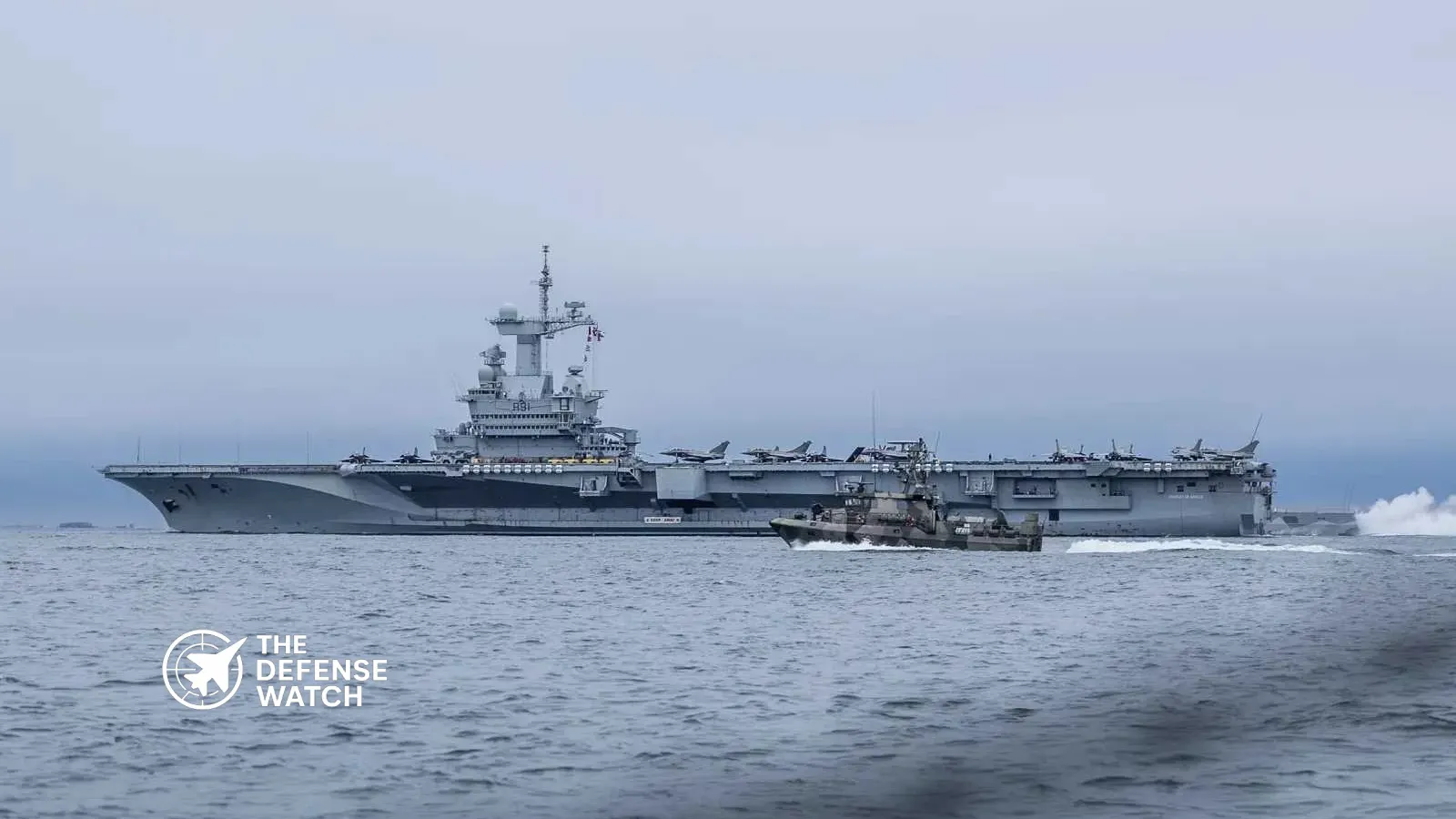
France has redeployed the Charles de Gaulle carrier strike group to the Middle East as the US Iran war expands, marking one of the most significant European naval movements in the current crisis.
The decision reflects mounting concern in Paris over regional stability and the security of maritime trade routes as US operations against Iranian targets intensify.
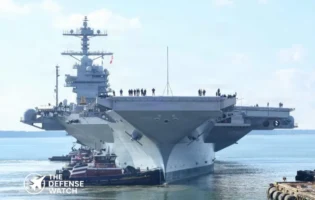
(adsbygoogle = window.adsbygoogle || []).push({});The deployment centers on the nuclear powered aircraft carrier French aircraft carrier Charles de Gaulle, the flagship of the French Navy. The carrier strike group includes multi mission frigates, an air defense destroyer, and support vessels designed to sustain long range operations.
Strategic Signal Beyond Symbolism
The redeployment of the France Charles de Gaulle carrier strike group is not merely symbolic.
As the only nuclear powered aircraft carrier in Europe, Charles de Gaulle provides France with independent power projection capability. Its air wing typically includes Rafale M fighter jets capable of strike, air superiority, and reconnaissance missions, alongside E 2C Hawkeye airborne early warning aircraft.
In the context of the expanding US Iran war, this capability provides Paris with options. It can conduct air patrols, intelligence missions, and if required, precision strike operations without relying on regional bases.
French officials have consistently emphasized freedom of navigation and the protection of commercial shipping through critical chokepoints such as the Strait of Hormuz. The renewed carrier presence reinforces that posture.
Coordinating With US Forces
The redeployment comes as the United States has increased its own naval and air presence in the region. Carrier strike groups traditionally operate in coordination with allied forces for air defense integration, intelligence sharing, and maritime security operations.
While France maintains strategic autonomy, its naval deployments frequently align with NATO and US objectives when interests converge. In past operations against extremist groups in Iraq and Syria, Charles de Gaulle operated alongside US forces, launching combat sorties from the eastern Mediterranean and the Gulf.
In the current environment, the French aircraft carrier Middle East deployment strengthens allied deterrence without formally merging command structures.
Risk Management And Escalation Control
From a strategic perspective, the France Charles de Gaulle carrier strike group serves two parallel purposes.
First, it deters hostile actions against French assets, European shipping, and regional partners. Second, it provides Paris with rapid response capability if French nationals or interests are threatened.
However, carrier deployments in contested waters also carry risk. Iranian anti ship missile systems, drones, and fast attack craft remain a persistent concern in the Gulf. Naval planners must account for layered air defense and electronic warfare measures to mitigate potential threats.
France modernized the carrier and its combat systems in recent years, enhancing radar, communications, and interoperability. The escorting frigates provide anti submarine, anti air, and anti surface warfare coverage, forming a layered defensive bubble around the strike group.
European Stake In Gulf Security
The redeployment underscores a broader point. The Middle East conflict is not solely a US Iran confrontation. European economies remain heavily dependent on Gulf energy flows and maritime trade routes.
By sending the France Charles de Gaulle carrier strike group, Paris signals that European security interests are directly engaged.
France has longstanding defense relationships with Gulf states and maintains regional military facilities, including bases in the United Arab Emirates. A visible naval presence reinforces those ties while demonstrating readiness.
At the same time, French leaders have traditionally balanced deterrence with diplomatic engagement. Naval deployments can serve as leverage in parallel diplomatic efforts aimed at containing escalation.
Operational Capabilities At Sea
The Charles de Gaulle carrier strike group typically embarks:
- Rafale M multirole fighters
- E 2C Hawkeye airborne early warning aircraft
- Helicopters for anti submarine and search and rescue missions
- Guided missile frigates and a fleet tanker
The carrier nuclear propulsion allows sustained high speed operations without the need for refueling, a significant advantage in extended deployments.
This mobility is central to its role in the US Iran war naval deployments environment, where rapid repositioning may be required in response to emerging threats.
What Comes Next
Much will depend on how the conflict evolves. If hostilities remain contained, the French presence may focus on deterrence and maritime security. If escalation continues, the carrier strike group provides France with credible military options.
(adsbygoogle = window.adsbygoogle || []).push({});For now, the France Charles de Gaulle carrier strike group stands as one of the most powerful European naval assets in the theater.
Its return to the Middle East signals that the strategic stakes have risen beyond bilateral confrontation. European naval power is now visibly in play.