

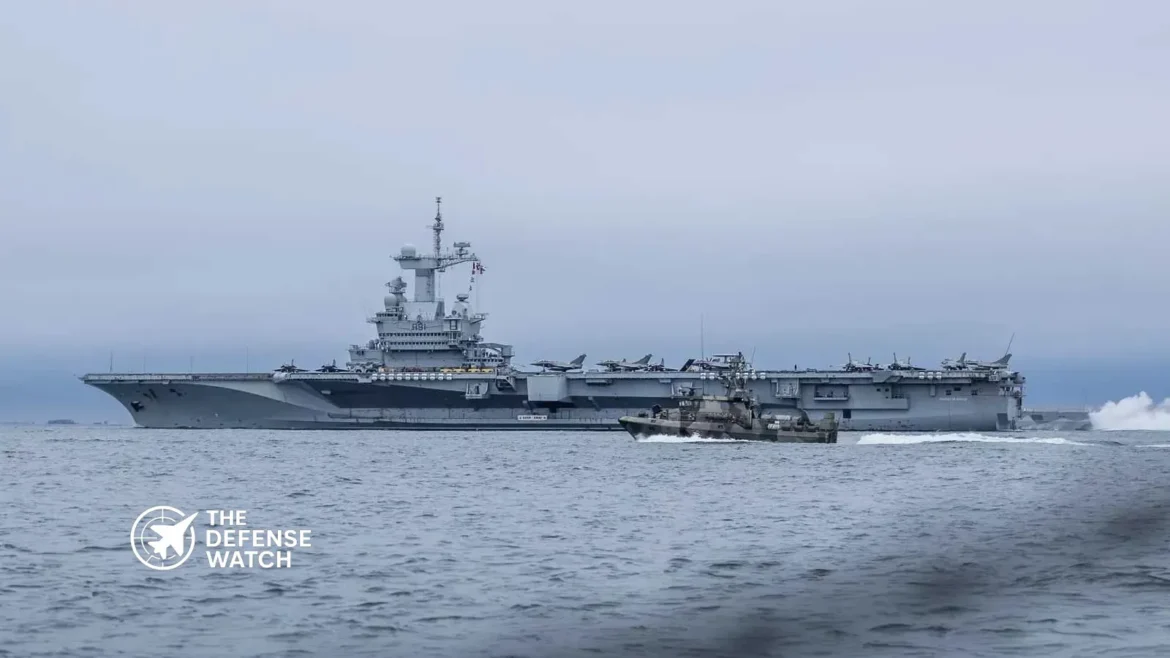
- ► France has redeployed the Charles de Gaulle carrier strike group to the Middle East amid the expanding US Iran war.
- ► The nuclear powered aircraft carrier carries Rafale M fighters, E 2C Hawkeye early warning aircraft, and escorting frigates.
- ► Deployment signals Paris commitment to protecting regional stability and allied maritime routes.
- ► Move follows intensified US military operations and growing risk of broader regional escalation.
- ► French naval presence strengthens European role in Gulf security at a critical moment.
France Redeploys Charles De Gaulle Carrier Strike Group As Regional Conflict Widens
France has redeployed the Charles de Gaulle carrier strike group to the Middle East as the US Iran war expands, marking one of the most significant European naval movements in the current crisis.
The decision reflects mounting concern in Paris over regional stability and the security of maritime trade routes as US operations against Iranian targets intensify.
(adsbygoogle = window.adsbygoogle || []).push({});The deployment centers on the nuclear powered aircraft carrier French aircraft carrier Charles de Gaulle, the flagship of the French Navy. The carrier strike group includes multi mission frigates, an air defense destroyer, and support vessels designed to sustain long range operations.
Strategic Signal Beyond Symbolism
The redeployment of the France Charles de Gaulle carrier strike group is not merely symbolic.
As the only nuclear powered aircraft carrier in Europe, Charles de Gaulle provides France with independent power projection capability. Its air wing typically includes Rafale M fighter jets capable of strike, air superiority, and reconnaissance missions, alongside E 2C Hawkeye airborne early warning aircraft.
In the context of the expanding US Iran war, this capability provides Paris with options. It can conduct air patrols, intelligence missions, and if required, precision strike operations without relying on regional bases.
French officials have consistently emphasized freedom of navigation and the protection of commercial shipping through critical chokepoints such as the Strait of Hormuz. The renewed carrier presence reinforces that posture.
Coordinating With US Forces
The redeployment comes as the United States has increased its own naval and air presence in the region. Carrier strike groups traditionally operate in coordination with allied forces for air defense integration, intelligence sharing, and maritime security operations.
While France maintains strategic autonomy, its naval deployments frequently align with NATO and US objectives when interests converge. In past operations against extremist groups in Iraq and Syria, Charles de Gaulle operated alongside US forces, launching combat sorties from the eastern Mediterranean and the Gulf.
In the current environment, the French aircraft carrier Middle East deployment strengthens allied deterrence without formally merging command structures.
Risk Management And Escalation Control
From a strategic perspective, the France Charles de Gaulle carrier strike group serves two parallel purposes.
First, it deters hostile actions against French assets, European shipping, and regional partners. Second, it provides Paris with rapid response capability if French nationals or interests are threatened.
However, carrier deployments in contested waters also carry risk. Iranian anti ship missile systems, drones, and fast attack craft remain a persistent concern in the Gulf. Naval planners must account for layered air defense and electronic warfare measures to mitigate potential threats.
France modernized the carrier and its combat systems in recent years, enhancing radar, communications, and interoperability. The escorting frigates provide anti submarine, anti air, and anti surface warfare coverage, forming a layered defensive bubble around the strike group.
European Stake In Gulf Security
The redeployment underscores a broader point. The Middle East conflict is not solely a US Iran confrontation. European economies remain heavily dependent on Gulf energy flows and maritime trade routes.
By sending the France Charles de Gaulle carrier strike group, Paris signals that European security interests are directly engaged.
France has longstanding defense relationships with Gulf states and maintains regional military facilities, including bases in the United Arab Emirates. A visible naval presence reinforces those ties while demonstrating readiness.
At the same time, French leaders have traditionally balanced deterrence with diplomatic engagement. Naval deployments can serve as leverage in parallel diplomatic efforts aimed at containing escalation.
Operational Capabilities At Sea
The Charles de Gaulle carrier strike group typically embarks:
- Rafale M multirole fighters
- E 2C Hawkeye airborne early warning aircraft
- Helicopters for anti submarine and search and rescue missions
- Guided missile frigates and a fleet tanker
The carrier nuclear propulsion allows sustained high speed operations without the need for refueling, a significant advantage in extended deployments.
This mobility is central to its role in the US Iran war naval deployments environment, where rapid repositioning may be required in response to emerging threats.
What Comes Next
Much will depend on how the conflict evolves. If hostilities remain contained, the French presence may focus on deterrence and maritime security. If escalation continues, the carrier strike group provides France with credible military options.
(adsbygoogle = window.adsbygoogle || []).push({});For now, the France Charles de Gaulle carrier strike group stands as one of the most powerful European naval assets in the theater.
Its return to the Middle East signals that the strategic stakes have risen beyond bilateral confrontation. European naval power is now visibly in play.

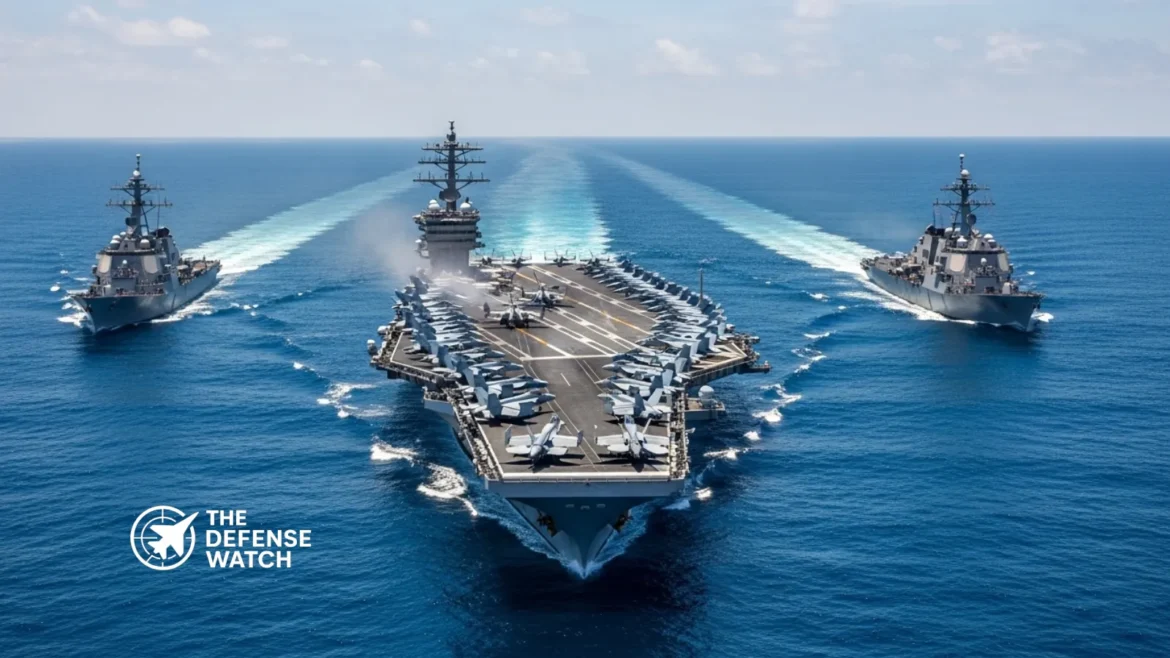
The United States has deployed a major naval force toward Iran as President Donald Trump signals possible military action, marking one of the most serious escalations in U.S. Iran tensions in years. The movement of U.S. Navy assets into the Middle East reflects heightened concern in Washington over regional stability, maritime security, and Iranian military activity.
According to reporting from Army Recognition and U.S. defense officials, the deployment includes carrier strike group elements, guided missile destroyers, and support vessels moving toward key maritime chokepoints near the Persian Gulf and Arabian Sea. The buildup follows a series of public statements by President Trump indicating that military options are under active consideration.
Composition of the U.S. Naval Force
U.S. Navy movements include surface combatants equipped with advanced air and missile defense systems, long range strike capabilities, and integrated command and control networks. Carrier based aircraft provide strike, surveillance, and electronic warfare capabilities that significantly expand U.S. operational reach in the region.
While the Pentagon has not released full details on the force package, officials confirmed that the deployment is intended to deter Iranian aggression, protect U.S. and allied interests, and ensure freedom of navigation in international waters.
The U.S. Fifth Fleet, headquartered in Bahrain, continues to coordinate maritime operations across the Gulf, Red Sea, Arabian Sea, and parts of the Indian Ocean. See also: U.S. Navy expands maritime patrols in the Red Sea.
Trump Signals Possible Military Action
President Trump has publicly stated that Iran must change its behavior or face serious consequences, including the potential use of military force. While stopping short of announcing specific actions, Trump emphasized that all options remain on the table.
Administration officials have linked the naval deployment to concerns over Iranian missile activity, naval harassment incidents, and support for regional proxy forces. The White House has framed the move as defensive, but the scale and timing signal readiness for rapid escalation if conditions deteriorate.
Defense analysts note that naval deployments offer flexible response options, allowing the U.S. to apply pressure without immediate ground involvement.
Strategic Importance of Maritime Posture
Naval power remains a central tool in U.S. strategy toward Iran. The Strait of Hormuz, through which roughly one fifth of global oil supply transits, remains a critical vulnerability. Any disruption could have global economic consequences.
By positioning major naval assets near Iran, the U.S. enhances its ability to conduct maritime security operations, missile defense, and precision strikes. The presence of Aegis equipped destroyers also strengthens regional missile defense coverage for U.S. forces and partners.
This posture aligns with long standing U.S. naval doctrine emphasizing forward presence and deterrence through visible capability.
Iranian Response and Regional Impact
Iranian officials have criticized the U.S. deployment, calling it provocative and destabilizing. Tehran has stated that it will defend its sovereignty and warned against foreign military presence near its waters.
Regional allies, including Gulf states, are closely monitoring the situation. Many rely on U.S. naval power for security assurances, particularly against missile and drone threats.
At the same time, regional actors are urging restraint, concerned that miscalculation at sea could rapidly escalate into a broader conflict.
Implications for U.S. Military Strategy
The deployment highlights the continued centrality of naval forces in U.S. power projection. Carrier strike groups provide unmatched flexibility, allowing rapid shifts between deterrence, signaling, and combat operations.
For the U.S. Navy, sustained operations in the Middle East also place pressure on force readiness and deployment cycles, especially as competition with China and Russia intensifies elsewhere.
Pentagon officials have emphasized that the deployment does not signal abandonment of other theaters, but rather reflects the Navy’s ability to operate globally.
Outlook
While no direct military action has been announced, the presence of a major U.S. naval force near Iran significantly raises the stakes. Diplomatic channels remain active, but the margin for error is narrowing.
Defense planners and regional partners will be watching closely for signs of de escalation or further military signaling in the days ahead.
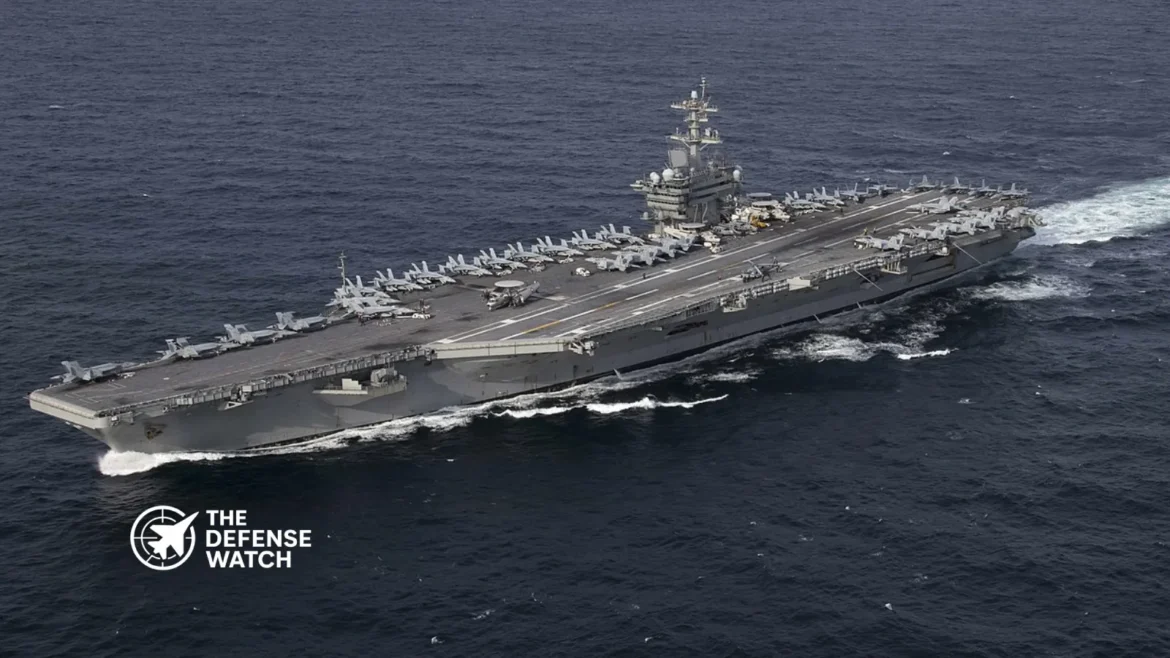
President Donald Trump has ordered a United States Navy carrier strike group toward Iran as tensions over Tehran’s nuclear program and regional unrest continue to rise. The deployment centers on the nuclear-powered USS Abraham Lincoln carrier strike group, which is moving from the Asia-Pacific toward the Middle East, sources say.
Background
The move comes amid growing pressure on Iran over its nuclear activities and a harsh crackdown on nationwide protests that has drawn international attention. Trump has warned Tehran against restarting nuclear enrichment and highlighted what he called a halt to planned executions of protesters after US pressure.
Naval Deployment Details
US officials and Trump have described the deployment as a substantial naval “armada” headed toward the Gulf region to ensure US forces are positioned to respond quickly if needed. The USS Abraham Lincoln and its escort vessels, including several guided-missile destroyers, are expected to reach the region in the coming days.
The carrier strike group provides a broad range of capabilities, including air power via embarked strike aircraft and integrated air and missile defenses from escort ships. Pentagon planners are also considering additional air defense assets for the region to protect US bases.
Trump’s Statements
Speaking to reporters aboard Air Force One returning from the World Economic Forum in Davos, Trump said the US was closely watching Iran’s actions and that the fleet was moving “just in case.” He reiterated that he would prefer to avoid conflict while maintaining the option to act if Tehran resumed activities the US views as destabilizing.
Regional Context
Iran’s leadership has signaled firmness in the face of US warnings. Senior Iranian military figures have warned of strong responses to any attack, including potential targeting of American interests in the region.
The broader Middle East remains tense. Iran’s relations with Israel and the United States have been strained, and protests within Iran have raised concerns internationally. The situation has drawn attention from global powers and rights groups noting significant casualties in ongoing unrest.
Strategic Implications
The deployment reinforces the US military’s ability to conduct air and maritime operations without reliance on regional land bases. A carrier strike group offers rapid strike capabilities, sustained air operations, and layered defenses, key assets in any high-end contingency.
What Comes Next
It remains unclear precisely how Iran will respond to the US naval build-up. Diplomatic channels appear open to some degree, but both sides are signaling readiness to defend their interests. Monitoring from defense officials and independent observers suggests this deployment aims to broaden US options without making immediate conflict inevitable.
U.S. Navy Carrier Strike Group Near Venezuela Draws Regional Attention
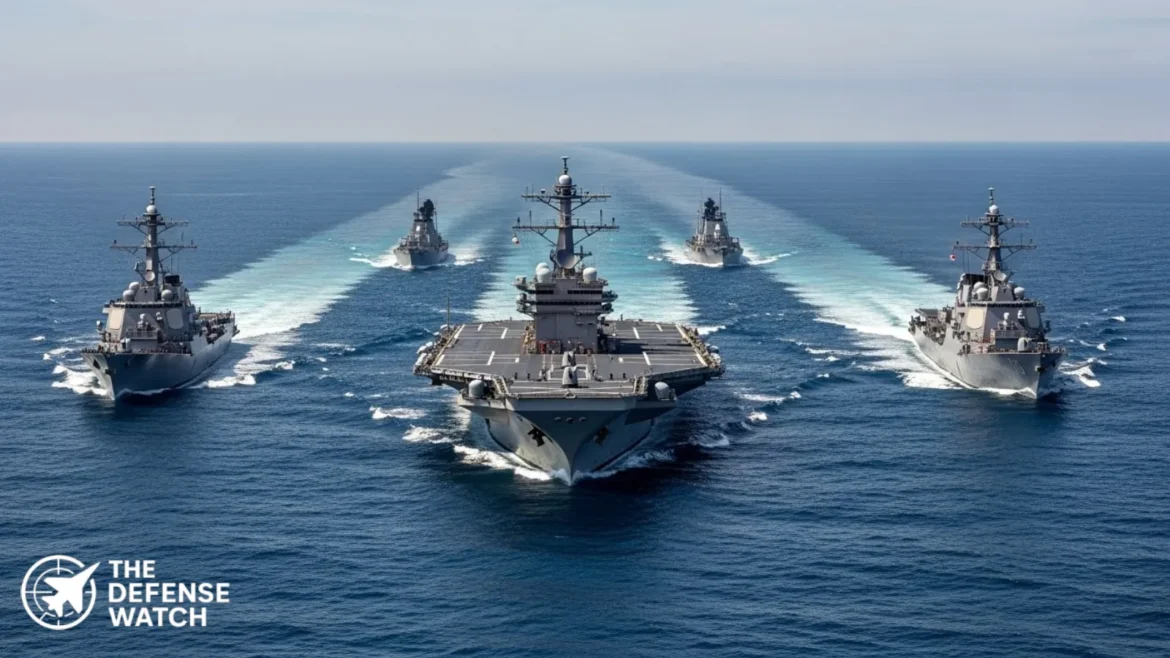
The U.S. Navy carrier strike group near Venezuela has moved into a position close to the Venezuelan coastline, according to defense monitoring reports published on January 2025. The deployment involves the USS Gerald R. Ford, the United States Navy’s newest and most advanced aircraft carrier, operating with its escorting warships in the southern Caribbean Sea.
The movement places a high value naval formation within proximity of Venezuela’s maritime approaches at a time of continued regional security monitoring by Washington. While U.S. officials have not announced a specific operation tied to the deployment, the presence of a carrier strike group represents one of the most visible demonstrations of American naval power.
Background on the Gerald R. Ford Carrier Strike Group
The USS Gerald R. Ford is the lead ship of its class and serves as a cornerstone of modern U.S. Navy carrier operations. Designed to replace older Nimitz class carriers, the Ford class introduces advanced radar systems, improved sortie generation rates, and enhanced power generation to support future weapons and sensors.
A typical carrier strike group includes guided missile destroyers, a cruiser, and air wing assets capable of conducting air defense, strike missions, maritime surveillance, and electronic warfare. When deployed near sensitive regions, such formations offer a flexible response option for U.S. decision makers.
Details of the Current Deployment
Tracking data and defense reporting confirm that the U.S. Navy carrier strike group near Venezuela is operating in international waters. The group maintains freedom of navigation while remaining within operational reach of key maritime routes in the Caribbean basin.
The deployment aligns with routine U.S. Navy forward presence missions, which are intended to support regional stability, protect sea lanes, and reassure partners. Carrier strike groups routinely conduct training flights, intelligence collection, and coordinated maneuvers while underway.
U.S. defense officials have not released statements indicating any direct link between the deployment and specific developments inside Venezuela. The Pentagon traditionally refrains from detailing operational intent while ships remain on station.
Strategic and Policy Context
From a policy perspective, the presence of a U.S. Navy carrier strike group near Venezuela underscores Washington’s continued focus on the Western Hemisphere as a strategic theater. The Caribbean Sea remains a vital corridor for commercial shipping, energy flows, and regional security cooperation.
U.S. naval operations in the region often support counter narcotics missions, maritime domain awareness, and multinational exercises with allied and partner navies. Aircraft carriers provide command and control capabilities that allow rapid response to emerging situations without relying on land bases.
Defense analysts note that carrier deployments also serve as a signaling mechanism, demonstrating readiness and deterrence without direct engagement.
Expert Assessment and Regional Impact
Naval analysts observe that the Gerald R. Ford deployment highlights the increasing operational role of next generation carriers. The ship’s advanced systems allow sustained flight operations with reduced crew workload, improving endurance during extended deployments.
For regional actors, the presence of a U.S. carrier strike group reinforces U.S. naval dominance in the Caribbean. It also reflects ongoing U.S. monitoring of geopolitical developments across northern South America and adjacent maritime zones.
What Comes Next
The U.S. Navy carrier strike group near Venezuela is expected to continue routine operations in the region before proceeding to follow on tasking as directed by U.S. Fleet Command. Such deployments are fluid, with ship movements adjusted based on global operational requirements.
As the situation develops, defense observers will closely watch official statements and ship tracking data for indications of future movements or exercises.
