

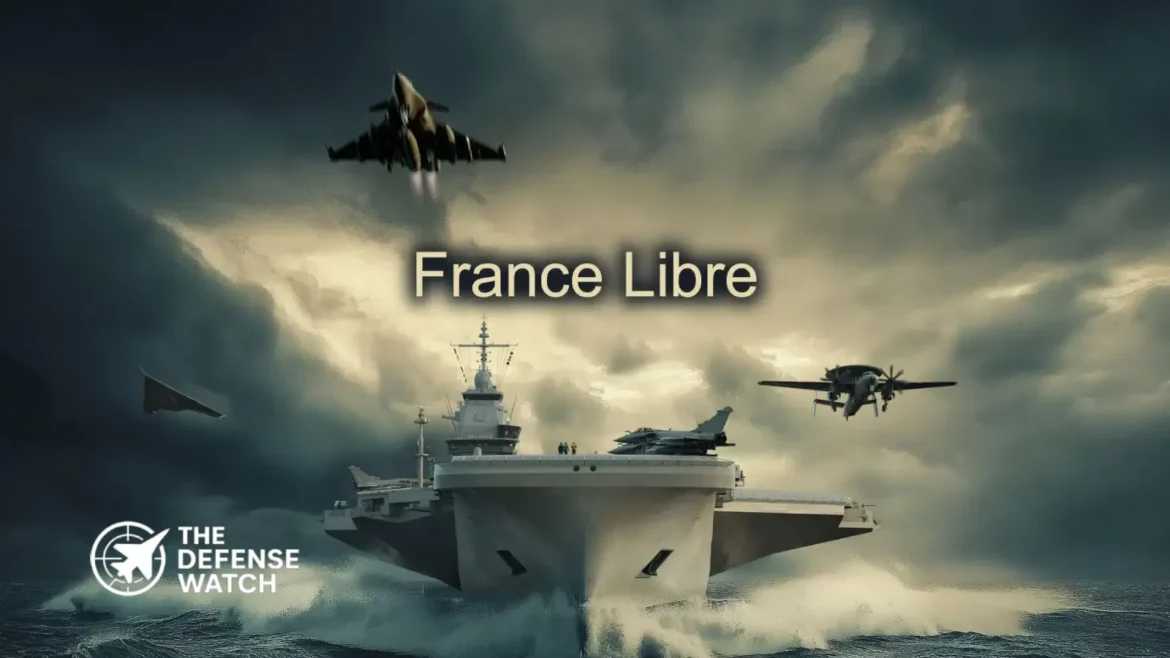
- France unveiled the 78,000-ton nuclear aircraft carrier France Libre as part of its next-generation naval program.
- The carrier is designed to operate around 40 aircraft, including next-generation fighter jets.
- The platform strengthens France’s global power projection and NATO maritime capabilities.
- The program is expected to replace the Charles de Gaulle carrier in the 2030s.
- The ship reflects Europe’s push toward strategic autonomy in high-end naval warfare.
France Libre Nuclear Aircraft Carrier Advances French Naval Power
France Libre nuclear aircraft carrier marks a major step in France’s naval modernization, introducing a 78,000-ton platform designed to carry around 40 aircraft and replace the aging Charles de Gaulle in the next decade.
The Big Picture
France is moving to sustain its status as Europe’s only nation operating a nuclear-powered aircraft carrier. The France Libre program reflects broader trends in NATO maritime strategy, where high-end naval assets are increasingly central to deterrence and expeditionary operations.
The United States continues to dominate carrier aviation with its Nimitz and Ford-class fleets, while China is expanding its own carrier force. France’s decision to invest in a next-generation nuclear carrier ensures it remains a credible blue-water navy capable of independent operations.
European defense policy has also shifted toward strategic autonomy. France Libre aligns with that objective by maintaining sovereign carrier strike capabilities without reliance on allied platforms.
What’s Happening
France has revealed details of the France Libre nuclear aircraft carrier, a next-generation platform expected to enter service in the 2030s.
The ship will displace approximately 78,000 tons, making it significantly larger than the current Charles de Gaulle, which displaces about 42,000 tons. The new carrier will feature nuclear propulsion, enabling extended deployments without the need for frequent refueling.
The air wing is expected to include around 40 aircraft, likely incorporating next-generation fighters developed under the Future Combat Air System program, alongside airborne early warning and support aircraft.
French defense authorities intend for the platform to serve as the backbone of the country’s naval aviation capability for decades.
Why It Matters
France Libre addresses several operational limitations of the current French carrier fleet.
Charles de Gaulle has provided France with a unique European capability, but its size limits sortie generation and aircraft capacity. The new carrier’s larger displacement allows for increased operational tempo, improved deck operations, and enhanced survivability.
The integration of next-generation aircraft and advanced launch systems will also improve interoperability with allied forces, particularly the United States Navy.
Nuclear propulsion remains a critical advantage. It allows sustained high-speed operations and reduces logistical constraints, enabling France to deploy globally without dependence on forward basing.
Strategic Implications
France Libre strengthens NATO’s maritime posture by adding a modern, high-end carrier to the alliance’s collective capabilities.
Carrier strike groups remain essential for power projection, sea control, and crisis response. France’s ability to deploy such a platform independently provides NATO with greater flexibility, particularly in contested regions such as the Mediterranean, Indo-Pacific, and North Atlantic.
The platform also enhances deterrence. A nuclear-powered carrier with advanced air assets signals sustained combat capability and operational reach.
France’s investment may also influence other European nations to expand their naval ambitions, particularly in carrier aviation and expeditionary warfare.
What To Watch Next
Program development milestones will shape the trajectory of France Libre over the next decade.
Observers should track design finalization, shipyard construction timelines, and integration of next-generation aircraft systems. The development of electromagnetic or advanced catapult systems will be particularly important for operational effectiveness.
Initial sea trials and air wing integration in the early 2030s will determine the carrier’s readiness for full operational deployment.
Budgetary stability and industrial capacity will also remain key factors influencing delivery timelines.
Capability Gap
France Libre directly addresses the limitations of operating a single, smaller carrier.
The current fleet structure creates gaps in availability during maintenance cycles. A larger and more capable platform improves sortie generation but does not fully eliminate the structural limitation of having only one carrier.
The ship’s scale and complexity also introduce risks, including cost overruns and technical challenges associated with nuclear propulsion and advanced launch systems.
Despite these challenges, the platform significantly enhances France’s ability to sustain high-intensity naval aviation operations.
The Bottom Line
France Libre nuclear aircraft carrier positions France to maintain credible, independent carrier strike capability in an increasingly competitive maritime environment.

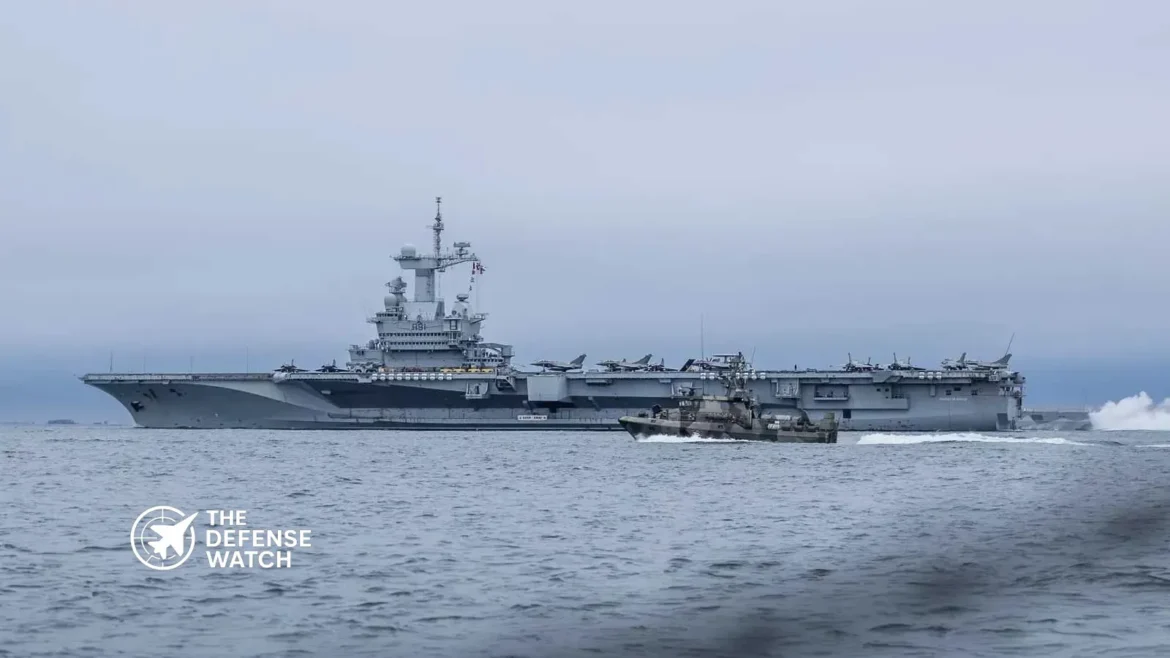
- ► France has redeployed the Charles de Gaulle carrier strike group to the Middle East amid the expanding US Iran war.
- ► The nuclear powered aircraft carrier carries Rafale M fighters, E 2C Hawkeye early warning aircraft, and escorting frigates.
- ► Deployment signals Paris commitment to protecting regional stability and allied maritime routes.
- ► Move follows intensified US military operations and growing risk of broader regional escalation.
- ► French naval presence strengthens European role in Gulf security at a critical moment.
France Redeploys Charles De Gaulle Carrier Strike Group As Regional Conflict Widens
France has redeployed the Charles de Gaulle carrier strike group to the Middle East as the US Iran war expands, marking one of the most significant European naval movements in the current crisis.
The decision reflects mounting concern in Paris over regional stability and the security of maritime trade routes as US operations against Iranian targets intensify.
(adsbygoogle = window.adsbygoogle || []).push({});The deployment centers on the nuclear powered aircraft carrier French aircraft carrier Charles de Gaulle, the flagship of the French Navy. The carrier strike group includes multi mission frigates, an air defense destroyer, and support vessels designed to sustain long range operations.
Strategic Signal Beyond Symbolism
The redeployment of the France Charles de Gaulle carrier strike group is not merely symbolic.
As the only nuclear powered aircraft carrier in Europe, Charles de Gaulle provides France with independent power projection capability. Its air wing typically includes Rafale M fighter jets capable of strike, air superiority, and reconnaissance missions, alongside E 2C Hawkeye airborne early warning aircraft.
In the context of the expanding US Iran war, this capability provides Paris with options. It can conduct air patrols, intelligence missions, and if required, precision strike operations without relying on regional bases.
French officials have consistently emphasized freedom of navigation and the protection of commercial shipping through critical chokepoints such as the Strait of Hormuz. The renewed carrier presence reinforces that posture.
Coordinating With US Forces
The redeployment comes as the United States has increased its own naval and air presence in the region. Carrier strike groups traditionally operate in coordination with allied forces for air defense integration, intelligence sharing, and maritime security operations.
While France maintains strategic autonomy, its naval deployments frequently align with NATO and US objectives when interests converge. In past operations against extremist groups in Iraq and Syria, Charles de Gaulle operated alongside US forces, launching combat sorties from the eastern Mediterranean and the Gulf.
In the current environment, the French aircraft carrier Middle East deployment strengthens allied deterrence without formally merging command structures.
Risk Management And Escalation Control
From a strategic perspective, the France Charles de Gaulle carrier strike group serves two parallel purposes.
First, it deters hostile actions against French assets, European shipping, and regional partners. Second, it provides Paris with rapid response capability if French nationals or interests are threatened.
However, carrier deployments in contested waters also carry risk. Iranian anti ship missile systems, drones, and fast attack craft remain a persistent concern in the Gulf. Naval planners must account for layered air defense and electronic warfare measures to mitigate potential threats.
France modernized the carrier and its combat systems in recent years, enhancing radar, communications, and interoperability. The escorting frigates provide anti submarine, anti air, and anti surface warfare coverage, forming a layered defensive bubble around the strike group.
European Stake In Gulf Security
The redeployment underscores a broader point. The Middle East conflict is not solely a US Iran confrontation. European economies remain heavily dependent on Gulf energy flows and maritime trade routes.
By sending the France Charles de Gaulle carrier strike group, Paris signals that European security interests are directly engaged.
France has longstanding defense relationships with Gulf states and maintains regional military facilities, including bases in the United Arab Emirates. A visible naval presence reinforces those ties while demonstrating readiness.
At the same time, French leaders have traditionally balanced deterrence with diplomatic engagement. Naval deployments can serve as leverage in parallel diplomatic efforts aimed at containing escalation.
Operational Capabilities At Sea
The Charles de Gaulle carrier strike group typically embarks:
- Rafale M multirole fighters
- E 2C Hawkeye airborne early warning aircraft
- Helicopters for anti submarine and search and rescue missions
- Guided missile frigates and a fleet tanker
The carrier nuclear propulsion allows sustained high speed operations without the need for refueling, a significant advantage in extended deployments.
This mobility is central to its role in the US Iran war naval deployments environment, where rapid repositioning may be required in response to emerging threats.
What Comes Next
Much will depend on how the conflict evolves. If hostilities remain contained, the French presence may focus on deterrence and maritime security. If escalation continues, the carrier strike group provides France with credible military options.
(adsbygoogle = window.adsbygoogle || []).push({});For now, the France Charles de Gaulle carrier strike group stands as one of the most powerful European naval assets in the theater.
Its return to the Middle East signals that the strategic stakes have risen beyond bilateral confrontation. European naval power is now visibly in play.
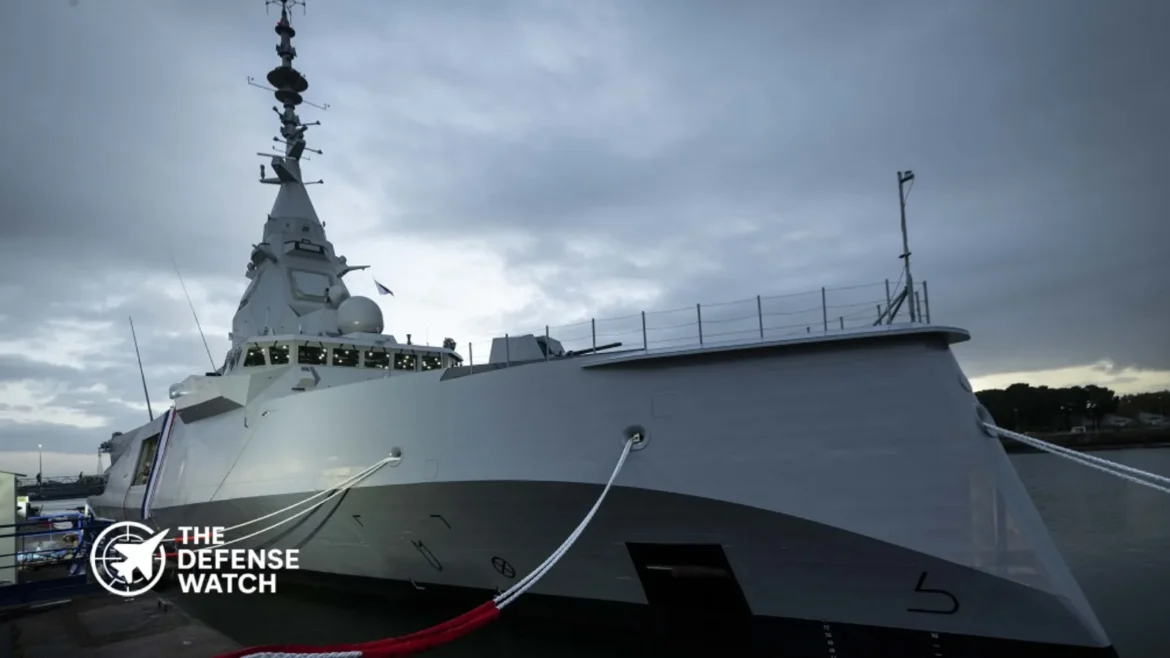
France Offers Upgraded FDI Frigate To Saudi Arabia With French MPLS Instead Of U.S. RAM System
France has offered an upgraded FDI frigate to Saudi Arabia, replacing the U.S.-made Rolling Airframe Missile system with a French MPLS air defense solution, according to a report.
The proposal centers on the Frégate de Défense et d’Intervention, or FDI frigate, developed by Naval Group for the French Navy. The variant presented to Riyadh would integrate a French close-in missile launcher in place of the U.S.-built Rolling Airframe Missile system typically installed on export configurations.
The move signals Paris’ intent to provide a more sovereign, fully French naval air defense package tailored to Saudi operational requirements.
A Modified FDI Configuration
The FDI frigate, also known as the Belh@rra class, is a 4,500 ton multi-mission surface combatant designed for anti-air, anti-submarine, and anti-surface warfare. It features the Thales Sea Fire active electronically scanned array radar, a digital combat management system, and vertical launch systems capable of deploying Aster surface-to-air missiles.
In its standard export configuration, the FDI frigate integrates the RAM system as a close-in air defense layer. However, France’s offer to Saudi Arabia replaces that system with a French MPLS launcher, ensuring the ship’s short-range air defense capability remains fully sourced from domestic suppliers.
While detailed specifications of the MPLS configuration for Saudi Arabia have not been publicly disclosed, the concept aligns with France’s broader defense industrial policy of promoting sovereign solutions through its domestic defense base.
Strategic Context For Saudi Naval Modernization
Saudi Arabia has been pursuing an extensive naval modernization program aimed at strengthening maritime security in the Red Sea and the Arabian Gulf. The Royal Saudi Navy operates a mix of Western-designed surface combatants, including vessels supplied by the United States and Europe.
The FDI frigate proposal positions France as a key contender in future Saudi naval procurement efforts. The French defense industry has longstanding ties with Riyadh, including previous naval and aerospace contracts.
Replacing the RAM system with a French MPLS solution may also simplify export approvals and reduce dependency on U.S. Foreign Military Sales processes. The RAM system is jointly developed by Raytheon and MBDA, and its export requires U.S. government authorization.
By offering a fully French configuration, Paris could streamline negotiations while strengthening its position in a competitive defense market.
Capabilities Of The FDI Frigate
The FDI frigate is designed as a next-generation digital warship, incorporating advanced automation and cyber-resilient architecture. Key features include:
- Thales Sea Fire AESA radar with 360 degree coverage
- Aster 15 and Aster 30 surface-to-air missiles
- Anti-submarine warfare suite with hull-mounted and towed sonar
- Anti-ship missile capability
- Hangar and flight deck for medium naval helicopters
The platform’s modular design allows customization based on customer requirements, including combat system configuration and weapons integration.
The French Navy’s own FDI ships are scheduled to enter service this decade, reinforcing confidence in the design’s maturity. Greece has also ordered FDI frigates, further validating the export model.
Broader Defense Industrial Implications
France’s decision to propose a French MPLS in place of the RAM system reflects a broader trend toward strategic autonomy in defense exports. Paris has consistently promoted integrated, nationally controlled solutions to international customers.
For Saudi Arabia, the offer provides an alternative to U.S.-centric naval systems while maintaining access to high-end European naval technology.
Any final contract would depend on negotiations between Riyadh and Paris, including industrial participation, technology transfer, and long-term support arrangements.
As regional maritime threats evolve, advanced frigate platforms such as the FDI remain central to force modernization strategies across the Middle East.
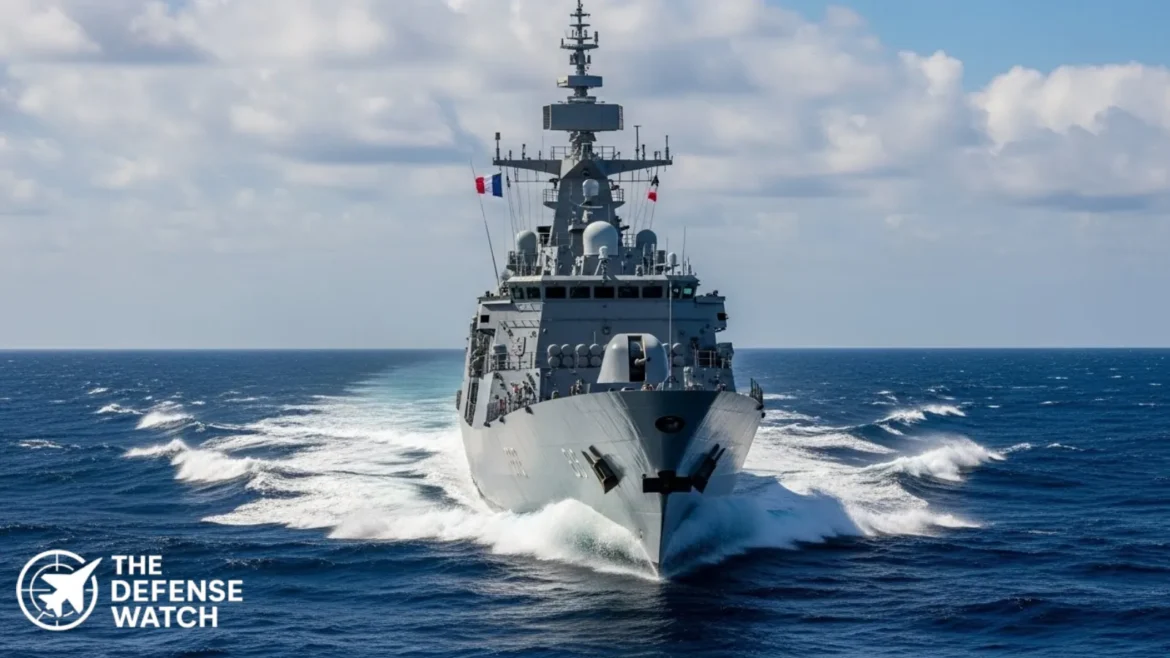
France Develops New Missile Launch System for FDI Frigates
France is developing a new missile launch system designed to significantly increase the missile load of its FDI class frigates, also known as the Belharra class. The development was disclosed in 2025 and reflects ongoing efforts by the French Navy and domestic defense industry to improve surface combatant firepower without increasing ship size.
According to available information, the new launch system could allow each FDI frigate to carry up to four times more missiles than current configurations. The effort is linked to broader French naval modernization plans and is expected to support future air defense and strike missions.
Background on the FDI Frigate Program
The FDI frigate is a next generation surface combatant developed by Naval Group for the French Navy. The program was launched to replace older La Fayette class frigates and to provide a modern, digitally designed platform optimized for high intensity naval operations.
FDI frigates are equipped with advanced sensors, including the Sea Fire active electronically scanned array radar, and are designed to perform air defense, anti surface, and anti submarine missions. Current French Navy FDI ships use vertical launch systems compatible with Aster air defense missiles.
As naval threats evolve, especially the growth of saturation missile attacks and drone swarms, navies are seeking ways to increase onboard missile capacity. This requirement has driven interest in more compact and flexible launch systems.
Details of the New Launch System
The France FDI frigate missile launch system under development focuses on increasing missile density within existing deck space. The concept involves a modular launcher capable of accommodating multiple smaller missiles within a single vertical launch cell.
This approach could allow four short to medium range missiles to be loaded where only one larger missile would normally be carried. Such configurations are already being explored by several navies worldwide as a way to improve defensive depth against massed threats.
For the FDI frigate, this would mean a substantial increase in ready to fire interceptors, particularly for air and missile defense roles. While the exact missile types have not been officially confirmed, the system is expected to support modern European naval missiles used by the French Navy.
Industrial and Program Context
The development effort is tied to Frances broader naval industrial base, with Naval Group playing a central role. Missile integration is also expected to involve European missile manufacturers already working with the French armed forces.
The France FDI frigate missile launch system is being designed to fit within the frigates existing architecture. This reduces the need for major structural changes and helps control costs. It also allows potential retrofitting on future hulls or export variants.
France has promoted the FDI design to international customers, including Greece, which has already ordered the type. A higher missile capacity could make the frigate more attractive in competitive export markets.
Operational Implications for the French Navy
Increasing missile capacity directly improves a ships ability to remain in combat longer without resupply. For air defense frigates, a larger missile load is critical when facing sustained or complex attacks.
With the new launcher, FDI frigates could provide stronger area and point defense for task groups, including aircraft carriers and amphibious ships. The system may also support layered defense concepts, combining long range and short range interceptors.
From an operational standpoint, the France FDI frigate missile launch system aligns with French naval doctrine, which emphasizes flexibility, autonomy, and high readiness across global deployments.
Expert and Policy Perspective
French defense planning documents have consistently highlighted the need to adapt naval platforms to changing threat environments. While no direct policy statement has been issued on this launcher, the development supports national objectives of maintaining technological independence and combat credibility at sea.
The move also reflects wider European trends, where navies are investing in modular systems to extend the life and relevance of existing platforms.
What Comes Next
Further technical details, including testing timelines and missile compatibility, are expected to emerge as development progresses. If successful, the new launcher could be integrated into later FDI units or offered as an upgrade option.
The France FDI frigate missile launch system may also influence future French surface combatant designs beyond the FDI class, setting a standard for higher missile density in medium sized warships.