Executive Summary:
Australia has confirmed it will acquire three in-service U.S. Navy Virginia-class nuclear-powered attack submarines under a revised AUKUS acquisition framework announced on May 31, 2026. The change replaces an earlier plan that included a newly built submarine and is intended to simplify fleet management, training, maintenance requirements, and long-term sustainment while reducing program complexity.
Australia Revises AUKUS Virginia-Class Submarine Acquisition Plan
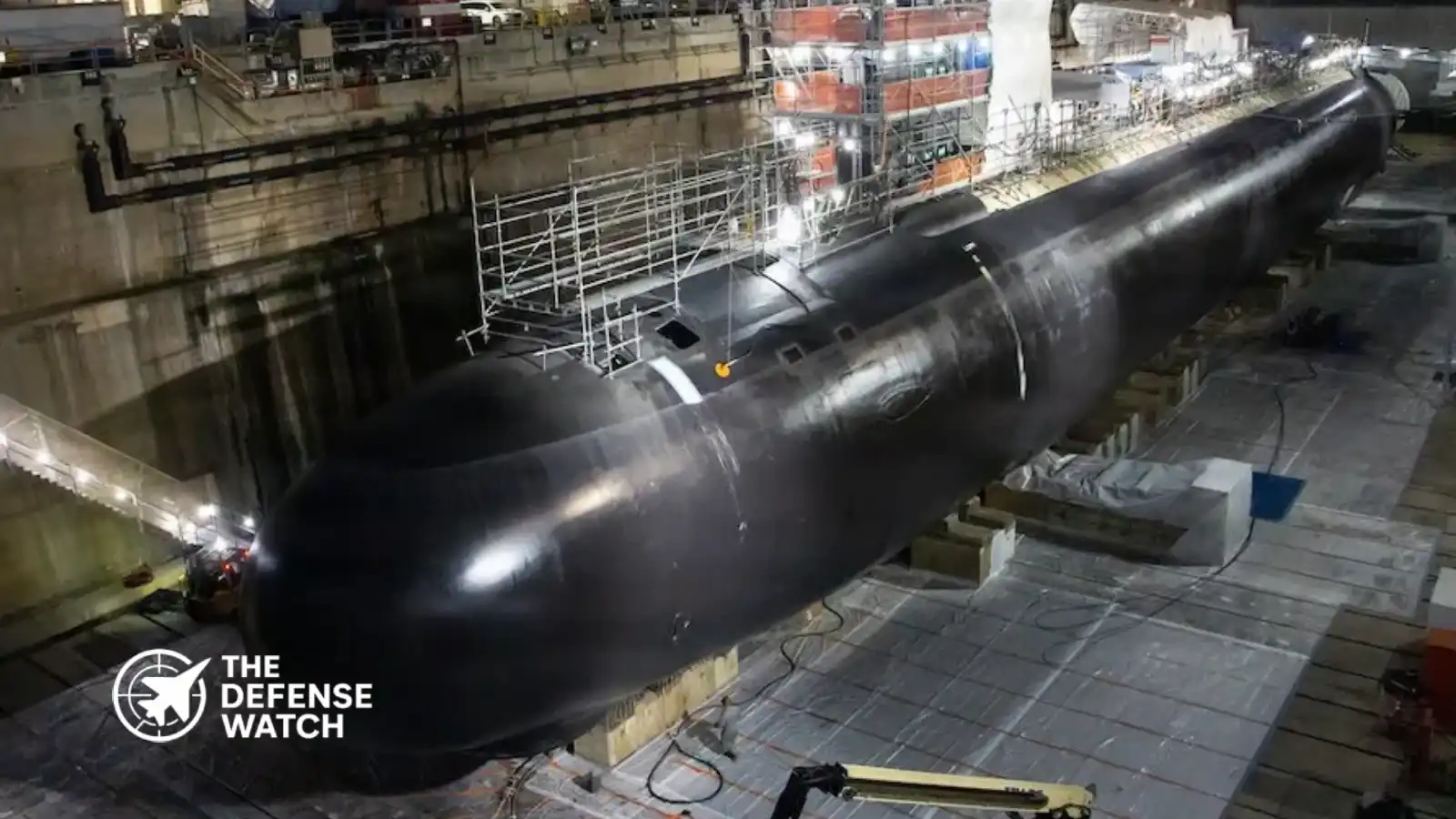
Australia will purchase three used Virginia-class submarines from the United States under a revised AUKUS pathway that reflects growing emphasis on fleet standardization and operational simplicity.
The announcement was made during the IISS Shangri-La Dialogue in Singapore, where Australian Deputy Prime Minister and Defence Minister Richard Marles outlined the updated approach alongside broader AUKUS discussions involving the United States and the United Kingdom. According to the joint trilateral statement, the revised acquisition model is intended to streamline supply chains, reduce maintenance complexity, and improve cost efficiency across the program.
Under the original AUKUS framework unveiled in 2021, Australia was expected to receive at least two used Virginia-class submarines and one newly constructed vessel from U.S. production lines. The revised plan eliminates the new-build component and instead focuses on acquiring three submarines from the same production block.
Marles described the change as a practical effort to reduce the burden of operating multiple submarine variants simultaneously.
Why Canberra Is Pursuing A Simpler Fleet Structure
A central challenge facing Australia’s submarine transition strategy has been managing overlapping generations of undersea platforms.
Without changes to the acquisition model, the Royal Australian Navy could have been required to operate:
Planned Fleet Elements Status Collins-class submarines Existing fleet undergoing life-extension Used Virginia-class submarines Transitional AUKUS capability New-build Virginia-class submarine Originally planned acquisition SSN-AUKUS submarines Future long-term fleet According to Australian officials, managing four distinct submarine categories would have significantly increased training requirements, logistics demands, maintenance planning, spare parts inventories, and workforce specialization needs.
By receiving three submarines from the same Virginia-class production block, Australia expects to standardize crew training, sustainment procedures, and maintenance infrastructure.
The decision also aligns with broader efforts to prepare Australian industry and naval personnel for eventual operation of the future SSN-AUKUS design expected to enter service during the 2040s.
Industrial Constraints Continue To Shape AUKUS Outcomes
The revised arrangement also highlights ongoing pressure on the U.S. submarine industrial base.
American shipyards have struggled for several years to increase production rates for Virginia-class attack submarines while simultaneously supporting development of the Columbia-class ballistic missile submarine program. Defense analysts have repeatedly warned that production targets remain below levels required to satisfy both U.S. Navy force structure goals and AUKUS commitments.
Several Australian defense analysts argue that industrial realities may have influenced Washington’s willingness to transfer new-build submarines.
Dr. Malcolm Davis of the Australian Strategic Policy Institute noted that the United States must still determine whether sufficient submarine numbers will be available for transfer. Other analysts suggested that retaining newer submarines for U.S. Navy requirements remains a strategic priority amid rising Indo-Pacific tensions.
The decision therefore represents both a fleet simplification effort and a reflection of the production challenges confronting the U.S. naval shipbuilding sector.
Strategic Importance Of Virginia-Class Submarines
Despite being transferred as in-service vessels, the Virginia-class remains among the world’s most capable nuclear-powered attack submarine platforms.
Key capabilities include:
- Long-endurance nuclear propulsion
- Advanced acoustic stealth features
- Intelligence, surveillance, and reconnaissance missions
- Anti-submarine warfare operations
- Anti-surface warfare missions
- Special operations support
- Long-range strike capabilities through cruise missile deployment
The class has become a cornerstone of U.S. undersea power projection across the Indo-Pacific, Atlantic, and Middle East theaters.
For Australia, the acquisition provides an opportunity to establish a sovereign nuclear-powered submarine capability decades before domestic production of SSN-AUKUS vessels becomes available.
Operational Benefits And Trade-Offs
While the revised plan simplifies fleet management, analysts note that it also introduces operational compromises.
Unlike newly constructed submarines, transferred boats will already have accumulated operational service life before entering Australian service. This could shorten the overall period they remain available compared with new-build vessels.
Some defense experts argue that newer Virginia-class variants offer enhanced capabilities and lower maintenance demands than older boats. Others contend that the benefits of standardization outweigh the drawbacks, particularly during a complex transition to nuclear-powered submarine operations.
The debate reflects a broader strategic question facing AUKUS: whether capability delivery speed and program certainty should take precedence over acquiring the most advanced possible platforms.
What This Means For The Future Of AUKUS
The submarine pathway remains the most expensive and strategically significant component of AUKUS.
Beyond submarine acquisition, the partnership encompasses advanced technologies including autonomous systems, artificial intelligence, quantum technologies, cyber capabilities, and undersea warfare systems. During the Shangri-La Dialogue, AUKUS partners also highlighted new efforts focused on underwater autonomous platforms designed to protect critical seabed infrastructure and communication networks.
The revised submarine plan demonstrates that AUKUS continues to evolve in response to industrial realities and operational requirements.
From a U.S. perspective, helping Australia field nuclear-powered attack submarines strengthens allied undersea presence across the Indo-Pacific without requiring permanent expansion of American force structure.
For Canberra, the revised acquisition offers a more predictable transition path while preserving the long-term objective of operating domestically produced SSN-AUKUS submarines.
The broader strategic significance extends beyond fleet numbers. The agreement represents one of the deepest defense technology integration efforts ever undertaken among the United States, Australia, and the United Kingdom, with undersea warfare remaining a central element of allied deterrence strategy in the Indo-Pacific.