
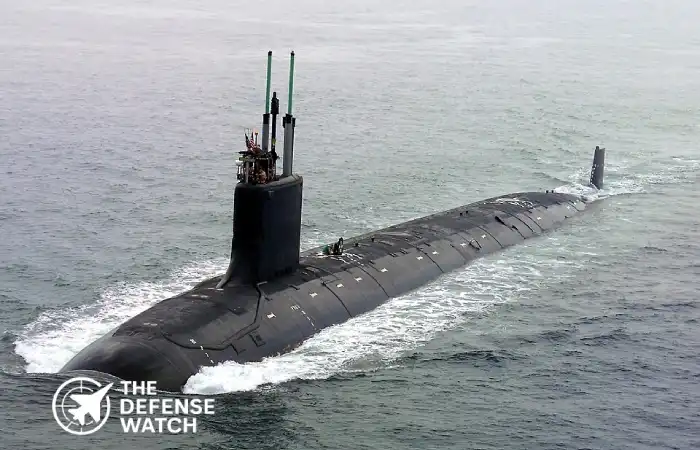
British Submarine Project Faces Mounting Pressure
The British submarine project has come under renewed scrutiny after a House of Commons Defence Committee report warned that the UK’s role in the AUKUS partnership could be undermined by delays, industrial bottlenecks, and limited submarine availability. The findings center on the future SSN-AUKUS attack submarine program, which is set to replace Britain’s Astute-class fleet and also support Australia’s future force.
- UK lawmakers say the British submarine project faces serious risks tied to SSN-AUKUS delivery.
- Delays at Barrow shipyard upgrades could damage UK national security and AUKUS credibility.
- Royal Navy Astute-class submarines are reportedly stretched to, or beyond, operational limits.
- Lawmakers also warned workforce, housing, transport, and infrastructure shortages threaten output.
- Britain plans up to 12 future attack submarines under its wider defense strategy.
The committee said a program of AUKUS’ size cannot be treated as just another defense initiative competing for scarce resources. It urged stronger leadership from the prime minister and senior ministers to prevent the effort from drifting into bureaucratic delay.
Barrow Shipyard Delays Raise Strategic Concerns
At the center of the warning is the expansion of BAE Systems facilities at Barrow-in-Furness, where SSN-AUKUS boats are expected to be built.
Lawmakers said timely investment decisions have already slipped. They warned further setbacks could delay submarine delivery with serious consequences for UK security and confidence among AUKUS partners, including the United States and Australia.
This matters because submarine production cannot be surged quickly. Nuclear submarine programs depend on long-lead materials, specialist labor, reactor integration, and certified infrastructure. Even modest delays today can push schedules years to the right.
Royal Navy Fleet Under Operational Strain
The report also highlighted pressure on the Royal Navy’s current attack submarine fleet. Britain’s Astute-class boats are expected to sustain domestic deterrence support, NATO missions, and increasing AUKUS commitments in the Indo-Pacific.
Lawmakers said the fleet has been stretched to, or even beyond, its limits. They called for faster infrastructure improvements at Devonport and Clyde naval bases to improve maintenance throughput and submarine readiness.
That warning reflects a broader challenge facing many Western navies. Building new submarines is only part of the equation. Keeping existing boats available through timely refits often determines real combat power.
Why This Matters For AUKUS
The AUKUS submarine pathway relies on three linked pillars: British industrial capacity, American transfer of Virginia-class submarines to Australia, and long-term joint production of SSN-AUKUS.
If one partner falls behind, pressure increases across the entire system.
For Britain, delays could affect fleet recapitalization timelines and weaken confidence in its ability to deliver one of the alliance’s most complex defense projects. For Australia, schedule slips could complicate transition planning as Canberra prepares to field nuclear-powered submarines later this decade and beyond.
Britain Plans Larger Future Submarine Force
The committee noted that Britain’s wider defense planning includes a future fleet of up to 12 nuclear-powered attack submarines, a significant expansion from the current force. That ambition would require sustained workforce growth, infrastructure spending, and predictable procurement funding.
In practical terms, the warning is less about program collapse and more about execution risk. Nuclear submarine fleets are built over decades, not election cycles. Without steady investment, schedule discipline, and skilled labor, even wealthy nations struggle to maintain momentum.
Outlook
The report sends a clear signal that the British submarine project remains strategically vital, but vulnerable to delay. With maritime competition rising in both the Euro-Atlantic and Indo-Pacific, London now faces pressure to prove it can turn political commitments into delivered submarines.
Get real time update about this post category directly on your device, subscribe now.
