

Carrier-launched strike at long range in eastern Mediterranean
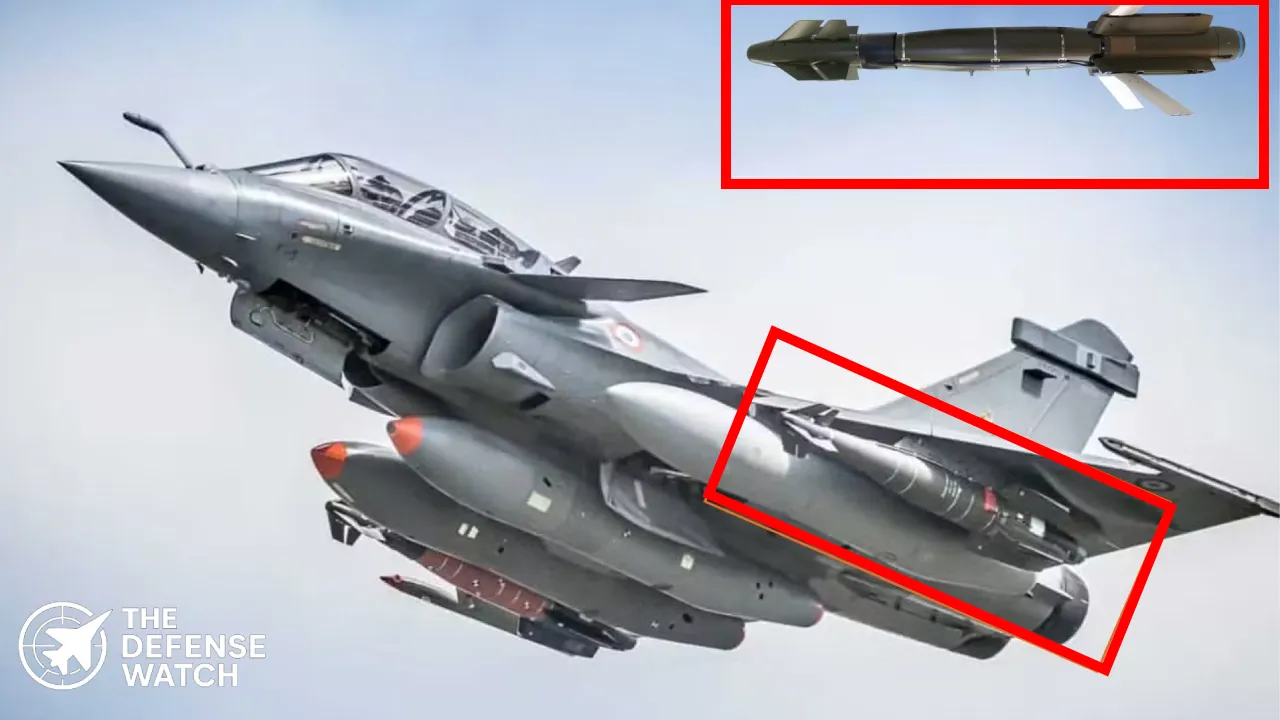
A French Navy Dassault Rafale Marine operating from carrier Charles de Gaulle carried out a live strike on a naval target in the eastern Mediterranean on December 6, 2025. The Rafale employed a 1,000-kg AASM Hammer 1000 guided bomb. The mission began with a long-range transit via Italy and Greece and culminated in a low-level penetration before bomb release on a target at sea — showcasing French ability to deliver heavy precision fire from a carrier air wing at very short notice and over extended range.
The strike was part of a ten-day workup of the carrier group. It underscores France’s readiness to employ heavy, stand-off capable ordnance from a single carrier-borne aviation element when required.
Background: What is AASM Hammer and why this matters
The AASM family and the 1000-kg variant
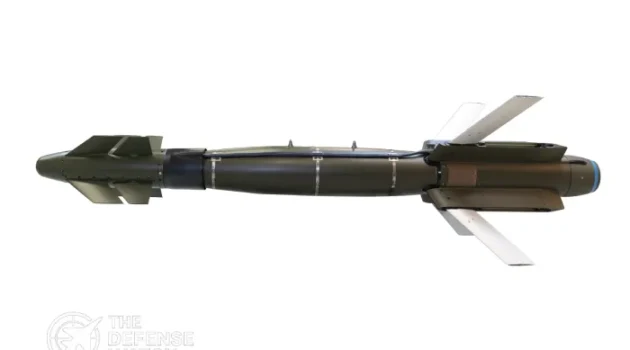
The AASM (Armement Air-Sol Modulaire) Hammer is a modular, precision-guided bomb system developed by Safran Electronics & Defense. Through a modular architecture it combines an inertial/GPS navigation kit (optionally supplemented by laser or infrared terminal guidance) with a rear propulsion kit. Warhead sections can range from roughly 125 kg up to 1,000 kg — giving mission planners flexibility depending on the target.
The 1,000-kg AASM Hammer (officially “AASM 1000 GS”) was qualified by the French procurement agency DGA in January 2023. Testing included separation trials from a Rafale aircraft to ensure safe release, and subsequent live-fire testing to validate operational performance.
Rafale F4.1 integration
Only the Rafale upgraded to the F4 standard (in this case F4.1) is capable of deploying the AASM 1000. The F4.1 upgrade bundles not only the heavy-bomb capability but also improved sensors, connectivity, electronic warfare and anti-cyber protection enhancements.
With AASM 1000 integrated, Rafale becomes capable of delivering a one-tonne warhead with precision guidance and rocket-assisted propulsion, enabling engagement of naval or hardened land targets from stand-off distances. That makes AASM 1000 Hammer a heavy-strike option rather than a simple tactical bomb.
Details of the December 6 Strike
Mission profile
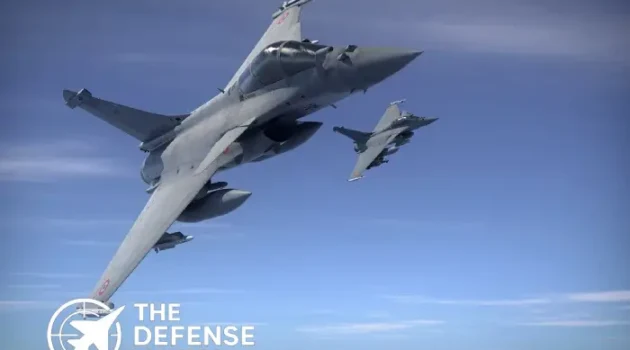
- The strike was executed by a Rafale Marine in F4.1 standard, launching from Charles de Gaulle. The mission included a long-range transit via Italy and Greece. 1
- A supporting fleet replenishment ship, Jacques Chevallier, provided at-sea logistics and munition transfer, while allowing the carrier to maintain readiness with an alert air-defence patrol intact.
- The aircraft flight path included low-altitude penetration to reduce radar exposure. At the end of the ingress, the AASM 1000 was released against a designated naval target on Greece’s Karavia firing range.
- According to the French Navy, the strike — from the initial launch to bomb release — was organized and executed in under 24 hours after target designation, proving a rapid-reaction capability.
Carrier strike group composition and training context
During the work-up, the Charles de Gaulle air wing included 18 Rafale Marine jets, two AEW aircraft (E-2C Hawkeye), and three helicopters. This mix enables simultaneous air defense, strike missions, and area surveillance. The group also ran multiple drills: fifteen SECUREX safety drills, eleven ADEX air-defense scenarios, several MACOPEX operational-capability exercises and an Exocet-centred anti-ship exercise.
This full-spectrum training regime — air defense, surveillance, logistics support and heavy-strike — indicates the French Navy’s aim to maintain a ready, versatile carrier force capable of rapid deployment and integrated operations.
Why this strike matters
Demonstrating long-range maritime strike flexibility
The use of a 1,000-kg AASM from a carrier wing highlights a shift in naval aviation capabilities: a single multirole fighter can now deliver heavy, precision-guided ordnance far from home bases. In scenarios where naval or littoral targets are defended by coastal air defenses or located beyond friendly airfields, this capability becomes strategically valuable.
By showing that Rafale M can deploy such weapons after long transits and under potentially contested conditions, France signals enhanced response readiness for crises in maritime theaters, such as the Mediterranean. The quick turnaround from tasking to strike demonstrates operational agility.
Strategic messaging in a tense maritime region
The eastern Mediterranean continues to be an arena of heightened naval competition, overlapping exclusive economic zones, and strategic interests from regional and extra-regional powers. By conducting a high-profile demonstration of carrier-based heavy strike, France underscores its ability to contribute meaningfully to deterrence, crisis response or power projection in maritime zones adjacent to key European and Middle Eastern states.
Moreover, such capability may influence allied and adversary planning alike, shaping how either side assesses the risk from a French carrier strike group — and by extension, how they posture naval assets or air defenses.
Platform-to-weapons integration shows maturity
The integration of AASM 1000 into Rafale F4.1 — combined with proven carrier-borne operations from the Charles de Gaulle — reflects a mature weapons-platform ecosystem. It confirms that earlier tests and qualification efforts have translated into operational capability.
This milestone may also encourage export customers or nations considering fleet upgrades to view the Rafale + AASM as credible if they require heavy strike options, not just short-range bombs or missiles.
Expert Perspective: What this means for carrier warfare and maritime strike doctrine
Experts in naval aviation and maritime strategy are likely to view this event as a validation of a doctrine still sometimes overshadowed by missile-heavy strike packages. Previously, long-range strike at sea was mostly associated with anti-ship cruise missiles. The use of heavy guided bombs like the AASM 1000 now adds an alternate tool in the strike toolbox — one that can deliver a large warhead with precision without needing a cruise missile flight profile.
In a crisis — blockade, denial-of-access, port infrastructure strike, suppression of coastal defenses — a 1,000-kg bomb can inflict damage far beyond what smaller bombs or missiles may achieve, and can target both naval and ground-based assets.
For navies operating in contested littoral zones, this also means that carrier-based aviation must be factored into threat assessments alongside missile platforms. Air defense systems, both shipborne and shore-based, must account for bomb-delivery profiles that may include low-altitude penetration and rapid release — complicating radar coverage and engagement planning.
This strike also underlines a broader shift underway in European and allied navies: renewed investment in stand-off precision weapons (whether bombs or missiles) to keep pace with improving coastal air defenses and layered maritime threat environments.
What to Watch Next
- Whether other navies operating heavy multirole fighters from carriers follow suit, integrating similarly capable guided bombs.
- Potential export interest from recent or future Rafale customers — especially those with maritime concerns.
- Countermeasures development by regional powers — including advanced coastal air defenses or electronic-warfare suites designed to defeat low-altitude, rocket-propelled bombs.
- How this capability might affect naval force posture, rules of engagement, and deterrence calculations in contested maritime zones.

4 comments
[…] SPEXER radars are designed for automatic detection, tracking and classification of ground, sea and low-altitude aerial targets. The SPEXER 2000 series offers high-performance surveillance capabilities that support a range of […]
[…] drones such as the Orion-E provide Ethiopia with enhanced situational awareness and stand off strike capabilities across difficult terrain, particularly in remote regions where manned aircraft operations are […]
[…] engagements. Soft-kill functions include dazzling or degrading optical sensors, while hard-kill capabilities involve heating and damaging the structure of targets. Installed on the USS Preble, a Flight IIA Arleigh Burke-class destroyer, HELIOS can operate […]
[…] shifted toward strategic autonomy. France Libre aligns with that objective by maintaining sovereign carrier strike capabilities without reliance on allied […]