Executive Summary:
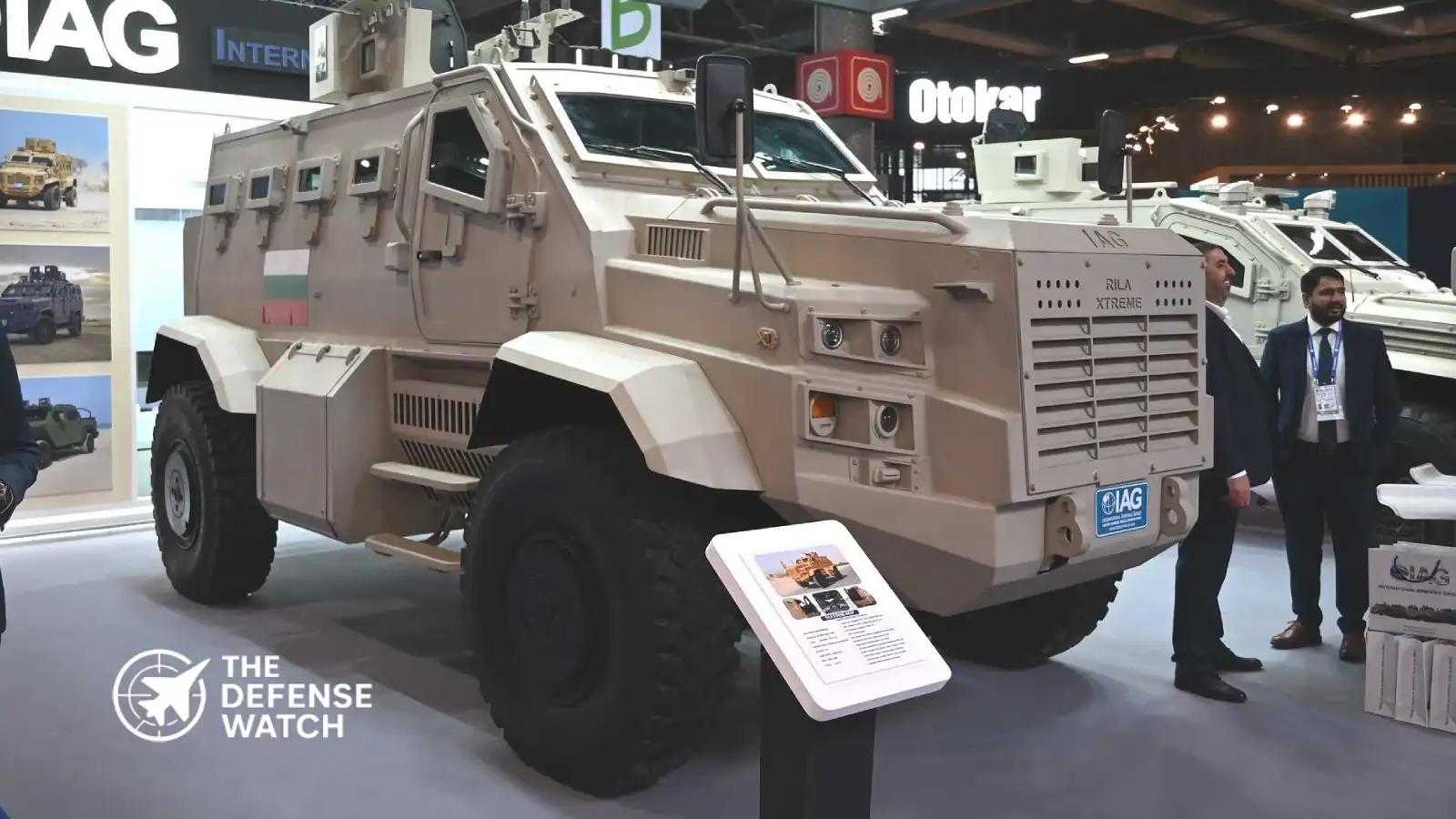
International Armored Group (IAG) has introduced a new generation of armored vehicle solutions aimed at improving battlefield survivability against mines, improvised explosive devices, ambushes, and evolving battlefield threats. The latest platforms emphasize modular protection, operational mobility, and mission adaptability as armed forces worldwide continue investing in protected mobility modernization.
IAG Expands Armored Vehicle Portfolio With New Battlefield Protection Solutions
International Armored Group (IAG) has unveiled its latest generation of armored vehicle solutions designed to enhance battlefield protection and operational flexibility for military customers worldwide. The company announced the new platforms as part of its continued investment in protected mobility technologies, highlighting improvements in survivability, modularity, and mission adaptability for modern combat environments.
The announcement reflects a broader shift across the global defense industry as armies adapt to increasingly complex operational environments shaped by widespread drone use, precision-guided weapons, mines, and improvised explosive devices. Modern armored vehicles are now expected to combine high levels of protection with digital connectivity, mobility, and rapid mission reconfiguration.
Focus on Survivability and Protected Mobility
The newest IAG platforms build on the company’s experience developing Mine Resistant Ambush Protected (MRAP) vehicles, armored personnel carriers, and tactical mobility platforms.
Among the highlighted vehicles are the Rila Xtreme and Guardian Xtreme, both engineered to provide enhanced crew protection while maintaining high mobility across challenging terrain. According to the company, the vehicles incorporate improved ballistic protection, blast-resistant hull designs, and modular armor packages that can be tailored to mission requirements.
Key design priorities include:
| Capability | Operational Benefit |
|---|---|
| Modular armor architecture | Adaptable protection for different missions |
| Blast-resistant hull | Improved survivability against mines and IEDs |
| High off-road mobility | Better performance across varied terrain |
| Multi-role configurations | Supports troop transport, command, reconnaissance, and security missions |
| NATO-compatible standards | Greater interoperability with allied forces |
Building on Earlier Vehicle Programs
The latest announcement continues IAG’s expansion beyond traditional armored patrol vehicles.
Earlier this year, the company revealed new 6×6 and 8×8 Infantry Fighting Vehicle (IFV) concepts at World Defense Show 2026, representing its entry into the medium-weight combat vehicle segment. Those platforms were designed as purpose-built infantry fighting vehicles rather than modified armored personnel carriers, featuring independent suspension systems, modular armor, and capacity for future electronic and weapons upgrades.
The company has also demonstrated the Pirin 4×4 APC and Balkan MRAP, reinforcing its strategy of offering a complete family of protected mobility solutions spanning internal security, peacekeeping, border protection, and high-intensity combat operations.
Why Protected Mobility Is Becoming More Important
The demand for modern armored vehicles has increased significantly since recent conflicts demonstrated the vulnerability of legacy platforms to inexpensive yet highly effective battlefield threats.
Commercial drones modified for reconnaissance and strike missions, loitering munitions, anti-tank guided missiles, and precision artillery have fundamentally changed vehicle survivability requirements. Passive armor alone is no longer sufficient.
As a result, military procurement increasingly emphasizes:
- Higher blast protection
- Modular armor upgrades
- Digital battlefield integration
- Counter-drone compatibility
- Improved crew survivability
- Easier maintenance and lifecycle support
These trends are influencing vehicle acquisition programs across NATO members, Middle Eastern operators, and emerging defense markets.
Analysis: A Shift Toward Adaptable Combat Platforms
IAG’s latest vehicle family illustrates a wider transformation taking place throughout the global armored vehicle market.
Rather than designing vehicles for a single operational role, manufacturers are increasingly developing common platforms that can support multiple missions through interchangeable mission modules and scalable protection packages. This approach reduces logistics burdens while allowing armed forces to adapt platforms as operational requirements evolve.
Equally important is the growing expectation that armored vehicles will function as networked battlefield assets rather than isolated platforms. Future combat vehicles are expected to integrate sensors, communications systems, electronic warfare capabilities, and autonomous technologies that improve situational awareness and accelerate decision making.
For medium-sized manufacturers like IAG, this strategy offers an opportunity to compete by providing customizable solutions for customers seeking alternatives to larger Western defense primes. Modular vehicle architectures also make it easier for nations to integrate domestically produced weapons, communications equipment, and mission systems, supporting local industrial participation and reducing long-term sustainment costs.
As modernization programs continue worldwide, demand is likely to remain strongest for armored platforms that balance protection, mobility, affordability, and upgrade potential instead of relying solely on heavier armor or larger vehicle designs.
Looking Ahead
IAG’s latest armored vehicle developments reinforce the growing emphasis on survivability, flexibility, and modular design within the global defense industry. While the company continues expanding its portfolio into increasingly capable combat vehicle segments, its newest platforms reflect broader military priorities centered on protecting personnel while maintaining operational agility across diverse mission environments.
As armed forces adapt to evolving battlefield conditions, protected mobility platforms equipped for future upgrades are expected to remain a central component of ground force modernization efforts.