(adsbygoogle = window.adsbygoogle || []).push({});Executive Summary:
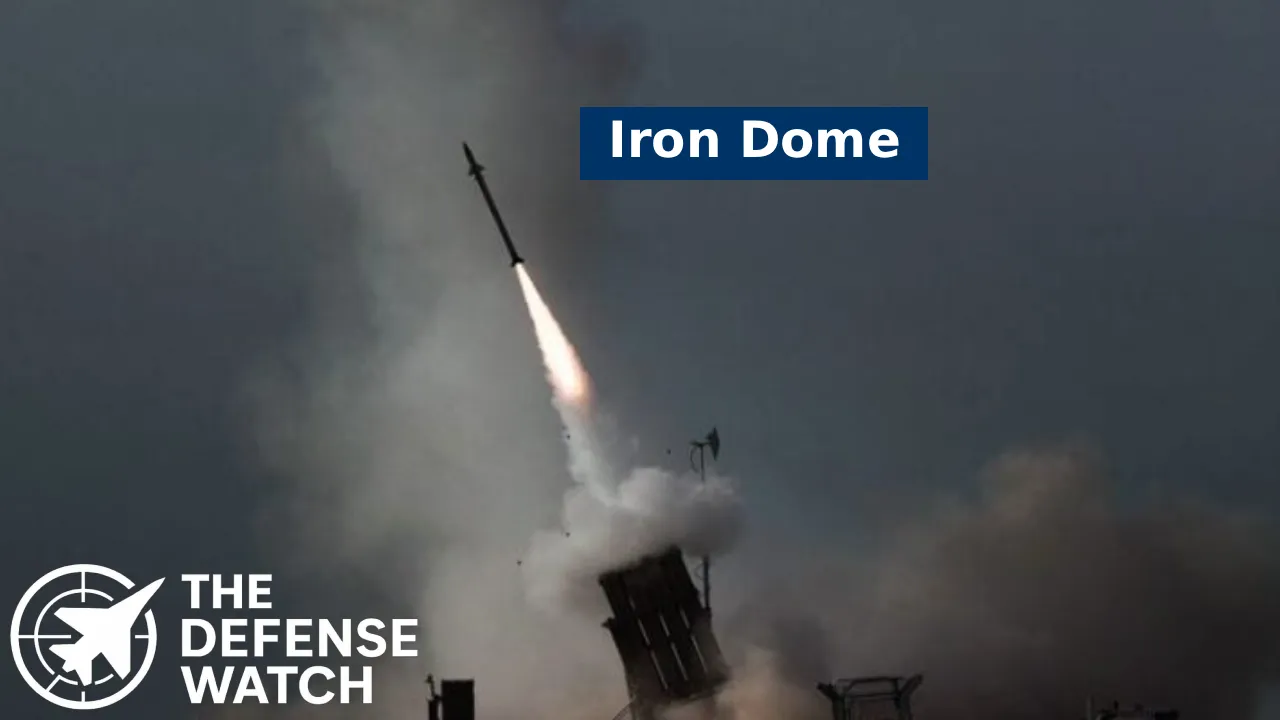
The Israeli Ministry of Defense (MoD) announced on June 30, 2026, the successful completion of a comprehensive test series validating upgrades to the Iron Dome air defense system. The enhancements focus on improving performance against high volumes of fire from rockets, cruise missiles, and unmanned aerial vehicles (UAVs), incorporating lessons from recent operations. Tests also demonstrated integration of the Iron Beam high-power laser system into the Iron Dome battle management center, marking a step toward layered kinetic and directed-energy defense.
Iron Dome Upgrade Enhances Counter-Saturation Capabilities
The Israeli MoD, in coordination with the Israel Missile Defense Organization (IMDO) and prime contractor Rafael Advanced Defense Systems, completed the test series that evaluated multiple upgrades to the combat-proven Iron Dome system. These improvements specifically target the system’s capacity to manage saturation attacks—scenarios involving large salvos of incoming threats.
Iron Dome, operational since 2011, has achieved a success rate exceeding 90% across more than 10,000 interceptions, primarily against short-range rockets, artillery, mortars, and increasingly diverse threats like UAVs and cruise missiles. The latest upgrades build directly on operational experience to expand this performance envelope.
Technical Enhancements and Test Scope
According to the MoD, the upgrades include technological improvements that boost the system’s ability to contend with high rates and volumes of fire. Tests simulated existing and future threats across multiple domains, validating enhanced detection, tracking, and interception algorithms within the battle management system.
atOptions = { ‘key’ : ‘3d48d603f906e3fe9f205be3c4433835’, ‘format’ : ‘iframe’, ‘height’ : 250, ‘width’ : 300, ‘params’ : {} };Key elements tested:
- Improved salvo handling: Better discrimination and prioritization of threats in dense attack environments.
- Multi-threat engagement: Simultaneous operations against rockets, cruise missiles, and UAVs.
- Battle management integration: Seamless incorporation of the Iron Beam laser into the existing Iron Dome command-and-control architecture.
Yoav Tourgeman, CEO of Rafael Advanced Defense Systems, described the tests as representing a “further expansion of the system’s capability envelope.
Iron Beam Integration Marks Layered Defense Evolution
A notable aspect of the trials was the operational integration of the Iron Beam high-power laser weapon system. Iron Beam, which entered initial service with the Israeli Air Force in late 2025, serves as a cost-effective complement to kinetic interceptors like the Tamir missile.
Iron Dome vs. Iron Beam Comparison (Key Attributes):
System Interceptor Type Primary Advantage Cost per Engagement Status (2026) Iron Dome Tamir missile All-weather, proven multi-threat ~$40,000–$100,000 Operational, upgraded Iron Beam High-energy laser Low-cost for drones/rockets ~$3–$10 Initial integration This hybrid approach allows commanders to allocate expensive missiles for higher-value or longer-range threats while using the laser for closer-in, high-volume targets, potentially extending magazine depth during prolonged engagements.
Operational and Strategic Context
Israel’s multi-layered air and missile defense architecture—comprising Iron Dome for short-range threats, David’s Sling for medium-range, and Arrow systems for ballistic missiles—has been repeatedly tested in recent regional conflicts. The upgrades reflect ongoing adaptation to evolving tactics, such as massed drone swarms and coordinated rocket barrages employed by various adversaries.
Analysis: Implications for U.S. Defense Strategy and Global Modernization
For the United States, which has provided significant funding for Iron Dome development and co-production with Raytheon (RTX), these advancements hold direct relevance. U.S. forces face similar challenges in potential high-intensity conflicts against peer adversaries capable of saturation attacks using drones, cruise missiles, and ballistic systems. The Israeli experience offers valuable data on real-world performance and integration of directed-energy weapons.
Technically, integrating lasers like Iron Beam addresses a core hurdle of traditional missile defense: finite and expensive munitions. In a protracted conflict, the ability to supplement kinetic interceptors with near-unlimited “magazine” depth from power-generated lasers could prove decisive for protecting forward bases, carrier strike groups, or allied territory.
Operationally, the upgrades underscore the importance of battle management systems capable of orchestrating mixed interceptor types. This mirrors U.S. efforts in programs like the Army’s Indirect Fires Protection Capability and Navy’s directed-energy initiatives. Lessons from Iron Dome’s evolution will likely inform American system-of-systems approaches to integrated air and missile defense (IAMD).
Geopolitically, Israel’s continued investment in defensive capabilities, even amid active operations, signals a long-term strategy emphasizing resilience and technological superiority in a volatile region. For U.S. policymakers, this reinforces the value of bilateral defense cooperation, where Israeli innovations—often battle-tested—accelerate American modernization.
Challenges and Future Outlook
While the tests represent a significant leap, challenges remain. Directed-energy systems like Iron Beam are weather-sensitive and require substantial power infrastructure, limiting mobility in some scenarios. Full integration across land, sea (via C-Dome variants), and potentially air domains will demand further development.
The MoD indicated that upgrades to Iron Dome and Iron Beam will continue across multiple platforms, reflecting a commitment to iterative improvement based on operational feedback.