

Table of Contents
Rafale vs F-35 comparison
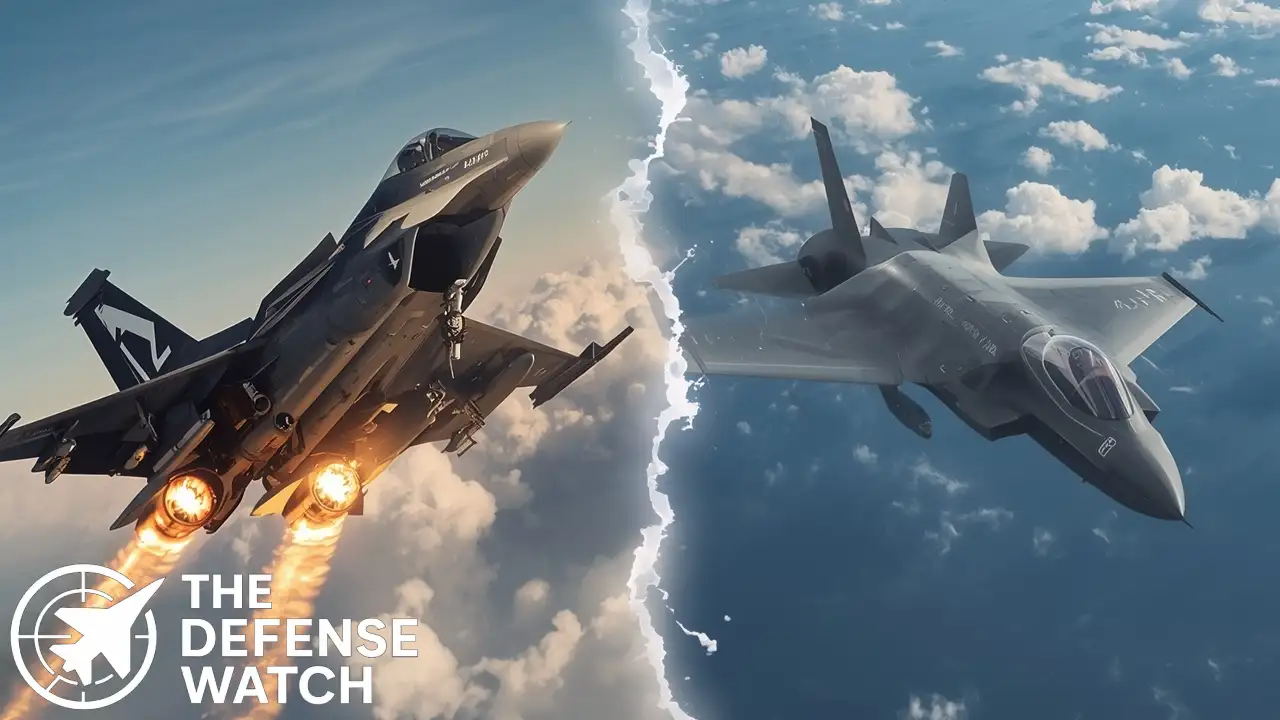
The debate of Rafale vs F-35 has gained traction as nations reassess their defense priorities amid rising global tensions. France’s Dassault Rafale, a 4.5-generation multirole fighter, has earned a reputation as a combat-proven, export-friendly platform. Meanwhile, the U.S. Lockheed Martin F-35 Lightning II represents the cornerstone of NATO’s future airpower, designed for stealth, sensor fusion, and next-generation warfare.
For U.S. readers, the comparison is more than technical—it’s strategic. While Washington promotes the F-35 as the alliance’s standard, some partners, including France and India, continue to invest in Rafale fleets. This raises key geopolitical questions: Is the Rafale a viable alternative to the F-35? And under what circumstances could it outperform America’s stealth jet?
Specifications Comparison: Rafale vs F-35
| Specification | Dassault Rafale | Lockheed Martin F-35 Lightning II |
|---|---|---|
| Origin | France | United States |
| Generation | 4.5th generation | 5th generation |
| Crew | 1 (Rafale C/B), 2 (Rafale B) | 1 |
| Top Speed | Mach 1.8 (~1,912 km/h) | Mach 1.6 (~1,960 km/h) |
| Ferry Range | ~3,700 km (with drop tanks) | ~2,200 km |
| Combat Radius | ~1,850 km | ~1,100 km |
| Payload Capacity | ~9,500 kg | ~8,160 kg |
| Stealth / RCS | ~1 m² (est., frontal) | ~0.001–0.005 m² (stealth-optimized) |
| Service Entry | 2001 | 2015 |
| Unit Cost (est.) | $100–120 million | $80–100 million (F-35A variant) |
| Primary Operators | France, India, Egypt, Greece | United States, NATO allies, Japan |
Design & Technology
The Rafale was built as an “omnirole” fighter capable of switching between air-to-air and strike missions mid-flight. It features advanced avionics, active electronically scanned array (AESA) radar, and a glass cockpit with hands-on-throttle-and-stick (HOTAS) control. Its design prioritizes agility, versatility, and survivability, though it is not a true stealth aircraft.
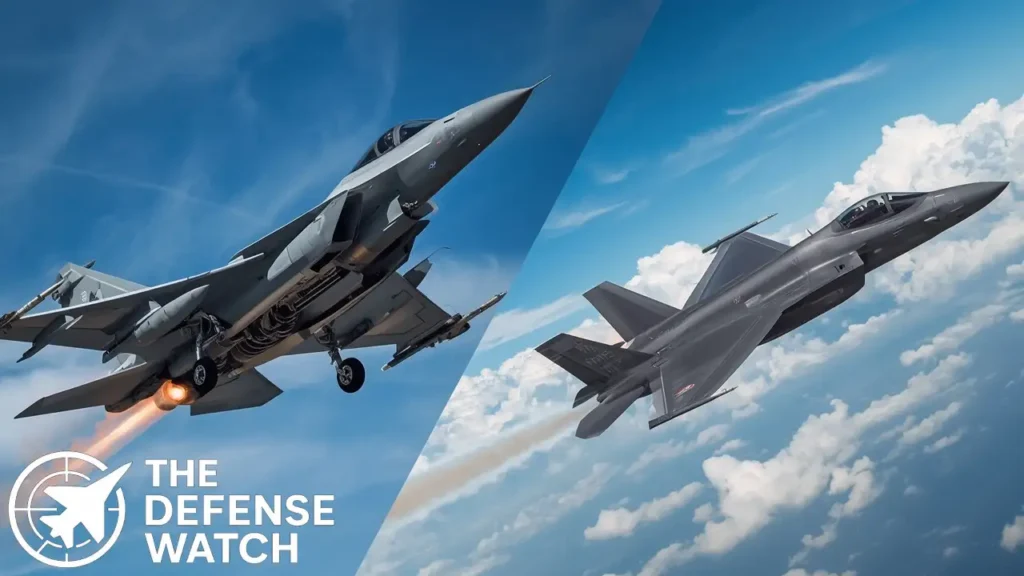
The F-35, by contrast, is a dedicated 5th-generation stealth fighter. Its design emphasizes radar-evading geometry, internal weapons bays, and advanced sensor fusion. The Distributed Aperture System (DAS) and Electro-Optical Targeting System (EOTS) give pilots 360-degree situational awareness. In terms of digital battlespace integration, the F-35 sets the global benchmark.
Firepower & Performance
- Rafale Armament:
- 30mm GIAT cannon
- Air-to-air: MICA, Meteor, Magic II missiles
- Air-to-ground: SCALP cruise missile, AASM precision bombs
- Nuclear role: ASMP-A nuclear missile (French deterrence role)
- 14 hardpoints allow heavy payload flexibility.
- F-35 Armament:
- 25mm GAU-22/A cannon
- Air-to-air: AIM-120 AMRAAM, AIM-9X Sidewinder
- Air-to-ground: JDAMs, SDBs, JASSM, nuclear-certified (B61-12 for NATO)
- Internal bays preserve stealth; external pylons increase payload but reduce low observability.
In dogfights, the Rafale’s agility, high thrust-to-weight ratio, and “supercruise” capability give it an edge. However, the F-35 rarely seeks close combat—its stealth and long-range sensors are designed to “kill before being seen.”
Operational Range & Mobility
The Rafale offers a longer combat radius and can conduct buddy-buddy refueling with wing-mounted pods. Its ability to operate from aircraft carriers (Rafale M) and short, rugged airstrips adds flexibility.
The F-35 has a shorter combat radius, but its integration into U.S. and NATO aerial refueling networks mitigates this. Mobility-wise, the F-35 is heavily dependent on advanced infrastructure and maintenance hubs, whereas the Rafale is known for its ease of deployment in expeditionary campaigns.
Combat Effectiveness
The Rafale is battle-proven in Afghanistan, Libya, Mali, Iraq, and Syria. Its adaptability to both air-to-air and deep-strike roles has given it credibility as a versatile warfighter.
The F-35 has not yet seen large-scale combat but has been deployed in intelligence and strike missions by Israel, the U.S., and UK forces. Its ability to link multiple platforms via secure datalinks gives it unmatched force-multiplying potential, especially in high-threat environments like the Indo-Pacific or Eastern Europe.
Cost & Export Value
- Rafale: Costs more per unit but is attractive for nations unwilling or unable to rely on U.S. technology. Export deals with India, Egypt, and Greece showcase its geopolitical reach. Maintenance is simpler than the F-35 but still costly.
- F-35: Initially criticized for overruns, its cost has stabilized. With more than 20 operators worldwide, it has become the default NATO fighter. Its mass adoption ensures steady parts supply and training synergy.
For allies, buying the F-35 often means deeper political alignment with Washington. Rafale buyers, meanwhile, enjoy a degree of strategic independence.
Analysis: Rafale vs F-35 – Who Wins?
- Air Superiority: F-35 (stealth advantage, beyond-visual-range combat)
- Agility / Dogfighting: Rafale (maneuverability, supercruise)
- Strike Missions: Tie (Rafale heavy loadout vs F-35 stealth penetration)
- Logistics & Training: F-35 (global standardization)
- Expeditionary Flexibility: Rafale (rugged operations, carrier-ready)
From a U.S. defense perspective, the F-35 clearly outpaces the Rafale in terms of future-proof technology and integration. However, the Rafale remains an elite fighter for nations prioritizing sovereignty, versatility, and proven combat history.
Conclusion
The Rafale vs F-35 comparison reflects more than aircraft design—it reflects two defense philosophies. The Rafale excels as a flexible, combat-tested platform suited for independent strategies. The F-35 dominates in stealth, networks, and coalition warfare.
For U.S. readers, the takeaway is clear: the F-35 is America’s choice for joint operations, but the Rafale remains a formidable counterpart and a reminder that not all allies fly American wings.
Source: Dassault Aviation Rafale Official
FAQ: Rafale vs F-35
The F-35 is more advanced in stealth and sensor fusion, while the Rafale is highly versatile and proven in combat.
In close combat, Rafale’s agility could give it an advantage, but the F-35’s strategy is to avoid dogfights using stealth and long-range weapons.
Nations like India and Egypt choose Rafale for strategic independence, simpler logistics, and fewer U.S. export restrictions.
The Rafale has a longer combat radius and expeditionary flexibility, while the F-35 relies on advanced tanker support.
For U.S. and NATO allies, yes—the F-35 offers unparalleled interoperability. But for independent powers, Rafale offers a strong alternative.

2 comments
[…] Multirole 4.5-gen fighter […]
[…] between India and the Bay of Bengal, Bangladesh’s air defense challenges are pronounced. A modern multirole fleet would give Dhaka enhanced capabilities to surveil, interdict, and enforce its airspace, […]