Finland F-35A Training Marks Key Step Toward Operational Capability
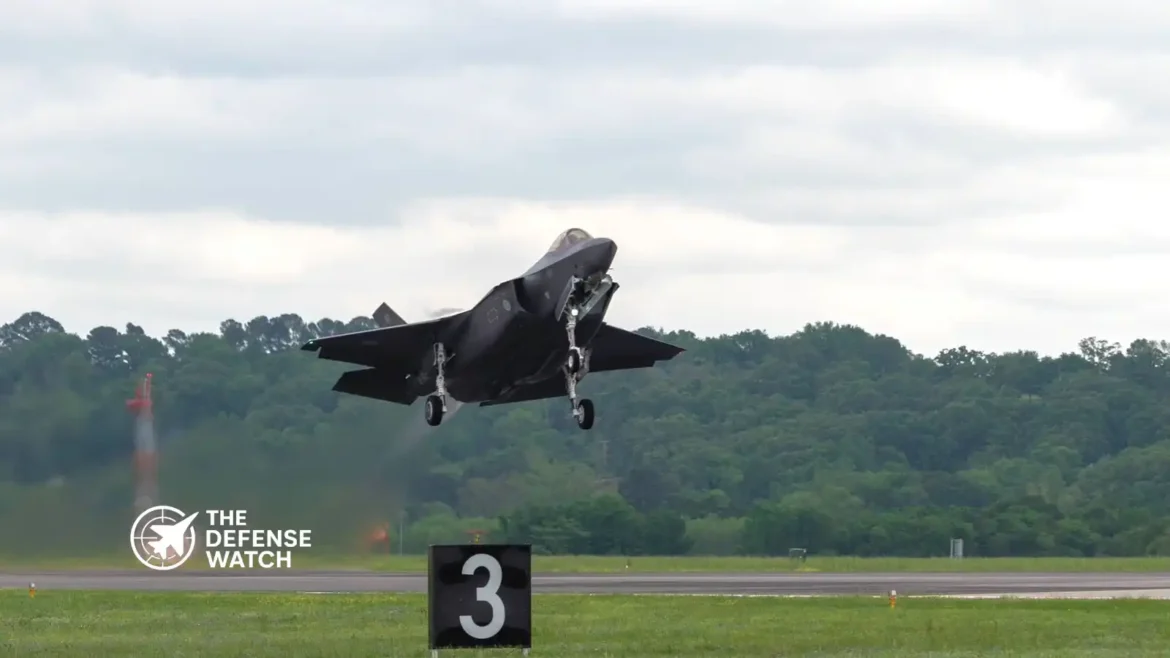
Finland F-35A training has reached a critical milestone after a Finnish Air Force pilot completed the country’s first flight in the F-35A in the United States, signaling steady progress toward operational readiness. The development was reported by Defence Industry Europe, highlighting the growing pace of Finland’s transition to fifth-generation airpower.
The flight forms part of a structured training pipeline conducted in close coordination with the U.S. Air Force. Finnish pilots and ground crews are undergoing comprehensive instruction designed to prepare them for the complexities of operating the stealth fighter, including sensor fusion, network-centric warfare, and advanced mission planning.
This milestone is not symbolic. It reflects a tangible shift from procurement to capability development.
- A Finnish Air Force pilot has completed the first F-35A flight in the United States as part of Finland’s training program.
- The training is being conducted in cooperation with the U.S. Air Force to prepare Finnish crews for operational deployment.
- Finland selected the F-35A in 2021 to replace its legacy F/A-18 Hornet fleet under the HX fighter program.
- Initial operational capability is expected later this decade as aircraft deliveries and training progress.
- The milestone reflects Finland’s broader integration into NATO airpower and advanced combat aviation networks.
Transition From Legacy Fighters To Fifth-Generation Capability
Finland selected the F-35A Lightning II in 2021 under its HX fighter program to replace its aging fleet of F/A-18 Hornets. The decision aligned Helsinki with a growing group of European operators adopting the platform to maintain technological parity with near-peer competitors.
The Finland F-35A training effort is central to that transition. Unlike legacy aircraft, the F-35A requires a different operational mindset. Pilots must manage large volumes of fused data while operating in contested environments where stealth and electronic warfare play decisive roles.
Training in the United States allows Finnish personnel to integrate directly into an established ecosystem. This includes exposure to U.S. operational doctrine, maintenance practices, and joint mission scenarios. Such integration reduces the time needed to achieve effective combat readiness once the aircraft are delivered to Finland.
Strategic Context: NATO Integration And Regional Deterrence
The timing of Finland’s F-35A training progress is significant. Following its accession to NATO, Finland is rapidly aligning its defense posture with alliance standards. The F-35A is widely regarded as a cornerstone of NATO’s future airpower architecture due to its ability to operate as a force multiplier across domains.
From a strategic perspective, Finland’s adoption of the F-35A enhances deterrence in Northern Europe. The aircraft’s stealth characteristics and advanced sensors improve situational awareness across the Baltic region, an area of increasing military activity.
The Finland F-35A training program also supports interoperability. Finnish pilots trained alongside U.S. and allied counterparts will be better positioned to participate in joint operations, exercises, and integrated air defense missions.
This interoperability is critical. Modern conflicts are unlikely to be fought in isolation, and shared platforms simplify coordination at both tactical and operational levels.
Building Toward Operational Readiness
While the first flight marks a major milestone, Finland’s path to full operational capability remains phased. Training will continue in the United States before transitioning to domestic operations as aircraft deliveries begin.
Ground crews, logistics personnel, and command structures must also adapt. The F-35A introduces new maintenance requirements and digital infrastructure, including secure data systems that support mission planning and real-time updates.
The Finland F-35A training framework is designed to address these challenges early. By building expertise ahead of aircraft delivery, Finland aims to avoid capability gaps during the transition period.
Initial operational capability is expected later in the decade, with full operational capability to follow as more aircraft enter service and training cycles mature.
Analysis: Why This Milestone Matters
The first Finnish F-35A flight represents more than pilot proficiency. It demonstrates that Finland is effectively executing one of Europe’s most significant fighter modernization programs.
From an operational standpoint, early training milestones reduce long-term risk. Countries that delay training often face bottlenecks when aircraft deliveries accelerate. Finland’s approach suggests a deliberate effort to synchronize training, infrastructure, and procurement timelines.
There is also a broader geopolitical signal. By advancing its F-35A training in partnership with the United States, Finland reinforces its commitment to transatlantic defense cooperation. This is particularly relevant given evolving security dynamics in Northern and Eastern Europe.
At the same time, the reliance on U.S.-based training highlights the continued importance of American infrastructure in enabling allied capability development. Even as European defense initiatives expand, U.S. platforms and training ecosystems remain central to NATO’s operational readiness.
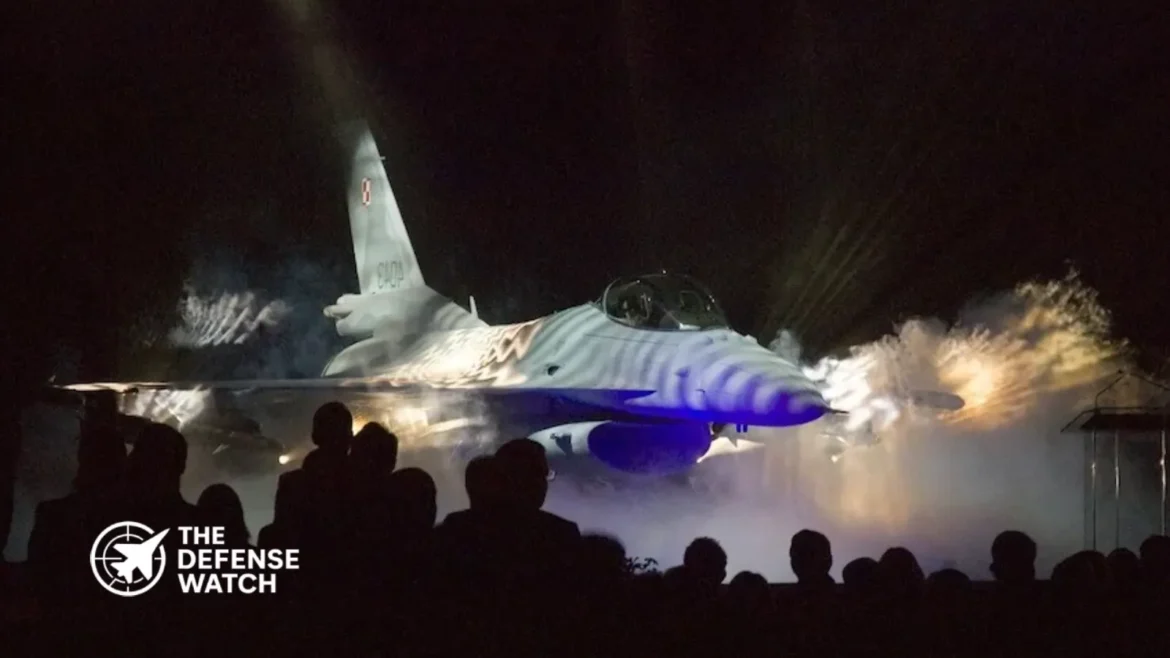
- Poland has operated F-16 fighter jets for 20 years, forming the backbone of its modern air force.
- The fleet supports NATO missions, including air policing and joint exercises in Eastern Europe.
- Lockheed Martin highlights interoperability and modernization as key advantages of the platform.
- Polish F-16s have been upgraded to maintain compatibility with evolving NATO standards.
- The milestone reflects Poland’s growing role in NATO’s eastern flank defense strategy.
Polish F-16 Service Strengthens NATO Airpower
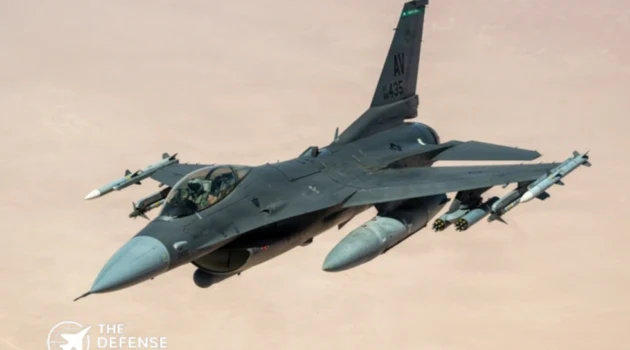
The Polish F-16 service NATO milestone has reached a significant point as Poland marks 20 years of operating its F-16 fighter fleet, with Lockheed Martin emphasizing the aircraft’s role in strengthening NATO airpower and regional security. Since entering service in the mid-2000s, Poland’s F-16s have become a central pillar of its air defense and a key contributor to alliance operations across Eastern Europe.
According to the original report, Lockheed Martin highlighted how Poland’s investment in the F-16 platform has enhanced interoperability within NATO while ensuring a credible deterrent posture along the alliance’s eastern flank.
Two Decades of Polish F-16 Operations
Poland introduced the F-16 Fighting Falcon as part of a broader modernization effort to transition from Soviet-era platforms to NATO-compatible systems. The aircraft quickly became a cornerstone of the Polish Air Force, enabling the country to participate fully in allied missions and joint operations.
Over the past two decades, Polish F-16s have taken part in air policing missions, multinational exercises, and deterrence operations. Their presence has been particularly important in reinforcing NATO’s eastern defenses, especially amid heightened tensions in Eastern Europe.
The aircraft’s multirole capability allows Poland to conduct air superiority, ground attack, and reconnaissance missions using a single platform. This flexibility has proven critical as NATO adapts to a more complex threat environment that includes both conventional and hybrid warfare.
Interoperability and NATO Integration
One of the most important aspects of the Polish F-16 service NATO framework is interoperability. From the outset, Poland’s F-16 fleet was designed to integrate seamlessly with NATO command structures, communication systems, and operational procedures.
This compatibility allows Polish pilots to operate alongside other NATO air forces without technical or procedural barriers. Joint exercises, such as large-scale air drills across Europe, have further strengthened coordination and readiness.
Lockheed Martin noted that the F-16 platform continues to evolve through upgrades in avionics, weapons integration, and data-sharing capabilities. These enhancements ensure that the aircraft remains relevant in modern network-centric warfare environments.
Modernization and Capability Enhancements
To maintain operational effectiveness, Poland has pursued continuous upgrades to its F-16 fleet. These improvements include advanced radar systems, precision-guided munitions, and enhanced electronic warfare capabilities.
Modernization efforts also focus on improving survivability and mission effectiveness in contested environments. As threats evolve, particularly in the form of advanced air defense systems and electronic warfare, maintaining a technological edge remains essential.
The ongoing upgrades align with NATO’s broader push to modernize its air forces and ensure collective defense capabilities remain credible. Poland’s commitment to upgrading its F-16s reflects a long-term strategy to sustain high readiness levels.
Strategic Importance for Eastern Europe
Poland’s geographic position places it at the center of NATO’s eastern flank, making its airpower capabilities especially critical. The Polish F-16 service NATO framework contributes directly to regional stability by providing rapid response and deterrence capabilities.
The presence of a capable and modern air force helps deter potential adversaries and reassures neighboring NATO members. In recent years, the importance of airpower in Eastern Europe has grown significantly due to shifting geopolitical dynamics.
Poland’s F-16 fleet also supports rotational deployments and allied exercises, reinforcing NATO’s collective defense posture. This role has become increasingly important as the alliance seeks to maintain readiness in a rapidly changing security environment.
Analysis: Why the F-16 Still Matters in NATO
Even as fifth-generation aircraft like the F-35 Lightning II enter service, the F-16 remains a critical asset for NATO. Its proven reliability, lower operating costs, and upgrade potential make it a practical choice for many member states.
For Poland, the F-16 provides a balance between capability and affordability. While newer platforms offer advanced stealth features, the F-16 continues to deliver strong performance in most operational scenarios, especially when supported by modern upgrades.
This layered approach, combining legacy platforms with next-generation systems, reflects NATO’s broader strategy. It allows the alliance to maintain a large, capable force while gradually integrating more advanced technologies.
Analysis: Long-Term Implications for NATO Airpower
Looking ahead, Poland’s experience with the F-16 highlights the importance of sustained investment in airpower. Rather than relying solely on new acquisitions, continuous modernization of existing fleets can deliver significant strategic value.
The Polish F-16 service NATO model demonstrates how mid-life upgrades can extend the operational life of aircraft while maintaining high levels of readiness. This approach is particularly relevant for countries balancing budget constraints with growing security demands.
At the same time, Poland’s ongoing defense investments, including future integration of advanced platforms, suggest a dual-track strategy. Maintaining a strong F-16 fleet while preparing for next-generation capabilities ensures long-term resilience within NATO.
FAQs
How long has Poland operated F-16 fighter jets?Poland has operated F-16 aircraft for approximately 20 years since their introduction in the mid-2000s.
Why are Polish F-16s important for NATO?They enhance interoperability, support joint missions, and strengthen NATO’s eastern flank defense.
Are Poland’s F-16s still modern?Yes, they have undergone continuous upgrades to remain compatible with modern NATO standards.
Will Poland replace its F-16 fleet?Poland is adding newer platforms but is expected to keep upgraded F-16s in service for years.
What role do F-16s play in modern warfare?They provide multirole capabilities including air defense, strike missions, and reconnaissance.
 ■ KEY FACTS AT A GLANCE
- ► US F-22 Raptors were recently sighted operating from RAF Lakenheath in the United Kingdom.
- ► The deployment comes amid ongoing U.S. force posture adjustments linked to Middle East security concerns.
- ► F-22 Raptors provide air dominance, stealth penetration, and advanced sensor fusion capabilities.
- ► The United Kingdom remains a critical forward operating hub for U.S. Air Force deployments into Europe and beyond.
- ► Movement underscores Washington’s emphasis on flexible, rapid-response airpower positioning.
US F-22 Raptors Sighted In UK Amid Middle East Force Posture Review
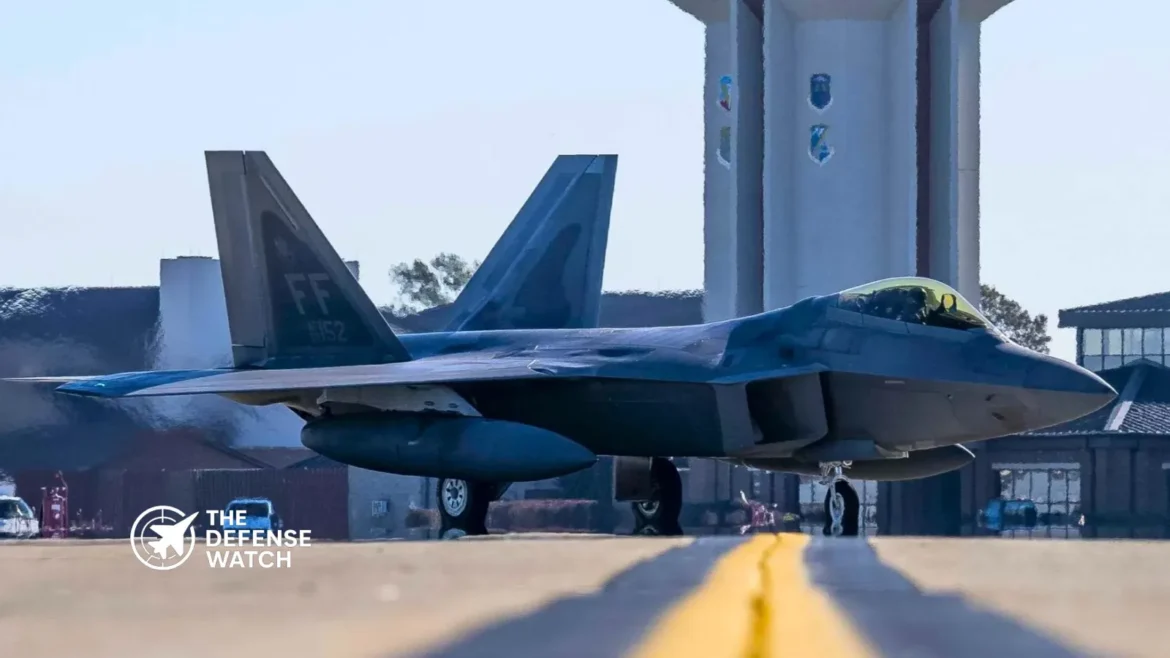
US F-22 Raptors operating from the United Kingdom are drawing attention as Washington reviews its Middle East airpower posture.
Recent imagery and reporting indicate that F-22 aircraft have been sighted at RAF Lakenheath, a long-standing U.S. Air Force hub in Britain. While U.S. officials have not publicly detailed the mission profile, the timing aligns with broader Pentagon adjustments to regional force deployments.
(adsbygoogle = window.adsbygoogle || []).push({});The presence of the aircraft may signal preparations for reinforcement or contingency options tied to Middle East security dynamics. The U.S. Department of Defense has repeatedly emphasized that it retains the ability to surge advanced air assets where needed.
Strategic Value Of The F-22 Raptor
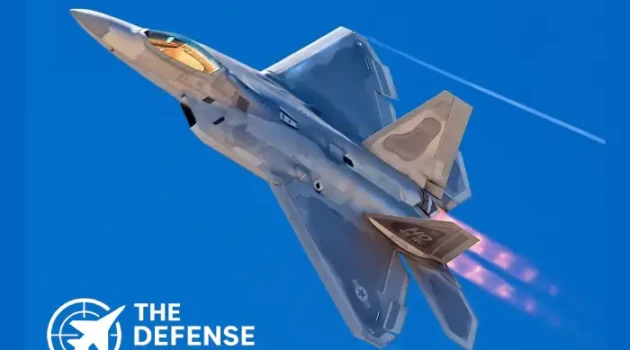
The F-22 Raptor remains the U.S. Air Force’s premier air superiority fighter. Developed by Lockheed Martin, the platform combines low observability, supercruise capability, and advanced avionics.
Unlike multirole fighters, the F-22 is optimized for air dominance missions. It can penetrate contested airspace, conduct beyond-visual-range engagements, and coordinate targeting data across joint forces. Its AN APG-77 radar and sensor fusion architecture allow pilots to detect and track threats at extended distances.
Although the aircraft is not permanently based in Europe, RAF Lakenheath frequently hosts rotational deployments. The base also supports the F-35A fleet assigned to U.S. Air Forces in Europe, making it a logical staging point for advanced fighter operations.
(adsbygoogle = window.adsbygoogle || []).push({});From a force posture standpoint, forward positioning F-22 Raptors in the UK provides geographic flexibility. Aircraft can rapidly deploy eastward toward the Middle East or operate across the European theater in support of NATO commitments.
Middle East Airpower Context
The Middle East remains a priority theater for U.S. Central Command. In recent months, Washington has adjusted air and naval deployments in response to regional tensions, threats to maritime traffic, and risks to U.S. personnel.
The U.S. Department of Defense has not formally confirmed that the F-22 Raptors sighted in the UK are earmarked specifically for Middle East operations. However, such deployments are consistent with established U.S. practice of maintaining strategic ambiguity while ensuring credible deterrence.
Historically, the F-22 has been deployed to the Middle East to counter advanced air defense systems and provide air superiority coverage. Its presence serves both operational and signaling purposes. The aircraft’s stealth profile complicates adversary planning and reinforces U.S. escalation control options.
Why The UK Matters In U.S. Force Projection
RAF Lakenheath plays a central role in U.S. transatlantic air operations. The base offers hardened infrastructure, munitions storage, and established logistics pipelines.
In practical terms, stationing F-22 Raptors in the UK reduces transit time to multiple theaters. Aircraft can move south toward the Middle East, east toward Eastern Europe, or remain in the North Atlantic area.
(adsbygoogle = window.adsbygoogle || []).push({});This flexibility aligns with the Pentagon’s shift toward dynamic force employment. Rather than maintaining large, static footprints, the U.S. military increasingly relies on rotational deployments and rapid repositioning.
For allies, visible F-22 operations reinforce collective defense commitments. For potential adversaries, they signal readiness without requiring permanent basing changes.
Operational And Strategic Implications
The sighting of US F-22 Raptors in the UK should be viewed within a broader pattern of calibrated force adjustments. It does not automatically indicate imminent military action.
Instead, it reflects layered deterrence. By moving high-end assets closer to potential flashpoints, the U.S. preserves response options while maintaining strategic depth.
There is also an interoperability dimension. Operating from the UK allows F-22 units to integrate with NATO air forces and conduct joint training. Such coordination improves readiness for both European and Middle Eastern contingencies.
(adsbygoogle = window.adsbygoogle || []).push({});At the same time, the limited fleet size of the F-22 makes each deployment notable. With fewer than 200 aircraft built and a smaller number mission-capable at any given time, any forward positioning signals deliberate planning.
Looking Ahead
As of now, U.S. officials have not announced a permanent redeployment. The situation underscores how quickly airpower assets can shift in response to evolving security conditions.
The presence of US F-22 Raptors in the UK reinforces Washington’s emphasis on flexibility, deterrence, and alliance coordination. Whether tied directly to Middle East contingencies or broader NATO considerations, the move reflects a force posture designed for rapid adaptation.
- (adsbygoogle = window.adsbygoogle || []).push({});
For defense planners, the key takeaway is clear. Advanced air dominance assets remain central to U.S. strategy, and their movement often speaks as loudly as formal policy statements.
- (adsbygoogle = window.adsbygoogle || []).push({});
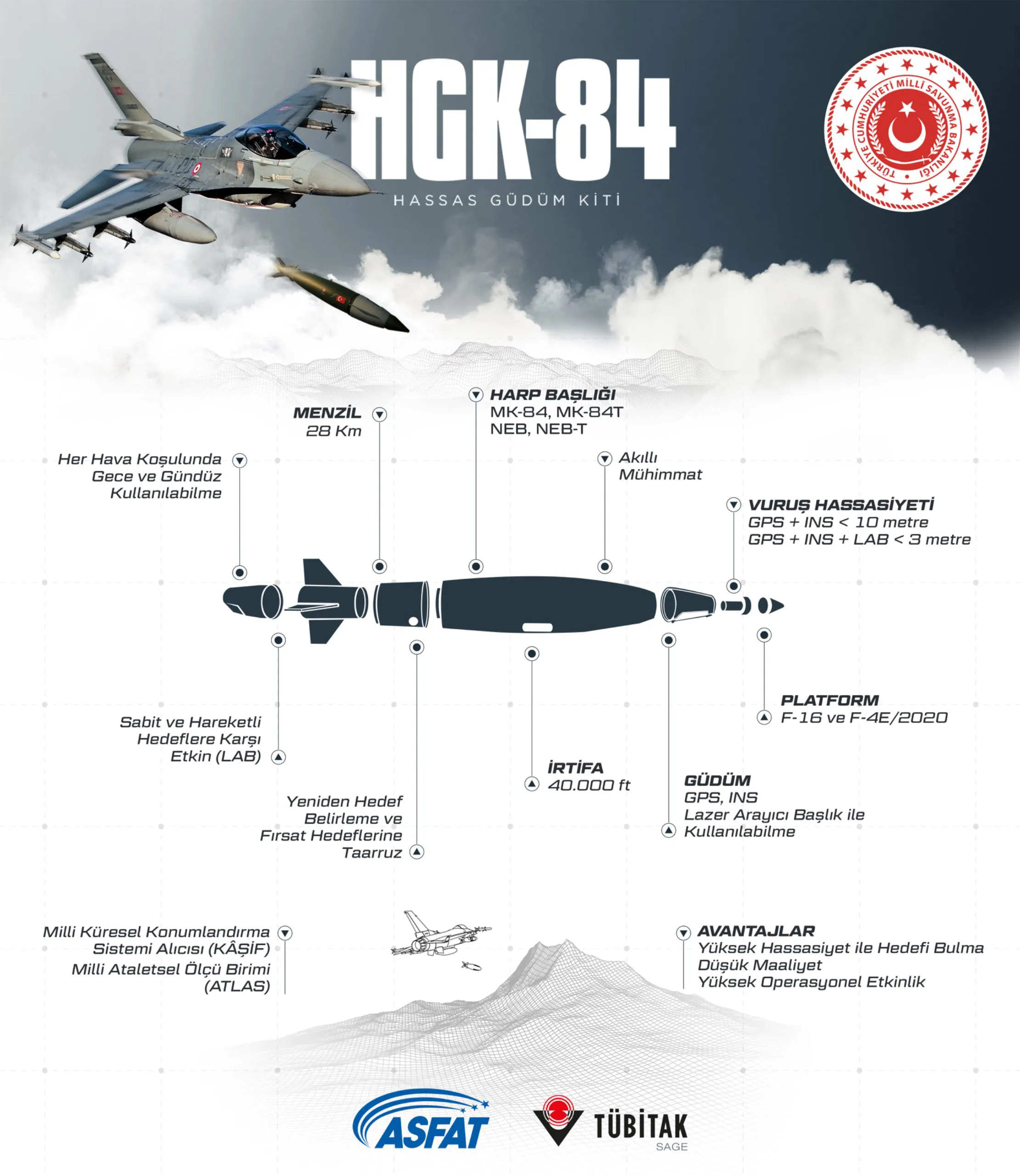
HGK 84 Precision Guidance Kits Delivered to Turkish Air Force
Turkey has delivered the first 2026 production batch of HGK 84 Precision Guidance Kits to the Turkish Air Force, marking another step in Ankara’s long running effort to expand indigenous smart munition capabilities. The delivery was completed under a contract between the Ministry of National Defence and state owned defense firm ASFAT, with development support from TUBITAK SAGE.
(adsbygoogle = window.adsbygoogle || []).push({});The kits have entered service with the Turkish Air Force, often referred to domestically as the Steel Eagles of the Sky, and are intended to enhance the accuracy and operational flexibility of existing Mk 84 general purpose bombs.
HGK 84 Program Overview and Role
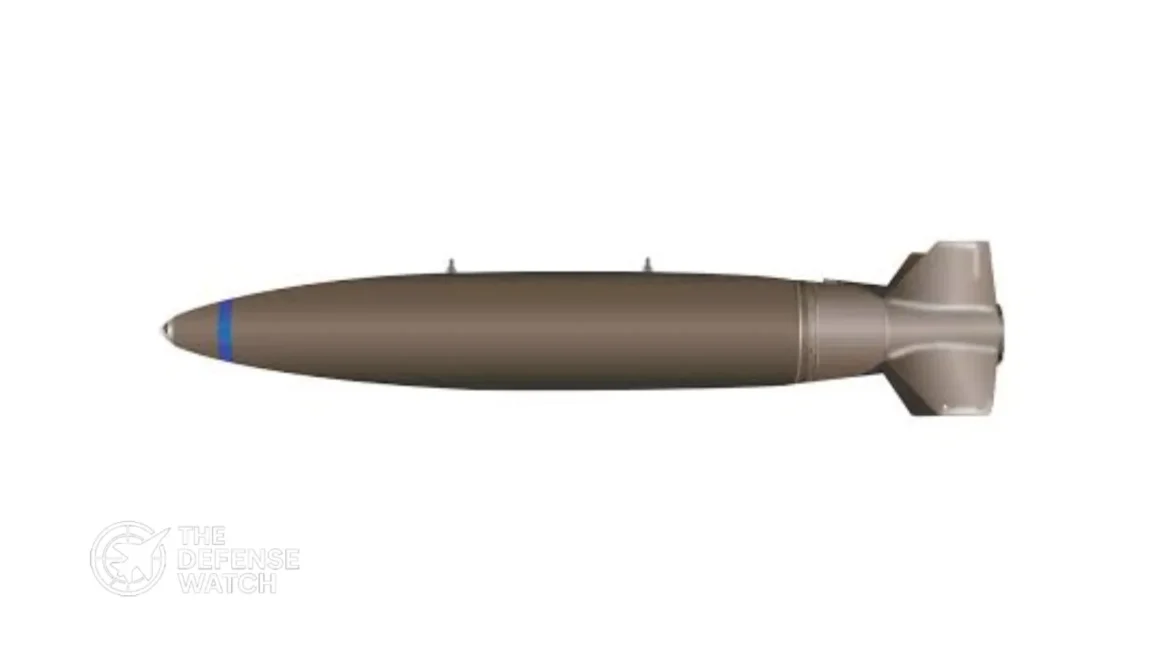
The HGK 84 Precision Guidance Kit is a GPS and INS based guidance package designed to convert standard 2,000 pound Mk 84 unguided bombs into all weather precision guided weapons. Developed by TUBITAK SAGE, the system has been in Turkish service for more than a decade and continues to receive incremental improvements.
By using satellite aided navigation, the HGK 84 allows Turkish Air Force aircraft to conduct precision strikes without relying on laser designation, which can be degraded by weather, smoke, or battlefield obscurants. This capability is especially relevant for deep strike, fixed target suppression, and strategic infrastructure missions.
The HGK family includes multiple variants, with the HGK 84 tailored specifically for the Mk 84 bomb class, offering extended stand off release profiles when deployed from higher altitudes.
2026 Delivery Under ASFAT Contract
According to the Ministry of National Defence, the newly delivered HGK 84 Precision Guidance Kits represent the first batch produced and handed over in 2026 under an ongoing production agreement with ASFAT. ASFAT is responsible for program coordination, production oversight, and delivery to the Turkish Armed Forces.
(adsbygoogle = window.adsbygoogle || []).push({});
Image Source : ASFAT The contract reflects Turkey’s broader policy of sustaining domestic production lines for critical air delivered munitions, ensuring continuity of supply without dependence on foreign vendors or export approvals.
Officials emphasized that production was carried out in cooperation with TUBITAK SAGE, which remains the design authority and technical backbone of the HGK program.
Integration With Turkish Air Force Platforms
The HGK 84 Precision Guidance Kit is compatible with several Turkish Air Force aircraft types, including the F 16 Fighting Falcon fleet that forms the backbone of Turkey’s combat aviation force.
Integration with national mission computers and software allows the weapon to be employed using indigenous targeting data, mission planning tools, and command and control systems. This alignment supports Turkey’s push for platform independence and full sovereign control over strike capabilities.
The system has previously been demonstrated in live fire exercises and operational deployments, showing circular error probable values measured in only a few meters under test conditions.
Strategic Importance for Turkey’s Airpower
The continued delivery of HGK 84 kits highlights Turkey’s emphasis on cost effective modernization rather than wholesale replacement of legacy weapons. By upgrading existing bomb stocks with guidance kits, the Turkish Air Force can significantly expand its precision strike inventory at a fraction of the cost of new build smart munitions.
This approach also aligns with NATO operational concepts, where precision engagement and reduced collateral damage are central requirements for modern air operations.
From a geopolitical standpoint, maintaining an independent precision munition production capability gives Turkey operational resilience during periods of political tension, export restrictions, or supply chain disruption.
Turkey’s Broader Smart Munition Ecosystem
The HGK 84 is part of a wider Turkish smart weapons portfolio developed by TUBITAK SAGE and other national firms. This portfolio includes laser guided kits, stand off glide bombs, bunker penetration weapons, and air launched cruise missiles.
(adsbygoogle = window.adsbygoogle || []).push({});Together, these systems support Turkey’s goal of becoming a self sufficient airpower producer, capable of sustaining high tempo operations without reliance on external suppliers.
Defense analysts note that continued serial deliveries such as the 2026 HGK 84 batch signal program maturity rather than experimental development, reinforcing confidence in domestic production quality and lifecycle support.
Outlook
While no new export announcements were made alongside the 2026 delivery, Turkey has previously promoted the HGK family to allied and partner air forces operating Western standard aircraft and Mk series bombs.
For the Turkish Air Force, the latest HGK 84 Precision Guidance Kit delivery ensures sustained availability of proven precision strike tools as Ankara balances fleet modernization, indigenous fighter development, and regional security commitments.
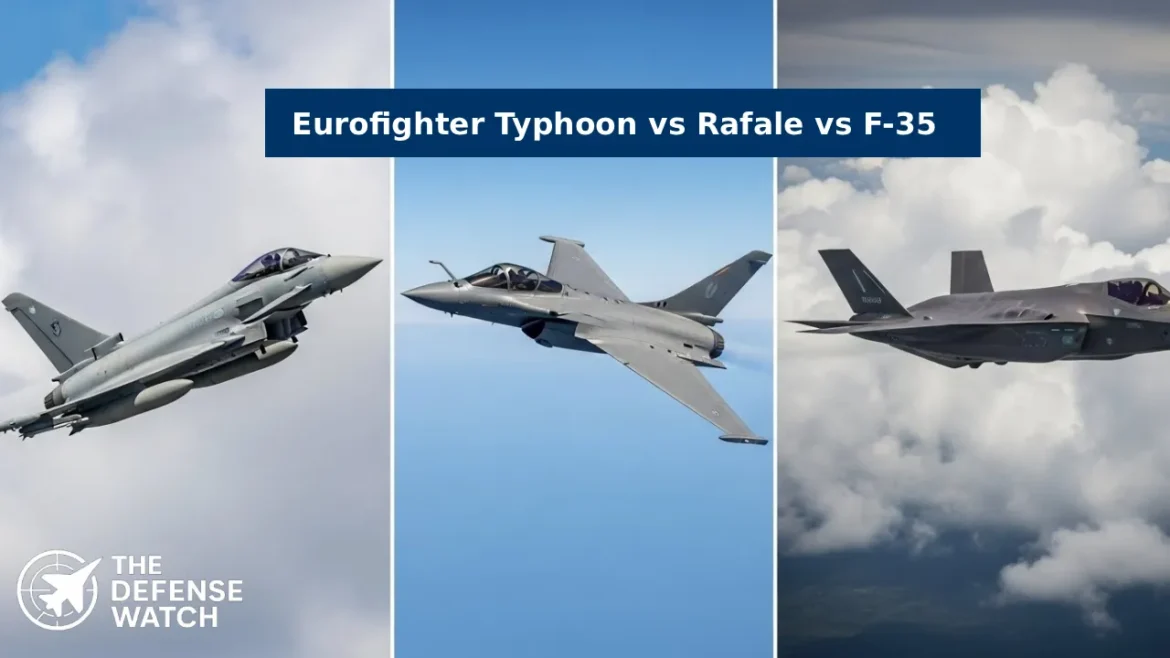
Why the Eurofighter Typhoon vs Rafale vs F-35 Comparison Matters
As Europe modernizes for a new era of great-power competition, three fighters stand at the center of Western airpower debates: the Eurofighter Typhoon, France’s Dassault Rafale, and America’s F-35 Lightning II. These aircraft represent different design philosophies—super-maneuverability, multirole flexibility, and fifth-generation stealth—yet they increasingly operate together across NATO missions from the Baltics to the Middle East.
For U.S. defense planners, this comparison matters for two core reasons. First, the Typhoon and Rafale equip key NATO allies whose airpower directly shapes combined operations against Russia. Second, the F-35 now serves as the backbone of U.S. and allied air dominance strategies in both the European and Indo-Pacific theaters. As countries seek to replace aging F-16s and MiG-29s, understanding how these fighters compare offers insight into coalition capability, deterrence posture, and future procurement trends.
Specifications Comparison Table: Eurofighter Typhoon vs Rafale vs F-35
Feature Eurofighter Typhoon Dassault Rafale F-35A Lightning II Generation 4.5-gen 4.5-gen 5th-gen Crew 1 (or 2 in trainer) 1 (or 2 in trainer) 1 Max Speed Mach 2.0 Mach 1.8 Mach 1.6 Combat Radius ~1,389 km ~1,852 km ~1,093 km Service Ceiling 55,000 ft 50,000 ft 50,000 ft Internal Weapons Bay No No Yes Max Payload 13,000+ lbs 21,000+ lbs 18,000 lbs ** Stealth Level** Low Low Very High Unit Cost (est.) $95–110M $90–120M $80–110M (A-variant) Service Entry 2003 2001 2015 Primary Operators UK, Germany, Italy, Spain, Saudi Arabia France, India, Greece, Egypt, Qatar U.S., UK, Italy, Poland, Japan, South Korea, many NATO states Design & Technology
Eurofighter Typhoon: Agility-First Philosophy
The Typhoon was built for air-superiority dominance, reflected in its delta-canard layout and unmatched high-altitude performance. Its new E-Scan Mk1 AESA radar and PIRATE infrared search-and-track system enhance long-range situational awareness. Though not stealthy, upgraded radar-absorbent materials reduce its frontal radar signature.
Dassault Rafale: A Multirole “Omni-Role” Workhorse
France designed the Rafale to perform every mission—from nuclear strike to carrier operations. The SPECTRA electronic warfare suite remains one of the most respected defensive systems in the world. Its advanced RBE2 AESA radar provides strong target acquisition and high-bandwidth electronic attack capability.
F-35A Lightning II: Stealth, Fusion, and Sensor Dominance
The F-35’s defining strength is its sensor fusion, linking EW, radar, IR, and offboard data into a single battlespace picture. Its VLO (Very-Low Observable) airframe dramatically reduces detection ranges, particularly against Russian and Chinese air defense systems. The Distributed Aperture System (DAS) gives 360° tracking and unprecedented pilot awareness.
Design Verdict:
• Typhoon = best raw aerodynamics
• Rafale = best EW/sensor mix among 4.5-gen jets
• F-35 = unmatched stealth and fused situational awarenessFirepower & Performance
Eurofighter Typhoon Weaponry
- Air-to-Air: Meteor, AIM-120 AMRAAM, IRIS-T
- Air-to-Ground: Storm Shadow, Brimstone, Paveway IV
- Gun: 27mm Mauser
The Typhoon excels in the air-superiority role with Meteor integration providing long-range kill capability.
Dassault Rafale Armament
- Air-to-Air: Meteor, MICA IR/RF
- Air-to-Ground: SCALP-EG, AASM Hammer, Exocet anti-ship missile
- Nuclear Option: ASMP-A (France exclusive)
- Gun: 30mm GIAT
The Rafale carries the broadest weapons portfolio, giving it the edge in mission versatility.
F-35A Armament
- Air-to-Air: AIM-120D, AIM-9X (external)
- Air-to-Ground: JDAM, SDB II, AGM-158 JASSM (future)
- Gun: Internal 25mm GAU-22
Internal weapons allow the F-35 to remain fully stealthy while striking deep into high-threat airspace.
Firepower Verdict:
• Typhoon = air combat powerhouse
• Rafale = most diverse loadout
• F-35 = best precision strike in contested airspaceOperational Range & Mobility
Eurofighter Typhoon
With a moderate range but superior high-altitude performance, the Typhoon thrives in quick-reaction alert (QRA) and air-policing roles.
Dassault Rafale
The Rafale boasts the best combat radius of all three, making it highly effective for expeditionary deployments and carrier-based missions.
F-35A
The F-35 is limited by range compared to the Rafale, but stealth increases survivability in offensive counter-air and deep strike missions.
Range Verdict:
• Rafale leads
• Typhoon second
• F-35 more range-limited but stealth-enabled for deeper penetrationCombat Effectiveness: Real-World Use
Eurofighter Typhoon
Typhoons have conducted air policing across Europe, intercepting Russian aircraft near NATO airspace. They also carried out precision strikes in Syria and Libya.
Dassault Rafale
Perhaps the most battle-proven European fighter of the modern era, Rafales have operated in Afghanistan, Libya, Iraq, Syria, the Sahel, and carrier strike operations.
F-35A
The F-35 has seen combat with the U.S., Israel, and the UK, including suppression of integrated air defense systems (IADS), strike missions, and ISR operations.
Combat Verdict:
• Rafale = most combat diversity
• Typhoon = strong but fewer mission sets
• F-35 = proven in high-threat environmentsCost & Export Considerations
Eurofighter Typhoon
Strong in NATO markets, especially in Central and Western Europe. Recent upgrades extend service life to 2060+.
Dassault Rafale
Massive export success with sales to India, UAE, Qatar, Egypt, Greece, and Indonesia. Known for lower maintenance demands.
F-35A
The most widely exported fifth-generation fighter in history. U.S. pressure and interoperability benefits drive adoption among NATO partners.
Export Verdict:
• F-35 = dominant
• Rafale = rising global favorite
• Typhoon = steady NATO standardAnalysis: How the U.S. Views the Typhoon, Rafale, and F-35
From a U.S. perspective, the F-35 is the backbone of allied airpower modernization, ensuring full interoperability with American C4ISR and strike networks. The Typhoon and Rafale remain important NATO capabilities, especially for air dominance (Typhoon) and stand-off strike (Rafale).
However, only the F-35 contributes directly to the U.S. strategy of distributed, stealth-enabled, network-centric warfare—critical in facing both Russian A2/AD zones and Chinese integrated air defenses.
Conclusion: Which Fighter Has the Edge?
The answer depends on mission requirements:
Air Superiority:
Eurofighter Typhoon — unmatched climb rate and kinematics.
Multirole Flexibility:
Dassault Rafale — best weapons diversity and EW package.
Survivability & High-Threat Strike:
F-35A Lightning II — only fifth-gen jet in the comparison.
Overall Winner?
There is no single winner—but for future NATO operations, the F-35 provides the greatest strategic value due to stealth, sensor fusion, and networked warfare.
FAQ: Eurofighter Typhoon vs Rafale vs F-35
Which is better in air-to-air combat: Typhoon, Rafale, or F-35?The Typhoon excels in pure dogfighting, but the F-35 dominates beyond-visual-range due to stealth and sensor fusion.
Which aircraft has the longest range?The Rafale offers the longest combat radius, making it ideal for long-range strike and expeditionary operations.
Is the F-35 really superior to 4.5-gen fighters?Yes—stealth, fused sensors, and advanced EW give it unmatched survivability in heavily defended airspace.
Which fighter is the most cost-effective?The Rafale is often considered the most cost-efficient over its lifetime, though the F-35’s operating costs continue to decline.
Which aircraft will remain relevant longest?The F-35’s architecture is designed for upgrades into the 2070s, giving it the longest projected service life.
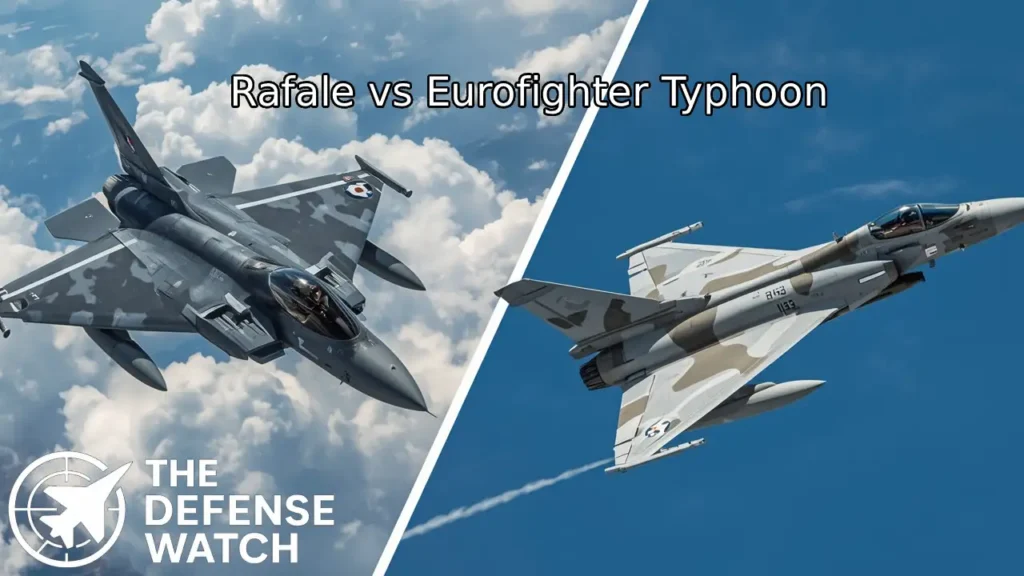
The Dassault Rafale and the Eurofighter Typhoon represent two of Europe’s most advanced multirole fighters, often compared for their technological sophistication, combat performance, and export success. Both aircraft emerged from Cold War-era requirements for next-generation fighters but diverged when France decided to pursue its own design instead of staying within the Eurofighter consortium.
For U.S. defense watchers, this comparison matters because NATO interoperability, European defense independence, and competition in the global arms market directly affect U.S. strategic interests. With conflicts in Ukraine and the Indo-Pacific highlighting the importance of advanced airpower, understanding the Rafale vs Eurofighter Typhoon debate provides valuable insights into allied capabilities and market competition against U.S. fighters like the F-35.
Rafale vs Eurofighter Typhoon: Specifications Table
Feature Dassault Rafale Eurofighter Typhoon Role Multirole 4.5-gen fighter Multirole 4.5-gen fighter Crew 1–2 (variants) 1–2 (variants) Length 15.3 m 15.96 m Wingspan 10.9 m 10.95 m Top Speed Mach 1.8 Mach 2.0 Combat Radius ~1,000 km ~1,390 km Ferry Range 3,700+ km 2,900+ km Service Ceiling 50,000 ft 55,000 ft Payload Capacity 9,500 kg 9,000 kg Radar Cross Section (RCS est.) 1 m² (reduced w/ shaping) ~1.5–2 m² Entry into Service 2001 (French Air Force) 2003 (RAF, Luftwaffe, others) Unit Cost $90–100 million $110–125 million Export Users India, Egypt, Greece, UAE, Indonesia, Croatia, Qatar UK, Germany, Italy, Spain, Austria, Saudi Arabia, Kuwait, Qatar Design & Technology
The Rafale was designed by Dassault with stealth shaping, smaller radar signature, and advanced SPECTRA electronic warfare suite, giving it strong survivability against modern air defenses. Its omnirole concept allows a single aircraft to perform air superiority, strike, reconnaissance, and nuclear deterrence missions.
The Eurofighter Typhoon, developed by a four-nation consortium (UK, Germany, Italy, Spain), emphasizes super-maneuverability, high thrust-to-weight ratio, and advanced Captor-E AESA radar (newer upgrades). While less stealthy than Rafale, Typhoon’s aerodynamics and powerful EJ200 engines make it a strong dogfighter.

Firepower & Performance
Both jets carry a mix of Western precision-guided munitions and air-to-air missiles.
- Rafale Loadout:
- Meteor, MICA IR/EM, SCALP-EG cruise missile, AM39 Exocet (anti-ship), Hammer/GBU series, ASMP-A nuclear missile.
- 30mm GIAT cannon.
- Typhoon Loadout:
- Meteor, AIM-120 AMRAAM, IRIS-T, Brimstone, Storm Shadow cruise missile, Paveway guided bombs.
- 27mm Mauser BK-27 cannon.
Rafale has stronger multirole versatility, including nuclear delivery, anti-ship, and carrier operations. Typhoon excels in air dominance, with unmatched high-altitude performance and dogfighting agility.
Operational Range & Mobility
The Rafale offers superior ferry range (3,700+ km) and carrier-based adaptability, making it attractive for nations with maritime operations. Its agility and lower RCS provide survivability against advanced SAM systems.
The Typhoon, while shorter ranged, has a larger combat radius (~1,390 km), enabling extended NATO air patrols. Its Mach 2 top speed and higher service ceiling give it the edge in high-speed interception.
Combat Effectiveness
The Rafale has extensive combat experience: Afghanistan, Libya, Syria, Iraq, Mali, and Ukraine (via export to allied operators). Its adaptability in precision strikes and long-range operations has been repeatedly validated.
The Eurofighter Typhoon has also seen action in Libya, Iraq, and Baltic NATO air policing missions. While its combat record is smaller, its presence across multiple NATO air forces ensures wide operational integration.
From a U.S. perspective, Rafale’s combat-proven record and nuclear strike capability make it strategically significant, while the Typhoon remains a vital NATO air superiority platform.
Cost & Export Value
- Rafale: More cost-effective, aggressively marketed by France. Major export wins in India (36 jets, with follow-on orders), UAE (80 jets), and Greece. Its adaptability to multiple environments (carrier ops, nuclear missions) boosts export appeal.
- Eurofighter Typhoon: More expensive, but backed by a larger industrial consortium. Exported to Saudi Arabia, Austria, Kuwait, and Qatar. Its long-term viability relies on Tranche 4/5 upgrades, extending service into the 2060s.
For U.S. defense contractors, Rafale and Typhoon compete in markets where the F-35 is politically sensitive or too expensive. This keeps them strategically relevant in global arms sales.
Analysis: Rafale vs Eurofighter Typhoon
- Strengths of Rafale: Superior multirole capability, stealthier design, carrier compatibility, nuclear role, proven combat record.
- Strengths of Typhoon: Faster, higher ceiling, superior dogfighting performance, strong NATO interoperability.
- Weaknesses: Rafale has slightly lower top-end performance; Typhoon has weaker strike/nuclear capability and higher cost.
From a U.S. defense perspective, both fighters complement NATO forces but remain 4.5-generation platforms compared to the 5th-generation F-35, which dominates future-oriented air combat planning.
Conclusion
The Rafale vs Eurofighter Typhoon debate reflects Europe’s diverging fighter design philosophies. Rafale excels as a versatile, combat-proven multirole fighter, while Typhoon shines as a high-performance air superiority jet with NATO-wide adoption.
In scenarios requiring multirole strike missions, the Rafale holds the edge. In pure air combat and NATO integration, the Typhoon may prove superior. For the U.S., both remain critical allies’ assets—but the F-35 still sets the benchmark for next-generation air dominance.
FAQ: Rafale vs Eurofighter Typhoon
Which is better in air combat, Rafale or Eurofighter Typhoon?The Typhoon offers higher speed and altitude, making it stronger in air-to-air combat, while Rafale balances air combat with superior multirole strike capability.
Has Rafale seen more combat than the Typhoon?Yes. Rafale has extensive combat use in Afghanistan, Libya, Syria, Iraq, and Mali, whereas Typhoon’s combat record is more limited.
Which aircraft is cheaper, Rafale or Typhoon?The Rafale is generally more cost-effective, priced around $90–100 million, compared to Typhoon’s $110–125 million per unit.
Can either fighter match the U.S. F-35?Both are advanced 4.5-generation jets, but neither fully matches the stealth and sensor fusion of the 5th-generation F-35.
Which fighter has better export success?The Rafale has recently outperformed the Typhoon in exports, securing major deals in India, UAE, and Indonesia.
🔗 Source: NATO Air Power
Rafale vs F-35 comparison
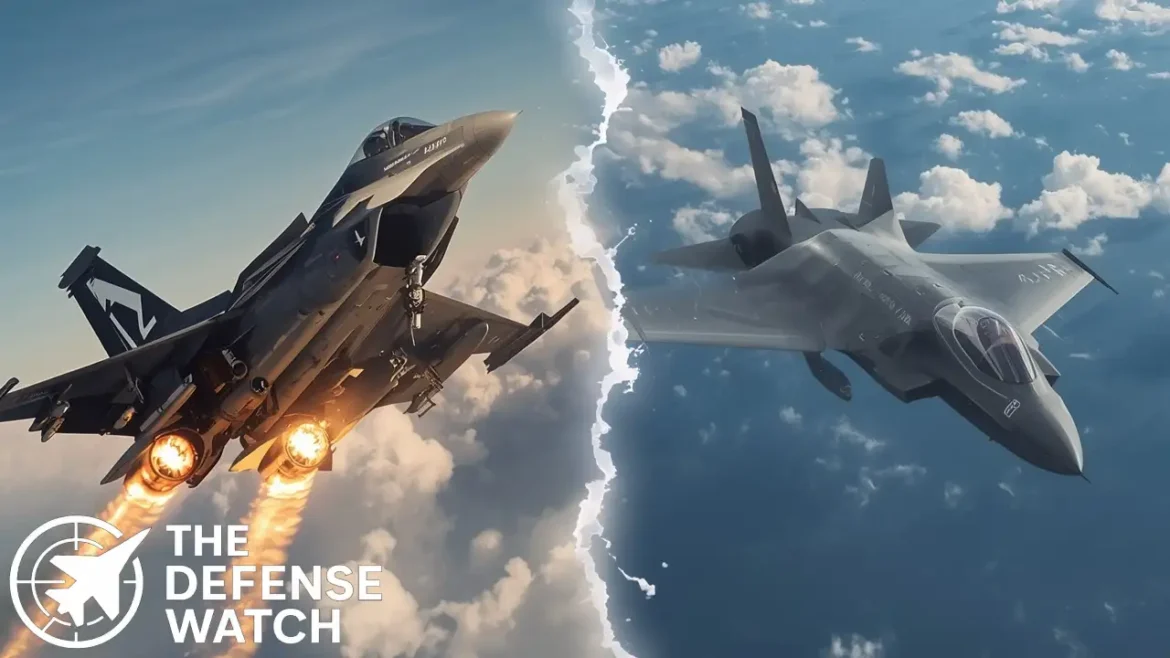
The debate of Rafale vs F-35 has gained traction as nations reassess their defense priorities amid rising global tensions. France’s Dassault Rafale, a 4.5-generation multirole fighter, has earned a reputation as a combat-proven, export-friendly platform. Meanwhile, the U.S. Lockheed Martin F-35 Lightning II represents the cornerstone of NATO’s future airpower, designed for stealth, sensor fusion, and next-generation warfare.
For U.S. readers, the comparison is more than technical—it’s strategic. While Washington promotes the F-35 as the alliance’s standard, some partners, including France and India, continue to invest in Rafale fleets. This raises key geopolitical questions: Is the Rafale a viable alternative to the F-35? And under what circumstances could it outperform America’s stealth jet?
Specifications Comparison: Rafale vs F-35
Specification Dassault Rafale Lockheed Martin F-35 Lightning II Origin France United States Generation 4.5th generation 5th generation Crew 1 (Rafale C/B), 2 (Rafale B) 1 Top Speed Mach 1.8 (~1,912 km/h) Mach 1.6 (~1,960 km/h) Ferry Range ~3,700 km (with drop tanks) ~2,200 km Combat Radius ~1,850 km ~1,100 km Payload Capacity ~9,500 kg ~8,160 kg Stealth / RCS ~1 m² (est., frontal) ~0.001–0.005 m² (stealth-optimized) Service Entry 2001 2015 Unit Cost (est.) $100–120 million $80–100 million (F-35A variant) Primary Operators France, India, Egypt, Greece United States, NATO allies, Japan Design & Technology
The Rafale was built as an “omnirole” fighter capable of switching between air-to-air and strike missions mid-flight. It features advanced avionics, active electronically scanned array (AESA) radar, and a glass cockpit with hands-on-throttle-and-stick (HOTAS) control. Its design prioritizes agility, versatility, and survivability, though it is not a true stealth aircraft.
AI generated images The F-35, by contrast, is a dedicated 5th-generation stealth fighter. Its design emphasizes radar-evading geometry, internal weapons bays, and advanced sensor fusion. The Distributed Aperture System (DAS) and Electro-Optical Targeting System (EOTS) give pilots 360-degree situational awareness. In terms of digital battlespace integration, the F-35 sets the global benchmark.
Firepower & Performance
- Rafale Armament:
- 30mm GIAT cannon
- Air-to-air: MICA, Meteor, Magic II missiles
- Air-to-ground: SCALP cruise missile, AASM precision bombs
- Nuclear role: ASMP-A nuclear missile (French deterrence role)
- 14 hardpoints allow heavy payload flexibility.
- F-35 Armament:
- 25mm GAU-22/A cannon
- Air-to-air: AIM-120 AMRAAM, AIM-9X Sidewinder
- Air-to-ground: JDAMs, SDBs, JASSM, nuclear-certified (B61-12 for NATO)
- Internal bays preserve stealth; external pylons increase payload but reduce low observability.
In dogfights, the Rafale’s agility, high thrust-to-weight ratio, and “supercruise” capability give it an edge. However, the F-35 rarely seeks close combat—its stealth and long-range sensors are designed to “kill before being seen.”
Operational Range & Mobility
The Rafale offers a longer combat radius and can conduct buddy-buddy refueling with wing-mounted pods. Its ability to operate from aircraft carriers (Rafale M) and short, rugged airstrips adds flexibility.
The F-35 has a shorter combat radius, but its integration into U.S. and NATO aerial refueling networks mitigates this. Mobility-wise, the F-35 is heavily dependent on advanced infrastructure and maintenance hubs, whereas the Rafale is known for its ease of deployment in expeditionary campaigns.
Combat Effectiveness
The Rafale is battle-proven in Afghanistan, Libya, Mali, Iraq, and Syria. Its adaptability to both air-to-air and deep-strike roles has given it credibility as a versatile warfighter.
The F-35 has not yet seen large-scale combat but has been deployed in intelligence and strike missions by Israel, the U.S., and UK forces. Its ability to link multiple platforms via secure datalinks gives it unmatched force-multiplying potential, especially in high-threat environments like the Indo-Pacific or Eastern Europe.
Cost & Export Value
- Rafale: Costs more per unit but is attractive for nations unwilling or unable to rely on U.S. technology. Export deals with India, Egypt, and Greece showcase its geopolitical reach. Maintenance is simpler than the F-35 but still costly.
- F-35: Initially criticized for overruns, its cost has stabilized. With more than 20 operators worldwide, it has become the default NATO fighter. Its mass adoption ensures steady parts supply and training synergy.
For allies, buying the F-35 often means deeper political alignment with Washington. Rafale buyers, meanwhile, enjoy a degree of strategic independence.
Analysis: Rafale vs F-35 – Who Wins?
- Air Superiority: F-35 (stealth advantage, beyond-visual-range combat)
- Agility / Dogfighting: Rafale (maneuverability, supercruise)
- Strike Missions: Tie (Rafale heavy loadout vs F-35 stealth penetration)
- Logistics & Training: F-35 (global standardization)
- Expeditionary Flexibility: Rafale (rugged operations, carrier-ready)
From a U.S. defense perspective, the F-35 clearly outpaces the Rafale in terms of future-proof technology and integration. However, the Rafale remains an elite fighter for nations prioritizing sovereignty, versatility, and proven combat history.
Conclusion
The Rafale vs F-35 comparison reflects more than aircraft design—it reflects two defense philosophies. The Rafale excels as a flexible, combat-tested platform suited for independent strategies. The F-35 dominates in stealth, networks, and coalition warfare.
For U.S. readers, the takeaway is clear: the F-35 is America’s choice for joint operations, but the Rafale remains a formidable counterpart and a reminder that not all allies fly American wings.
Source: Dassault Aviation Rafale Official
FAQ: Rafale vs F-35
Which is more advanced, Rafale or F-35?The F-35 is more advanced in stealth and sensor fusion, while the Rafale is highly versatile and proven in combat.
Can Rafale beat the F-35 in a dogfight?In close combat, Rafale’s agility could give it an advantage, but the F-35’s strategy is to avoid dogfights using stealth and long-range weapons.
Why do some countries choose Rafale instead of F-35?Nations like India and Egypt choose Rafale for strategic independence, simpler logistics, and fewer U.S. export restrictions.
Which jet has better range?The Rafale has a longer combat radius and expeditionary flexibility, while the F-35 relies on advanced tanker support.
Is the F-35 worth the cost?For U.S. and NATO allies, yes—the F-35 offers unparalleled interoperability. But for independent powers, Rafale offers a strong alternative.