

Japan’s First Fighter Jet Deployment to NATO
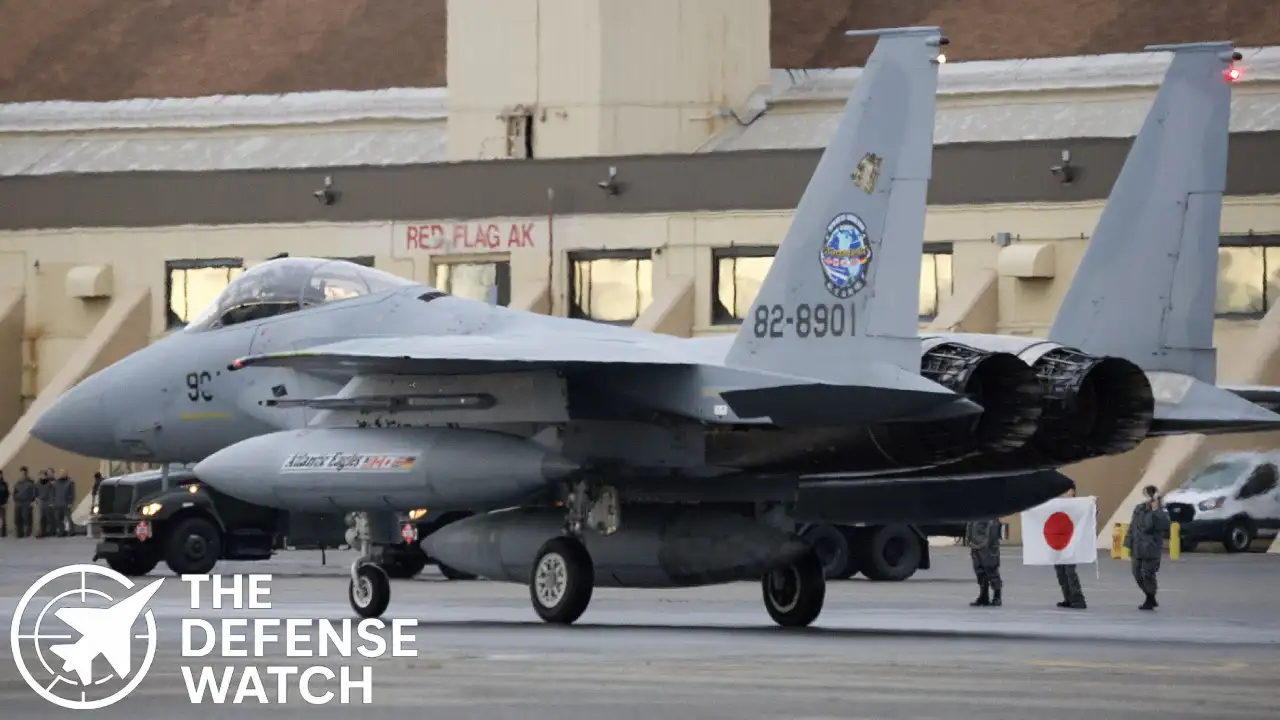
In an unprecedented move, Japan has deployed four F-15 fighter jets and support aircraft to NATO bases in North America and Europe, marking the country’s first warplane mission to Canada and Europe.
The operation, named Atlantic Eagles, involves a total of eight aircraft — four Mitsubishi F-15J Eagles, two tanker aircraft, and two transport planes — alongside 180 Japan Air Self-Defense Force (JASDF) personnel. The mission underscores Tokyo’s recognition that the Indo-Pacific and Euro-Atlantic security environments are increasingly interconnected.
The JASDF announced that its aircraft landed at Eielson Air Force Base in Alaska on Monday before continuing to CFB Goose Bay in Canada, RAF Coningsby in the United Kingdom, and Laage Air Base in Germany.
Bases, Units, and Mission Scope
Personnel for the deployment are drawn from multiple JASDF units:
- 2nd Air Wing (Chitose)
- 1st Tactical Airlift Wing (Komaki)
- 2nd Tactical Airlift Group (Iruma)
- 3rd Tactical Airlift Wing (Miho)
The mission represents not only the first fighter deployment to Europe, but also a significant operational test for Japan’s aerial refueling and long-range mobility capabilities. The presence of two KC-767 tankers is critical, enabling the F-15s to sustain transcontinental operations.
Strategic Context: NATO-Japan Security Ties Deepen
The deployment follows Japan’s establishment of a diplomatic mission to NATO in 2025, a clear signal of its intent to strengthen defense coordination beyond the Indo-Pacific.
The timing is notable. NATO allies are closely monitoring Russian and Belarusian joint exercises, while China has stepped up activities in the Arctic region — a theater increasingly viewed as strategically contested.
For Japan, the mission signals solidarity with NATO and emphasizes its role as a like-minded partner in countering authoritarian military expansion.
Analysis: Implications for U.S. Defense and Global Security
For the United States, Japan’s Atlantic Eagles mission represents a valuable step toward burden-sharing and interoperability. Tokyo’s willingness to send combat aircraft halfway across the globe demonstrates an expanded role beyond regional self-defense.
- Strengthening NATO ties: Japan’s direct military presence on NATO soil sets a precedent for future joint training exercises and cross-theater operations.
- Global mobility of Asian air forces: Until now, only U.S., European, and some Middle Eastern air forces regularly deployed across oceans. Japan’s ability to project fighter power to Europe is a milestone in operational maturity.
- U.S. deterrence posture: As Washington increasingly focuses on deterring both China and Russia simultaneously, having allies like Japan capable of contributing to European defense allows the U.S. to allocate resources more flexibly.
- China and Russia signaling: The deployment sends a strategic message to both Moscow and Beijing — that NATO and Indo-Pacific allies are forging a networked deterrence architecture spanning multiple regions.
This development parallels earlier moves, such as Australia’s participation in NATO exercises and the establishment of NATO’s new Asia-Pacific partnerships framework.
Conclusion: Japan Steps onto the Global Security Stage
The Atlantic Eagles mission illustrates Japan’s determination to be more than a regional power. By sending its F-15s to Europe and Canada, Tokyo not only deepens its defense ties with NATO but also elevates its profile as a global security contributor.
For U.S. defense planners, this deployment confirms Japan’s role as a frontline partner in both Indo-Pacific and trans-Atlantic deterrence. The next steps may include expanded participation in joint NATO exercises or even long-term rotational presence.
As NATO and Indo-Pacific allies confront simultaneous security challenges from Russia and China, Japan’s historic deployment suggests that the lines between regional defense theaters are rapidly disappearing.

13 comments
[…] computing and display systems. Lockheed Martin officials describe the upgrade as making the jet’s mission systems up to 25 times faster, providing pilots with significantly expanded processing power, […]
[…] later this decade. That range exceeds that of the F-35A and even the F-22, providing greater mission flexibility in the vast Indo-Pacific […]
[…] Eurofighter Typhoon has also seen action in Libya, Iraq, and Baltic NATO air policing missions. While its combat record is smaller, its presence across multiple NATO air forces ensures wide […]
[…] U.S. Air National Guard relies on F-16 for air policing missions. […]
[…] dilemma of balancing credible threat with force sustainability and alliance burden-sharing. Deploying large forces in peacetime invites cost and risk; sending too few risks credibility […]
[…] F-35 is arguably the most visible modern multirole stealth fighter. Deployed across NATO and allied air forces, its sensor fusion, networked warfare capabilities, and export scale make it central to […]
[…] Taiwan, early receipt of the jets will bolster its readiness as Chinese air incursions near its air defense identification zone […]
[…] continue apace: Belarus’s full receipt of 12 SM/SM2 jets in August 2025 bolsters NATO’s eastern flank concerns, while Indonesia eyes additional units for archipelago defense. This […]
[…] astronauts. Their original return date of November 5 was postponed after the damage was discovered, forcing mission planners to implement an alternative return […]
[…] jets departed from Skrydstrup Air Base (Denmark) on November […]
[…] reportedly identified himself as affiliated with Syria’s General Security forces. Despite this, the door to his home was breached, and he was fatally shot. His family was initially […]
[…] interception, and electronic warfare tools. Proceeds from the fundraising are slated to expand mission deployment across new operational theaters and broaden the company’s product […]
[…] the ministers condemned the killing of protestors and intimidation tactics employed by Iranian security forces. They urged Iran to respect human rights, including freedom of expression, assembly, and access to […]