Executive Summary:
The United Kingdom has joined six other NATO allies in launching a new multinational Airbus A400M fleet initiative announced during the NATO Summit Defence Industry Forum in Ankara on July 7, 2026. The project aims to create a pooled strategic airlift capability that improves interoperability, reduces operating costs, and gives participating nations greater access to military transport, aerial refueling, medical evacuation, and humanitarian response missions.
UK Joins NATO A400M Airlift Fleet Initiative
The NATO A400M airlift fleet gained significant momentum on July 7 after the United Kingdom joined six allied nations in launching a new multinational transport aircraft initiative during the NATO Summit Defence Industry Forum in Ankara.
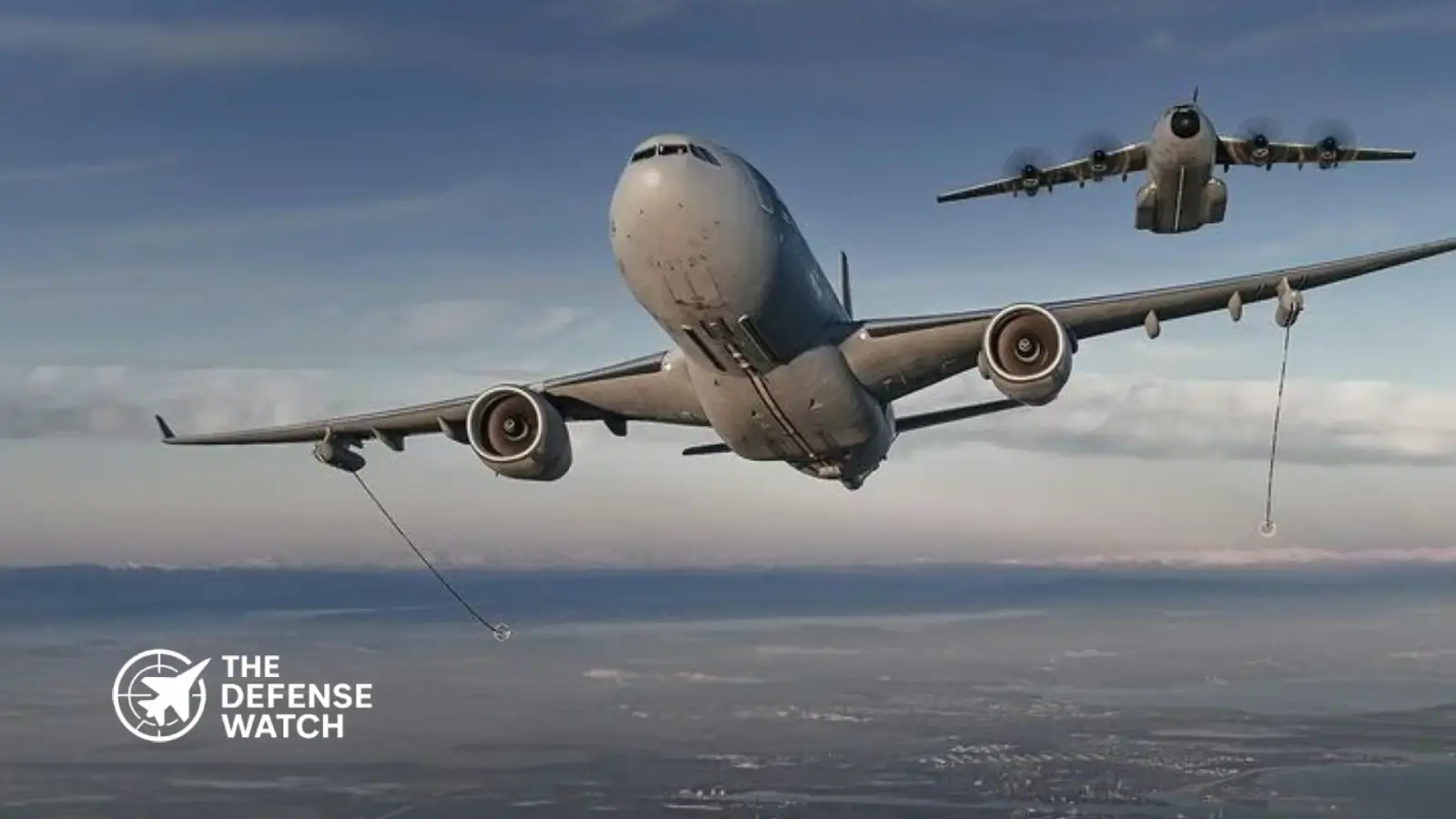
Belgium, Croatia, France, Poland, Spain, Türkiye, and the United Kingdom agreed to establish a High Visibility Project centered on the Airbus A400M military transport aircraft. The initiative is intended to follow NATO’s successful multinational pooling model already used for the Alliance’s Airbus A330 Multi Role Tanker Transport (MRTT) fleet.
Rather than requiring every nation to purchase and sustain a large fleet independently, participating countries will be able to share aircraft, maintenance, logistics, training, and procurement resources while maintaining access to strategic airlift capacity.
A New Multinational Model For Strategic Airlift
According to NATO and Airbus, the project will be developed in stages.
The initiative could eventually include:
| Capability | Planned Benefit |
|---|---|
| Shared A400M fleet | Greater aircraft availability across participating nations |
| Joint maintenance | Lower sustainment costs |
| Common pilot and crew training | Improved interoperability |
| Shared logistics | Faster deployment readiness |
| Coordinated procurement | Economies of scale |
Officials emphasized that the concept mirrors the multinational MRTT fleet, which has demonstrated that shared ownership can deliver significant operational and financial benefits while ensuring continuous access to critical capabilities.
Why The Airbus A400M Was Selected
The Airbus A400M has become one of Europe’s primary military transport aircraft.
More than 135 aircraft are currently in service worldwide, accumulating over 270,000 flight hours across a broad range of military and humanitarian operations. The aircraft combines strategic range with tactical flexibility, allowing it to carry heavy cargo while operating from short or unprepared airstrips.
Its mission set includes:
- Strategic and tactical airlift
- Air-to-air refueling
- Medical evacuation
- Humanitarian assistance
- Disaster relief
- Firefighting support
- Special operations support
Unlike larger strategic transports that require developed airfields, the A400M can operate much closer to front-line forces, providing NATO with additional deployment flexibility.
UK Participation Strengthens NATO Mobility
For the United Kingdom, participation complements the Royal Air Force’s existing A400M Atlas fleet based at RAF Brize Norton.
The RAF already relies heavily on the aircraft for transporting troops, armored vehicles, humanitarian supplies, and special operations forces worldwide. Joining the multinational initiative expands opportunities for common training, logistics cooperation, and shared capability with European allies.
Croatia and Poland, meanwhile, illustrate another advantage of the program. Neither country currently operates the A400M nationally, yet both can gain access to strategic airlift through the multinational framework without independently purchasing and sustaining a full fleet.
Finland Expands NATO’s MRTT Fleet
The announcement also included another milestone for NATO’s shared air mobility capabilities.
Finland officially joined the Multinational MRTT Fleet, bringing total participation to nine nations. The fleet currently operates nine Airbus A330 MRTT aircraft, with additional aircraft still scheduled for delivery.
Together, the MRTT and planned A400M fleets provide complementary capabilities:
- MRTT aircraft provide strategic transport and aerial refueling.
- A400M aircraft add tactical airlift and access to austere operating locations.
NATO officials say the combination improves alliance-wide readiness and military mobility across Europe.
Strategic Analysis: Why The Project Matters
The new multinational A400M initiative reflects NATO’s growing emphasis on rapidly moving forces across Europe during both peacetime and crisis operations.
Military mobility has become a central element of Alliance planning since Russia’s full-scale invasion of Ukraine. Reinforcing NATO’s eastern flank depends not only on combat aircraft and ground forces, but also on the ability to transport personnel, equipment, ammunition, and humanitarian supplies quickly between member states.
Pooling expensive high-value aircraft offers several advantages beyond cost savings.
Shared fleets increase aircraft availability, simplify multinational training, improve logistics standardization, and reduce duplication among allied air forces. The approach also enables smaller members to access capabilities that would otherwise be financially difficult to maintain independently.
For the United Kingdom, participation reinforces its longstanding role as one of NATO’s leading contributors to strategic mobility while strengthening defense industrial cooperation with European partners.
The initiative also demonstrates NATO’s continued reliance on multinational capability development as defense budgets expand across Europe. Rather than duplicating national fleets, the Alliance is increasingly pursuing shared ownership models that maximize readiness while distributing costs among participating members.
Although NATO has not announced how many A400M aircraft will ultimately comprise the multinational fleet or where they will be based, the project establishes another major cooperative capability alongside the Strategic Airlift Capability and the Multinational MRTT Fleet.
Looking Ahead
The A400M initiative remains in its initial planning phase, with participating governments expected to define governance, procurement, operational, and support arrangements over time.
If implemented as envisioned, the multinational fleet would provide NATO members with a more flexible and resilient strategic airlift capability while deepening interoperability across European air forces.
The announcement comes on the same day NATO also confirmed plans to begin negotiations with Saab for the Alliance’s future GlobalEye airborne early warning fleet, underscoring a broader effort to modernize key multinational capabilities.
Get real time update about this post category directly on your device, subscribe now.