
- Home
- Defense Systems
- Fighter Jets
- Su-57D Fighter Jet
Su-57D Fighter Jet
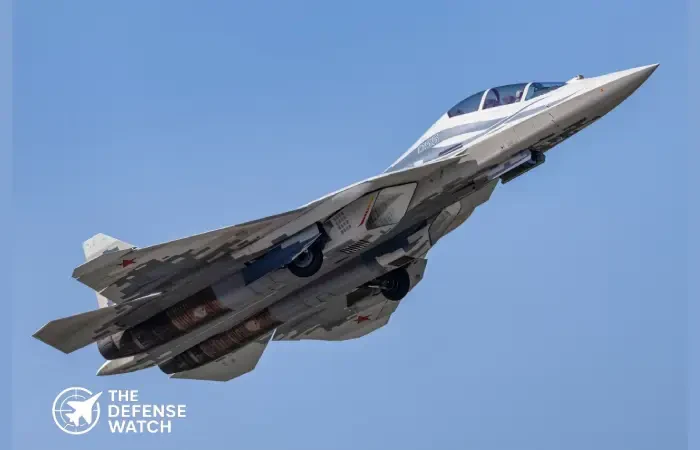
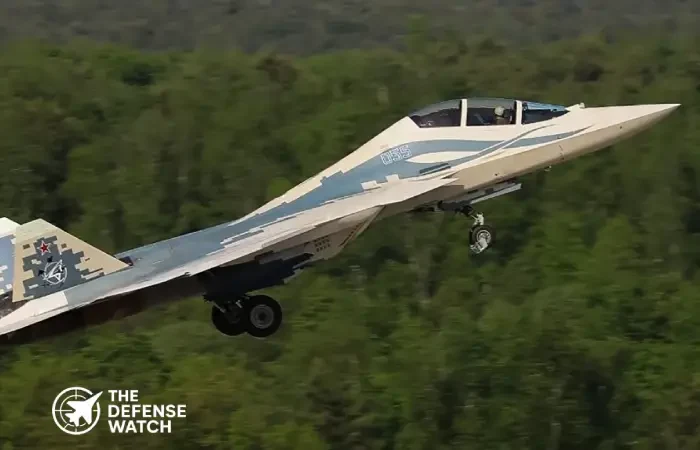
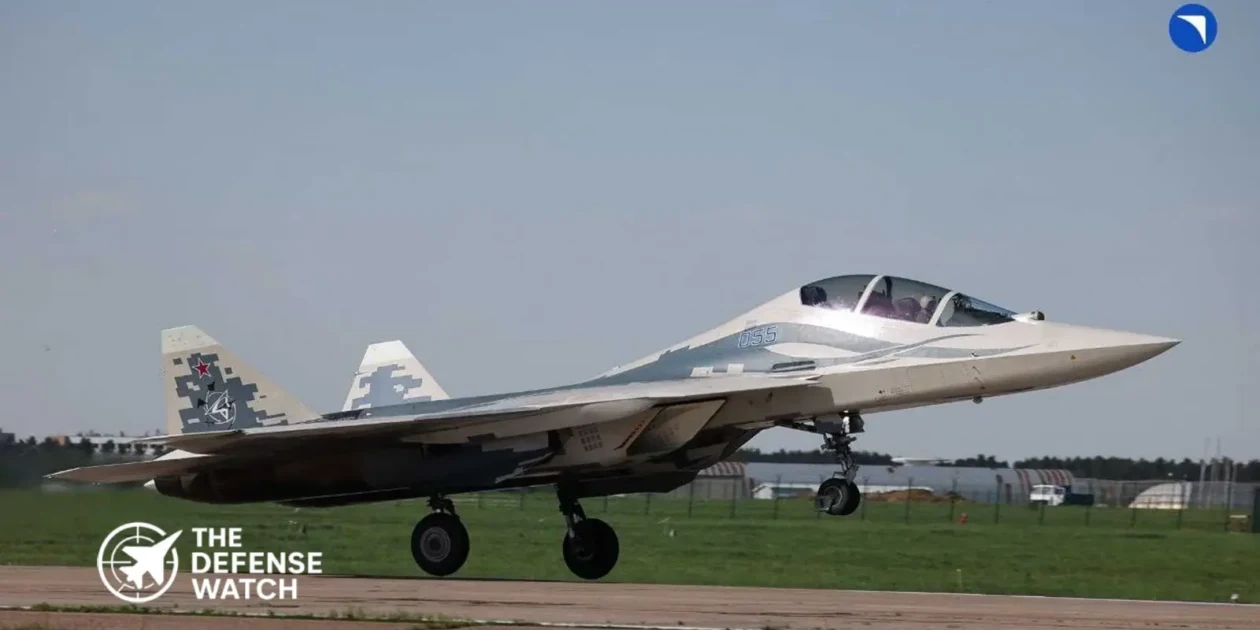
Defense Systems Full Specifications
General Information
| Name | Sukhoi Su-57D (Felon) |
| Manufacturer | United Aircraft Corporation (UAC) / Sukhoi |
| Country of Origin | Russia |
| Type / Role | Multirole Stealth Fighter / Airborne Command Post |
| Generation | Fifth-Generation |
| Status | Prototype / Flight Testing (Introduced May 2026) |
| First Flight | May 19, 2026 |
| Introduction / In Service Since | Prototype stage; baseline variant in service since December 2020 |
| Number Built | Limited prototypes (Base single-seat variant: 42+ units) |
| Operators | Russian Aerospace Forces (Planned), India/Algeria (Prospective) |
Dimensions & Structure
| Length | 65 ft 11 in (20.1 m) |
| Wingspan | 46 ft 3 in (14.1 m) |
| Height | 15 ft 1 in (4.6 m) |
| Wing Area | 848 sq ft (78.8 sq m) |
| Empty Weight | 39,680 lbs (18,000 kg) |
| Maximum Takeoff Weight (MTOW) | 77,160 lbs (35,000 kg) |
| Internal Weapons Bay | 2 main tandem bays, 2 side quick-separation bays |
| External Hardpoints | 6 additional wing hardpoints for non-stealth missions |
Performance
| Maximum Speed | Mach 2.0 (1,320 mph / 2,135 km/h) at altitude |
| Range | 2,174 miles (3,500 km) subsonic clean |
| Combat Radius | 745 miles (1,200 km) supersonic supercruise |
| Service Ceiling | 65,600 ft (20,000 m) |
| Rate of Climb | 650 ft/s (198 m/s) |
| Thrust-to-Weight Ratio | 1.15 (with typical combat takeoff weight) |
| G Limits | +9.0 / -3.0 g |
Powerplant
| Engine Type | Saturn AL-41F-1 (Stage 1) / AL-51F-1 (Stage 2) Turbofans |
| No. of Engines | 2 |
| Thrust (each) | 24,300 lbf dry / 33,100 lbf with afterburner (AL-41F-1) |
| Thrust Vectoring | 3D thrust-vectoring nozzles |
| Fuel Capacity | Estimated 21,000 lbs (9,500 kg) internal |
Armament
| Gun | 1 × 30 mm Gryazev-Shipunov GSh-30-1 autocannon |
| Missiles (Air-to-Air) | R-77M (BVR), R-37M (Ultra Long-Range), R-74M2 (Short-Range) |
| Missiles (Air-to-Ground) | Kh-69 Stealth Cruise Missile, Kh-59MK2, Kh-47M2 Kinzhal (Planned) |
| Bombs | KAB-250, KAB-500 precision-guided munitions |
| Hardpoints | 4 internal, 6 external |
| Payload Capacity | 16,500 lbs (7,500 kg) total capacity |
Avionics & Systems
| Radar | Sh121 Multifunctional Integrated Radio Electronic System (MIRES) |
| Radar Range | 248 miles (400 km) frontal tracking |
| Electronic Warfare (EW) System | Himalaya L402 Electronic Countermeasures Suite |
| Targeting System | 101KS "Atoll" Electro-Optical Targeting System (IRST) |
| Helmet Display | Advanced NSTsI-V Integrated Helmet-Mounted Sight |
| Navigation | GLONASS and redundant INS baseline units |
| Autopilot / AI Assistance | Integrated e-Pilot AI system for rapid target distribution |
| Communication | Polyot-AIST resilient network datalink channels |
Stealth & Technology
| Radar Cross Section (RCS) | Estimated 0.1 to 1.0 sq m (frontal profile) |
| Stealth Features | Internal weapons carriage, radar-absorbent material (RAM) coating |
| Infrared Signature Reduction | Planar cooling channels and shielded engine ducting paths |
| Sensor Fusion | Multi-spectral processing blending radar, EW, and IRST feeds |
| Networking Capabilities | Real-time command architecture linking aircraft and UCAV swarms |
Variants
| Special Export Versions | Su-57E |
Operational History
| Major Conflicts / Deployments | Evaluation flights; baseline single-seater utilized in Syria and Ukraine |
| Notable Operators | Russian Aerospace Forces |
| Combat Proven? | No (Variant-specific; baseline single-seater has combat history) |
| Mission Types | MUM-T Drone Command, Air Superiority, Deep Strike Coordination |
Cost & Program
| Unit Cost | Estimated $45M – $55M (Domestic flyaway price) |
| Development Cost | Estimated $8 Billion – $10 Billion program total |
| Program Name | PAK FA / Prospective Aeronautical Complex of Front-Line Aviation |
| Funding Countries | Russian Federation |
Additional Information
| Upgrades Planned | Full integration of serialization-ready AL-51F-1 powerplant units |
| Future Replacement | Russian Mikoyan PAK DP (6th-Generation concept development) |
| Export Restrictions | Subject to Rosoboronexport state authorization frameworks |
| Notable Achievements | Second operational fifth-generation tandem two-seat fighter globally |
| Competitors | Chengdu J-20S (China), Lockheed Martin F-35 Lightning II (US) |
PROS
- Drone Command Hub: Seamlessly integrates with and controls advanced unmanned combat aerial vehicles (UCAVs) like the S-70 Okhotnik-B.
- Reduced Pilot Workload: Dual-crew cockpit layout optimizes multi-tasking during complex electronic warfare and strike missions.
- Superb Maneuverability: Retains sophisticated thrust-vectoring nozzles for unmatched close-range aerial dogfighting capabilities.
- 360-Degree Radar Coverage: Utilizes an integrated Sh121 Byelka AESA radar system paired with side-looking arrays.
- Diverse Payload: Features large internal weapons bays capable of housing ultra-long-range missiles and stealthy cruise missiles.
CONS
- Compromised Stealth profile: The altered forward fuselage and larger canopy negatively impact the aircraft’s overall radar cross-section.
- Performance Penalty: The added weight of a second cockpit slightly reduces maximum range and structural turning performance compared to the single-seater.
- Industrial Bottlenecks: International sanctions and component shortages create persistent delivery delays and production constraints.
- Unproven Fleet Logistics: Small operational deployment numbers limit extensive real-world data regarding long-term, multi-role maintenance.
- High Operational Overhead: Managing advanced dual-crewed network-centric avionics increases comprehensive ground maintenance requirements.
Su-57D Felon: Russia’s Advanced Two-Seat Stealth Fighter
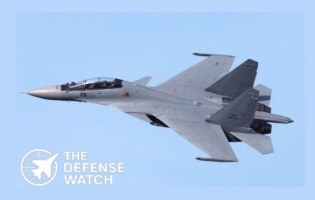
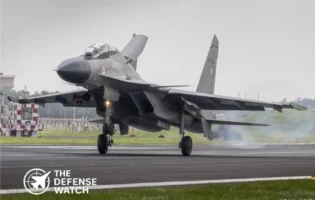
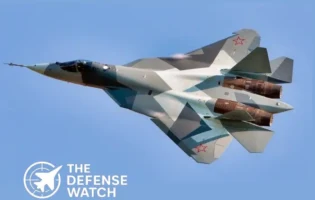
The Sukhoi Su-57D (NATO reporting name: Felon) represents a significant evolutionary leap in modern aviation, transitioning from a standalone tactical asset into an airborne battle management hub. Making its maiden flight in May 2026, this highly anticipated twin-seat variant introduces a radical paradigm shift for the Russian Aerospace Forces and prospective international buyers. Optimized for network-centric warfare, the aircraft features an elongated tandem cockpit canopy where a dedicated second crew member acts as a mission commander. This secondary station drastically reduces pilot workload during high-intensity operations, specifically focusing on electronic warfare, precision strike coordination, and crewed-uncrewed teaming (MUM-T) concepts.
Manufacturer
The Su-57D is engineered and produced by the Sukhoi Design Bureau, a prominent subsidiary of Russia’s state-owned United Aircraft Corporation (UAC). Assembly takes place at the specialized Komsomolsk-on-Amur Aircraft Plant in the Russian Far East.
Speed and Range
Powered by dual afterburning turbofans, the Su-57D retains remarkable aerodynamic performance despite its increased airframe mass. The jet achieves a maximum speed of Mach 2.0 (approximately 1,320 mph) and maintains the ability to supercruise—sustaining supersonic flight without utilizing fuel-heavy afterburners. It boasts a substantial operational range exceeding 2,174 miles (3,500 km), which translates into a combat radius of over 745 miles (1,200 km) for long-range air superiority and deep-strike missions.
Variant
The tandem-seat architecture enables diverse operational roles within a single, stealthy platform, structured directly to support modern, complex tactical roles.
| Variant | Role & Technical Description |
| Su-57 (Baseline) | Single-seat initial production multirole stealth fighter. |
| Su-57M | Upgraded single-seat variant featuring advanced “Stage 2” engines. |
| Su-57D | Two-seat tactical command, drone controller, and advanced combat trainer. |
| Su-57E/ED | Designated commercial export configurations marketed to international forces. |
Cost/Price
The estimated program unit cost for the Su-57D sits at approximately $45 million to $55 million for domestic production. However, customized export packages—such as those discussed under license-production frameworks with international clients like India—can drive full procurement packages significantly higher due to technological transfers and domestic parts integration.
Disclaimer Note
The information provided on TheDefenseWatch.com is for general informational purposes only. While we strive to ensure the accuracy, completeness, and timeliness of our content regarding defense and aerospace products, technologies, and specifications, we cannot guarantee that all information is 100% accurate or up-to-date due to the evolving nature of military technology and classified data.TheDefenseWatch.com does not warrant the reliability, suitability, or availability of the information for any specific purpose. Users are advised to consult official sources, such as manufacturers, government publications, or defense agencies, for precise and verified data before making decisions based on our content.We are not affiliated with any defense manufacturers, governments, or military organizations mentioned. Opinions, reviews, and ratings reflect expert analysis but are subjective and should not be considered endorsements. TheDefenseWatch.com is not responsible for any errors, omissions, or consequences arising from the use of this website’s content.External links are provided for convenience and do not imply endorsement. TheDefenseWatch.com reserves the right to update or modify content without prior notice. By using this website, you agree to our Privacy & Cookies Policy.

New Arrivals

Popular Comparisons
-
 J-10C vs JF-17 Thunder: Which Fighter Is More Capable?
View Comparison →
-
Tejas vs Gripen: Key Differences and Capabilities
View Comparison →
-
Tejas vs MiG-21 Bison: How India Replaced Its Iconic Supersonic Fighter
View Comparison →
-
F-35 vs F-16: Stealth, Sensors and Combat Roles
View Comparison →
-
Tejas Fighter Jet vs F-16 Fighting Falcon: Capability Compared
View Comparison →
-
Rafale Fighter Jet vs F-16 Fighting Falcon : Which Fighter Has the Edge?
View Comparison →
-
Su-57 Fighter Jet vs J-20 Fighter Jet: Stealth and Air Combat Compared
View Comparison →
-
Mirage 2000 vs Tejas Mk1A: Legacy Combat Power vs Indigenous Modernization
View Comparison →
-
Rafale Fighter Jet vs F-22 Raptor: Which Air Dominance Fighter Has the Edge?
View Comparison →
-
Tejas Fighter Jet vs. Rafale Fighter Jet: India’s Indigenous Fighter Meets France’s Proven Multirole Combat Aircraft
View Comparison →


- Israel Signs Deal for 12 AH-64E Apache Attack Helicopters

- Nepal Orders Robinson Unmanned SPIRIT Drones for Army Operations
- Draken Deploys Sting and Phantom Sky Training System Together for First Time
- Ukraine Says Neptune Strike Damaged Six Russian Su-34 Aircraft
- Why Pakistan Still Relies on F-16 Fighters Despite Chinese Advances
- US Military Weighs MOAB for Potential Future Strikes on Iran, CNN Reports
- Saab Wins $120 Million Order for New Gripen Flight Control Computer
- L3Harris Delivers First VAMPIRE Counter-Drone Systems to U.S. Army
- Lockheed Martin Invests $300 Million in Texas Munitions Expansion, Plans 6,000 U.S. Jobs
- Lockheed Martin Taps Avio for ER GMLRS and PrSM Rocket Motor Production


Fighter Jets
-
 MIG-31 Fighter Jet
-
J-10CE Fighter Jet
-
Chengdu J-10 Fighter Jet
-
Chengdu J-10C Fighter Jet
-
Gripen E Fighter Jet
-
Tejas Mk1A Fighter Jet
-
Tejas Mk‑2 Fighter Jet
-
F-16V Viper Block 70 Fighter Jet
-
F-15EX Eagle II Fighter
-
Boeing F/A-XX Fighter
-
F-15E Strike Eagle Fighter
-
F/A-18E/F Super Hornet Fighter Jet
-
Saab Gripen F Fighter Jet
-
JAS 39E/F Gripen Fighter Jet
-
JAS 39 Gripen Fighter Jet
-
F-35A Lightning II Fighter Jet
-
F/A-18F Super Hornet
-
J-50 Fighter Jet
-
Spanish EF-18 Hornet Fighter
-
F-47 Fighter Jet
-
F-35i Adir Fighter Jet
-
F-16 Fighting Falcon
-
AIDC T-5 Brave Eagle
-
F-CK-1 Ching-Kuo Fighter








Recent Compares
-
J-10C vs JF-17 Thunder: Which Fighter Is More Capable?
View Comparison →
-
Tejas vs Gripen: Key Differences and Capabilities
View Comparison →
-
Tejas vs MiG-21 Bison: How India Replaced Its Iconic Supersonic Fighter
View Comparison →
-
F-35 vs F-16: Stealth, Sensors and Combat Roles
View Comparison →
-
Tejas Fighter Jet vs F-16 Fighting Falcon: Capability Compared
View Comparison →
Latest Defense Systems
10 Compares Defense Systems
-
J-10C vs JF-17 Thunder: Which Fighter Is More Capable?
View Comparison →
-
Tejas vs Gripen: Key Differences and Capabilities
View Comparison →
-
Tejas vs MiG-21 Bison: How India Replaced Its Iconic Supersonic Fighter
View Comparison →
-
F-35 vs F-16: Stealth, Sensors and Combat Roles
View Comparison →
-
Tejas Fighter Jet vs F-16 Fighting Falcon: Capability Compared
View Comparison →
-
Rafale Fighter Jet vs F-16 Fighting Falcon : Which Fighter Has the Edge?
View Comparison →
-
Su-57 Fighter Jet vs J-20 Fighter Jet: Stealth and Air Combat Compared
View Comparison →
-
Mirage 2000 vs Tejas Mk1A: Legacy Combat Power vs Indigenous Modernization
View Comparison →
-
Rafale Fighter Jet vs F-22 Raptor: Which Air Dominance Fighter Has the Edge?
View Comparison →
-
Tejas Fighter Jet vs. Rafale Fighter Jet: India’s Indigenous Fighter Meets France’s Proven Multirole Combat Aircraft
View Comparison →
- Israel Signs Deal for 12 AH-64E Apache Attack Helicopters
- Nepal Orders Robinson Unmanned SPIRIT Drones for Army Operations
- Draken Deploys Sting and Phantom Sky Training System Together for First Time
- Ukraine Says Neptune Strike Damaged Six Russian Su-34 Aircraft
- Why Pakistan Still Relies on F-16 Fighters Despite Chinese Advances