• Home
  • About
  • Defense Systems
  • Manufacturer
  • Comparisons
  • Compare 
  • Tools
TheDefenseWatch.com
  • Aerospace & Aviation
  • Military & Ordnance
  • Naval & Maritime
  • Cyber & Space Defense
  • Policy & Strategy
  • Global News
  • Tools Library
    • Smart Calculator
    • Drone Flight Time Calculator
    • Drone Range Calculator
    • Counter-Drone Jammer Effective Range Calculator
    • Counter-Battery Radar Detection Calculator
    • Artillery Fire Correction Calculator
    • Thermal Camera Detection Range Calculator
    • Missile Range & Time-of-Flight Calculator
    • Radar Detection Range Calculator
    • FPV Strike Drone Payload vs Range Calculator
    • Loitering Munition Endurance Calculator
    • Sniper Ballistic Drop & Windage Calculator
    • Bullet Drop Calculator
    • U.S. Army Combat Fitness Test (ACFT) Calculator
    • Military Pension Calculator
    • Military Retirement Calculator
    • Military Pension Calculator
    • Large Number Calculator
Font ResizerAa

TheDefenseWatch.com

The Defense Watch | U.S. & Global Defense News, Analysis & Military Updates

Search
  • Home
  • About
  • Defense Systems
  • Manufacturer
  • Comparisons
  • Compare 
  • Tools

Stay Updated

Get the latest update

Subscribe

Explore

  • Drone
  • Fighter Jets & Military Aircraft
  • Hypersonic Weapons
  • Aircraft Carriers
  • Strategic History & Missions
  • Tools Library
Home » Raytheon Missiles and Defense Secures $213 Million Deal For Zumwalt-class destroyer Combat System Upgrades
Naval & MaritimeNaval Strategy & Maritime Security

Raytheon Missiles and Defense Secures $213 Million Deal For Zumwalt-class destroyer Combat System Upgrades

Samuel Drake | Defense Analyst
Last updated: September 7, 2026 2:40 pm
Samuel Drake | Defense Analyst
Share
2 Min Read
Zumwalt-class combat system
SHARE

Zumwalt-Class Combat System Gets Fresh U.S. Navy Investment

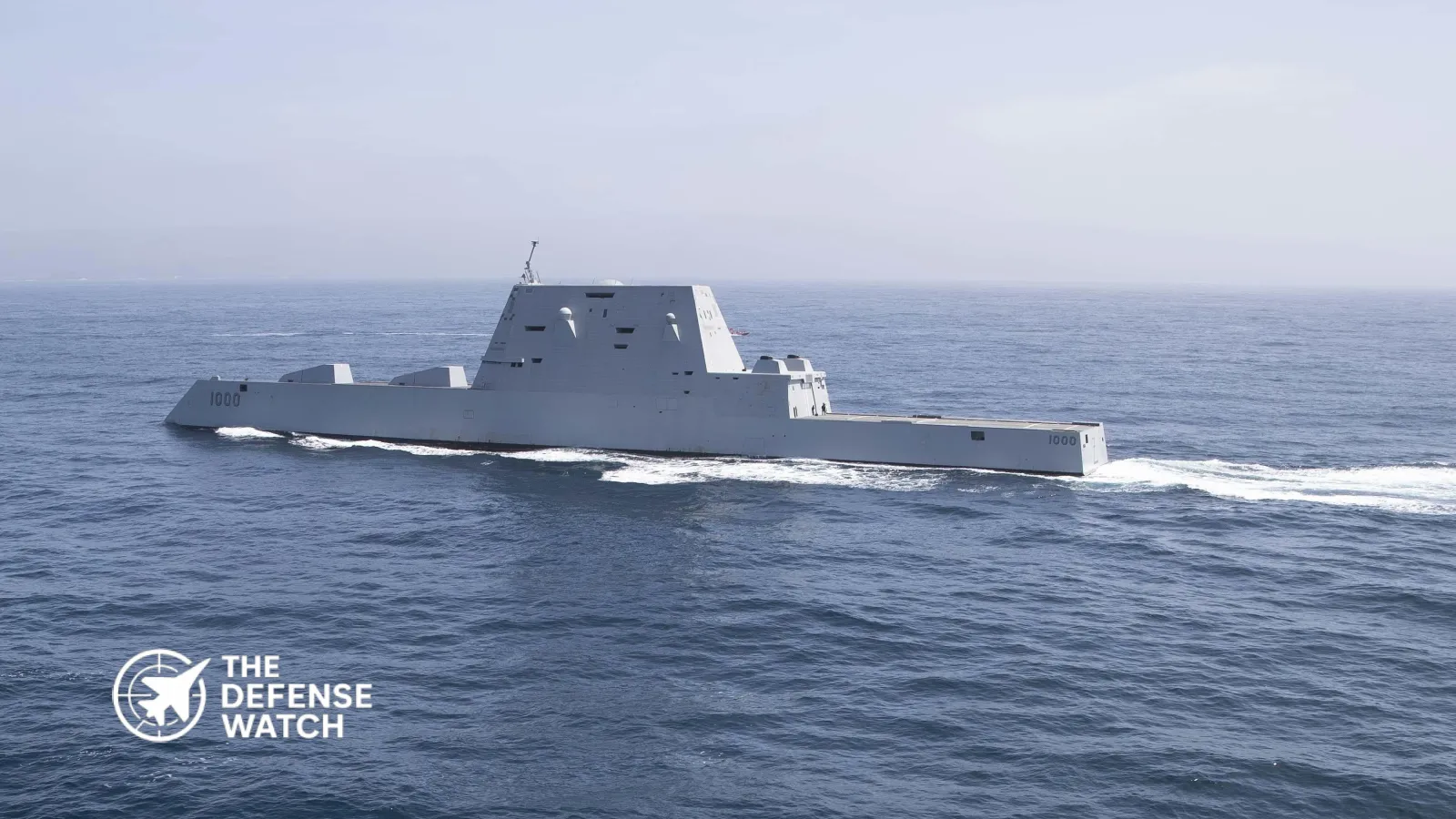
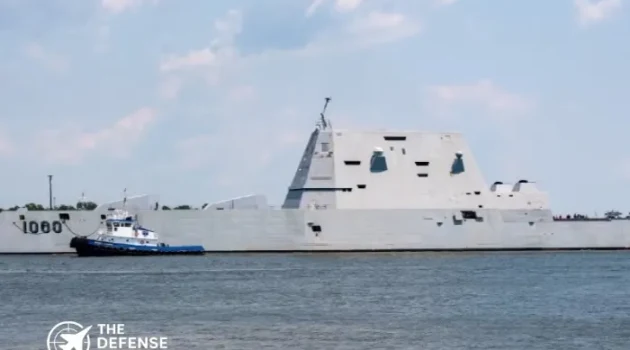
The Zumwalt-class combat system is receiving another major funding injection after the U.S. Navy awarded Raytheon Missiles and Defense a $213.4 million contract modification to continue upgrades and sustainment work for the fleet’s mission systems. The award underscores Washington’s effort to preserve and expand the combat value of one of its most technologically ambitious surface combatant programs.

Contents
  • Zumwalt-Class Combat System Gets Fresh U.S. Navy Investment
  • The Big Picture
  • What’s Happening
  • Why It Matters
  • Strategic Implications
  • Competitor View
  • Capability Gap
  • What To Watch Next
  • The Bottom Line
¦ KEY FACTS AT A GLANCE
  • Raytheon received a $213.4 million Navy contract modification for Zumwalt-class mission systems.
  • Work covers installation, integration, testing, maintenance, corrections, and modernization.
  • Upgrades support the Navy’s push to make Zumwalt destroyers more operationally relevant.
  • Work runs across six U.S. states and is scheduled for completion by April 2027.
  • Contract signals continued long-term investment in high-end surface warfare capabilities.

The Big Picture

The U.S. Navy is balancing two priorities at once: expanding fleet size while modernizing existing high-end warships for contested maritime operations. That strategy has become more urgent as the Indo-Pacific theater grows more competitive and long-range anti-ship missile threats continue to spread.

The three-ship Zumwalt-class destroyer program has often been debated because of its cost and reduced production run. Yet the vessels still offer unique advantages, including stealth shaping, integrated power generation, and large onboard capacity for future weapons or sensors. Continued investment suggests the Navy intends to extract maximum operational value from those advantages rather than treat the class as a niche experiment.

  • Zumwalt Class Destroyer

    Zumwalt Class Destroyer

    • Displacement: Approx. 15000 tons
    • Maximum Speed: Over 30 knots
    • Radar Range: Classified
    • Vertical Launch Cells (VLS): 80
    • View Details →
    8.0

    What’s Happening

    According to the U.S. Department of Defense contract announcement, Raytheon will perform work supporting combat system installation, integration, development, testing, correction, maintenance, and modernization of Zumwalt-class mission systems.

    The workshare includes:

    • Portsmouth, Rhode Island (39%)
    • Tewksbury, Massachusetts (32%)
    • Pascagoula, Mississippi (14%)
    • Nashua, New Hampshire (9%)
    • San Diego, California (5%)
    • Fort Wayne, Indiana (1%)

    The contract is expected to run through April 2027.

    Funding comes from multiple Navy accounts, including operations and maintenance, shipbuilding and conversion, procurement, and research and development. That mix indicates both near-term fleet sustainment and longer-term capability growth.

    Why It Matters

    Combat systems are the core of a modern destroyer. They connect sensors, command networks, weapons, electronic warfare tools, and targeting data into a single fighting architecture. Without constant software and hardware updates, even advanced hulls lose relevance quickly.

    For the Zumwalt fleet, modernization is especially important because these ships were designed with significant growth margins. Their power generation and internal volume make them suitable candidates for future systems that require more electricity, cooling, or computing capacity.

    That means the Zumwalt-class combat system can evolve faster than many legacy destroyers if funding remains steady.

    Strategic Implications

    The Navy increasingly needs distributed lethality, meaning more ships able to strike targets at range and operate independently in contested waters. Upgraded Zumwalt destroyers can support that concept by acting as stealthier surface strike platforms with advanced sensor integration.

    The ships may also complement the larger Arleigh Burke-class destroyer fleet rather than replace it. Burkes provide numbers and proven versatility. Zumwalts can offer specialized high-end capability, especially in environments where lower radar signature and extra power capacity matter.

    This contract also supports the U.S. industrial base across several states, sustaining engineering and naval combat system expertise that remains strategically valuable.

    Competitor View

    China and Russia closely track U.S. naval modernization, particularly programs involving long-range strike and advanced surface warfare networks. Continued upgrades to the Zumwalt class signal that the United States is not abandoning expensive but potentially high-payoff naval technologies.

    Competitors may also view the decision as evidence that the Navy is preparing select premium platforms for future weapons integration, including next-generation missiles or energy-intensive systems.

    Capability Gap

    The Zumwalt program originally centered on land attack missions, but strategic needs shifted toward maritime competition against peer navies. That left a mission gap the Navy has been working to close.

    • Zumwalt Class Destroyer

      Zumwalt Class Destroyer

      • Displacement: Approx. 15000 tons
      • Maximum Speed: Over 30 knots
      • Radar Range: Classified
      • Vertical Launch Cells (VLS): 80
      • View Details →
      8.0

      Modernizing the Zumwalt-class combat system helps reposition the ships toward surface warfare and multi-domain operations. However, limitations remain. Only three hulls exist, which constrains fleet-wide impact, logistics efficiency, and deployment availability.

      What To Watch Next

      Several milestones will determine whether the modernization effort delivers full value:

      • Integration of newer missile and sensor packages
      • Software updates tied to joint force networks
      • Readiness rates for all three ships
      • Potential deployment patterns in the Pacific
      • Future directed-energy or hypersonic weapon compatibility

      The Bottom Line

      The $213 million Raytheon award shows the U.S. Navy still sees the Zumwalt class as a valuable future combat asset rather than a legacy procurement problem.
TAGGED:Defense contractsRaytheonU.S. NavyZumwalt-class
Share This Article
Facebook Copy Link Print
BySamuel Drake | Defense Analyst
Follow:
Samuel Drake is a defense analyst at TheDefenseWatch.com covering naval warfare, military ordnance, maritime technology, fleet modernization, and defense procurement. His reporting focuses on documented capabilities, procurement programs, and military technology.
Leave a Comment

Leave a Reply Cancel reply

Your email address will not be published. Required fields are marked *

Latest Defense Systems

  • XQ-67A Drone XQ-67A Drone
  • B-25 Mitchell Bomber B-25 Mitchell Bomber
  • F-100 Super Sabre F-100 Super Sabre
  • North American F-86 Sabre North American F-86 Sabre
  • North American XB-70 Valkyrie North American XB-70 Valkyrie
  • Northrop YF-23 Fighter Northrop YF-23 Fighter
  • P-51 Mustang Fighter Aircraft P-51 Mustang Fighter Aircraft
  • Rafale F5 Fighter Rafale F5 Fighter
  • Tomahawk Block V Missile Tomahawk Block V Missile

Recent Compares

  • J-10C vs JF-17 Thunder: Which Fighter Is More Capable? J-10C vs JF-17 Thunder: Which Fighter Is More Capable? View Comparison →
  • Tejas vs Gripen: Key Differences and Capabilities Tejas vs Gripen: Key Differences and Capabilities View Comparison →
  • Tejas vs MiG-21 Bison: How India Replaced Its Iconic Supersonic Fighter Tejas vs MiG-21 Bison: How India Replaced Its Iconic Supersonic Fighter View Comparison →
  • F-35 vs F-16: Stealth, Sensors and Combat Roles F-35 vs F-16: Stealth, Sensors and Combat Roles View Comparison →
  • Tejas Fighter Jet vs F-16 Fighting Falcon: Capability Compared Tejas Fighter Jet vs F-16 Fighting Falcon: Capability Compared View Comparison →
  • Rafale Fighter Jet vs F-16 Fighting Falcon : Which Fighter Has the Edge? Rafale Fighter Jet vs F-16 Fighting Falcon : Which Fighter Has the Edge? View Comparison →
  • Su-57 Fighter Jet vs J-20 Fighter Jet: Stealth and Air Combat Compared Su-57 Fighter Jet vs J-20 Fighter Jet: Stealth and Air Combat Compared View Comparison →
  • Mirage 2000 vs Tejas Mk1A: Legacy Combat Power vs Indigenous Modernization Mirage 2000 vs Tejas Mk1A: Legacy Combat Power vs Indigenous Modernization View Comparison →
  • Rafale Fighter Jet vs F-22 Raptor: Which Air Dominance Fighter Has the Edge? Rafale Fighter Jet vs F-22 Raptor: Which Air Dominance Fighter Has the Edge? View Comparison →
  • Tejas Fighter Jet vs. Rafale Fighter Jet: India’s Indigenous Fighter Meets France’s Proven Multirole Combat Aircraft Tejas Fighter Jet vs. Rafale Fighter Jet: India’s Indigenous Fighter Meets France’s Proven Multirole Combat Aircraft View Comparison →

Recent Posts

  • China Reports Fielding 40mm Cased Telescoped Ammunition
  • Saab Launches Ocean Barrier Underwater Surveillance System
  • Saab Names Canadian Partners for Gripen E Fighter Production
  • U.S. Air Force Tests XQ-67A Drone Systems for Dispersed Combat Operations
  • Lockheed Martin Wins $9.76 Million Contract for Canadian CH-148 Cyclone Electronic Warfare Software

You Might Also Like

shipbuilders need to hire 250000 workers
Naval & MaritimeSubmarines

U.S. Navy: Shipbuilders Must Hire 250,000 Workers Over Next Decade to Build ‘Golden Fleet’

January 15, 2026
RTX missile production expansion
Artillery & Missile SystemsMilitary & Ordnance

RTX Plans to Increase Missile Production Up to Fourfold Under Pentagon Contracts

October 23, 2026
NSA Stirling Australia
Naval & MaritimeSubmarines

US Navy Expands Submarine Capability In Australia With New NSA Stirling Support Hub

June 9, 2026
Russia fifth generation nuclear submarine
Naval & MaritimeSubmarines

Russia Confirms Fifth Generation Nuclear Submarine Development

September 8, 2026

Logo

Copyright © 2026 TheDefenseWatch.com

Helpful Links

  • Home
  • About Us
  • Privacy Policy
  • Terms of Use / Disclaimer
  • U.S. Privacy Notice – CCPA Compliance

Defense Systems

  • Defense Systems
  • Comparisons 
  • Manufacturer
  • Tactical Calculators

Popuplar

Which 5 Air Forces Possess the Costliest Fighter Jet Fleets in the World
Evolving Strategic Value: Carrier Strike Groups in the Indo-Pacific’s Future Security Architecture
Autonomous Weapon Systems Spark U.S. Ethics Debate Amid Rapid Military AI Integration

We report on developments involving military forces, governments, defense companies, research organizations, and security institutions around the world. 

Welcome Back!

Sign in to your account

Username or Email Address
Password

Lost your password?