Saab Expands Denmark’s CV90 Combat Training With SEK 350 Million Order
Denmark is expanding its live military training capabilities through a new SEK 350 million order with Swedish defense company Saab, adding equipment designed to prepare armored and infantry units for battlefield conditions increasingly shaped by drones and long-range precision weapons.
The order was placed by the Danish Defence Acquisition and Logistics Organisation (DALO). It includes Saab’s Instrumented Laser Duel System (ILDS) for the CV90 infantry fighting vehicle, alongside new non-line-of-sight and drone training capabilities.
Saab confirmed that deliveries will take place between 2026 and 2028. The procurement builds on a Combat Training Centre agreement signed with Denmark in 2025, under which four training sites were established.
The latest purchase expands the existing training infrastructure rather than introducing an entirely new combat training program.
CV90 Training Gains New Engagement Capabilities
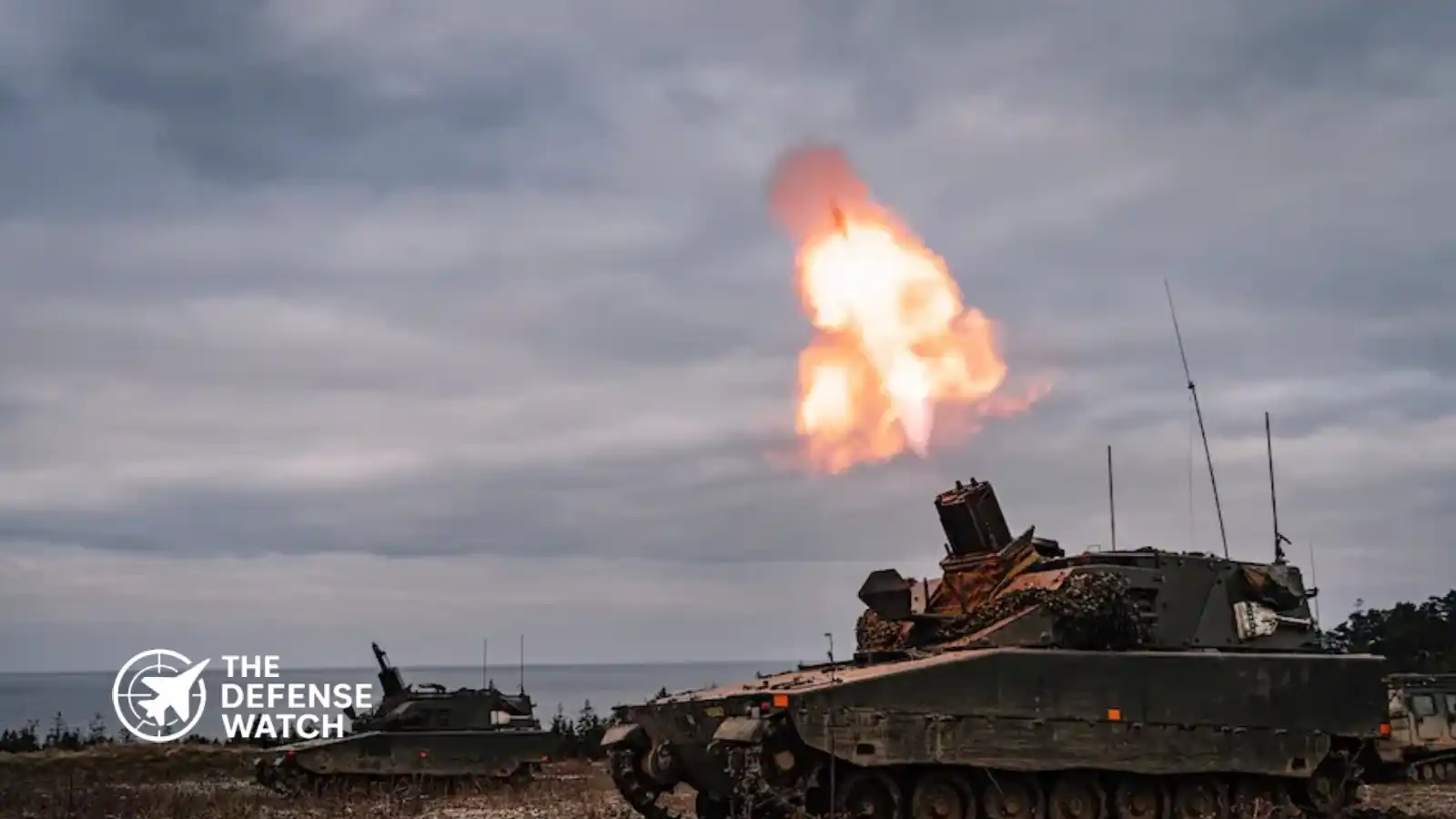
The main equipment included in the order is Saab’s Instrumented Laser Duel System, which allows military units to conduct simulated combat engagements during live exercises.
ILDS uses laser-based instrumentation to reproduce weapon engagements and register simulated hits. This enables exercise controllers to assess tactical decisions, engagement outcomes and unit performance without requiring live ammunition for simulated engagements.
Integrating the system with the CV90 allows vehicle crews to participate in instrumented exercises alongside other equipped platforms and dismounted personnel.
The addition of non-line-of-sight training capabilities is particularly relevant. Modern ground operations increasingly involve engagements in which forces cannot directly observe their targets. Training for these situations requires more than conventional visual engagement scenarios.
Saab has not disclosed the detailed technical specifications of the new functions, including their precise implementation or the methods used to simulate non-line-of-sight engagements.
The procurement concerns training equipment and simulated battlefield scenarios, not an announced acquisition of additional CV90 vehicles or operational drone systems.
Why Denmark Is Adding Drone Scenarios to Live Exercises
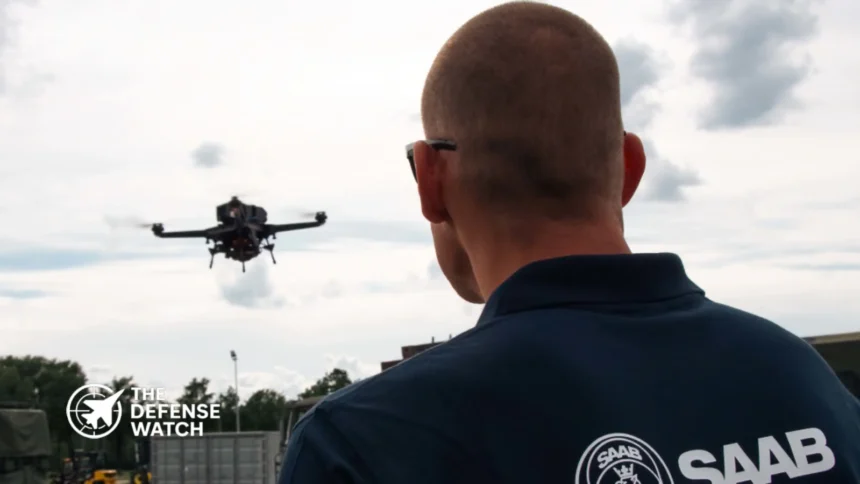
Unmanned aerial systems have changed how armored formations operate.
Drones can provide reconnaissance, identify vehicle positions, support artillery targeting and conduct direct attacks. Their growing availability has made concealment, movement discipline and coordination more important for ground forces.
For CV90 crews and supporting infantry, this creates additional training requirements.
Units must account for aerial observation, recognize potential threats and coordinate their movements with other elements of a formation. They also need to understand how to operate when their positions may be exposed to persistent surveillance.
Incorporating drone-related scenarios into live training can help commanders evaluate these procedures under controlled conditions.
However, Saab’s announcement does not specify whether the new capability uses physical drones, simulated aerial threats or a combination of both. It also does not disclose the number of training systems included in the order.
The operational value will depend on how effectively these scenarios are integrated into regular exercises.
The New Order Builds on Denmark’s Earlier Saab Agreement
The SEK 350 million purchase follows Saab’s June 2025 contract with DALO for the establishment of a Combat Training Centre in Denmark.
That earlier agreement was valued at SEK 680 million and covered a broader package of training infrastructure across four locations.
The program included soldier and vehicle training systems, anti-tank and sniper training weapons, communications equipment and Exercise Control (EXCON) software.
EXCON provides the infrastructure needed to manage exercises, monitor participating units and support after-action reviews. These functions help commanders assess how personnel performed during simulated engagements and identify areas requiring improvement.
The latest order adds further capabilities to this established framework.
Denmark also has a longer procurement relationship with Saab in this field. In March 2022, the company announced that it had been selected to supply live training systems under a framework agreement valued at approximately DKK 550 million over 15 years, with an option for a further five-year extension.
These earlier agreements demonstrate that Denmark’s investment in live training has developed through successive procurement decisions rather than a single equipment purchase.
What the SEK 350 Million Investment Means for Danish Forces
The expanded training capability addresses a practical requirement for Denmark’s ground forces: preparing personnel to operate in an environment where armored vehicles, infantry, unmanned systems and precision weapons increasingly interact.
Instrumented training can provide a more detailed assessment of battlefield decisions than conventional exercises alone. It allows training personnel to reconstruct simulated engagements and evaluate the consequences of tactical choices.
There is also a potential benefit for multinational exercises. Denmark operates within NATO’s collective defense framework, making coordination and interoperability important considerations for its armed forces.
Saab supplies training and simulation solutions to customers in more than 40 countries. Its wider portfolio includes systems designed to connect soldiers, vehicles and exercise-control infrastructure.
Nevertheless, the SEK 350 million order does not establish the precise level of NATO system interoperability or disclose how the new capabilities will be integrated with allied training networks.
Deliveries scheduled for 2026 to 2028 will gradually expand Denmark’s existing training infrastructure. The extent to which the investment improves operational readiness will depend on equipment integration, exercise frequency and the realism of the scenarios used.
For Saab, the contract adds another Danish procurement to its established training and simulation business. For Denmark, it extends a multi-year effort to adapt ground-force training to the changing demands of modern warfare.