- Home
- Defense Systems
- Compare
- F-14 Tomcat vs Su-57: Can a Legend Challenge Russia’s Stealth Fighter?
F-14 Tomcat vs Su-57: Can a Legend Challenge Russia’s Stealth Fighter?
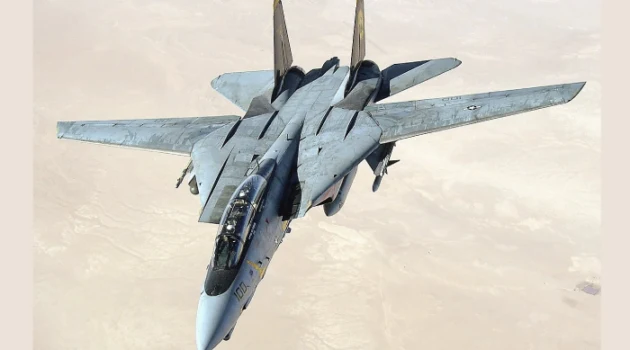
The showdown between the F-14 Tomcat and Russia’s Su-57 is a clash of aviation eras—one defined by Cold War air superiority and the other by next-generation stealth warfare. Although these aircraft never shared the same battlefield, the comparison remains one of the most intriguing “classic vs modern” matchups in military aviation.
The F-14 Tomcat, introduced in the 1970s, became an icon of U.S. naval airpower with its variable-sweep wings, long-range AIM-54 Phoenix missile, and powerful AWG-9 radar—decades ahead of its time. In contrast, the Su-57 represents Russia’s push into 5th-generation stealth technology, combining low-observable shaping, advanced avionics, supermaneuverability, and modern long-range air-to-air weapons.
This analysis explores how a legendary 4th-generation fighter would theoretically stack up against a modern stealth platform. From radar cross-section and sensor capability to speed, agility, and missile range, the F-14’s raw aeronautical muscle is measured against the Su-57’s digital-era advantages. While the Su-57 clearly benefits from 40 years of technological evolution, the Tomcat’s pioneering systems still hold surprising relevance.
Whether for aviation enthusiasts, military analysts, or fans of classic fighters, this comparison highlights how far air combat technology has come—and why the F-14 remains a legend.
General Information
|
Name
|
F-14 Tomcat
Su-57 Felon |
|
Manufacturer
|
Grumman Aerospace
Sukhoi (UAC) |
|
Country of Origin
|
United States
Russia |
|
Type / Role
|
Carrier-based air superiority & fleet defense fighter
Stealth Air Superiority / Multirole Fighter |
|
Generation
|
3rd–4th generation
Fifth |
|
Status
|
Retired (U.S.), Active (Iran)
In limited service |
|
First Flight
|
1970
January 29, 2010 |
|
Introduction / In Service Since
|
974
2020 |
|
Number Built
|
712
~25 (as of 2025) |
|
Operators
|
U.S. Navy (retired), Iran
Russian Aerospace Forces |
Dimensions & Structure
|
Length
|
62 ft 8 in
20.1 m |
|
Wingspan
|
38–64 ft (variable)
14.1 m |
|
Height
|
16 ft
4.6 m |
|
Wing Area
|
565 sq ft
78.8 m² |
|
Empty Weight
|
~43,735 lbs
~18,000 kg |
|
Maximum Takeoff Weight (MTOW)
|
74,350 lbs
35,000 kg |
|
Internal Weapons Bay
|
No dedicated bay
Yes (2 main, 2 side) |
|
External Hardpoints
|
10
6 |
Performance
|
Maximum Speed
|
Mach 2.34
Mach 2.0 |
|
Range
|
1,600+ miles
3,500 km |
|
Combat Radius
|
~500 miles
1,500 km |
|
Service Ceiling
|
50,000+ ft
20,000 m |
|
Rate of Climb
|
~45,000 ft/min
330 m/s |
|
Thrust-to-Weight Ratio
|
Up to 0.91 (F110 engines)
~1.15 |
|
G Limits
|
+7.5
+9 |
Powerplant
|
Engine Type
|
Turbofan
Saturn AL-41F1 (future Izdeliye 30) |
|
No. of Engines
|
2
2 |
|
Thrust (each)
|
20,900 lbf (F110 engines)
142 kN with afterburner |
|
Thrust Vectoring
|
No
Yes (3D) |
|
Fuel Capacity
|
~16,200 lbs internal
~10,300 kg |
Armament
|
Gun
|
20mm M61A1 Vulcan
30mm GSh-30-1 cannon |
|
Missiles (Air-to-Air)
|
AIM-54 Phoenix, AIM-7 Sparrow, AIM-9 Sidewinder
R-77, R-74M, R-37M |
|
Missiles (Air-to-Ground)
|
LANTIRN-guided bombs (late service)
Kh-38, Kh-59MK2 |
|
Bombs
|
JDAM, LGBs (late variants)
KAB-250/500 guided bombs |
|
Hardpoints
|
10
10 (internal + external) |
|
Payload Capacity
|
~14,500 lbs
10,000 kg |
Avionics & Systems
|
Radar
|
AN/AWG-9
N036 Byelka AESA |
|
Radar Range
|
200+ miles
400+ km |
|
Electronic Warfare (EW) System
|
ALR-67 RWR, ALQ-126
L402 Himalayas suite |
|
Targeting System
|
LANTIRN (F-14B/D)
IRST + radar fusion |
|
Helmet Display
|
Basic HUD (no HMD)
Integrated HMS |
|
Navigation
|
INS/GPS (later upgrades)
GLONASS-based INS |
|
Autopilot / AI Assistance
|
Basic autopilot
Partial autonomy |
|
Communication
|
UHF/VHF, data link (later)
Encrypted data link |
Stealth & Technology
|
Radar Cross Section (RCS)
|
Large (non-stealth)
Estimated 0.3–0.5 m² |
|
Stealth Features
|
None
Internal bays, radar-absorbing composites |
|
Infrared Signature Reduction
|
Minimal
Engine shielding, cooling design |
|
Sensor Fusion
|
Limited
Multi-source integration |
|
Networking Capabilities
|
Upgraded in later variants
Limited data-link interoperability |
Variants
|
Special Export Versions
|
Limited; Iran received F-14A only
Su-57E (Export Variant) |
Operational History
|
Major Conflicts / Deployments
|
Desert Storm, Southern Watch, Enduring Freedom, Iraqi Freedom
Syria (testing), Ukraine (limited combat) |
|
Notable Operators
|
U.S. Navy
Russia |
|
Combat Proven?
|
Yes
Limited |
|
Mission Types
|
Air superiority, fleet defense, escort, strike
Air superiority, strike, reconnaissance |
Cost & Program
|
Unit Cost
|
~$38 million (1998 dollars)
~$45–50 million (estimated) |
|
Development Cost
|
~$1.9 billion
~$10 billion (PAK FA program) |
|
Program Name
|
Naval Fighter Experimental (VFX)
PAK FA (T-50) |
|
Funding Countries
|
United States
Russia |
Additional Information
|
Upgrades Planned
|
None (retired)
New radar, Izdeliye 30 engines |
|
Future Replacement
|
F/A-18E/F Super Hornet
None planned (Su-57M modernization) |
|
Export Restrictions
|
Strict; only Iran received exports
Controlled by Russian government |
|
Notable Achievements
|
Longest-range AAM capability of its era
Russia’s first fifth-gen stealth jet |
|
Competitors
|
MiG-23/25, Su-27, F-15
F-22 Raptor, F-35 Lightning II, J-20 Mighty Dragon |
Disclaimer Note
The information provided on TheDefenseWatch.com is for general informational purposes only. While we strive to ensure the accuracy, completeness, and timeliness of our content regarding defense and aerospace products, technologies, and specifications, we cannot guarantee that all information is 100% accurate or up-to-date due to the evolving nature of military technology and classified data.TheDefenseWatch.com does not warrant the reliability, suitability, or availability of the information for any specific purpose. Users are advised to consult official sources, such as manufacturers, government publications, or defense agencies, for precise and verified data before making decisions based on our content.We are not affiliated with any defense manufacturers, governments, or military organizations mentioned. Opinions, reviews, and ratings reflect expert analysis but are subjective and should not be considered endorsements. TheDefenseWatch.com is not responsible for any errors, omissions, or consequences arising from the use of this website’s content.External links are provided for convenience and do not imply endorsement. TheDefenseWatch.com reserves the right to update or modify content without prior notice. By using this website, you agree to our Privacy & Cookies Policy.















 J-10C vs JF-17 Thunder: Which Fighter Is More Capable?
View Comparison →




 F-47A Fighter Jet