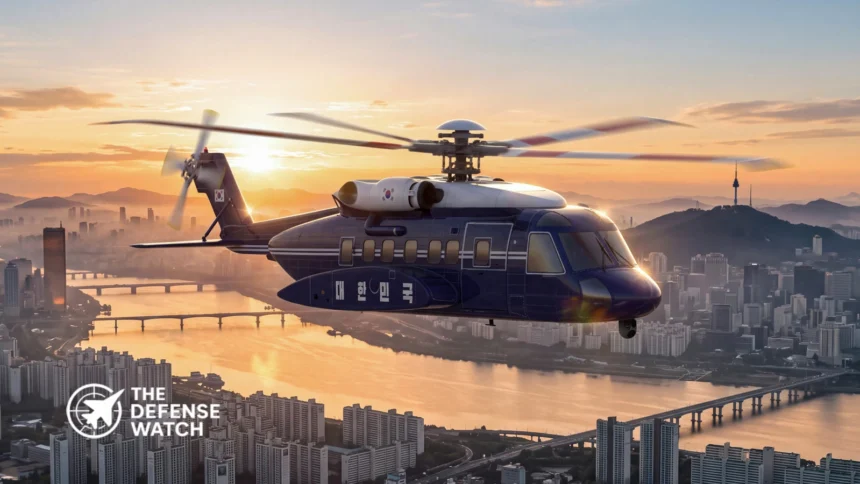
Sikorsky S-92A+ Selected for South Korea’s Presidential Helicopter Fleet
South Korea has selected Sikorsky’s S-92A+ helicopter to replace its aging presidential transport fleet, awarding the U.S. manufacturer a place in the country’s Presidential Helicopter II procurement program.
The selection, announced by Lockheed Martin on November 6, 2026, covers four S-92A+ helicopters for the Republic of Korea Air Force (ROKAF). The package also includes special mission equipment, spare parts and sustainment support, while South Korean aerospace company Korea Aviation Engineering & Maintenance Service (KAEMS) will handle in-country mission equipment completion.
The decision extends South Korea’s use of the S-92 family, which has supported presidential transport missions since the ROKAF received its first three aircraft in 2007.
Unlike a completely new helicopter introduction, the selection builds on an established operating relationship with Sikorsky. However, the S-92A+ introduces hardware improvements intended to increase available power, improve gearbox safety and provide greater payload or fuel flexibility.
Four helicopters selected under Presidential Helicopter II
The Presidential Helicopter II program is intended to replace South Korea’s existing presidential transport helicopters with aircraft equipped for improved survivability and command-and-control missions.
South Korea’s Defense Acquisition Program Administration (DAPA) approved the procurement plan in April 2025. The original program budget was approximately 870 billion won, with the acquisition scheduled to run through 2031. An October 2025 DAPA procurement notice listed a budget of $628.3 million and identified the program period as 2026 to 2031.
The four-helicopter selection gives Sikorsky the contract opportunity, but the company has not publicly disclosed the final award value or a detailed aircraft delivery schedule.
It is important to distinguish the overall South Korean procurement budget from the value of Sikorsky’s specific contract. The available announcement does not establish that the manufacturer received an award worth the entire program allocation.
The selection followed a competition involving international helicopter manufacturers. Earlier reporting identified Airbus’s H225M, Leonardo’s AW101, Bell’s Bell 525 and Sikorsky’s S-92A+ among the potential candidates.
What makes the S-92A+ different?
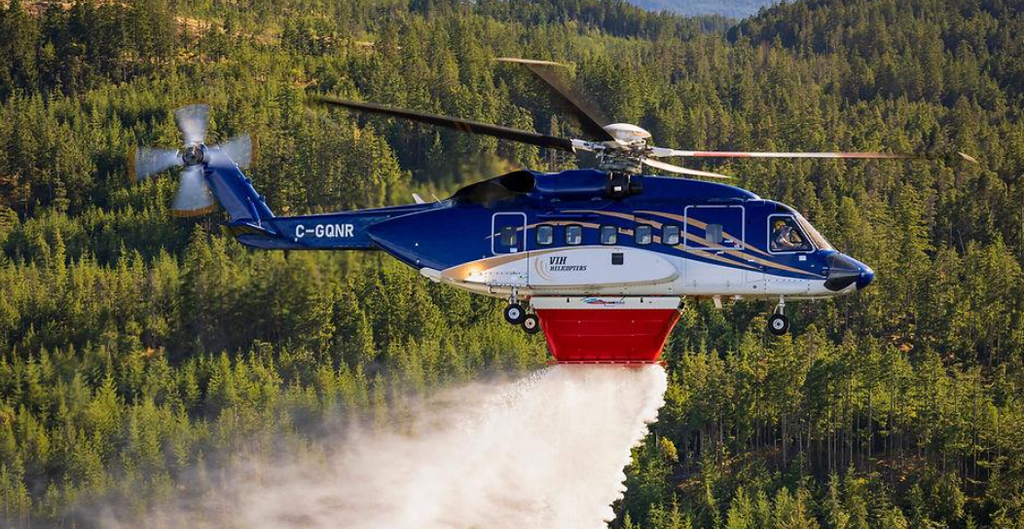
The S-92A+ is an upgraded version of Sikorsky’s established S-92 helicopter platform. It retains the basic aircraft architecture while incorporating changes to its propulsion and transmission systems.
According to Sikorsky’s technical information, the upgraded aircraft features two General Electric CT7-8A6 turboshaft engines. These engines provide additional power, particularly in demanding high-temperature and high-altitude operating conditions.
The aircraft also incorporates a Phase IV main gearbox with an auxiliary lubrication system. This system is designed to improve safety by allowing continued flight following a loss of primary gearbox oil pressure, reducing the risk associated with an immediate forced landing.
Lockheed Martin identifies increased payload or fuel capacity as another benefit of the upgraded configuration.
Its March 2026 production announcement provides additional technical context, stating that the improved engine and airframe configuration raises maximum gross weight to 27,700 pounds, providing approximately 1,200 pounds of additional payload or fuel compared with the earlier configuration. These are manufacturer-published figures, not independently verified performance results for the South Korean aircraft.
For presidential transport, these improvements have practical implications. Additional power can support operations in challenging environmental conditions, while greater payload flexibility can accommodate mission equipment, communications systems, security personnel and other requirements.
However, the S-92A+ designation alone does not establish the exact defensive equipment or communications configuration that South Korea will receive.
South Korean industry to handle mission equipment work
The procurement also includes a domestic industrial component.
KAEMS, a subsidiary of Korea Aerospace Industries (KAI), will perform in-country mission equipment completion for the four helicopters. Sikorsky’s announcement also identifies special mission equipment, critical spare parts and field service representation as elements of the support package.
This arrangement gives South Korean industry a role beyond operating and maintaining imported aircraft.
Local mission equipment work can help establish domestic expertise in aircraft integration, testing and sustainment. It may also reduce dependence on overseas support for selected maintenance and equipment-related activities.
South Korea already operates a substantial aerospace industrial base through KAI and other domestic companies. However, the extent of technology transfer, local manufacturing participation and long-term maintenance responsibilities under this particular program has not been fully disclosed.
The distinction matters because in-country equipment completion does not necessarily mean that the aircraft themselves will be manufactured domestically.
An established platform with a U.S. presidential connection
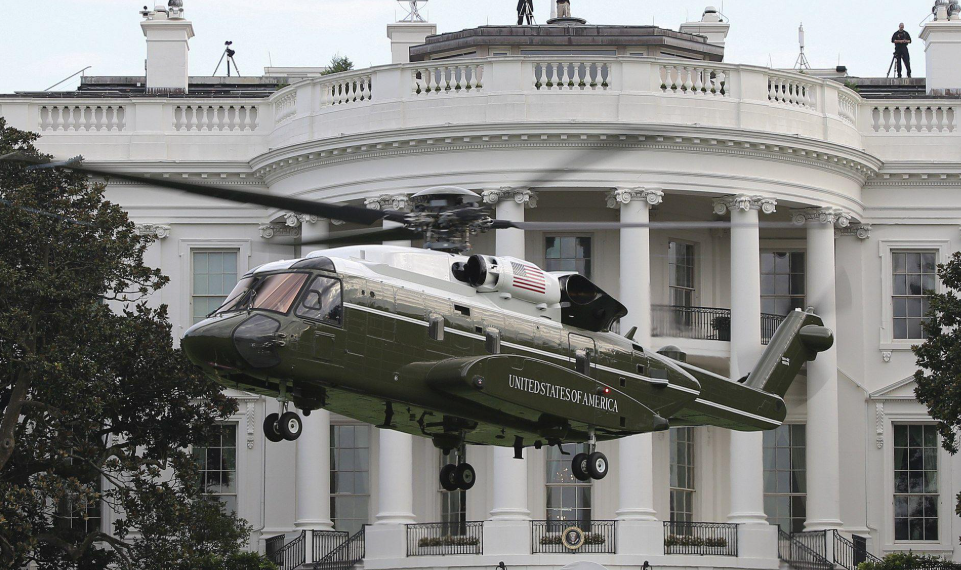
The S-92 family also has a direct connection to the U.S. presidential helicopter fleet.
The U.S. Marine Corps operates the VH-92A Patriot, a presidential transport helicopter developed from the commercial S-92A platform. It performs transportation missions for the U.S. president, vice president and other designated officials.
According to the U.S. Naval Air Systems Command (NAVAIR), the VH-92A uses an FAA-certified S-92 airframe with an enhanced mission communications system and executive interior. The Marine Corps declared initial operational capability for the aircraft on December 28, 2021. Its program of record includes 23 aircraft, comprising 21 operational helicopters and two test aircraft.
The U.S. and South Korean aircraft should not be treated as identical configurations. The VH-92A incorporates mission-specific systems developed for American presidential transport, while South Korea will define its own requirements for the S-92A+ fleet.
Nevertheless, the shared platform provides an established technical foundation and demonstrates the S-92 family’s suitability for specialized government transport roles.
Why the selection matters for South Korea
South Korea’s presidential helicopter requirement extends beyond executive transportation.
The aircraft must support secure movement of national leadership while providing reliable communications and the ability to operate under demanding conditions. The country’s security environment, particularly its proximity to North Korea, makes survivability and continuity of command important considerations.
DAPA’s original procurement plan explicitly identified improved survivability and command-and-control capabilities as objectives of the replacement program.
The S-92A+ selection therefore needs to be understood as a mission-specific procurement rather than simply an upgrade to presidential travel arrangements.
The inclusion of special mission equipment and sustainment support is particularly relevant. An executive transport helicopter requires more than a capable airframe. Communications, navigation, security-related equipment, maintenance arrangements and trained personnel all contribute to its operational usefulness.
There are still important unanswered questions. Lockheed Martin has not publicly detailed the complete South Korean mission-system configuration, the precise delivery sequence or the final contract value.
Sikorsky’s selection secures the platform choice, but the operational effectiveness of the new fleet will depend on the equipment integration and support arrangements completed over the coming years.
For South Korea, retaining the S-92 family also offers continuity in pilot familiarity and maintenance experience while introducing an upgraded aircraft for the next phase of presidential air transport.