Saab Canada Fighter Partnership Targets Future Airpower Strategy
Sweden’s Saab is actively pursuing a Saab Canada fighter partnership aimed at supporting Ottawa’s long-term next-generation fighter development, signaling a strategic push to remain relevant in Canada’s evolving airpower landscape.
Saab is positioning itself as a partner not only for aircraft platforms but also for broader defense industrial collaboration, including technology transfer and domestic production capabilities. The effort comes even as Canada proceeds with its acquisition of the F-35, underscoring Saab’s focus on future opportunities rather than past procurement outcomes.
- Saab is seeking a long-term partnership with Canada on next-generation fighter development and industrial cooperation.
- The move comes despite Canada’s selection of the F-35, signaling Saab’s continued interest in future programs.
- Saab is offering technology collaboration, domestic industry participation, and sovereign capability development.
- Canada is expected to evaluate long-term airpower needs beyond current fifth-generation platforms.
- The proposal reflects growing competition among Western defense firms for future fighter ecosystems.
This approach reflects a broader shift in the global fighter market, where competition increasingly centers on ecosystem partnerships rather than standalone aircraft sales.
Saab’s Strategy: Beyond Aircraft Sales
Saab’s proposal emphasizes industrial cooperation, sovereignty, and long-term capability development. Rather than offering a traditional off-the-shelf fighter solution, the company is promoting a collaborative framework that could allow Canada to shape future systems alongside international partners.
This aligns with Saab’s established export strategy seen in previous campaigns, where it has highlighted technology sharing and local industry participation as key differentiators. The company’s pitch to Canada includes:
- Joint development of next-generation fighter technologies
- Integration of Canadian defense firms into global supply chains
- Support for sovereign maintenance and upgrade capabilities
From an operational standpoint, this model appeals to countries seeking greater control over their defense assets, particularly in an era where supply chain resilience and strategic autonomy are gaining importance.
Canada’s Long-Term Fighter Considerations
While Canada has committed to acquiring the F-35, defense planners continue to assess future requirements beyond fifth-generation platforms. Air forces across NATO and allied nations are already exploring sixth-generation fighter concepts, often involving multinational collaboration.
In this context, Saab’s outreach can be seen as a forward-looking move. By engaging early, the company aims to position itself within any future Canadian-led or multinational fighter initiative.
Canada’s geographic and strategic environment also plays a role. With vast Arctic territories and increasing attention to northern defense, future fighter capabilities may require:
- Extended range and endurance
- Advanced sensor integration
- Interoperability with allied systems
- Adaptability to extreme operating conditions
Saab’s experience in designing aircraft for dispersed operations and austere environments could factor into its pitch, particularly if Canada prioritizes flexibility alongside advanced stealth and sensor capabilities.
Competitive Landscape: A Crowded Field
The Saab Canada fighter partnership initiative enters a highly competitive environment dominated by major defense primes. The F-35 program, led by the United States, already integrates multiple partner nations into a shared development and sustainment framework.
At the same time, emerging sixth-generation programs such as the Global Combat Air Programme (GCAP) and the Future Combat Air System (FCAS) are reshaping the market. These initiatives emphasize networked warfare, artificial intelligence integration, and manned-unmanned teaming.
Saab’s challenge lies in carving out a role within this evolving ecosystem. Unlike larger consortiums backed by multiple governments, Saab may need to leverage niche strengths such as cost efficiency, modular design, and flexible partnership models.
Industrial and Strategic Implications
For Canada, engaging with Saab could offer several potential advantages, even outside a formal aircraft procurement:
- Diversification of defense partnerships
- Increased domestic industrial participation
- Access to alternative technology pathways
However, such collaboration would need to align with Canada’s existing commitments, particularly within the F-35 program and NATO interoperability requirements.
From a geopolitical perspective, Saab’s outreach highlights the intensifying competition among Western defense firms to secure long-term partnerships with allied nations. As military modernization accelerates, early collaboration on future systems is becoming a key battleground.
Analysis: Positioning For The Next Cycle
Saab’s move is less about immediate procurement and more about shaping the next phase of fighter development. By targeting Canada now, the company is attempting to establish relationships that could influence decisions a decade or more into the future.
This reflects a broader industry trend where defense companies seek to embed themselves within national industrial ecosystems early, ensuring relevance as new programs emerge.
For Canada, the decision will ultimately hinge on balancing operational requirements, alliance commitments, and domestic industrial priorities. While the F-35 addresses current needs, future airpower strategies remain open to influence.
- BreakPoint Labs awarded $50 million firm-fixed-price contract for cybersecurity services.
- Contract supports the DoD High Performance Computing Modernization Program software factory initiative.
- Work includes cybersecurity expertise for advanced computing and software technologies.
- 158 bids were submitted, highlighting strong industry competition.
- Contract runs through April 5, 2031, with task orders determining funding and locations.
BreakPoint Labs $50M Cybersecurity Contract Strengthens DoD HPC Modernization
BreakPoint Labs cybersecurity contract marks a significant step in reinforcing the Department of Defense High Performance Computing Modernization Program, as the Pentagon continues to prioritize secure software development and advanced computing resilience.
The Herndon, Virginia-based firm has been awarded a $50 million firm-fixed-price contract to provide cybersecurity subject matter expertise for advanced computing and software technologies. The effort falls under a broader initiative known as the Software Factory for Modernization, Accelerated Innovation, Resilience, and Technological Advantage.
The contract was awarded by the U.S. Army Corps of Engineers Engineering Research and Development Center in Vicksburg, Mississippi. Officials confirmed that 158 bids were received, reflecting strong competition across the defense cyber sector.
Work will be assigned through individual task orders, with locations and funding determined incrementally. The contract is scheduled for completion by April 5, 2031.
Cybersecurity At The Core Of DoD Computing Strategy
The BreakPoint Labs cybersecurity contract underscores a growing shift within the Department of Defense toward securing its high performance computing infrastructure. HPC systems play a critical role in modeling, simulation, artificial intelligence, and weapons system design.
As adversaries invest heavily in cyber capabilities, the DoD has increasingly treated cybersecurity not as a support function, but as a core operational requirement. The integration of cybersecurity expertise into software factories reflects a move toward embedding security directly into development pipelines.
This approach aligns with broader Pentagon initiatives such as zero trust architecture and DevSecOps adoption. By placing cybersecurity specialists alongside developers and engineers, the DoD aims to reduce vulnerabilities early in the development cycle rather than addressing them after deployment.
Software Factory Model Gains Momentum
The Software Factory for Modernization initiative represents a structural shift in how the U.S. military develops and deploys software. Instead of relying on traditional acquisition timelines, software factories emphasize rapid iteration, continuous integration, and real-time updates.
The BreakPoint Labs cybersecurity contract directly supports this model by ensuring that accelerated development does not come at the cost of security. This is especially relevant as software increasingly underpins critical defense systems, from command and control networks to autonomous platforms.
The inclusion of cybersecurity subject matter expertise also suggests a recognition that modern threats target not just hardware, but the software ecosystems that enable military operations.
Competitive Field Reflects Growing Cyber Demand
The fact that 158 bids were submitted for the BreakPoint Labs cybersecurity contract highlights the expanding demand for cyber expertise within the defense sector. Companies are competing aggressively to support modernization efforts tied to artificial intelligence, cloud computing, and advanced analytics.
This level of competition also reflects the Pentagon’s emphasis on attracting non-traditional vendors and commercial innovation into defense programs. Cybersecurity, in particular, has become a key entry point for smaller firms with specialized expertise.
At the same time, the use of firm-fixed-price contracts suggests a focus on cost predictability and performance accountability, even in complex and evolving technical domains.
Strategic Implications For U.S. Military Readiness
From a strategic perspective, the BreakPoint Labs cybersecurity contract contributes to a broader effort to maintain technological advantage in an increasingly contested digital environment.
High performance computing systems are central to everything from hypersonic weapons development to battlefield simulations. Any compromise in these systems could have far-reaching consequences for operational readiness and decision-making.
By investing in cybersecurity at the infrastructure and software levels, the DoD is attempting to mitigate risks posed by sophisticated cyber adversaries, including state actors capable of targeting supply chains and development environments.
This contract also signals that cybersecurity will remain a long-term priority, with sustained funding and multi-year commitments extending through the end of the decade.
Boeing Secures $51.9M AH-6 Support Contract For Saudi Arabia
AH-6 support contract Saudi Arabia activity expanded this week as Boeing secured a $51.9 million U.S. Army contract modification to provide postproduction sustainment services for the Saudi Arabia Ministry of National Guard’s light attack helicopter fleet.
The award, announced by the U.S. Department of Defense, modifies an existing agreement and brings the total cumulative value of the contract to $76.8 million. The work will be carried out in Mesa, Arizona, with completion scheduled for May 31, 2028.
- Boeing awarded $51.9 million contract modification for AH-6 postproduction support services.
- Contract supports Saudi Arabia Ministry of National Guard under Foreign Military Sales program.
- Total contract value rises to $76.8 million following latest modification.
- Work will be performed in Mesa, Arizona, through May 31, 2028.
- U.S. Army Contracting Command at Redstone Arsenal is the contracting authority.
Funded through Fiscal 2025 Foreign Military Sales allocations, the contract reflects continued U.S. support for allied rotary-wing capabilities in the Middle East.
Sustaining Saudi Arabia’s Light Attack Capability
The AH-6 support contract Saudi Arabia centers on postproduction services, a critical phase that ensures operational readiness beyond initial procurement. These services typically include maintenance planning, logistics support, spare parts management, and system upgrades.
The AH-6, a light attack and reconnaissance helicopter derived from the proven MH-6 Little Bird platform, is designed for rapid deployment, close air support, and urban operations. Its small footprint and agility make it particularly effective in counterinsurgency and internal security missions, roles that align closely with the operational needs of the Saudi National Guard.
By extending sustainment support through 2028, the contract ensures that Saudi-operated AH-6 platforms remain mission-ready amid evolving regional security dynamics.
Strategic Role Of Foreign Military Sales
This AH-6 support contract Saudi Arabia deal falls under the U.S. Foreign Military Sales framework, a key instrument of American defense policy that enables partner nations to acquire and sustain U.S.-made military systems.
The FMS model provides several advantages. It standardizes training and logistics, ensures interoperability with U.S. forces, and strengthens long-term defense relationships. In this case, the continued investment in AH-6 sustainment reinforces operational alignment between U.S. and Saudi forces, particularly in areas such as counterterrorism and rapid response operations.

Image : Boeing According to the U.S. Army Contracting Command at Redstone Arsenal, Alabama, the funds were fully obligated at the time of award, indicating immediate execution without incremental funding delays.
Mesa, Arizona As A Sustainment Hub
Boeing’s Mesa, Arizona facility plays a central role in rotary-wing production and sustainment. The site has long served as a hub for Apache and light helicopter programs, offering integrated engineering, manufacturing, and lifecycle support capabilities.
For the AH-6 support contract Saudi Arabia, concentrating work in Mesa ensures access to specialized expertise and established supply chains. This approach reduces logistical friction and helps maintain consistent service quality over the contract’s multi-year duration.
The choice of a single primary location also reflects a broader trend in defense sustainment, where centralized hubs improve efficiency while maintaining global reach through deployed support teams.
Operational And Regional Implications
From an operational perspective, the AH-6 support contract Saudi Arabia enhances the Saudi National Guard’s ability to maintain a high readiness posture. Light attack helicopters like the AH-6 are often used in time-sensitive missions where reliability and rapid turnaround are critical.
Regionally, the contract underscores continued U.S. engagement in Middle East defense partnerships. While the agreement itself is focused on sustainment rather than new capability acquisition, its impact is significant. Sustainment contracts extend the effective lifespan of existing platforms, often delivering greater operational value than new purchases in the short term.
Moreover, the timing aligns with ongoing efforts by Gulf states to modernize and maintain agile, cost-effective air capabilities in response to asymmetric threats.
Analysis: Why Sustainment Contracts Matter More Than Ever
A key takeaway from the AH-6 support contract Saudi Arabia is the growing importance of lifecycle support in modern defense planning. Procurement often attracts attention, but sustainment determines real-world effectiveness.
In recent years, defense budgets globally have shifted toward maintaining readiness rather than expanding fleets. This reflects lessons learned from high-tempo operations, where availability rates and maintenance cycles directly influence mission success.
For platforms like the AH-6, which operate in demanding environments, sustained investment in support infrastructure ensures reliability and reduces long-term costs. It also allows incremental upgrades, keeping older systems relevant without the need for full replacement.
From Boeing’s perspective, contracts like this provide stable revenue streams while reinforcing long-term customer relationships. For the U.S. government, they strengthen allied capabilities without introducing new systems that require extensive training or integration.
Contracting Authority And Timeline
The contract modification was issued by the U.S. Army Contracting Command at Redstone Arsenal, a central hub for aviation and missile procurement.
Originally awarded under contract W58RGZ-24-C-0002, the agreement now reflects an expanded scope aligned with Saudi operational requirements. The April 6, 2025 award date marks the latest step in what appears to be a phased sustainment strategy.
With completion set for mid-2028, the contract provides a multi-year window for continuous support, aligning with typical maintenance cycles for light rotary-wing platforms.
NOVA Group Secures F-22 Fuel Infrastructure Contract
The F-22 fuel infrastructure contract awarded to NOVA Group Inc. marks a significant investment in sustaining U.S. fifth-generation air dominance in the Arctic region. The $57.9 million firm-fixed-price award will fund the construction of petroleum, oil, and lubricant infrastructure at Joint Base Elmendorf-Richardson.
- NOVA Group awarded $57.9 million contract for F-22 fuel infrastructure in Alaska.
- Project supports operations at Joint Base Elmendorf-Richardson in Anchorage.
- Total contract value reaches $62 million with completion set for July 2029.
- U.S. Army Corps of Engineers Alaska District is the contracting authority.
- Funding sourced from Fiscal 2025 military construction defense-wide budget.
The project directly supports operations of the F-22 Raptor, one of the U.S. Air Force’s most advanced air superiority platforms. Work will be carried out in Anchorage, Alaska, with completion scheduled for July 25, 2029.
The contract was issued by the U.S. Army Corps of Engineers Alaska District following a competitive process that drew four bids via online solicitation.
Strategic Importance Of Arctic Airpower Infrastructure
This F-22 fuel infrastructure contract reflects a broader Pentagon effort to reinforce logistics and sustainment capabilities in Alaska, a region increasingly central to U.S. defense posture.
Joint Base Elmendorf-Richardson serves as a critical hub for air operations across the Indo-Pacific and Arctic theaters. Its proximity to potential flashpoints in the Pacific and access to polar routes makes it a strategic asset for rapid deployment and air defense missions.
Fuel infrastructure, while less visible than aircraft procurement, plays a decisive role in operational readiness. Without reliable storage, distribution, and refueling systems, even advanced platforms like the F-22 cannot sustain high sortie rates during extended operations.
By expanding petroleum, oil, and lubricant capacity, the project ensures that F-22 units can operate at full tempo in harsh Arctic conditions where logistics are inherently challenging.
Contract Scope And Funding Details
The base contract value stands at $57,956,500, with a total cumulative value of $62,005,000 when accounting for additional elements. Funding was obligated at the time of award using Fiscal 2025 military construction, defense-wide appropriations.
The firm-fixed-price structure places cost control responsibility on the contractor, a common approach in U.S. military construction projects aimed at minimizing budget overruns.

Image : U.S. Air Force From an acquisition perspective, the relatively limited number of bids suggests a specialized requirement. Fuel infrastructure projects in extreme climates demand technical expertise in environmental protection, cold-weather engineering, and compliance with stringent military standards.
Operational Impact On F-22 Readiness
The F-22 fuel infrastructure contract will directly enhance sortie generation capability at Elmendorf. Increased fuel storage and improved distribution systems reduce turnaround times between missions, a critical factor in both peacetime deterrence and wartime operations.
For the F-22 fleet, which relies on high-performance engines and precision logistics, consistent fuel availability is essential. The aircraft’s role in air superiority, including counter-air missions and integrated air defense suppression, depends on rapid response capability.
This infrastructure upgrade also supports joint operations. Elmendorf hosts multiple units across the Air Force and Army, and improved fuel systems can benefit a broader range of aircraft and support assets.
Broader Defense Context
The timing of the contract aligns with growing U.S. focus on the Arctic as a contested domain. As climate change opens new maritime routes and increases accessibility, competition among major powers is expected to intensify.
Defense planners have increasingly emphasized resilient basing and logistics in remote regions. Investments like this F-22 fuel infrastructure contract indicate a shift toward strengthening foundational capabilities rather than solely prioritizing new platforms.
According to U.S. Department of Defense strategy documents and USACE project data, infrastructure modernization is a key pillar in maintaining long-term readiness, particularly in geographically challenging areas like Alaska.
Industry Perspective
For NOVA Group, the award reinforces its position in the military construction sector, particularly in complex infrastructure projects. Delivering on this contract will require coordination with federal agencies, adherence to strict environmental standards, and execution under demanding climatic conditions.
The project also highlights the role of private contractors in enabling U.S. military capabilities beyond traditional defense manufacturing. Infrastructure, logistics, and sustainment remain essential components of overall combat effectiveness.
Raytheon SDB II Contract Expands Precision Strike Arsenal
The Raytheon SDB II contract marks a significant expansion in U.S. and allied precision strike capabilities, with a not-to-exceed value of $708.9 million awarded by the U.S. Air Force.
The contract covers production Lot 12 of the Small Diameter Bomb Increment II, along with associated test equipment, containers, and spares. Work will be carried out in Tucson, Arizona, and is scheduled for completion by March 6, 2030, according to the U.S. Department of Defense.
Managed by the Air Force Life Cycle Management Center at Eglin Air Force Base, Florida, the award reflects continued demand for advanced precision-guided munitions amid evolving operational requirements.
- Raytheon awarded a $708.9 million contract for SDB II production Lot 12 and test equipment.
- Work will be performed in Tucson, Arizona, with completion expected by March 2030.
- Contract includes munitions, containers, spares, and test equipment.
- Program supports Foreign Military Sales to eight allied nations across Europe and Asia.
- The award was issued as a sole-source contract by the U.S. Air Force.
Multi-Nation Demand Drives Production Scale
A key feature of the Raytheon SDB II contract is its strong international component. The program includes Foreign Military Sales to Belgium, Canada, Finland, Germany, Italy, Norway, the Republic of Korea, and Switzerland.
This broad participation underscores the growing reliance among allied nations on precision, network-enabled weapons that can operate effectively in contested environments.
From an operational standpoint, the SDB II, also known as the GBU-53/B StormBreaker, offers multi-mode guidance, enabling engagement of moving targets in adverse weather conditions. Its integration across multiple platforms enhances interoperability among NATO and partner air forces.
The inclusion of multiple allied buyers also helps sustain production economies of scale, lowering unit costs while ensuring long-term supply chain stability.
Funding Structure Reflects Multi-Year Procurement Strategy
The contract’s funding breakdown highlights a layered procurement approach across fiscal years. Initial obligations include:
- $128.2 million in FY2026 missile procurement funds
- $31.5 million in FY2026 weapons procurement
- $5.29 million in FY2025 procurement funding
- $1.87 million in operations and maintenance funds
- $171.5 million in Foreign Military Sales contributions
This diversified funding structure reflects both U.S. military requirements and partner nation commitments, ensuring steady production flow over the contract period.
Strategic Context: Precision Weapons in High-Density Conflict
The Raytheon SDB II contract comes at a time when precision-guided munitions are central to modern air warfare doctrine. Conflicts in recent years have highlighted the importance of weapons capable of striking mobile targets with minimal collateral damage.
Compared to legacy systems, the SDB II provides enhanced flexibility through its tri-mode seeker, combining radar, infrared imaging, and semi-active laser guidance. This allows operators to engage targets in GPS-denied or electronically contested environments.
From a strategic perspective, expanding SDB II production aligns with broader U.S. efforts to maintain a technological edge against near-peer adversaries. The weapon’s ability to support stand-off engagement reduces risk to manned aircraft while increasing mission effectiveness.
For allied nations, participation in the program ensures access to a proven, interoperable capability that can be integrated into existing air platforms without significant modification.
Sole-Source Award Raises Industrial Base Considerations
The contract was issued as a sole-source acquisition, reflecting Raytheon’s position as the primary manufacturer of the SDB II system.
While sole-source awards can streamline procurement timelines and ensure consistency in production, they also highlight ongoing challenges within the defense industrial base. Maintaining competition and resilience in munitions manufacturing remains a priority for the Pentagon, particularly as global demand for precision weapons continues to rise.
However, given the technical complexity of the SDB II and its established production line, a sole-source approach is consistent with past procurement decisions for advanced munitions programs.
Operational Impact Through 2030
With production extending through 2030, the Raytheon SDB II contract ensures sustained availability of a critical precision strike capability for both U.S. and allied forces.
The program supports not only inventory replenishment but also long-term modernization goals, particularly as air forces transition toward network-centric and multi-domain operations.
As demand for precision engagement grows across multiple theaters, the SDB II is positioned to remain a key component of Western airpower strategies.
- Lockheed Martin awarded a $1.36 billion contract modification for the Conventional Prompt Strike program.
- The contract supports missile production, systems integration, testing, and long-lead materials.
- Work spans multiple U.S. locations including Colorado, California, Utah, and Alabama.
- Program funding includes Army and Navy procurement, R&D, and operations accounts.
- The effort is scheduled for completion by September 2032.
Lockheed Martin CPS Contract Expands U.S. Hypersonic Strike Capability
The Lockheed Martin CPS contract marks a major step forward in scaling U.S. hypersonic weapons production, with the Department of Defense awarding a $1.36 billion modification to support the Conventional Prompt Strike program.
The award converts several previously unpriced contract actions into a fully funded effort, while also adding new scope tied to missile and launch platform production. The work will be executed under contract N00030-22-C-1025 and managed by Strategic Systems Programs in Washington, D.C.
This latest move underscores growing urgency within the Pentagon to field operational hypersonic strike capabilities amid intensifying competition with near-peer adversaries.
Expanding the Conventional Prompt Strike Program
The Conventional Prompt Strike program is designed to deliver long-range, non-nuclear hypersonic weapons capable of striking targets at high speed with precision. These systems are intended to provide rapid response options against time-sensitive or heavily defended targets.
Under the new contract, Lockheed Martin Space will carry out:
- Program management and engineering development
- Systems integration across missile and launch platforms
- Procurement of long-lead materials
- Testing and validation activities
- Development of specialized tooling and production equipment
The scope reflects a transition from development toward scaled production, a critical phase for any advanced weapons program.
The CPS system is expected to be deployed across multiple platforms, including naval surface vessels, reinforcing its role as a joint force capability.
Multi-State Industrial Base Engagement
The Lockheed Martin CPS contract will drive activity across a broad U.S. defense industrial network.
Work distribution includes:
- Denver, Colorado, 55 percent
- Sunnyvale, California, 16 percent
- Magna, Utah, 8 percent
- Courtland, Alabama, 7 percent
- Simsbury, Connecticut, 4 percent
- Pittsfield, Massachusetts, 3 percent
- East Aurora, New York, 2 percent
- Owego, New York, 2 percent
- Additional locations, 3 percent combined
This spread highlights the complexity of hypersonic weapons production, which relies on specialized suppliers, advanced materials, and precision manufacturing capabilities.
From an industrial perspective, the program reinforces long-term demand across the U.S. missile production ecosystem, particularly in propulsion, guidance systems, and thermal protection technologies.
Funding Structure Signals Joint Priority
Funding for the Lockheed Martin CPS contract reflects a coordinated effort between the U.S. Army and Navy.
Allocated funds include:
- $72.1 million from FY2025 Army missile procurement
- $120.9 million from FY2026 Army missile procurement
- $208.6 million from Navy R&D accounts
- $89.1 million from Navy procurement funding
- $2 million from Navy operations and maintenance
The mix of procurement and R&D funding suggests the program is balancing continued development with early production readiness.
Notably, a portion of the funding is set to expire within the current fiscal year, indicating near-term execution pressure on specific program elements.
Strategic Context: Hypersonic Competition Intensifies
The expansion of the Conventional Prompt Strike program comes amid a broader global push to operationalize hypersonic weapons.
The United States is working to close capability gaps with competitors such as China and Russia, both of which have already fielded or tested hypersonic glide vehicles and boost-glide systems.
Hypersonic weapons offer several advantages:
- Speeds exceeding Mach 5
- Maneuverability that complicates interception
- Reduced response time for adversaries
These characteristics make them particularly valuable for penetrating advanced air defense systems and striking high-value targets.
However, the technical challenges are significant. Thermal protection, guidance accuracy at high speeds, and integration with launch platforms remain complex engineering hurdles.
The Lockheed Martin CPS contract signals that the Pentagon is moving beyond experimentation toward sustained production, a shift that could reshape future deterrence strategies.
Sole Source Award Reflects Program Sensitivity
The contract was awarded as a sole-source acquisition under U.S. Code provisions that allow for limited competition when only one responsible source is available.
This approach is common in highly specialized defense programs where:
- Proprietary technologies are involved
- Integration risks must be minimized
- Program timelines are critical
Lockheed Martin’s role as a prime contractor in hypersonic systems development positions it as a central player in the CPS effort.
Outlook Through 2032
Work under the contract is expected to continue through September 2032, indicating a long-term commitment to the Conventional Prompt Strike program.
Looking ahead, key milestones will likely include:
- Initial operational capability on naval platforms
- Increased production rates
- Integration with broader joint force architectures
As the U.S. military refines its approach to hypersonic warfare, programs like CPS are expected to play a central role in future strike doctrines.
The scale and duration of this contract suggest that hypersonic weapons are moving from experimental capability to core component of U.S. military power.
- FTG is supplying advanced printed circuit boards for the global F-35 fighter program.
- The company supports avionics, radar, and mission-critical systems integration.
- Its manufacturing spans North America and Asia, enabling global supply resilience.
- The F-35 program relies on a multinational supplier network for production and sustainment.
- Demand for high-reliability electronics continues to grow alongside F-35 fleet expansion.
FTG Strengthens F-35 Production Supply Chain
The F-35 production supply chain continues to expand as Canada-based FTG (Firan Technology Group) delivers advanced printed circuit boards for the global fleet of F-35 Lightning II fighters.
FTG plays a key role in manufacturing high-reliability electronics used across avionics and mission systems. These components are critical to maintaining operational performance in fifth-generation aircraft, where data processing and sensor fusion define combat capability.
The F-35 program, led by Lockheed Martin, depends on a wide network of international suppliers to sustain production and lifecycle support. FTG’s contribution highlights the importance of specialized electronics firms within this ecosystem.
High-Reliability Electronics for Mission Systems
FTG’s circuit boards are designed for demanding aerospace environments, supporting systems such as radar, communications, and flight controls. In modern fighters, these subsystems must operate under extreme conditions, including high temperatures, vibration, and electromagnetic interference.
The company’s expertise lies in producing complex, multilayer printed circuit boards that meet stringent military standards. These boards serve as the backbone for processing and transmitting data across the aircraft’s integrated systems.
As the F-35 continues to evolve, including software upgrades and block improvements, the role of electronics suppliers becomes even more critical. Each iteration increases reliance on processing power and data management, placing additional demands on hardware reliability.
Global Manufacturing Footprint Enhances Resilience
A notable aspect of FTG’s involvement in the F-35 production supply chain is its global manufacturing footprint. With facilities in North America and Asia, the company is positioned to support distributed production requirements.
This geographic diversification aligns with broader efforts across the defense sector to strengthen supply chain resilience. Recent disruptions, including pandemic-related delays and geopolitical tensions, have underscored vulnerabilities in highly specialized manufacturing sectors.

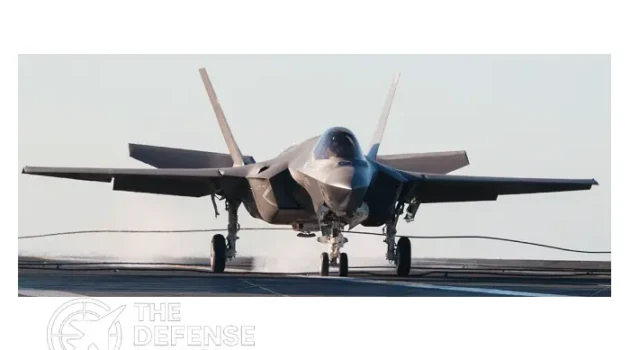
Image: U.S. Air Force. By maintaining multiple production sites, FTG can mitigate risks associated with single-point failures and support continuous delivery to prime contractors and subsystem integrators.
Strategic Importance of Supplier Networks
The F-35 program is one of the largest and most complex defense initiatives in history, involving dozens of partner nations and hundreds of suppliers. While prime contractors often receive the most attention, second- and third-tier suppliers like FTG are essential to sustaining production rates.
The F-35 production supply chain depends heavily on such firms to deliver components that meet exacting specifications. Any disruption at this level can cascade across the program, affecting delivery timelines and operational readiness.
This dynamic has prompted increased focus by governments and defense companies on supply chain transparency and risk management. Ensuring consistent access to critical components, especially electronics, has become a strategic priority.
Growing Demand Driven by Fleet Expansion
Demand for F-35 aircraft continues to rise, with new orders and ongoing deliveries to U.S. and allied forces. As the fleet grows, so does the need for replacement parts, upgrades, and sustainment support.
This trend directly benefits suppliers like FTG, which provide foundational components for both production and maintenance. The long service life of the F-35, expected to extend for decades, further amplifies the importance of reliable electronics manufacturing.
In addition, evolving threats are driving continuous upgrades to the aircraft’s capabilities. These upgrades often require new or enhanced hardware, reinforcing the need for adaptable and scalable production capabilities within the F-35 production supply chain.
Analysis: Electronics as a Critical Enabler of Air Dominance
The increasing reliance on advanced electronics reflects a broader shift in air combat toward information-centric warfare. In platforms like the F-35, superiority is not determined solely by speed or maneuverability, but by the ability to collect, process, and share data in real time.
This makes companies like FTG strategically important, even if they operate outside the spotlight. Their products enable core capabilities such as sensor fusion, electronic warfare, and networked operations.
From a U.S. defense perspective, maintaining a robust and diversified supplier base is essential to sustaining technological advantage. The inclusion of allied suppliers like FTG also strengthens interoperability and industrial cooperation across partner nations.
However, this interconnected model also introduces complexity. Managing quality, security, and delivery timelines across a global network requires significant coordination. As the F-35 program scales, these challenges will remain central to its long-term success.
- RTX awarded $3.81 billion contract modification for F135 propulsion systems supporting F-35 Lot 18 and Lot 19 production.
- Contract covers U.S. Air Force, Navy, Marine Corps, international partners, and Foreign Military Sales customers.
- Work spans multiple U.S. locations with completion expected by March 2028.
- Funding includes FY2024 and FY2025 aircraft procurement accounts plus partner and FMS contributions.
- Contract awarded by Naval Air Systems Command on a non-competitive basis.
RTX Secures Major F135 Engine Contract For F-35 Production
RTX has secured a $3.8 billion F135 engine contract to support ongoing F-35 production, reinforcing its central role in powering the Joint Strike Fighter fleet. The award, issued by Naval Air Systems Command, finalizes production terms for Lot 18 and advances procurement for Lot 19 aircraft.
The contract modification converts a previously undefinitized agreement into a finalized structure while adding new production scope. It reflects continued demand for the F-35 program across U.S. services and international partners.
Scope And Structure Of The Contract
The $3,813,591,875 modification covers the production of F135 propulsion systems, the sole engine used across all variants of the F-35 fighter. This includes aircraft operated by the U.S. Air Force, Navy, and Marine Corps, as well as allied nations participating in the program and Foreign Military Sales customers.
The contract combines cost-plus-incentive-fee and fixed-price incentive elements. This hybrid structure is commonly used in large defense programs to balance cost control with performance incentives, particularly when production complexity remains high.
Funding allocations reflect the multinational nature of the F-35 program. Contributions come from U.S. fiscal year 2024 and 2025 aircraft procurement budgets, alongside partner nation funding and a significant share from Foreign Military Sales.
Notably, more than $1.46 billion of the total comes from FMS customers, highlighting continued export demand for the F-35 platform.
Industrial Base And Production Footprint
Work under the F135 engine contract will be distributed across a broad U.S. industrial base. Key locations include Connecticut, Indiana, Washington, Maine, California, and several other states, with additional work conducted both within and outside the continental United States.
East Hartford, Connecticut, accounts for the largest share at 17 percent, reflecting RTX’s primary engine manufacturing hub. Other notable contributions come from Indianapolis, Middletown, and Kent, Washington.
This distributed production model supports supply chain resilience and aligns with Pentagon priorities to maintain a robust domestic defense industrial base.
From an operational standpoint, the wide geographic spread also reduces risk tied to localized disruptions, a factor that has gained importance in recent years due to global supply chain pressures.
Program Significance And Strategic Context
The F135 engine contract is a critical component of the broader F-35 program, which remains the cornerstone of U.S. and allied tactical airpower. As production transitions from early low-rate initial production to more sustained output, engine manufacturing has become a key pacing element.
Delays or inefficiencies in propulsion system delivery can directly impact aircraft rollout schedules. By definitizing Lot 18 and advancing Lot 19 procurement, the Pentagon is signaling confidence in production stability moving forward.
The inclusion of international partner funding also underscores the program’s long-term sustainability. Countries across Europe, Asia, and the Middle East continue to invest in the F-35, ensuring steady demand for engines well into the next decade.
At the same time, the reliance on a single engine type for all F-35 variants continues to draw attention. While it simplifies logistics and maintenance, it also creates a single point of dependency within the supply chain. This makes contracts like this one essential for maintaining production continuity.
Funding Breakdown And Timeline
The contract pulls from multiple funding streams, including:
- FY2024 Navy aircraft procurement
- FY2024 Air Force aircraft procurement
- FY2025 Navy and Air Force procurement funds
- Cooperative program partner contributions
- Foreign Military Sales funding
A portion of the obligated funds, approximately $430.8 million, is set to expire at the end of the current fiscal year. This adds urgency to execution timelines and reinforces the need for efficient contract performance.
The program is scheduled for completion by March 2028, aligning with projected F-35 production timelines for Lot 18 and Lot 19 aircraft.
Acquisition Strategy And Industry Implications
The contract was awarded on a non-competitive basis, consistent with RTX’s position as the sole manufacturer of the F135 engine. While this limits competition, it reflects the technical complexity and certification requirements associated with fifth-generation fighter propulsion systems.
From a policy perspective, the award highlights ongoing challenges in balancing competition with program continuity in high-end defense systems. Developing an alternative engine for the F-35 would require significant investment and time, making near-term competition unlikely.
However, the scale of the contract and the long-term demand profile could renew discussions around future propulsion upgrades or alternative engine programs.
Outlook For The F-35 Program
The latest F135 engine contract reinforces the steady momentum of the F-35 program despite past cost and sustainment concerns. Continued investment from both the United States and international partners suggests strong confidence in the platform’s operational value.
As production ramps up and more aircraft enter service globally, engine reliability, maintenance efficiency, and lifecycle cost will remain key focus areas.
For RTX, the contract secures a significant revenue stream while strengthening its position within the defense propulsion market.
- U.S. Department of War signed a framework agreement with Northrop Grumman for M1147 AMP tank ammunition.
- The M1147 AMP is a multi purpose round designed for the M1A2 Abrams main battle tank.
- The round replaces several legacy ammunition types with a single programmable solution.
- The agreement supports long term production and supply flexibility for U.S. armored forces.
- The program is part of broader U.S. Army modernization efforts focused on lethality and logistics efficiency.
U.S. Advances M1147 AMP Tank Ammunition Program
The M1147 AMP tank ammunition program has taken a significant step forward after the U.S. Department of War signed a framework agreement with Northrop Grumman, according to reporting from Defence Industry Europe.
The agreement establishes the foundation for future production and procurement of the Advanced Multi Purpose round, a key capability designed for the M1A2 Abrams main battle tank. The deal is structured to provide flexibility in ordering quantities over time, aligning with evolving operational requirements.
Northrop Grumman, already a major supplier of medium caliber and large caliber ammunition systems, will support the continued development and production scaling of the M1147 AMP tank ammunition under this framework.
Replacing Legacy Ammunition With A Single Solution
The M1147 AMP tank ammunition is designed to consolidate multiple existing rounds into one programmable munition. Traditionally, Abrams crews rely on different ammunition types for specific targets, including anti personnel, anti structure, and obstacle reduction roles.
The AMP round simplifies this by offering selectable modes that can be programmed via the tank’s fire control system. These modes allow crews to engage a wide range of targets using a single round type.
According to U.S. Army program documentation, the M1147 replaces several legacy rounds such as the M830 HEAT, M830A1 MPAT, and M1028 canister rounds. This consolidation reduces the logistical burden and simplifies ammunition management in combat environments.
From an operational standpoint, this shift reflects a broader trend toward multi role munitions that reduce complexity while maintaining or improving effectiveness.
Operational Impact On Abrams Tank Units
The introduction of M1147 AMP tank ammunition is expected to enhance battlefield flexibility for Abrams crews. Instead of switching between different ammunition types under pressure, tank operators can adjust the fuze setting electronically based on the target.
This reduces reaction time and allows for more adaptive engagement in complex combat scenarios, particularly in urban environments where target types can vary rapidly.
The programmable nature of the round also supports improved precision and controlled effects, which is increasingly important in modern operations where minimizing collateral damage is a priority.
Industrial Base And Supply Chain Considerations
The framework agreement with Northrop Grumman reflects a strategic approach to sustaining the U.S. defense industrial base. By establishing long term contractual mechanisms, the Department of War ensures continuity in production capacity and supplier readiness.
This approach is consistent with recent U.S. defense procurement strategies that emphasize resilience and scalability in munitions manufacturing. Lessons from recent conflicts have highlighted the importance of maintaining sufficient stockpiles and production surge capacity.
Northrop Grumman’s role in the M1147 AMP tank ammunition program also underscores the reliance on established defense contractors for advanced munitions development.
Modernization Context And Strategic Analysis
The M1147 AMP tank ammunition program fits within a larger modernization effort aimed at improving the lethality and efficiency of U.S. armored forces.
A key aspect of this effort is reducing logistical complexity. By replacing multiple ammunition types with a single versatile round, the Army can streamline supply chains, reduce storage requirements, and simplify training.
This shift also aligns with the concept of multi domain operations, where units must operate across diverse environments with limited logistical support. In such scenarios, having fewer but more capable systems can provide a decisive advantage.
However, reliance on a single ammunition type also introduces potential risks. Any production disruption or technical issue could have broader operational implications compared to a diversified inventory. As a result, maintaining redundancy and ensuring robust quality control will remain critical.
Looking Ahead
The framework agreement signals continued momentum for the M1147 AMP tank ammunition program as it moves toward wider fielding across Abrams units.
Future developments are likely to focus on scaling production, refining performance, and integrating the round into evolving fire control and targeting systems.
As armored warfare continues to evolve, the emphasis on adaptable, multi purpose munitions such as the M1147 will remain central to maintaining battlefield effectiveness.
- Raytheon completed a $115 million expansion of its Alabama missile integration facility.
- The facility supports integration and assembly of advanced precision-guided missiles.
- Expansion strengthens U.S. and allied missile supply chains amid rising global demand.
- Investment reflects long-term Pentagon focus on industrial base resilience and surge capacity.
- Facility enhances production scalability for high-demand systems like air defense and strike missiles.
Raytheon Alabama Missile Integration Facility Expansion
The Raytheon Alabama missile integration facility expansion marks a significant step in strengthening U.S. missile production capacity, with a $115 million investment aimed at accelerating assembly and delivery of advanced weapons systems.
The Big Picture
The United States is actively rebuilding its defense industrial base to meet sustained demand for precision weapons. High consumption rates in recent conflicts, combined with rising tensions in the Indo-Pacific and Europe, have exposed limits in existing production capacity.
Missile systems such as air defense interceptors, precision strike munitions, and long-range weapons now sit at the center of U.S. deterrence strategy. The Department of Defense has prioritized expanding manufacturing throughput, reducing bottlenecks, and ensuring rapid replenishment capability.
Raytheon, a business unit of RTX Corporation, plays a central role in this effort. Its investment in Alabama reflects a broader industry shift toward scalable, high-rate production.
What’s Happening
Raytheon has completed a $115 million expansion of its missile integration facility in Alabama, according to an official company announcement released in March 2026.
The upgraded site focuses on the integration phase of missile production, where key components such as guidance systems, propulsion units, and warheads are assembled into operational weapons. This stage is often the most complex and time-sensitive part of the manufacturing process.
The expansion adds new production lines, advanced tooling, and modernized workflows designed to increase throughput and improve efficiency. The facility supports a range of missile programs used by the U.S. military and allied partners.
Raytheon officials stated the investment will help meet growing demand while improving delivery timelines for critical systems.
Why It Matters
Missile demand has surged across multiple theaters. The U.S. has transferred large quantities of air defense and precision strike systems to allies while maintaining its own readiness requirements.
Production constraints have become a strategic concern. Integration facilities like the one in Alabama often determine how quickly finished systems can reach operational units.
The Raytheon Alabama missile integration facility expansion directly addresses this bottleneck. By increasing integration capacity, the company can move partially completed components into deployable systems at a faster rate.
This capability is especially important for systems that rely on complex electronics and multi-domain integration, where delays can ripple across the entire supply chain.
Strategic Implications
The expansion strengthens U.S. military readiness by enabling faster replenishment of key missile inventories. It also improves surge capacity in the event of a prolonged conflict.
A more resilient industrial base supports deterrence by signaling that the United States can sustain high-intensity operations over time. This has direct implications for both NATO commitments and Indo-Pacific force posture.
The investment also reinforces domestic manufacturing. By expanding production within the United States, Raytheon reduces reliance on external suppliers and mitigates supply chain vulnerabilities.
For allied nations, increased U.S. production capacity translates into more reliable access to advanced weapons systems, particularly in air defense and precision strike roles.
Competitor View
China has placed heavy emphasis on scaling its own missile production capabilities, particularly for long-range precision strike systems and anti-access strategies. Beijing is likely to view U.S. industrial expansion as part of a broader effort to sustain military advantage.
Russia, facing constraints from sanctions and wartime attrition, may interpret the expansion as evidence of Western industrial depth. Increased U.S. production capacity highlights the gap between NATO and Russian defense manufacturing output.
Regional actors such as Iran also monitor U.S. missile production trends, particularly in relation to air defense systems that could counter their missile and drone capabilities.
What To Watch Next
Raytheon’s next steps will likely focus on ramping up production rates and integrating additional missile programs into the expanded facility.
Key indicators include:
Production output increases over the next 12 to 24 months
New contracts from the U.S. Department of Defense and allied customers
Integration of emerging missile technologies into the facility
The Pentagon’s continued funding for munitions production will also shape how quickly facilities like this reach full operational capacity.
Capability Gap
The expansion addresses a critical gap in U.S. defense manufacturing, limited integration capacity for complex missile systems.
While the U.S. maintains advanced design and development capabilities, scaling production has proven more difficult. Integration facilities require specialized infrastructure and skilled labor, which cannot be expanded overnight.
However, the investment does not fully eliminate constraints. Supply chain dependencies, particularly in electronics and propulsion components, remain potential limiting factors.
The Bottom Line
Raytheon’s Alabama expansion strengthens the backbone of U.S. missile production, improving readiness and ensuring the ability to sustain high-demand operations.