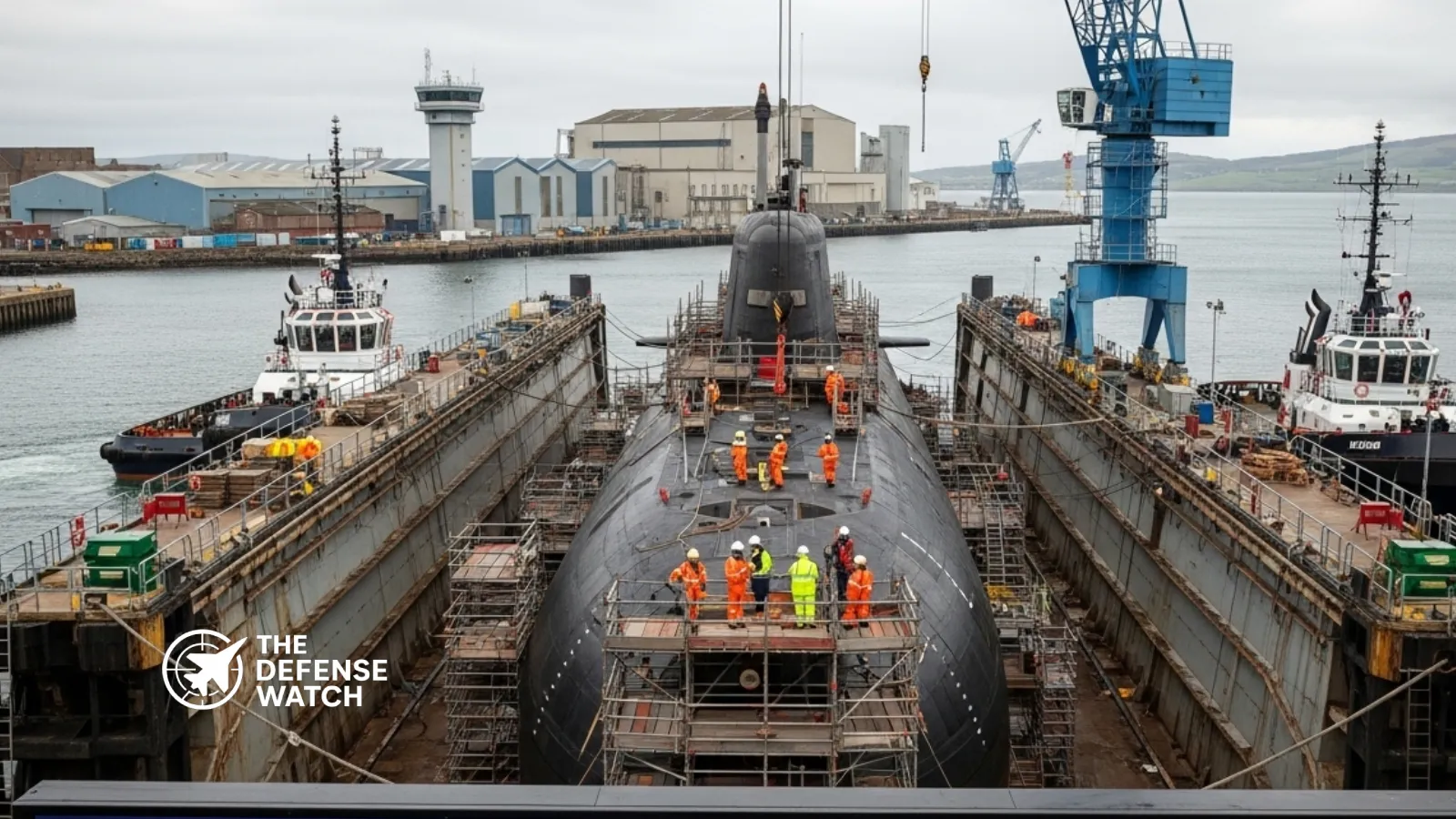
The Royal Navy launched a Submarine Maintenance Recovery Plan to speed up maintenance work on its submarine fleet and improve readiness..
Plan Aims to Improve Throughput and Capacity
The plan was formally introduced on January 14 and aims to bring existing maintenance efforts together under a single structure to boost productivity.
First Sea Lord General Sir Gwyn Jenkins visited HM Naval Base Clyde on January 20 to emphasize the need for rapid improvement in maintenance throughput and to stress that delivery must match future operational demands.
Navy leadership has said the Royal Navy will receive weekly updates on progress against the plan, with the goal of “dramatically” better maintenance outcomes over the next four years.
New Facilities for Faster Work
As part of the recovery plan, the Royal Navy is deploying containerized engineering workshops at Clyde to give technicians additional space to carry out work more quickly.
Additional temporary facilities are in development, and an off-site maintenance location has already been acquired. Routine maintenance functions remain at Clyde while deeper maintenance periods and major upgrades continue at HM Naval Base Devonport.
Backdrop: Submarine Fleet Strain and Operational Demand
The Royal Navy currently maintains nine nuclear-powered submarines, including four Vanguard-class ballistic missile submarines and five Astute-class attack submarines, according to recent UK Ministry of Defence figures.
Extended patrols and slower dock cycles in recent years have placed pressure on availability. A recent Vanguard-class patrol lasting more than 200 days illustrated the strain on fleet rotations and the need for faster maintenance return cycles.
Industry and government have already been investing in submarine support infrastructure. Contracts worth hundreds of millions for support and upgrades at key yards like Devonport are part of longer-term efforts to modernize maintenance capacity.
Why This Matters
Delays in submarine maintenance have knock-on effects for fleet readiness, crew rotation and the UK’s ability to sustain continuous at-sea deterrence. Improvements in throughput are expected to reduce downtime for boats awaiting work and increase the number of vessels available for operations.
What Comes Next
Officials plan to track progress under the recovery plan and adjust resourcing and processes where needed. Success will depend on the integration of new workspaces, stronger coordination between naval commands and the Submarine Delivery Agency, and long-term investment in dock, workforce and technical capacity.