

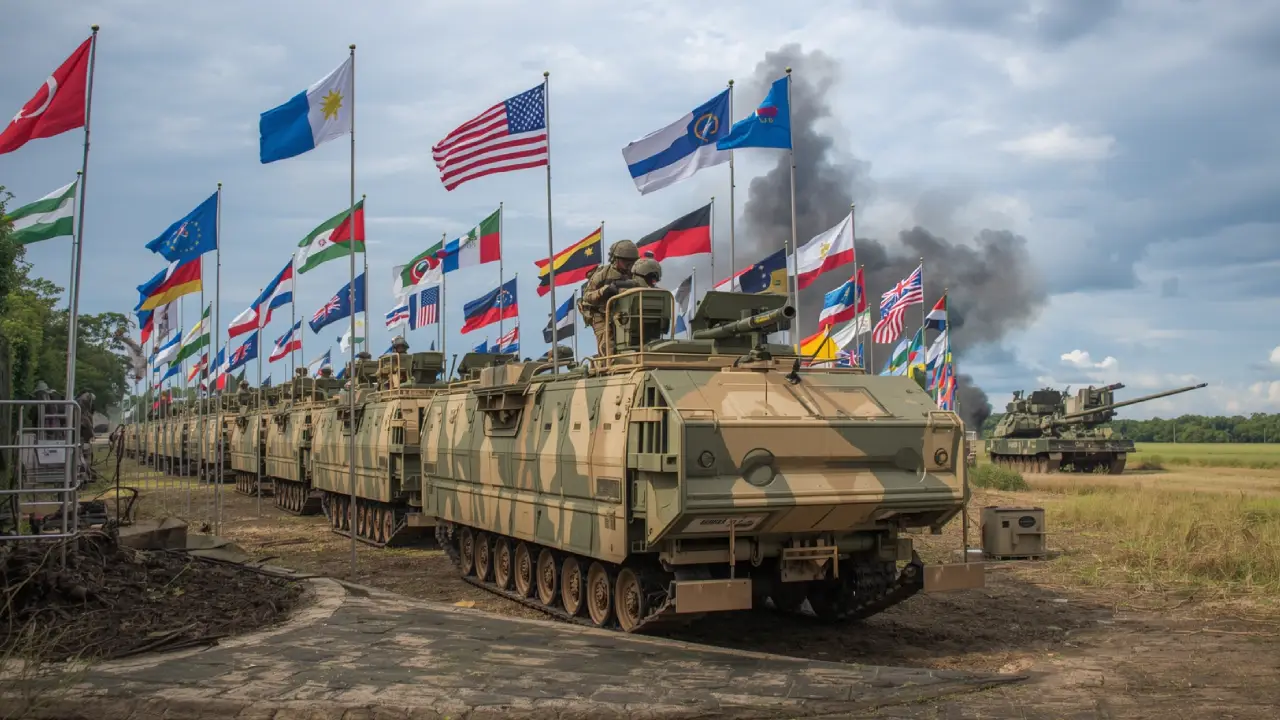
Pentagon Shifts Focus to the Indo-Pacific as Strategic Priority
In 2025, the Pentagon is explicitly reorienting its defense strategy to make the Indo-Pacific its top theater of strategic focus, citing mounting threats from China. This recalibration reflects a broader shift to counter Beijing’s growing military assertiveness, reestablish deterrence, and bolster regional alliances.
Strategic Rationale Behind the Pivot
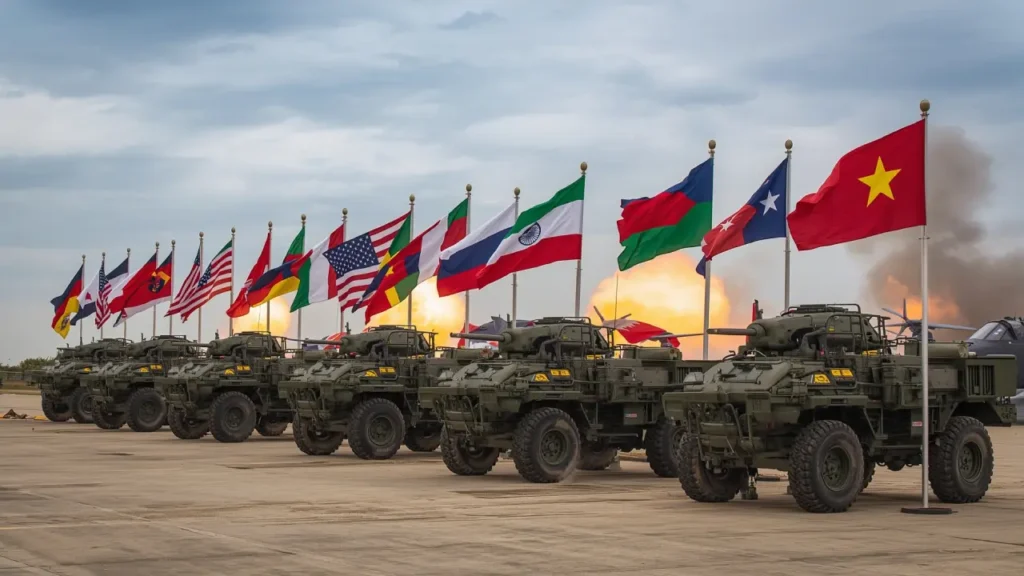
At May’s Shangri-La Dialogue in Singapore, Defense Secretary Pete Hegseth reaffirmed that the futures of the U.S. and its Indo-Pacific allies are “bound together,” calling the region the Department’s “priority theater.” He emphasized that as allies invest more in their self-defense, Washington can redeploy resources to strengthen regional deterrence efforts
Concurrently, a Pentagon press secretary confirmed in August that the department is doing “everything … to reorient to that theater and make sure that we’re countering the China threat,” characterizing the Indo-Pacific as “increasingly dangerous”.
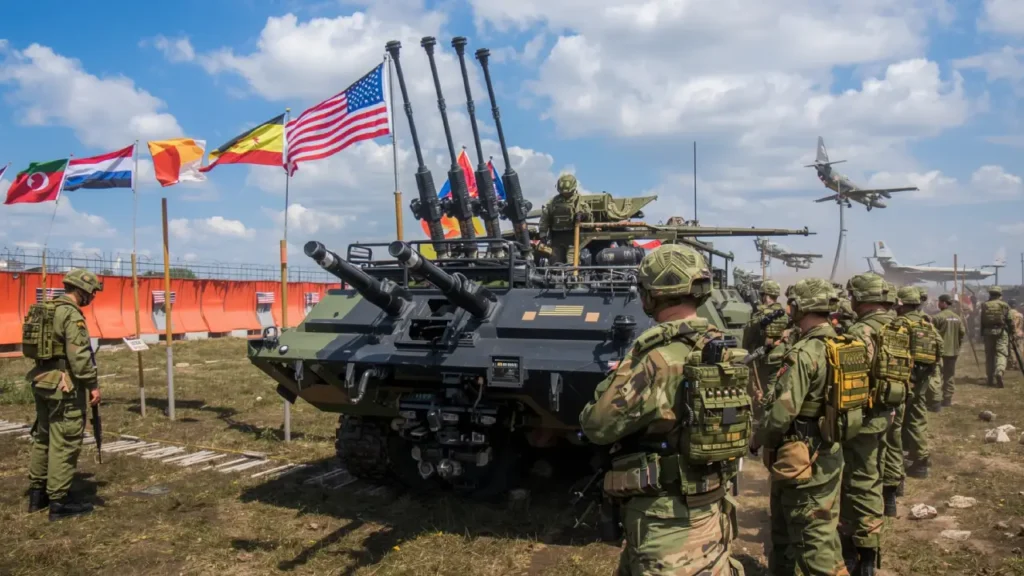
This momentum is supported by internal guidance. A leaked interim defense guidance memo—drawing from conservative think-tank influence—directs U.S. forces to emphasize a “denial defense” of Taiwan, expand Indo-Pacific deterrence capabilities, and assume increased homeland defense while reducing commitments in other theaters.
Expanding Military Exercises and Deterrence Platforms
On the ground, the U.S. and allies ramped up joint military activities:
- Balikatan 2025 in the Philippines—a large-scale exercise including air, land, sea, cyber, information, and space domains—involved over 14,000 personnel, reinforcing interoperability and rapid response readiness.
- Super Garuda Shield 2025 in Indonesia mobilized approximately 6,500 troops from 13 nations, reinforcing the collective commitment to regional security.
Additionally, Exercise Ultimate Caduceus 2025 tested mass casualty and medical evacuation capabilities from Indo-Pacific regions—underscoring U.S. transport and humanitarian readiness.
Strengthening Technological Partnerships and Deterrence Economics
The Pentagon’s Defense Innovation Unit (DIU) is embedding liaisons across key Indo-Pacific allies—Taiwan, Japan—to fast-track collaboration on dual-use technologies like drones and space systems.
Meanwhile, as part of the broader Pacific Deterrence Initiative (PDI), the U.S. continues to invest billions in infrastructure and capability development west of the International Date Line—marking it as the largest regional deterrence funding since the Cold War.
Army Modernizes to Counter China
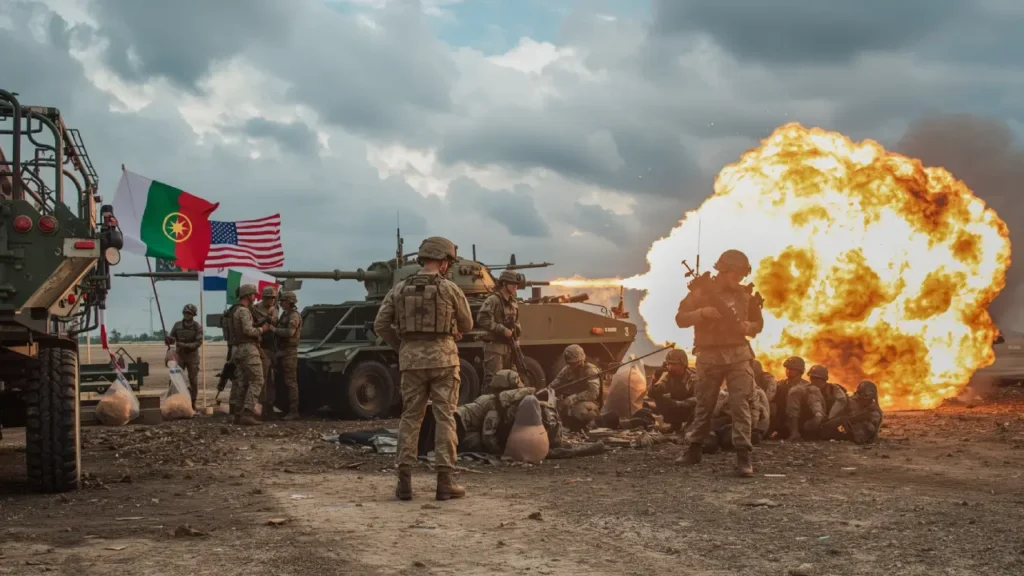
Recognized as the Pentagon’s top strategic challenge, the U.S. Army is undergoing sweeping modernization: deploying uncrewed systems, AI, and autonomous platforms; reforming acquisition; and enhancing lethality with a $36 billion restructuring budget. These efforts aim to present a credible, agile deterrent across the Indo-Pacific.
Allies’ Financial Commitments and Strategic Coordination
Hegseth’s message to allies at Shangri-La was stark: the China threat is “imminent,” and regional partners must increase defense spending to safeguard stability and avoid a “sucker” posture. This sentiment is echoed in internal analyses showing Indo-Pacific allies—Japan, South Korea, Australia, Philippines—are increasingly compelled to align with U.S. defense expectations despite some reservations.
Analysis / Additional Context
- Strategic Refocus Meets Domestic Pressures
The pivot aligns with Washington’s broader “America First” posture, prioritizing Indo-Pacific deterrence while scaling back commitments in Europe, Middle East, and Africa. While this promises enhanced regional focus, it risks overstretching finite resources and uneasy allies recalling U.S. disengagement elsewhere. - Balancing Deterrence and Alliance Sovereignty
The intensifying budget and exercise demands pose political challenges for reluctant allies balancing domestic priorities and rising dependence on U.S. security guarantees. Sustaining a durable coalition under these pressures will test U.S. diplomatic finesse. Recent tensions around defense spending show that commitment must be complemented by equitable partnership and transparent burden-sharing.
FAQs
Growing Chinese military assertiveness—across domains including naval expansion, hypersonic weapons, and regional infrastructure—has elevated the Indo-Pacific as the U.S.’s strategic priority theater.
Key elements include the Pacific Deterrence Initiative, DIU partnerships, expanded large-scale exercises (Balikatan, Super Garuda Shield), and Army modernization. The interim strategic guidance also heavily emphasizes Taiwan deterrence.
Allies are increasing budgets, joining exercises, and deepening cooperation—though some express concerns about over-reliance on U.S. security and economic repercussions.
Fine-tuning alliance expectations, managing budget and resource constraints, and ensuring strategy remains sustainable amid shifting global priorities.

2 comments
[…] The missile will be unarmed and will fly across a designated test corridor—likely from California toward the Pacific test range—though specific impact location has not been publicly detailed. The event follows a […]
[…] interview also underscores TUSAŞ’s communication strategy toward both domestic stakeholders and international partners. By publicly outlining aspects of the […]