

Table of Contents
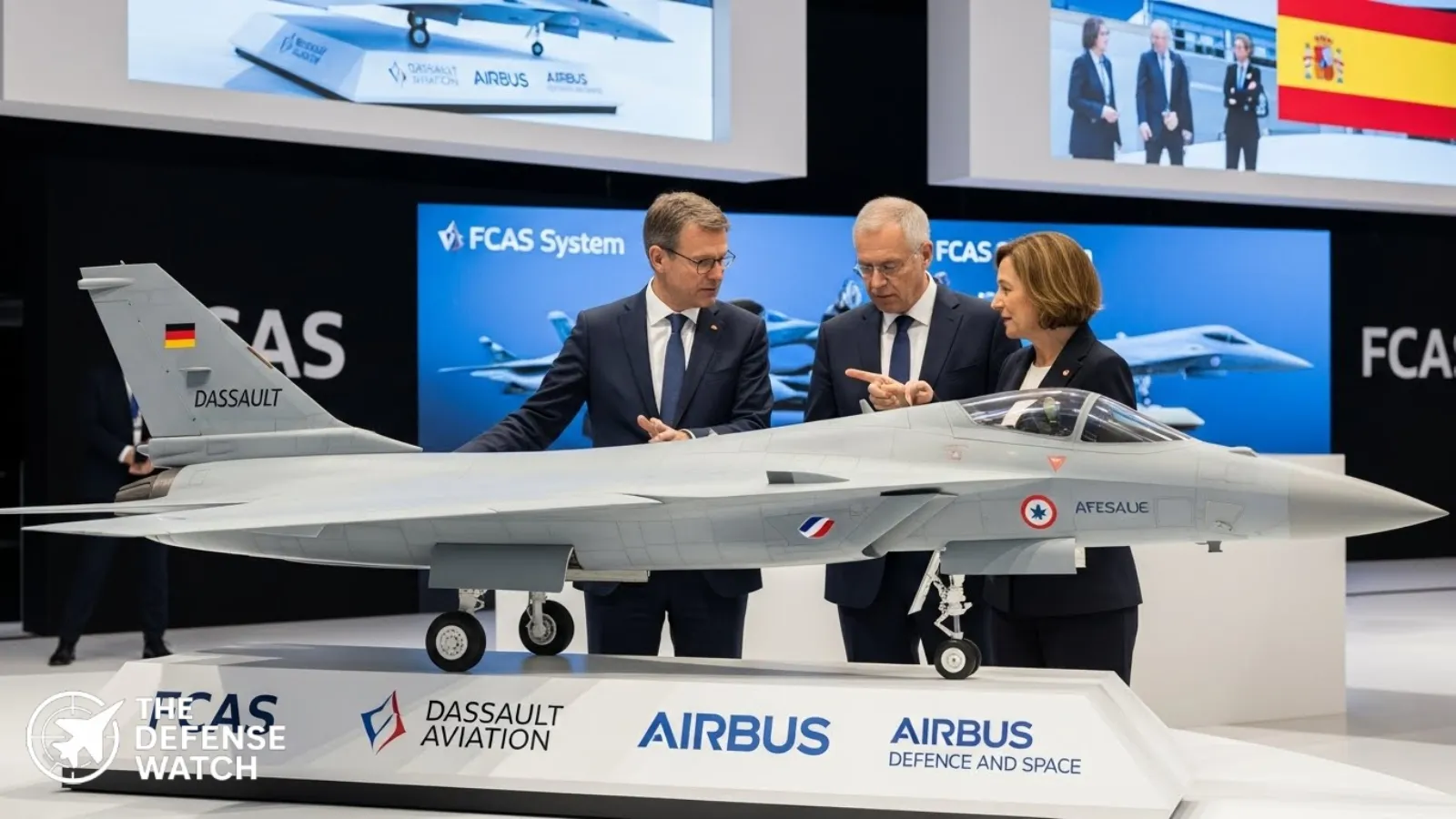
Germany, France, and Spain have agreed to hold high-level talks this week in Berlin aimed at ending a prolonged impasse over Europe’s next generation fighter jet project, the Future Combat Air System, officials said on December 11, 2025. The meeting of defense ministers from the three countries comes after years of industrial disputes that have delayed progress on a program valued at up to 100 billion euros.
What Happened and Why It Matters
Defense chiefs from Germany, France, and Spain are gathering in Berlin to address a deepening deadlock on the Future Combat Air System, known as FCAS, a key European aerospace and defense initiative first launched more than eight years ago. The goal of FCAS is to develop a sixth-generation fighter jet and related systems to replace current fleets including the French Rafale and German and Spanish Eurofighters.
The meeting in Berlin follows mounting political pressure and public dispute among industrial partners, particularly over how roles and workshare should be split. Germany’s defense ministry said the talks would be used to explore ways to restart progress on the stalled program.
Background: The FCAS Fighter Jet Program
FCAS is a flagship European defense project involving three NATO allies. With an estimated cost of up to 100 billion euros it is intended to deliver a future-proof fighter aircraft and associated technologies by around 2040. France’s Dassault Aviation is leading development of the main fighter aircraft. Germany’s Airbus and Spain’s Indra Sistemas are responsible for key elements such as the combat cloud, unmanned systems, and other components.
The deadline for a demonstrator aircraft was originally set for 2027, with operational capability expected around 2040, but repeated delays have pushed back timelines and raised questions about whether FCAS can stay on schedule.
Major Issues Keeping FCAS Stalled
One of the biggest barriers to progress has been disagreement over how the program’s industrial workshare and leadership roles are divided. France has pushed for a larger share of core fighter development, while Germany and Spain want more balanced distribution of key tasks. Reports have cited French proposals for as much as eighty percent of certain workshare to reside with French industry.
These differences have spilled into national politics and labor issues. Germany’s IG Metall union, which represents defense workers, warned it could withdraw support if French company Dassault remains dominant in the project. The union said confidence in Dassault’s leadership had eroded.
Officials in France’s metalworking sector responded that excluding French industrial interests was unacceptable, underscoring how industrial and political factors have become intertwined.
On the Ground in Berlin
German Defense Minister Boris Pistorius, his French counterpart Catherine Vautrin, and Spain’s Margarita Robles are leading the talks in Berlin. A separate meeting is scheduled between German Chancellor Friedrich Merz and French President Emmanuel Macron, underlining how the dispute has risen to the highest levels of government.
Although no formal agreement has been announced yet, one area under discussion is a possible focus on common elements such as the combat cloud and unmanned systems as a basis for cooperation. This could allow each nation to pursue national fighter development while maintaining key shared technologies.
Airbus Chief Executive Guillaume Faury said he believes the program will move forward, though exact cooperation mechanisms remain unresolved.
Strategic Stakes and External Pressures
The FCAS program is seen by many European policymakers as central to Europe’s defense autonomy, especially in the context of Russia’s war in Ukraine and shifting U.S. strategic priorities. A breakdown of cooperation on this project could weaken European defense integration and force partners to seek alternative paths.
Spain has signaled that it remains committed to European solutions and is no longer considering U.S.-built F-35 jets, focusing instead on the Eurofighter or the future FCAS platform for its airpower needs.
However, other reports have suggested that France and Germany are contemplating dropping the joint fighter element of FCAS altogether and focusing on shared digital and network systems. Such a move would mark a significant shift in the project’s scope and could lead to separate national fighter programs.
What Comes Next
Officials want a clear decision on the future of the FCAS program by the end of 2025. The outcome of the Berlin talks and the subsequent French-German meeting could shape whether the project enters its next development phase or is restructured.
A resolution would help solidify Europe’s plan to field a next generation combat aircraft and reinforce industrial cooperation across NATO allies. Failure to reach agreement, on the other hand, could delay or fragment Europe’s efforts to develop advanced aerospace technologies at a time of growing security challenges.

3 comments
[…] EU’s move also reflects broader concerns among European leaders over U.S. intentions in the Arctic, emphasizing coordinated defense planning and deterrence […]
[…] offerings. However, production rates and technical factors will shape how quickly additional jets move from Russia to […]
[…] has invested heavily in indigenous aerospace programs, seeking to reduce reliance on foreign suppliers. The HÜRJET program fits within a broader […]