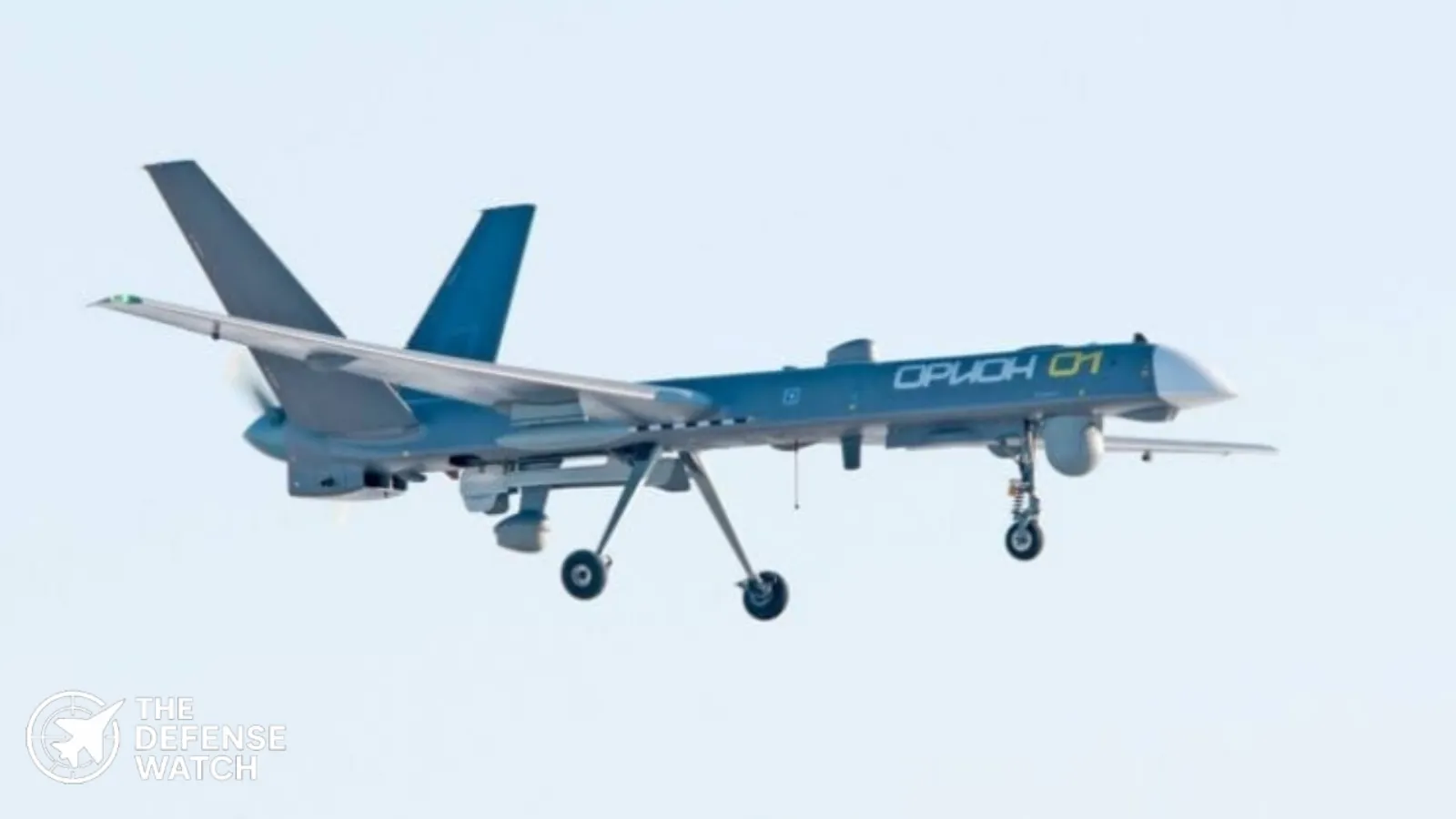
Ethiopia Confirms Orion-E Combat Drone Acquisition
Ethiopia has become the first confirmed foreign buyer of the Russian Orion-E combat drone, marking a milestone for Moscow’s unmanned aircraft export efforts and signaling deeper defense ties between Addis Ababa and Moscow.
The confirmation came after the Orion-E was displayed with Ethiopian Air Force markings at Aviation Expo 2026, which opened on January 23 as part of celebrations marking the air force’s 90th anniversary. The appearance represents the first publicly verified export of Russia’s medium altitude long endurance unmanned aerial system.
Russian state media and defense industry outlets have previously promoted the Orion-E for export, but Ethiopia is the first customer to publicly field the system, according to open source defense analysts and imagery from the event.
Orion-E Drone Enters African Service
The Orion-E is the export variant of Russia’s Inokhodets drone, developed by Kronstadt Group. It is designed for intelligence, surveillance, reconnaissance, and precision strike missions, placing it in the same operational category as the U.S. MQ-1 Predator and Turkey’s Bayraktar TB2.
The system features a wingspan of approximately 16 meters and an endurance reported at up to 24 hours, depending on payload and mission profile. It can carry guided munitions, including Russian-developed air to surface weapons designed for use against ground targets.
Russia has employed the Orion drone operationally in Syria and Ukraine, using it for reconnaissance, artillery spotting, and limited strike missions. However, its combat record has been mixed, with documented losses and performance constraints compared to more mature Western and Turkish platforms.
Strategic Context for Ethiopia
Ethiopia’s acquisition of the Orion-E comes as the country continues to address multiple internal security challenges, including insurgencies and border instability. Unmanned systems have become a key capability for regional militaries seeking persistent surveillance and precision strike options without risking crewed aircraft.
The Ethiopian Air Force has steadily expanded its unmanned fleet in recent years, previously relying on systems sourced from China, Iran, and Turkey. The introduction of the Russian Orion-E adds a new supplier and reflects Addis Ababa’s effort to diversify its defense partnerships.
According to defense analysts, drones such as the Orion-E provide Ethiopia with enhanced situational awareness and stand off strike capabilities across difficult terrain, particularly in remote regions where manned aircraft operations are limited.
Russia Expands Arms Footprint in Africa
For Moscow, the Ethiopian deal represents a notable success in its push to expand defense exports to Africa despite sanctions and battlefield setbacks in Ukraine. Russia has actively marketed unmanned systems, air defense platforms, and armored vehicles to African states seeking alternatives to Western suppliers.
Africa has become a growing focus for Russian defense diplomacy, with countries including Mali, Algeria, and Egypt maintaining or expanding military cooperation with Moscow. The Orion-E export strengthens Russia’s credibility as a supplier of advanced UAV systems outside its traditional customer base.
Russian officials have highlighted the Orion-E as a cost effective alternative to Western drones, emphasizing local maintenance options and flexible weapons integration. However, independent assessments note that Russian UAV production capacity remains under pressure due to supply chain constraints.
Mixed Combat Record Raises Questions
While the Orion-E has been promoted as a capable MALE platform, its operational performance has faced scrutiny. Open source intelligence groups have documented multiple Orion losses during the Ukraine conflict, attributed to air defenses, electronic warfare, and reliability issues.
Unlike Western and Turkish systems with extensive export service histories, the Orion-E remains relatively unproven in foreign operational environments. Ethiopia’s experience with the platform will likely be closely watched by other potential customers in Africa and the Middle East.
Defense analysts caution that effectiveness will depend heavily on training, sustainment support, and integration with command and control networks, areas where Russian export customers have seen uneven results in the past.
Implications for Regional Military Balance
The introduction of the Orion-E into Ethiopian service underscores the growing role of armed drones in African security dynamics. UAVs have already reshaped conflicts in Libya, Ethiopia, and the Sahel, offering states new tools for surveillance and strike operations.
Ethiopia’s move may encourage neighboring countries to accelerate their own drone acquisitions, further driving demand for unmanned systems across the continent. It also highlights the competitive landscape among drone suppliers from Russia, China, Turkey, Iran, and Israel.
As unmanned platforms become central to modern African air forces, export deals like the Orion-E sale are likely to carry both military and geopolitical weight.