U.S. Navy MQ-25A Stingray Reaches Major Flight Milestone
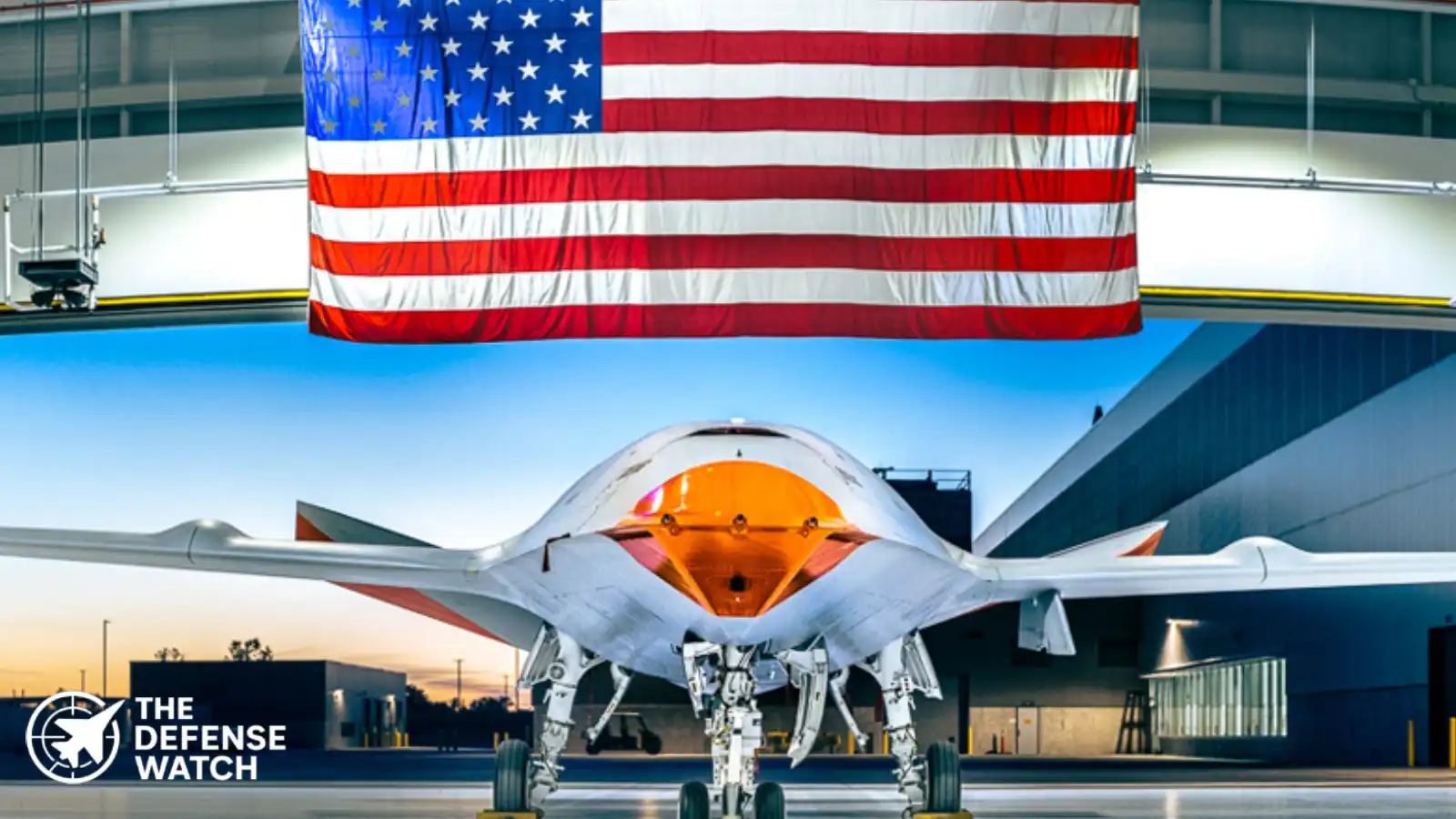
The MQ-25A Stingray completed its first flight, marking one of the most important recent steps in U.S. Navy carrier aviation modernization. The Boeing-built unmanned aircraft flew on April 25 from MidAmerica St. Louis Airport, where the company manufactures the platform. The sortie signals that the Navy’s first carrier-based operational drone tanker is moving closer to fleet service.
The MQ-25A Stingray is not just another unmanned aircraft. It is designed to solve a long-running operational problem for the Navy, the heavy use of frontline fighters as airborne tankers.
- The first production-representative U.S. Navy MQ-25A Stingray completed its maiden flight on April 25, 2026.
- The aircraft flew from MidAmerica St. Louis Airport near Boeing’s MQ-25 production site.
- MQ-25A is designed to refuel carrier aircraft including F/A-18E/F Super Hornet and F-35C fighters.
- The Navy plans to acquire 76 MQ-25 aircraft, with initial operational capability targeted for 2027.
- The program could reshape carrier operations by freeing manned fighters from tanker missions.
For years, F/A-18E/F Super Hornets have performed buddy refueling missions that consume airframe life and reduce the number of fighters available for strike or air defense missions. The MQ-25A is intended to take over that task.
Why The MQ-25A Matters
The arrival of the MQ-25A Stingray could significantly extend the combat reach of U.S. aircraft carriers.
Modern threats, particularly long-range anti-ship missiles and dense air defense networks, have pushed carriers to operate farther from hostile coastlines. That distance reduces the striking range of carrier aircraft. By providing organic aerial refueling, the MQ-25A can help restore lost reach for aircraft such as the F-35C Lightning II and F/A-18E/F Super Hornet.
Boeing and Navy officials have previously stated the aircraft is expected to offload around 15,000 pounds of fuel at operationally relevant distances. That makes the system a force multiplier rather than a simple support aircraft.
From Demonstrator To Fleet Asset
Earlier MQ-25 development used the T1 demonstrator, which proved core capabilities including unmanned aerial refueling. This latest aircraft is the first production-representative version, meaning it is much closer to the configuration the fleet will eventually operate.
That distinction matters because it moves the program from technology demonstration into real acquisition and operational testing.
The Navy currently plans to procure 76 MQ-25 aircraft, with initial operational capability expected in 2027.
Strategic Analysis
The MQ-25A Stingray reflects a broader Pentagon shift toward human-machine teaming. Rather than replacing crewed fighters, it supports them, expands their range, and preserves valuable pilot hours.
This is a practical model for unmanned integration. It avoids the political and technical friction of replacing combat aircraft outright while still delivering immediate gains.
If successful, the MQ-25A could open the door for future carrier-based unmanned systems focused on surveillance, strike, and electronic warfare.
What Comes Next
The next major hurdles include deck handling trials, catapult launches, arrested recoveries, and carrier integration testing. Those steps are especially demanding because carrier operations remain among the most complex environments in military aviation.
Still, with first flight complete, the MQ-25A Stingray has crossed a key threshold.
For the U.S. Navy, it may become one of the most consequential carrier aviation programs of the decade.
UK Carrier Drone Plan Advances Without Catapults
The UK carrier drone plan has moved forward under a revised approach that drops the need for catapults and arrestor systems, the UK Ministry of Defence confirmed in a written statement on February 11, 2026.
In responses to parliamentary questions, Defence Minister Luke Pollard said the previously separate Royal Navy programmes Project VIXEN and Project ARK ROYAL have been folded into a new initiative, Project VANQUISH, under the broader Maritime Aviation Transformation Strategy (MATX).
Shift To STOL Carrier Drones
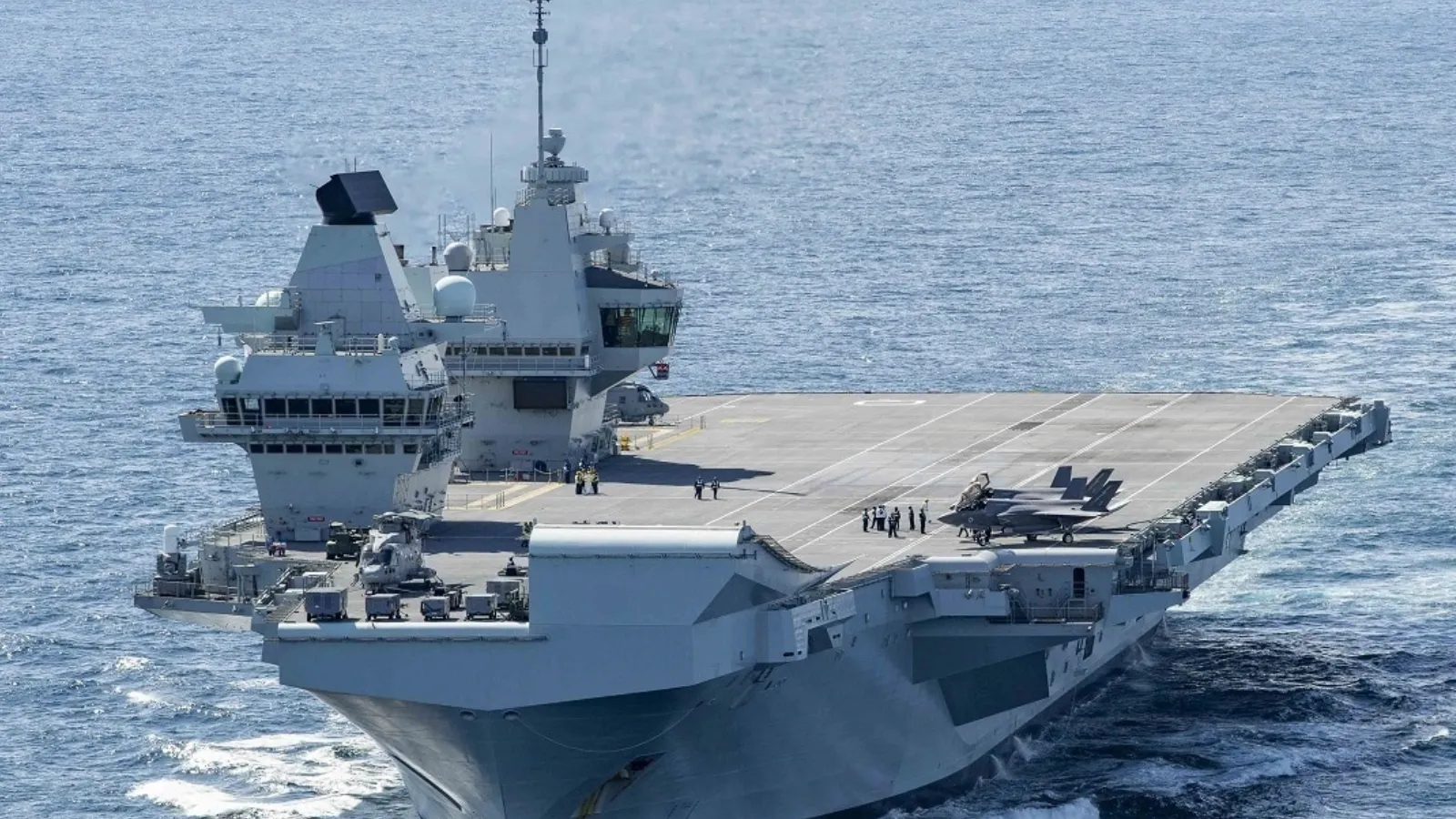
Project VANQUISH is designed to develop and demonstrate a jet-powered, short-takeoff and landing (STOL) autonomous fixed-wing drone that can operate from the Royal Navy’s Queen Elizabeth class aircraft carriers without catapults or arrestor gear. This approach leverages the carriers’ existing ski-jump design.
The UK confirmed the shift away from assisted launch and recovery equipment (ALRE) in the House of Commons. According to Pollard, the project will generate evidence to support future uncrewed fixed-wing aircraft operations aboard carriers with minimal structural modifications.
That strategy aligns with recent UK Ministry of Defence documentation seeking industry input on a fixed-wing STOL Autonomous Collaborative Platform (ACP) capable of ISR, strike, and other missions, while complementing the Royal Navy’s F-35B Lightning aircraft in a hybrid air wing.
From VIXEN To VANQUISH
The move marks a change from earlier plans such as Project VIXEN and Project ARK ROYAL. Those efforts had explored broader carrier modifications including catapult-assisted takeoff and arrested recovery concepts for larger uncrewed aircraft. Those programmes have now been discontinued.
Under the new plan, the focus is on a hybrid air wing that mixes crewed and uncrewed aircraft. The Royal Navy’s current carriers use a ski-jump ramp and short takeoff vertical landing (STOVL) design for F-35B jets, a setup that limits the types of fixed-wing unmanned assets that can be operated without additional launch systems.
Operational Context
The Queen Elizabeth class carriers, HMS Queen Elizabeth and HMS Prince of Wales, do not have catapult-assisted launch or arrested recovery systems. That constraint has shaped UK carrier aviation planning for years. The ships were commissioned with a ski-jump ramp to support STOVL operations for F-35Bs.
UK planners had considered retrofitting catapults and arrestor gear to expand the carriers’ capabilities. Those options are now being de-emphasized in favor of drones that operate within the existing STOL envelope.
Earlier industrial proposals, including fixed-wing unmanned combat aerial vehicles designed for catapult launch, were featured at international air shows and in defence reporting. Those concepts highlighted the potential capability growth that catapults could provide but also underscored the integration challenges.
AVAILABILITY AND NEXT STEPS
Officials have issued a Request for Information (RFI) to industry as part of Project VANQUISH to inform future requirements and potential demonstrations. The RFI seeks unmanned STOL platforms capable of autonomous operations from carrier decks without the need for traditional launch and recovery infrastructure.
Responses to the RFI are due by late 2025, with contract and demonstration phases expected to run into late 2027. This early-stage effort will inform broader decisions under the UK Defence Investment Plan.
Strategic Importance
Developing carrier-based drones that operate without significant modification to existing carriers reflects a push across several navies to integrate unmanned systems into air wings. Unmanned platforms can extend surveillance, strike, and support capabilities while reducing risk to human pilots.
For the Royal Navy, the strategy under MATX aims to balance current operational needs with future capability growth, leveraging autonomous systems to supplement manned aircraft in a contested environment.
Carrier-launched strike at long range in eastern Mediterranean
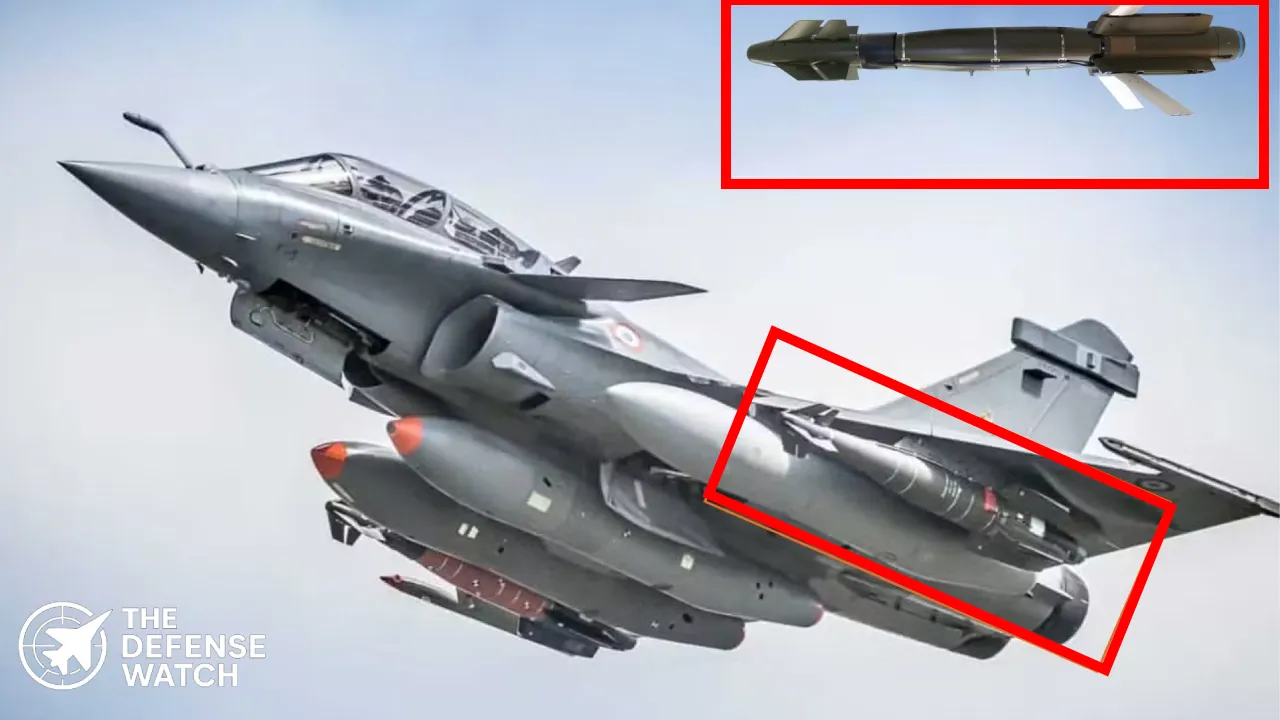
A French Navy Dassault Rafale Marine operating from carrier Charles de Gaulle carried out a live strike on a naval target in the eastern Mediterranean on December 6, 2025. The Rafale employed a 1,000-kg AASM Hammer 1000 guided bomb. The mission began with a long-range transit via Italy and Greece and culminated in a low-level penetration before bomb release on a target at sea — showcasing French ability to deliver heavy precision fire from a carrier air wing at very short notice and over extended range.
The strike was part of a ten-day workup of the carrier group. It underscores France’s readiness to employ heavy, stand-off capable ordnance from a single carrier-borne aviation element when required.
Background: What is AASM Hammer and why this matters
The AASM family and the 1000-kg variant
The AASM (Armement Air-Sol Modulaire) Hammer is a modular, precision-guided bomb system developed by Safran Electronics & Defense. Through a modular architecture it combines an inertial/GPS navigation kit (optionally supplemented by laser or infrared terminal guidance) with a rear propulsion kit. Warhead sections can range from roughly 125 kg up to 1,000 kg — giving mission planners flexibility depending on the target.
The 1,000-kg AASM Hammer (officially “AASM 1000 GS”) was qualified by the French procurement agency DGA in January 2023. Testing included separation trials from a Rafale aircraft to ensure safe release, and subsequent live-fire testing to validate operational performance.
Rafale F4.1 integration
Only the Rafale upgraded to the F4 standard (in this case F4.1) is capable of deploying the AASM 1000. The F4.1 upgrade bundles not only the heavy-bomb capability but also improved sensors, connectivity, electronic warfare and anti-cyber protection enhancements.
With AASM 1000 integrated, Rafale becomes capable of delivering a one-tonne warhead with precision guidance and rocket-assisted propulsion, enabling engagement of naval or hardened land targets from stand-off distances. That makes AASM 1000 Hammer a heavy-strike option rather than a simple tactical bomb.
Details of the December 6 Strike
Mission profile
- The strike was executed by a Rafale Marine in F4.1 standard, launching from Charles de Gaulle. The mission included a long-range transit via Italy and Greece. 1
- A supporting fleet replenishment ship, Jacques Chevallier, provided at-sea logistics and munition transfer, while allowing the carrier to maintain readiness with an alert air-defence patrol intact.
- The aircraft flight path included low-altitude penetration to reduce radar exposure. At the end of the ingress, the AASM 1000 was released against a designated naval target on Greece’s Karavia firing range.
- According to the French Navy, the strike — from the initial launch to bomb release — was organized and executed in under 24 hours after target designation, proving a rapid-reaction capability.
Carrier strike group composition and training context
During the work-up, the Charles de Gaulle air wing included 18 Rafale Marine jets, two AEW aircraft (E-2C Hawkeye), and three helicopters. This mix enables simultaneous air defense, strike missions, and area surveillance. The group also ran multiple drills: fifteen SECUREX safety drills, eleven ADEX air-defense scenarios, several MACOPEX operational-capability exercises and an Exocet-centred anti-ship exercise.
This full-spectrum training regime — air defense, surveillance, logistics support and heavy-strike — indicates the French Navy’s aim to maintain a ready, versatile carrier force capable of rapid deployment and integrated operations.
Why this strike matters
Demonstrating long-range maritime strike flexibility
The use of a 1,000-kg AASM from a carrier wing highlights a shift in naval aviation capabilities: a single multirole fighter can now deliver heavy, precision-guided ordnance far from home bases. In scenarios where naval or littoral targets are defended by coastal air defenses or located beyond friendly airfields, this capability becomes strategically valuable.
By showing that Rafale M can deploy such weapons after long transits and under potentially contested conditions, France signals enhanced response readiness for crises in maritime theaters, such as the Mediterranean. The quick turnaround from tasking to strike demonstrates operational agility.
Strategic messaging in a tense maritime region
The eastern Mediterranean continues to be an arena of heightened naval competition, overlapping exclusive economic zones, and strategic interests from regional and extra-regional powers. By conducting a high-profile demonstration of carrier-based heavy strike, France underscores its ability to contribute meaningfully to deterrence, crisis response or power projection in maritime zones adjacent to key European and Middle Eastern states.
Moreover, such capability may influence allied and adversary planning alike, shaping how either side assesses the risk from a French carrier strike group — and by extension, how they posture naval assets or air defenses.
Platform-to-weapons integration shows maturity
The integration of AASM 1000 into Rafale F4.1 — combined with proven carrier-borne operations from the Charles de Gaulle — reflects a mature weapons-platform ecosystem. It confirms that earlier tests and qualification efforts have translated into operational capability.
This milestone may also encourage export customers or nations considering fleet upgrades to view the Rafale + AASM as credible if they require heavy strike options, not just short-range bombs or missiles.
Expert Perspective: What this means for carrier warfare and maritime strike doctrine
Experts in naval aviation and maritime strategy are likely to view this event as a validation of a doctrine still sometimes overshadowed by missile-heavy strike packages. Previously, long-range strike at sea was mostly associated with anti-ship cruise missiles. The use of heavy guided bombs like the AASM 1000 now adds an alternate tool in the strike toolbox — one that can deliver a large warhead with precision without needing a cruise missile flight profile.
In a crisis — blockade, denial-of-access, port infrastructure strike, suppression of coastal defenses — a 1,000-kg bomb can inflict damage far beyond what smaller bombs or missiles may achieve, and can target both naval and ground-based assets.
For navies operating in contested littoral zones, this also means that carrier-based aviation must be factored into threat assessments alongside missile platforms. Air defense systems, both shipborne and shore-based, must account for bomb-delivery profiles that may include low-altitude penetration and rapid release — complicating radar coverage and engagement planning.
This strike also underlines a broader shift underway in European and allied navies: renewed investment in stand-off precision weapons (whether bombs or missiles) to keep pace with improving coastal air defenses and layered maritime threat environments.
What to Watch Next
- Whether other navies operating heavy multirole fighters from carriers follow suit, integrating similarly capable guided bombs.
- Potential export interest from recent or future Rafale customers — especially those with maritime concerns.
- Countermeasures development by regional powers — including advanced coastal air defenses or electronic-warfare suites designed to defeat low-altitude, rocket-propelled bombs.
- How this capability might affect naval force posture, rules of engagement, and deterrence calculations in contested maritime zones.