








@2026 – All Right Reserved. TheDefenseWatch.com
- Home
- Catalog
- Compare
- Tejas Fighter Jet vs. J-10C Fighter Jet: Which Modern Multirole Fighter Has the Edge?
Tejas Fighter Jet vs. J-10C Fighter Jet: Which Modern Multirole Fighter Has the Edge?
Tejas Fighter Jet vs. J-10C Fighter Jet: High Level Comparison
1. Executive Summary / Tactical Overview
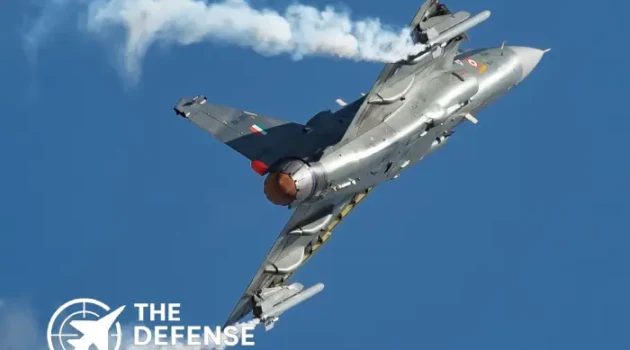
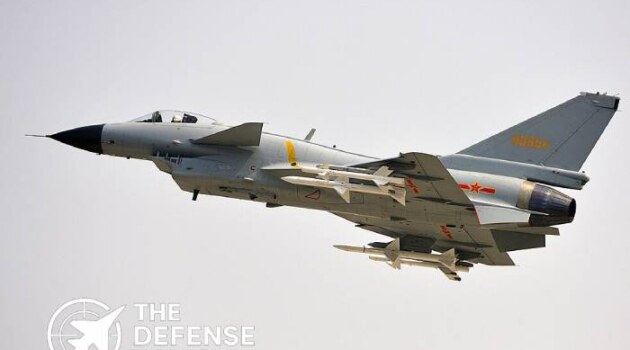
The HAL Tejas and Chengdu J-10C represent two different approaches to modern fourth generation multirole fighter development. India’s Tejas emphasizes affordability, domestic production, modern avionics, and defensive air operations, while China’s J-10C focuses on longer range, greater payload, powerful sensors, and offensive multirole capabilities.
Although neither aircraft is a true fifth generation stealth fighter, both incorporate advanced AESA radars, modern electronic warfare suites, beyond visual range missiles, and network enabled combat systems. The J-10C generally offers superior endurance and payload, whereas the Tejas provides lower operating costs and growing indigenous capability.
2. Technical Specifications Table
| Specification | HAL Tejas Mk1A | Chengdu J-10C |
|---|---|---|
| Country | India | China |
| Manufacturer | Hindustan Aeronautics Limited (HAL) | Chengdu Aircraft Corporation |
| Generation | 4.5 Generation | 4.5 Generation |
| Crew | 1 | 1 |
| Length | 13.2 m | 16.9 m |
| Wingspan | 8.2 m | 9.75 m |
| Maximum Takeoff Weight | ~17,500 kg | ~19,300 kg |
| Engine | GE F404-IN20 | WS-10B (or AL-31FN on earlier variants) |
| Maximum Speed | Mach 1.8 | Mach 2.0 |
| Combat Radius | ~500 to 700 km | ~1,100 km |
| Ferry Range | ~3,000 km | ~2,950 km |
| Service Ceiling | 50,000 ft | 59,000 ft |
| Hardpoints | 8 | 11 |
| Maximum Payload | ~5,300 kg | ~6,000 kg |
| Radar | Uttam AESA (or EL/M-2052 AESA on some aircraft) | Indigenous AESA Radar |
| Electronic Warfare | Integrated EW Suite | Advanced EW Suite |
| Primary BVR Missiles | Astra Mk1, Derby ER | PL-15 |
| Short Range Missiles | ASRAAM, Python-5 | PL-10 |
| Air to Surface Weapons | Smart bombs, BrahMos NG (future), laser guided bombs | Precision guided bombs, anti-ship missiles, cruise missiles |
3. Key Capability Pillars
Stealth & Survivability
Neither aircraft is designed as a stealth platform.
The Tejas incorporates composite materials that reduce radar cross section compared to older fighters while lowering structural weight. Its relatively small size also contributes to reduced detectability.
The J-10C features a redesigned diverterless supersonic inlet (DSI), radar absorbing coatings in selected areas, and a modern electronic warfare system. Although not stealthy, these improvements reduce radar signature compared to earlier J-10 variants.
Advantage: J-10C
Avionics & Sensor Fusion
The Tejas Mk1A introduces significant avionics improvements, including:
- Uttam AESA radar
- Digital cockpit
- Helmet Mounted Display
- Integrated Electronic Warfare Suite
- Data link capability
- Open architecture mission computer
The J-10C is equipped with:
- Indigenous AESA radar
- Infrared Search and Track (reported)
- Advanced electronic warfare system
- Secure tactical datalink
- Modern digital cockpit
- Network-centric combat capability
China has invested heavily in sensor integration, giving the J-10C excellent situational awareness.
Advantage: Slight edge to J-10C
Weapons & Payload
HAL Tejas
Typical weapons include:
- Astra Mk1
- Derby ER
- ASRAAM
- Python-5
- Laser Guided Bombs
- Smart Anti-Airfield Weapon
- Future integration of BrahMos NG
Maximum payload:
Approximately 5.3 tons
Chengdu J-10C
Typical weapons include:
- PL-10
- PL-15
- KD series precision strike missiles
- YJ anti-ship missiles
- Guided bombs
- Cruise missiles
Maximum payload:
Approximately 6 tons
The PL-15 long range missile provides one of the J-10C’s strongest advantages in beyond visual range combat.
Advantage: J-10C
Air Combat Performance
Tejas
Strengths include:
- Lightweight airframe
- Excellent agility
- High composite structure percentage
- Modern flight control system
- Lower maintenance requirements
J-10C
Strengths include:
- More powerful engine
- Greater thrust
- Larger fuel capacity
- Longer endurance
- Higher payload
- Better acceleration
Advantage: J-10C
Radar & Electronic Warfare
Tejas Mk1A
The indigenous Uttam AESA radar represents a major leap for India’s domestic aerospace industry. Combined with advanced electronic warfare equipment, it significantly enhances tracking, survivability, and engagement capability.
J-10C
The J-10C’s AESA radar is believed to offer long range target detection and can support the PL-15 beyond visual range missile. Its electronic warfare suite is considered among China’s most capable for fourth generation fighters.
Advantage: J-10C
Operational Roles
HAL Tejas
Best suited for:
- Air defense
- Point interception
- Close Air Support
- Maritime strike
- Tactical reconnaissance
- Homeland defense
Chengdu J-10C
Optimized for:
- Air superiority
- Long range interception
- Offensive counter air
- Precision strike
- Maritime attack
- Multirole combat
4. Strategic Verdict
The HAL Tejas Mk1A is a highly capable lightweight multirole fighter that delivers modern avionics, indigenous technology, and cost effective operation. It is well suited for regional air defense, quick reaction alert missions, and tactical strike operations while supporting India’s goal of self reliance in defense manufacturing.
The Chengdu J-10C, however, offers greater combat range, higher payload capacity, stronger beyond visual range engagement capability through the PL-15 missile, and a more powerful propulsion system. These features make it better suited for long range offensive missions and sustained multirole operations.
For nations prioritizing affordability, domestic production, and efficient fleet expansion, the Tejas Mk1A presents an attractive solution. For operators seeking greater range, payload, and offensive capability within the fourth and a half generation category, the J-10C currently holds the overall advantage.
Overall Comparison Score
| Category | Winner |
|---|---|
| Speed | J-10C |
| Combat Radius | J-10C |
| Payload | J-10C |
| Agility | Tejas |
| Radar | J-10C |
| Electronic Warfare | J-10C |
| Beyond Visual Range Combat | J-10C |
| Operating Cost | Tejas |
| Indigenous Manufacturing | Tejas |
| Overall Multirole Capability | J-10C |
| |
| Price | |
| Our Rating | |
| Manufacturer | Hindustan Aeronautics Limited (HAL) Chengdu Aircraft Industry Group (CAIG) |
| Category | Fighter Jets Fighter Jets |
General Information
| Name | HAL Tejas Mk1A Chengdu J-10C (Vigorous Dragon) |
| Manufacturer | Hindustan Aeronautics Limited (HAL) Chengdu Aircraft Industry Group (CAIG) |
| Country of Origin | India China |
| Type / Role | Multirole Light Fighter Multirole Fighter |
| Generation | 4.5th 4.5 |
| Status | In production / Entering service In service |
| First Flight | 28 March 2024 (prototype) 2013 |
| Introduction / In Service Since | 2025 2018 |
| Number Built | 83 on order (IAF) 200+ |
| Operators | Indian Air Force (IAF) China, Pakistan |
Dimensions & Structure
| Length | 13.2 m 16.9 m |
| Wingspan | 8.2 m 9.8 m |
| Height | 4.4 m 5.4 m |
| Wing Area | 38.4 m² 33 m² |
| Empty Weight | 6,560 kg 9,750 kg |
| Maximum Takeoff Weight (MTOW) | 13,500 kg 19,200 kg |
| Internal Weapons Bay | None (external only) None |
| External Hardpoints | 8 11 |
Performance
| Maximum Speed | Mach 1.8 (2,205 km/h) Mach 2.0 |
| Range | 3,000 km (ferry) 1,850 km |
| Combat Radius | 500 km ~1,000 km |
| Service Ceiling | 16,000 m (52,500 ft) 56,000 ft |
| Rate of Climb | 213 m/s 60,000 ft/min |
| Thrust-to-Weight Ratio | 1.07 1.1 |
| G Limits | +8 / –3.5 g +9 |
Powerplant
| Engine Type | GE F404-IN20 afterburning turbofan WS-10B Taihang Turbofan |
| No. of Engines | 1 1 |
| Thrust (each) | 84 kN (with afterburner) 13,200 kgf (with afterburner) |
| Thrust Vectoring | No Optional variant |
| Fuel Capacity | 3,060 L internal (+ drop tanks) ~4,500 kg internal |
Armament
| Gun | 23 mm GSh-23 cannon 23mm GSh-23 twin-barrel cannon |
| Missiles (Air-to-Air) | Astra Mk 1/2, Derby, R-73 PL-10, PL-12, PL-15 |
| Missiles (Air-to-Ground) | Spice-2000, Crystal Maze, Harop (UCAV control capable) KD-88, YJ-91, LT-series |
| Bombs | Mk-82/84, LGBs, SAAW LS-6, LT-2 guided bombs |
| Hardpoints | 8 11 |
| Payload Capacity | 5,300 kg 6,000 kg |
Avionics & Systems
| Radar | Uttam GaN-based AESA KLJ-7A AESA |
| Radar Range | 200 km (class) ~170 km |
| Electronic Warfare (EW) System | Unified EW Suite (DARE) ECM suite with radar warning receiver |
| Targeting System | Litening Pod Electro-optical/laser pod |
| Helmet Display | HMDS Yes |
| Navigation | GPS/INS INS/GPS hybrid |
| Autopilot / AI Assistance | Digital Fly-By-Wire Fly-by-wire with limited AI assist |
| Communication | V/UHF + Indigenous Data Link Data link with PLAAF C4ISR network |
Stealth & Technology
| Radar Cross Section (RCS) | ≈ 0.5 m² ~1.0 m² (reduced) |
| Stealth Features | 45 % composite airframe RAM coatings, intake shaping |
| Infrared Signature Reduction | Yes Partial exhaust masking |
| Sensor Fusion | Yes Integrated data fusion |
| Networking Capabilities | Secure Indigenous Data Links Compatible with KJ-500 AEW&C systems |
Variants
| Special Export Versions | Customized for foreign clients (planned) J-10CE (Pakistan) |
Operational History
| Major Conflicts / Deployments | None – Mk1 used in training & exercises None (peacetime operations) |
| Notable Operators | Indian Air Force PLAAF, Pakistan Air Force |
| Combat Proven? | No (Mk1A new platform) Not yet |
| Mission Types | Air superiority, ground attack, reconnaissance Air superiority, strike, interception |
Cost & Program
| Unit Cost | ≈ $48 million USD ~$35–40 million |
| Development Cost | ≈ $2.5 billion (LCA program) Classified |
| Program Name | Light Combat Aircraft (LCA) J-10 Development Program |
| Funding Countries | India China |
Additional Information
| Upgrades Planned | Mk2 with GE F414 engine & canards WS-15E engine, enhanced EW suite |
| Future Replacement | Advanced Medium Combat Aircraft (AMCA) Sixth-generation Chinese fighter |
| Export Restrictions | None (‘Make in India’ program) Moderate (friendly nations only) |
| Notable Achievements | Uttam AESA radar now 100 % indigenous First PLAAF jet with AESA radar |
| Competitors | JF-17 Block III, Saab Gripen C/D, KAI FA-50 F-16V, Rafale, Gripen E |

|
Disclaimer Note
The information provided on TheDefenseWatch.com is for general informational purposes only. While we strive to ensure the accuracy, completeness, and timeliness of our content regarding defense and aerospace products, technologies, and specifications, we cannot guarantee that all information is 100% accurate or up-to-date due to the evolving nature of military technology and classified data.TheDefenseWatch.com does not warrant the reliability, suitability, or availability of the information for any specific purpose. Users are advised to consult official sources, such as manufacturers, government publications, or defense agencies, for precise and verified data before making decisions based on our content.We are not affiliated with any defense manufacturers, governments, or military organizations mentioned. Opinions, reviews, and ratings reflect expert analysis but are subjective and should not be considered endorsements. TheDefenseWatch.com is not responsible for any errors, omissions, or consequences arising from the use of this website’s content.External links are provided for convenience and do not imply endorsement. TheDefenseWatch.com reserves the right to update or modify content without prior notice. By using this website, you agree to our Privacy & Cookies Policy.

New Arrivals
Popular Comparisons
-
 Su-57 Fighter Jet vs J-20 Fighter Jet: Stealth and Air Combat Compared
View Comparison →
Su-57 Fighter Jet vs J-20 Fighter Jet: Stealth and Air Combat Compared
View Comparison → -
Mirage 2000 vs Tejas Mk1A: Legacy Combat Power vs Indigenous Modernization
View Comparison →
-
Rafale Fighter Jet vs F-22 Raptor: Which Air Dominance Fighter Has the Edge?
View Comparison →
-
Tejas Fighter Jet vs. Rafale Fighter Jet: India’s Indigenous Fighter Meets France’s Proven Multirole Combat Aircraft
View Comparison →
-
F-22 Raptor vs. F-35 Joint Strike Fighter: Which Fifth Generation Fighter Has the Edge?
View Comparison →
-
F-35A vs. F-22 Raptor: Which U.S. Stealth Fighter Dominates Modern Air Combat?
View Comparison →
-
AGM-114 Hellfire vs. AGM-179 JAGM: Which U.S. Precision Missile Is Better?
View Comparison →
-
Patriot (PAC-3) vs. THAAD: Complete Missile Defense System Comparison, Capabilities, Range, and Strategic Roles
View Comparison →
-
AIM-120 AMRAAM vs. AIM-9X Sidewinder: Complete Air-to-Air Missile Comparison, Range, Speed, and Combat Roles
View Comparison →
-
BGM-109 Tomahawk vs. AGM-158 JASSM: Which Long Range Precision Strike Missile Offers Greater Strategic Advantage?
View Comparison →
- B-2 Spirit Demonstrates U.S. Global Strike Reach With F-35 and F-22 Fighters

- U.S. Navy Unveils AIM-424 Malice to Extend Air-to-Air Reach Beyond 250 Nautical Miles
- Ukraine’s Dovbush T40 Expands Long Range Drone Strike Capability Beyond the Urals
- Sweden Advances Long Range Strike Capability With First Taurus Launch From Gripen
- Saab Unveils A3-001 Uncrewed Combat Aircraft Concept for Future Combat Air Operations
- Ukraine Unveils Alexa Spatium Jet-Powered Interceptor To Counter Russian Geran And Shahed Drones
- USS George Washington Marks 200,000th Fixed Wing Aircraft Recovery With F-35C Landing
- Tiberius Aerospace Moves Invictus Missile Into Formal Testing With Mach 3, 200-Kilometer Strike Range
- U.S. Navy Retires C-2A Greyhound After Six Decades Of Carrier Logistics
- Qatar Seeks Four Boeing KC-46A Tankers In $4.5 Billion U.S. Deal