Executive Summary:
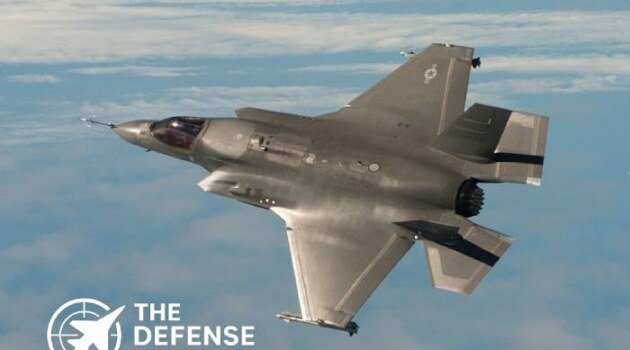
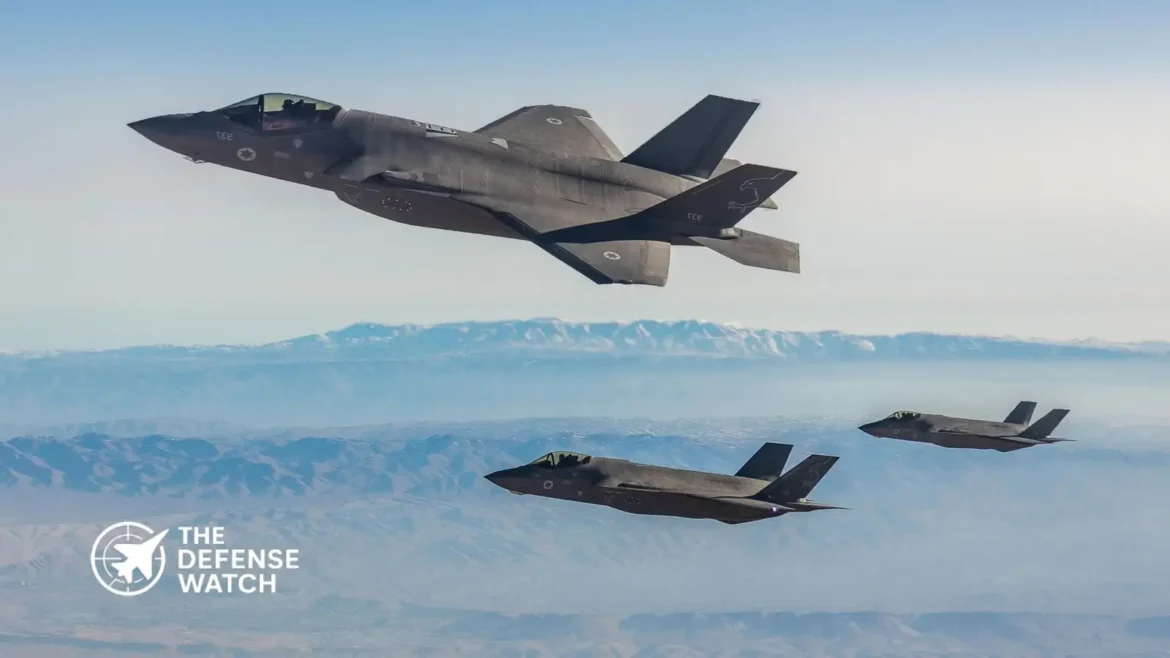
Israel has awarded Elbit Systems a new contract aimed at extending the operational range of the Israeli Air Force’s F-35I Adir stealth fighter fleet. The program reflects Israel’s continued focus on long-range strike capability, regional deterrence, and operational flexibility amid evolving Middle East security challenges.
Israel Expands F-35I Adir Operational Reach
The F-35I Adir remains central to Israel’s airpower strategy, and the latest agreement with Elbit Systems highlights a growing emphasis on extended operational reach and mission endurance.
The Israeli Ministry of Defense selected Elbit Systems to develop and integrate capabilities designed to increase the operational range of the F-35I Adir fleet operated by the Israeli Air Force. The contract supports Israel’s long-term modernization roadmap for fifth-generation combat aviation and advanced strike operations.
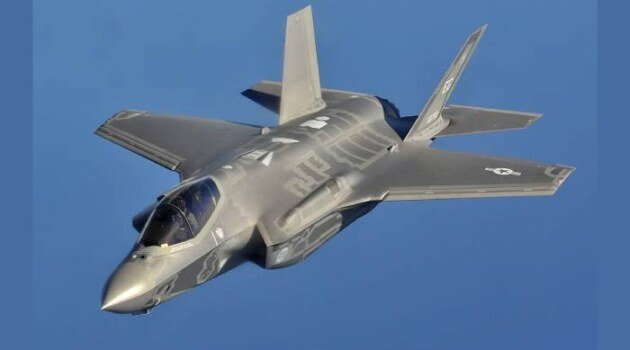
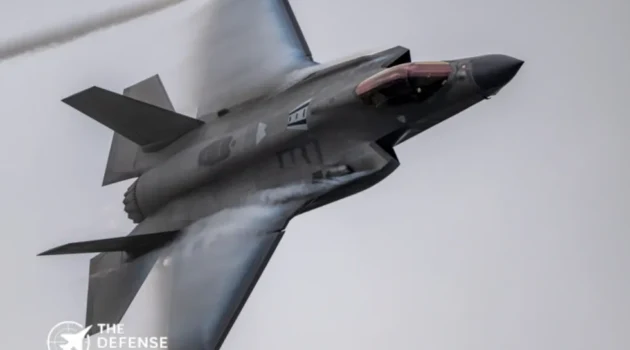
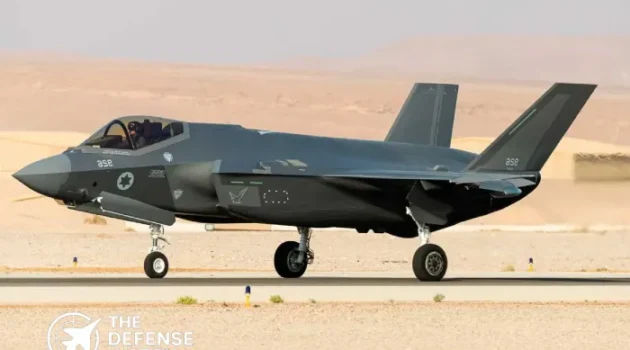
The F-35I Adir is Israel’s customized variant of the Lockheed Martin F-35 Lightning II. Unlike standard export variants, the aircraft incorporates Israeli-developed systems and mission-specific modifications approved under a unique bilateral arrangement with the United States.
While financial details of the contract were not publicly disclosed, the effort is expected to focus on advanced airborne systems, mission support technologies, and enhancements intended to improve operational flexibility during long-range missions.
Long-Range Strike Capability Remains A Strategic Priority
Israel’s decision to expand the operational range of the F-35I Adir comes as regional security dynamics continue to evolve across the Middle East.
The Israeli Air Force has increasingly prioritized deep-strike capability, survivability, and rapid-response operations against emerging threats across extended distances. Analysts have long viewed range and endurance enhancements as critical components of Israel’s future airpower doctrine, particularly as regional adversaries continue investing in integrated air defense systems, long-range missiles, and dispersed military infrastructure.
The F-35I already provides Israel with low observable penetration capability, advanced sensor fusion, electronic warfare systems, and network-centric operational advantages. Extending the aircraft’s effective operational reach could improve flexibility for intelligence, surveillance, strike, and deterrence missions without relying heavily on forward basing options.
Elbit Systems has played a significant role in several Israeli combat aviation modernization efforts, including helmet-mounted systems, electronic warfare technologies, avionics, and mission support equipment. The company’s involvement in the F-35I program reinforces Israel’s strategy of integrating domestic defense technologies into imported platforms to preserve operational independence and customization capability.
F-35I Adir Continues To Anchor Israeli Airpower
The Israeli Air Force was among the first international operators to declare the F-35 operational. Since entering service, the aircraft has become a key component of Israel’s multi-domain combat architecture.
Israel has previously stated that the F-35I has participated in operational missions across the region, including intelligence gathering and precision strike operations. The aircraft’s stealth characteristics and advanced electronic warfare suite are widely considered essential for operating in contested environments defended by modern surface-to-air missile systems.
The latest range enhancement initiative may also support future mission profiles involving longer-duration patrols, strategic deterrence operations, and expanded strike planning options.
Defense analysts note that survivability alone is no longer sufficient for fifth-generation aircraft operating in increasingly complex threat environments. Range, data connectivity, electronic warfare integration, and logistical sustainability are becoming equally important factors in modern air combat operations.
Broader Regional And Industrial Implications
The contract also reflects the continued strength of Israel’s domestic defense industrial base. By assigning key integration and upgrade responsibilities to Elbit Systems, Israel continues to reinforce local technological expertise while reducing dependence on external modification pathways.
The move aligns with broader global trends in military aviation, where operators increasingly seek sovereign control over mission systems, software integration, and platform-specific upgrades.
For Israel, maintaining technological superiority remains a core national security objective. Investments tied to the F-35I Adir demonstrate how the country continues adapting Western-built platforms to meet regional operational requirements.
The agreement further underscores the strategic importance of the F-35 program within Middle East defense planning. Several regional states are expanding air defense capabilities and investing heavily in long-range missile systems, unmanned platforms, and electronic warfare assets. In that environment, operational reach and survivability remain decisive factors.
Executive Summary:
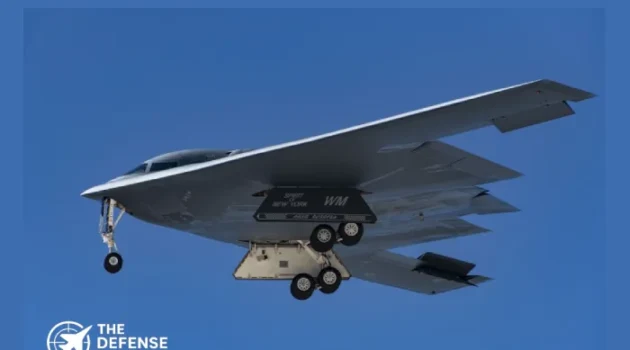
The U.S. Air Force and Northrop Grumman completed a critical B-21 Raider flight test campaign in 73 days instead of the planned 180. The accelerated pace highlights progress in America’s next-generation stealth bomber program and could support faster operational deployment.
B-21 Raider Flight Test Campaign Advances Faster Than Expected
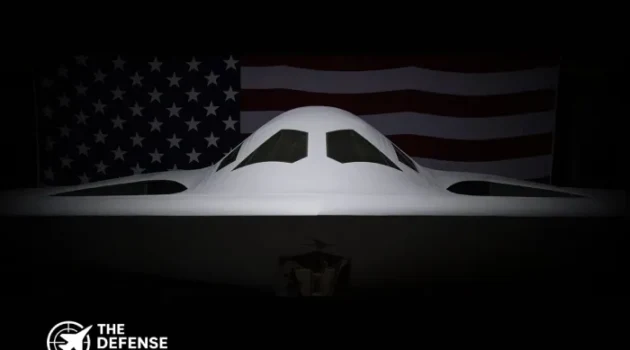
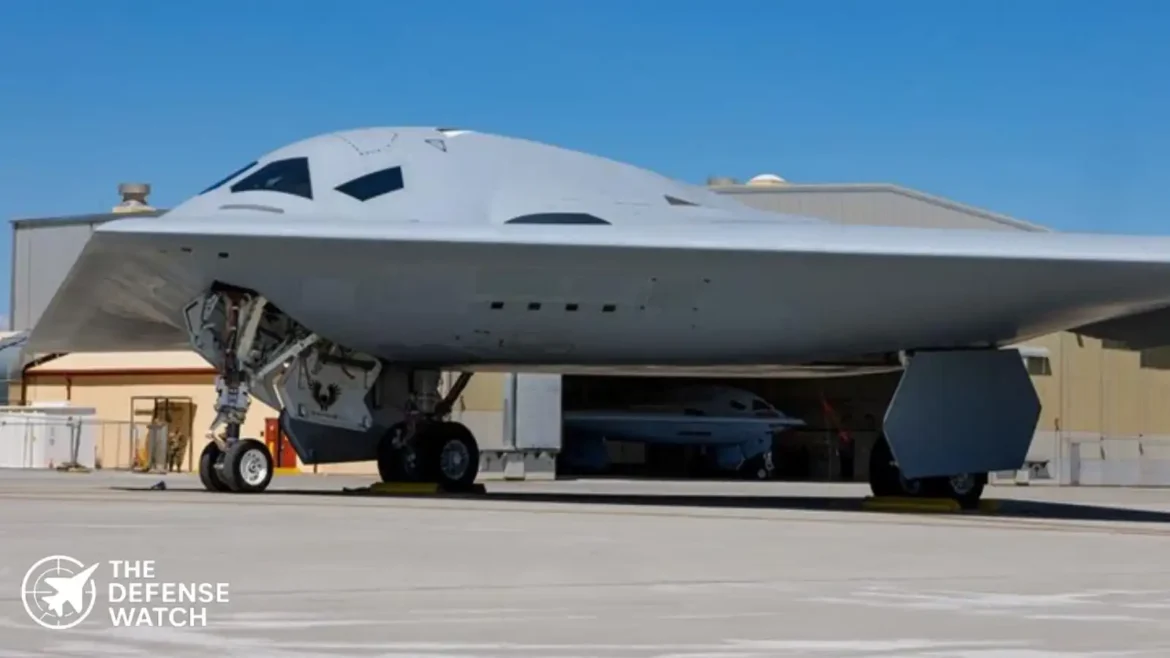
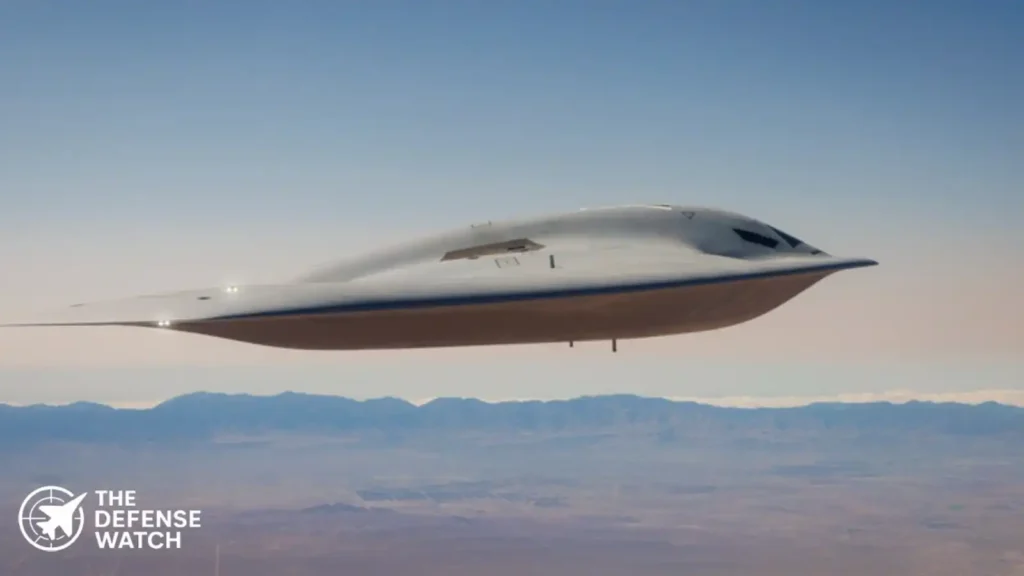
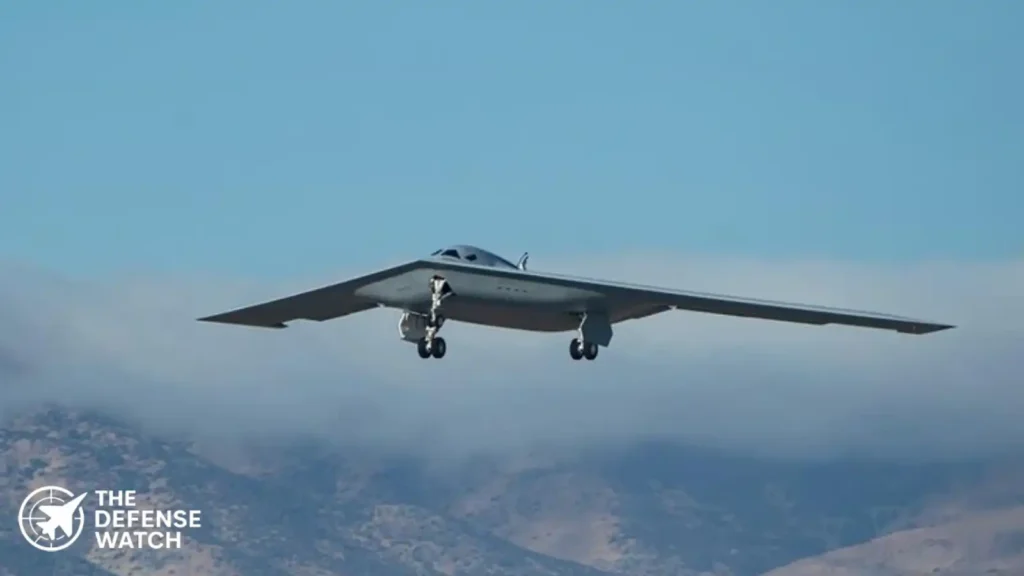
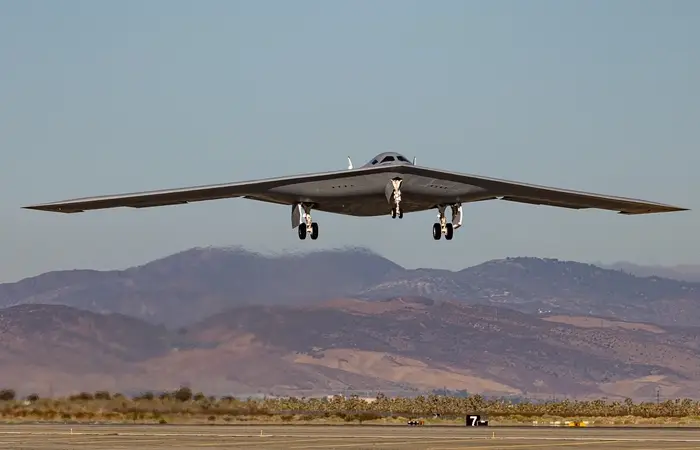
The U.S. B-21 Raider stealth bomber has completed a major developmental flight test campaign significantly faster than initially planned, marking an important milestone for the U.S. Air Force’s next-generation long-range strike program.
Northrop Grumman revealed on May 7, 2026, that the B-21 Raider Combined Test Force reduced a planned 180-day testing schedule to just 73 days.
The accelerated timeline is notable because large-scale military aircraft development programs frequently encounter delays during early flight testing, especially with stealth aircraft integrating advanced sensors, mission systems, and low observable technologies.
The B-21 Raider program appears to be avoiding many of those early setbacks.
Why The Accelerated Testing Timeline Matters
The B-21 Raider is intended to replace portions of the aging U.S. bomber fleet, including the B-1B Lancer and B-2 Spirit, while complementing the B-52 Stratofortress in long-range strike missions.
The faster-than-expected test progress suggests that the aircraft entered flight trials with mature software integration and a relatively stable design baseline. That is a significant achievement for a stealth platform expected to operate in highly contested environments against advanced air defense systems.
Northrop Grumman stated that the Combined Test Force achieved the milestone while completing roughly half of the planned mission objectives connected to an $11.8 billion effort.
Industry analysts view this as evidence that digital engineering and advanced modeling techniques used during development may be reducing traditional flight-test risks. The B-21 program has heavily emphasized digital design and production methods since its earliest phases. Earlier Air Force and Northrop Grumman statements also indicated that flight performance during testing closely matched digital simulations.
That alignment between simulated and real-world performance can shorten troubleshooting cycles and reduce costly redesign work.
Expanding U.S. Long-Range Strike Capability
The B-21 Raider is central to the U.S. Air Force’s future global strike strategy. Designed as a penetrating stealth bomber capable of delivering both conventional and nuclear payloads, the aircraft is expected to operate deep inside heavily defended airspace.
The bomber will eventually support missions across the Indo-Pacific, Europe, and other contested theaters where survivability against modern integrated air defense systems is increasingly important.
Recent testing milestones have included aerial refueling operations with a KC-135 Stratotanker, expanding the bomber’s operational reach and endurance.
The U.S. Air Force has also continued expanding the flight test fleet. A second B-21 Raider test aircraft joined the program in 2025, enabling parallel testing of mission systems, weapons integration, and sustainment procedures.
Officials believe multiple aircraft operating simultaneously will accelerate the path toward operational capability.
Strategic Implications For The United States
The rapid progress of the B-21 Raider program comes amid increasing strategic competition with China and Russia. Both nations continue investing heavily in advanced air defenses, long-range missiles, and next-generation combat aircraft.
For the Pentagon, the B-21 Raider represents more than a new bomber. It is a key part of maintaining credible long-range deterrence and strike flexibility in future conflicts.
The Air Force plans to acquire at least 100 B-21 aircraft, though some defense analysts argue that number may eventually increase depending on operational demands and geopolitical developments.
Unlike previous stealth bomber programs that faced major production and affordability challenges, the B-21 effort has focused heavily on scalable manufacturing and lower sustainment costs from the outset.
That production-focused approach may help the Air Force field the aircraft more rapidly than earlier strategic bombers.
Program Momentum Continues
The B-21 Raider first flew in November 2023 and has steadily expanded its test envelope since then. The aircraft already entered low-rate initial production, another sign of Pentagon confidence in the program’s maturity.
While many technical details remain classified, recent milestones indicate the stealth bomber program is progressing with fewer disruptions than typically seen in next-generation combat aircraft development.
If the current pace continues, the B-21 Raider could enter operational service on schedule and become the backbone of the U.S. Air Force’s future bomber fleet during a period of intensifying global strategic competition.

Executive Summary: The Commander of US Indo-Pacific Command (INDOPACOM) has formally supported increasing the US Air Force’s acquisition objective for the B-21 Raider from 100 to 200 aircraft. This recommendation is driven by the need for high-volume, long-range conventional and nuclear precision strikes to deter peer-state aggression in the Pacific theater.
Strategic Requirement for Expanded Stealth Capacity
The push for a 200-aircraft fleet represents a significant shift from the current Department of Defense (DoD) “Program of Record.” Military leadership argues that the initial requirement of 100 units was formulated under different geopolitical conditions. As regional anti-access/area-denial (A2/AD) bubbles expand, the B-21 is increasingly viewed as the primary tool for penetrating sophisticated Integrated Air Defense Systems (IADS).

The B-21 Raider, developed by Northrop Grumman, utilizes sixth-generation stealth technology designed to remain survivable against modern S-400 and nascent S-500 surface-to-air missile systems. By doubling the fleet, INDOPACOM aims to ensure high-sortie availability despite the vast geographical distances of the Pacific.
Comparative Analysis: B-21 Raider vs. B-2 Spirit
The B-21 is intended to replace the aging B-2 Spirit and B-1B Lancer fleets, providing a more maintainable and digitally integrated platform.
Feature B-21 Raider B-2 Spirit (Legacy) Range Estimated 6,000+ nm (Unrefueled) Approx. 6,000 nm Payload Classified (Mixed Munitions) 40,000 lbs Status In Production / Flight Testing Operational (Low Fleet Count) Key Technology Open Systems Architecture (OSA) Analog/Proprietary Digital Mix Export to Sheets
Technical Advantages and Mission Profile
The B-21’s value proposition extends beyond its radar cross-section (RCS) reduction. Its “Open Systems Architecture” allows for rapid software insertion, ensuring the platform can adapt to electronic warfare (EW) threats in real-time.
- Digital Engineering: The platform was developed using digital twin technology, reducing the sustainment tail and increasing the “Mission Capable” rate compared to the maintenance-intensive B-2.
- Multi-Role Capability: While primarily a bomber, the B-21 serves as a high-altitude sensor node, capable of gathering and distributing intelligence, surveillance, and reconnaissance (ISR) data across the Joint All-Domain Command and Control (JADC2) network.
- Dual-Capable Strike: The aircraft is designed to carry both the B61-12 guided nuclear bomb and the Long Range Stand-Off (LRSO) cruise missile, alongside a vast array of conventional precision-guided munitions (PGMs).
Geopolitical Implications and Deterrence
The INDOPACOM recommendation arrives amid increasing concerns regarding the People’s Liberation Army (PLA) modernization. The vastness of the Pacific theater requires a platform that can operate without reliance on vulnerable forward-operating bases.
“The B-21 is the most significant deterrent in our inventory,” noted officials during the 2026 posture hearings. The ability to hold targets at risk from the continental United States (CONUS) or second-island-chain bases like Guam provides a strategic depth that tactical fighters cannot match.
However, expanding the order to 200 aircraft will face budgetary scrutiny. With an estimated unit cost of $750 million (in 2026 dollars), a 100-unit increase would require an additional $75 billion in procurement funding, not including long-term operations and sustainment (O&S) costs. Proponents argue that the cost of conflict far outweighs the investment in a dominant stealth deterrent.
Boeing’s F-47 accelerates under a $4.4B budget while Edgewing consolidates three nations into a unified GCAP design authority — two programs, two strategies, one race for post-F-35 air dominance.
¦ KEY FACTS AT A GLANCE- On March 21, 2025, Boeing was awarded the NGAD Penetrating Combat Aircraft contract worth more than $20 billion, with the aircraft formally designated the F-47 — the first U.S. fighter designation beyond the F-35.
- The USAF FY2026 budget commits approximately $4.4 billion to the F-47 program — $3.5 billion in base funding plus $900 million in reconciliation spending — the largest single-year investment in a U.S. crewed tactical aircraft in over two decades.
- On April 1, 2026, the GCAP Agency awarded a £686 million ($905 million) contract to Edgewing — the tri-national joint venture of BAE Systems, Leonardo, and Japan Aircraft Industrial Enhancement Co. Ltd. (JAIEC) — marking the first unified international contract in the program’s history.
- GCAP Agency CEO Masami Oka confirmed the contract transitions activities “previously conducted under three nations’ contracts” into a single, fully-fledged international program for the first time.
- The F-47 requires a 1,200+ nautical mile unrefueled combat radius — nearly three times the F-22 Raptor’s 410 nm range — driven by the Pacific theater requirement to penetrate China’s A2/AD envelope from Guam or Japan.
- GCAP targets a 2035 operational service date, confirmed by the Japan Ministry of Defense in its FY2026 budget cycle. The F-47 targets service entry before 2029, with first flight estimated at 2028.
- Europe’s rival FCAS program (France, Germany, Spain) has no confirmed prime contractor, no firm first-flight timeline, and a slipping 2040 target date — trailing both NGAD and GCAP by a significant programmatic margin as of April 2026.
2026 Status Check: Two Programs, Two Turning Points
The global sixth-generation fighter competition has reached a decisive inflection point in the first quarter of 2026. Two programs have separated themselves from the field: the United States Air Force’s Next Generation Air Dominance (NGAD) program, now formally designated the Boeing F-47, and the trilateral Global Combat Air Programme (GCAP), operated by the United Kingdom, Italy, and Japan. Both have crossed significant programmatic milestones within weeks of each other — marking what analysts are calling the most consequential month in post-Cold War air power acquisition.
The F-47 Designation and FY2026 Budget Acceleration
On March 21, 2025, the Air Force formally announced that Boeing had won the NGAD Penetrating Combat Aircraft (PCA) competition, designating the aircraft the F-47 — the first new fighter designation beyond the F-35 in the U.S. inventory. The contract was valued at more than $20 billion. Boeing will design and produce a fleet of approximately 185 to 200 aircraft, intended to enter service before the end of this decade.
In the FY2026 budget request submitted to Congress, the Trump administration committed approximately $3.5 billion in base funding plus $900 million in reconciliation spending — a combined $4.4 billion — to accelerate the F-47’s Engineering and Manufacturing Development (EMD) phase. This represents the largest single-year investment in a U.S. crewed tactical aircraft program in at least two decades. The FY2026 National Defense Authorization Act (NDAA) reinforced this commitment, and the One Big Beautiful Bill Act (P.L. 119-21) added a further $400 million specifically to accelerate production timelines.
Complementing the F-47, the Air Force also doubled its investment in Collaborative Combat Aircraft (CCA) — autonomous loyal wingmen — from approximately $494 million in the prior cycle to $807 million in FY2026. The Air Force’s doctrine explicitly defines NGAD as a “family of systems,” with the F-47 serving as the crewed apex node of a broader manned-unmanned teaming architecture.
GCAP: The Edgewing Contract and the Shift to a Unified International Program
On April 1, 2026, the GCAP International Government Organisation (GIGO) awarded a £686 million (approximately $905 million) contract to Edgewing — the UK-headquartered industrial joint venture formed on June 20, 2025, by BAE Systems, Leonardo, and Japan Aircraft Industrial Enhancement Co. Ltd. (JAIEC). Each nation holds an equal 33.3 percent stake. Edgewing serves as the program’s prime contractor and unified design authority for the full service life of the aircraft, expected to extend beyond 2070.
GCAP Agency Chief Executive Masami Oka was unambiguous about the contract’s significance: “This contract is an important moment for GCAP, as activities previously conducted under three nations’ contracts will now be carried out as part of a fully-fledged international program.”
The transition from parallel national efforts into a single unified development framework is precisely the kind of governance consolidation that the FCAS program — the rival European sixth-gen effort — has conspicuously failed to achieve. Major industrial partners beneath the Edgewing prime include Rolls-Royce, Italy’s Avio Aero, and Japan’s IHI on propulsion; MBDA on weapons integration; and a trilateral sensor consortium led by Leonardo UK, Leonardo Italy, ELT, and Mitsubishi Electric.
Technical Comparison: F-47 NGAD vs. GCAP — Where the Programs Diverge
Surface-level comparisons of sixth-generation fighters inevitably focus on specifications that remain classified or unconfirmed. The more analytically useful approach is to examine what each program has chosen to optimize — and why those choices reflect different threat assessments, industrial capabilities, and operational doctrines.
Program Comparison Matrix — April 2026
Attribute F-47 NGAD — United States GCAP — UK / Italy / Japan Program Designation Boeing F-47 (NGAD Penetrating Combat Aircraft) GCAP — developed by Edgewing JV Partner Nations United States (USAF sole operator) UK, Italy, Japan — equal 33.3% each Primary Strategic Focus Long-range stealth penetration + sensor-shooter dominance in A2/AD environments Sovereign air superiority + multi-domain integration beyond US ITAR constraints Engine Technology XA-103 adaptive cycle engine (GE Aerospace/P&W NGAP); variable-cycle for cruise efficiency and combat thrust; advanced thermal management for IR signature reduction Advanced Power and Propulsion program; adaptive cycle demonstrators under Rolls-Royce, IHI, Avio Aero — optimized to support directed-energy system loads Crewing Model Human-in-the-loop crewed fighter; designed to operate with multiple CCA autonomous wingmen per sortie Optionally manned architecture under evaluation; autonomous wingmen integral to Combat Cloud concept Range Priority 1,200+ nm unrefueled combat radius for Pacific theater; large internal payload bay Broadly comparable range requirement; modular payload architecture for multi-role flexibility Target Entry to Service Late 2020s to early 2030s; administration has cited before 2029 aspirationally 2035 — confirmed by Japan MoD and GCAP Agency First Flight (Estimated) 2028 target widely cited; classified demonstrators may have already flown Demonstrator flight testing through late 2020s; prototype first flight targeting early 2030s Industrial Prime Boeing — sole-source, $20B+ contract Edgewing (BAE Systems, Leonardo, JAIEC) — equal national shares Multi-Domain Integration Integrated with JADC2; CCA swarms as distributed sensor-shooters GCAP Combat Cloud: satellites, ships, ground sensors, allied platforms in real-time shared data environment FY2026 Budget Commitment ~$4.4B (base + reconciliation) + $807M CCA £686M ($905M) Edgewing contract; Japan MoD FY2026 allocations separate The Collaborative Combat Aircraft Factor: Sixth-Gen as a System of Systems
The defining architectural shift of the sixth-generation era is the formal abandonment of the platform-centric paradigm. Neither the F-47 nor GCAP is designed primarily as a superior individual aircraft. Both are engineered as command nodes within a distributed, multi-domain kill chain — a concept that fundamentally changes how analysts should evaluate these programs.
F-47 and the Loyal Wingman Doctrine
The USAF’s CCA investment — now at $807 million annually — reflects a doctrine in which each F-47 sortie deploys multiple autonomous wingmen acting as sensor extensions, electronic warfare platforms, or expendable strike assets. The Air Force has publicly stated a goal of purchasing more than 1,000 CCAs — roughly two per F-47 and two per F-35A in the force structure. Current CCA competition entrants include designs from General Atomics and Anduril Industries.
The human pilot in the F-47 retains decision authority — a deliberate design choice in response to rules-of-engagement doctrine around lethal autonomous systems — but tactical workload is increasingly offloaded to AI-managed drone networks. A single F-47 sortie entering a contested environment could simultaneously present multiple radar returns, distribute electronic jamming across a wider aperture, and execute distributed strike options while the crewed aircraft remains at range. This is the operational logic that justifies the F-47’s projected unit cost — estimated at several hundred million dollars per airframe — as an acceptable premium for a low-density, high-demand platform that rarely needs to be placed at direct risk.
GCAP and the Combat Cloud Concept
GCAP’s equivalent architecture is the Combat Cloud — a networked operational environment linking the crewed fighter to satellites, surface ships, ground-based sensors, and allied aircraft in a persistent, real-time shared data environment. Where the USAF’s CCA concept emphasizes organic drone wingmen under direct pilot supervision, GCAP’s Combat Cloud is designed for interoperability across a broader joint and coalition force.
Japan’s Self-Defense Force will operate GCAP in an environment where it routinely integrates with U.S. Navy surface combatants, Aegis-capable destroyers, and E-2D Hawkeye airborne early-warning aircraft. The Combat Cloud architecture is therefore designed for seamless multi-domain integration across allied platforms — not merely within a single air wing. The trilateral sensor consortium of Leonardo, ELT, and Mitsubishi Electric is specifically tasked with ensuring GCAP’s data links remain interoperable with NATO and U.S. joint force architecture, while maintaining ITAR-independent design pathways for sovereign industrial capability.
Geopolitical and Industrial Context: Why Both Programs Matter in 2026
The Pacific Theater and the 1,200 Nautical Mile Benchmark
The F-47’s strategic rationale is anchored almost entirely in the Pacific theater and the requirement to operate within China’s expanding Anti-Access/Area-Denial (A2/AD) envelope. The PLA Air Force and Rocket Force have invested heavily in long-range surface-to-air missile systems, over-the-horizon radar networks, and anti-satellite capabilities specifically designed to deny U.S. air power the sanctuary from which it currently operates.
The USAF planning requirement for the F-47 centers on a 1,200+ nautical mile unrefueled combat radius — sufficient to reach targets deep inside Chinese-controlled airspace from bases in Guam or Japan without relying on forward bases vulnerable to ballistic missile strikes. For context, the F-22 Raptor — which the F-47 is designed to replace — has an unrefueled combat radius of approximately 410 nautical miles. The generational leap in required range reflects the honest operational assessment within Air Force planning circles that the threat environment of 2030 will look nothing like the one for which the F-22 was optimized.
Adaptive engine technology — specifically the XA-103 and its program siblings from GE Aerospace and Pratt & Whitney — is the enabling technology for this range requirement. Adaptive cycle engines dynamically reconfigure their thermodynamic cycle, providing maximum thrust for supersonic sprint or combat maneuvering while reverting to a highly fuel-efficient cruise mode for long transit legs. The thermal management benefits also reduce infrared signature — a vulnerability highlighted by recent operational experience in the Gulf region, where fourth-generation aircraft faced heat-seeking missile threats in contested airspace.
GCAP and Sovereign Capability: The ITAR Calculus
For the United Kingdom, Italy, and Japan, GCAP carries a strategic dimension that transcends the aircraft’s technical specifications. All three nations currently operate the F-35, a platform whose entire support chain — software updates, sensor packages, and certain maintenance activities — runs through ITAR-controlled U.S. systems. While manageable in peacetime, this dependency creates real operational constraints in scenarios where U.S. and partner-nation interests may diverge, or where operational tempo demands immediate capability changes that cannot wait for U.S. government approval cycles.
GCAP is explicitly designed to give its three partner nations a sovereign 6th-generation combat air capability that operates outside the ITAR constraint. Design authority resides with Edgewing, headquartered in the UK. Mission system architecture is developed by the trilateral sensor consortium. Weapons integration is managed by MBDA — a European firm. This is not an accident; it is the foundational industrial-policy rationale for why Japan, despite its deep alliance with the United States, chose GCAP over a U.S.-led program. Tokyo’s defense industrial strategy demands domestic content, sovereign sustainment capability, and technology transfer that the classified, sole-source F-47 program cannot provide.
Canada’s decision to join GCAP as an informal observer in March 2026 — with a formal announcement anticipated by June 2026 — further validates the program’s expanding geopolitical footprint. Germany’s reported February 2026 examination of GCAP as a fallback to the troubled FCAS program is another indicator of its credibility as the most viable non-U.S. sixth-generation option in the Western alliance.
FCAS in 2026: A Cautionary Contrast
The Future Combat Air System (FCAS) — the Franco-German-Spanish sixth-generation program — remains a relevant reference point precisely because its difficulties illustrate what GCAP and NGAD have managed to avoid. As of early 2026, FCAS has not selected an industrial prime contractor, does not have a firm first-flight timeline, and continues to navigate deep structural disagreements between Dassault Aviation and Airbus Defence and Space over work-share, intellectual property control, and system architecture authority.
Germany missed its end-of-2025 decision milestone without resolution, and reporting in February 2026 indicated Berlin was actively examining GCAP membership as a fallback. France has signaled continued commitment, but the program’s 2040 target date — already five years behind GCAP’s 2035 goal — has slipped further in credibility with each missed governance milestone. For defense analysts evaluating the Western sixth-generation landscape in 2026, FCAS occupies the cautionary position: a technically ambitious program whose governance architecture has proven unable to match its industrial ambition.
Key Question: Which Sixth-Gen Fighter Will Fly First?
This question requires separating two distinct metrics: first flight of a prototype and first operational deployment.
F-47 — Leading in Flight Testing Maturity
The F-47 is almost certainly ahead in flight testing. The USAF’s classified X-plane demonstration program produced prototype aircraft that have been flying at classified facilities for several years. When former Air Force Secretary Frank Kendall noted that “X-planes had been built and were successful” prior to the NGAD PCA competition, he confirmed that subsystem and configuration flight testing had already occurred. The F-47’s formal EMD first flight is publicly estimated at 2028 — though it is plausible that demonstrator variants have already exceeded this milestone under classification. The administration’s stated aspiration to field the F-47 before 2029 and the $4.4 billion FY2026 investment are explicitly structured to compress the traditional EMD timeline.
GCAP — Leading in International Industrial Consolidation
GCAP’s measurable lead is not in flight hardware but in governance and industrial architecture. The April 2026 Edgewing contract represents the kind of organizational consolidation — a single prime contractor with unified design authority, a co-located program office in Reading, and equal-share tri-national industrial structure — that FCAS has attempted for years without success. Engine demonstrator activity under the trilateral propulsion consortium is planned through the late 2020s, with prototype first flight targeting the early 2030s. The 2035 operational target, reaffirmed by Japan’s Ministry of Defense in its FY2026 budget cycle, remains credible.
The bottom line: the F-47 leads in flight testing maturity and production timeline ambition. GCAP leads in international industrial consolidation, governance robustness, and the ability to sustain program coherence across three sovereign governments with different procurement calendars and defense budgets. Whether either achieves its target decade will depend less on engineering and more on budget continuity across administration changes in Washington, Westminster, Rome, and Tokyo.
Analytical Conclusion: Complementary Programs, Not Competitors
A recurring misconception in sixth-generation analysis is that GCAP and the F-47 are competing programs. They are not. The F-47 is a U.S. sovereign capability optimized for the Pacific theater and USAF doctrine. GCAP is a trilateral sovereign capability optimized for post-ITAR independence, allied interoperability, and the specific political economies of UK, Italian, and Japanese defense industrial policy.
What makes 2026 analytically significant is that both programs have simultaneously reached the point of irreversibility. The F-47’s $20 billion-plus Boeing contract and $4.4 billion FY2026 budget commitment make program cancellation politically and industrially catastrophic. The Edgewing contract and unified GCAP governance structure make a similar reversal unthinkable for three allied governments that have invested years of political capital in the program’s architecture.
For U.S. defense analysts, the operational question is straightforward: the F-47 and its CCA ecosystem will define USAF air dominance doctrine through the 2040s. For analysts in London, Rome, and Tokyo, the April 2026 Edgewing contract marks the moment GCAP became real — not as a concept or political commitment, but as a funded, governed, internationally integrated program with a named contractor, a named CEO, and a named deadline.
Both programs represent the correct strategic answer to the same question: how does a first-tier air power maintain dominance in a world where F-35-generation stealth is no longer sufficient? The fact that they have chosen different architectures, different industrial models, and different timelines is not a weakness. It is the resilience of an alliance that retains multiple paths to the same objective.
Pentagon’s FY2027 Budget Doubles Down on F-47, Exposing a Deep Divide Over Naval Aviation’s Future
The Trump administration’s fiscal year 2027 defense budget delivers the clearest signal yet about White House airpower priorities: the F-47 sixth-generation fighter will receive roughly $5 billion in development funding, while the Navy’s own next-generation combat jet — the F/A-XX — gets just $140 million. The asymmetry, embedded in a record-breaking $1.5 trillion overall defense request, sets up a potential clash between the executive branch and Congress that could define U.S. combat aviation investment for the decade ahead.
¦ KEY FACTS AT A GLANCE- The Trump administration’s FY2027 defense budget requests approximately $5 billion for the Air Force’s F-47 sixth-generation fighter — all from baseline discretionary spending.
- The Navy’s next-generation fighter, the F/A-XX, receives just $140 million in the FY2027 request — a 35-to-1 funding disparity compared to the F-47.
- Budget documents state the F-47 program is on track to achieve first flight in 2028, marking a critical milestone for the Boeing-built aircraft.
- Congress dramatically boosted F/A-XX funding in FY2026 — from $74 million to nearly $1.7 billion — in direct contrast to the White House’s current proposal.
- The FY2027 request also includes 85 F-35 aircraft across the Air Force, Navy, and Marine Corps, with 53 funded through the proposed reconciliation bill.
The Big Picture
U.S. military aviation modernization has reached a critical inflection point. The Trump administration is, once again, going all in on the development of the Air Force’s sixth-generation fighter while seeking only a fraction of funding for the Navy’s future combat jet.
The F-47, built by Boeing and designed to replace the F-22 Raptor as the Air Force’s premier air superiority platform, represents the centerpiece of Washington’s push to maintain dominance over increasingly capable Chinese and Russian air forces. China’s J-20 and J-35 programs are maturing rapidly, and Beijing has publicly telegraphed ambitions for its own sixth-generation program. Against that backdrop, the F-47 is not merely a procurement decision — it is a strategic deterrence instrument.
The FY2027 budget, released April 3, frames this investment explicitly in those terms. Budget documents state: “The Administration is sending a clear message to the nation’s adversaries by aggressively moving forward with the F-47 sixth-generation fighter: that the U.S. military will secure command of the skies, deter aggression, and project power anywhere on the globe.”
What’s Happening
The record-breaking $1.5 trillion FY2027 defense spending request includes around $5 billion to develop the F-47, all from baseline discretionary funding. This represents a substantial increase from the prior year. The F-47 received $2.5 billion in the FY2026 budget request and $900 million in reconciliation funding, netting a total of $3.5 billion last year.
The contrast with naval aviation is striking. Just $140 million — $72 million of which comes from a proposed reconciliation bill — is requested for the Navy’s F/A-XX next-generation fighter.
The budget documents state the FY2027 request would achieve a first flight for the F-47 in 2028. That timeline, if met, would put the Air Force on a credible path toward initial operational capability by the early 2030s — ahead of what most analysts had previously projected for any U.S. sixth-generation platform.
On the F-35 front, the White House is requesting a total of 85 aircraft for the Air Force, Navy, and Marine Corps, with 32 funded by the discretionary budget and 53 by the proposed reconciliation bill. Of the total, 38 would go to the Air Force, 37 to the Navy, and 10 to the Marine Corps.
Why It Matters
The funding gap between the F-47 and F/A-XX is not simply a budgetary preference — it reflects a fundamental debate inside the U.S. defense establishment about where air combat superiority will be won in a future high-end conflict.
The Air Force’s F-47 program benefits from clear White House backing, a named contractor in Boeing, and now a declared first-flight target. The program has momentum and institutional support that the F/A-XX currently lacks at the executive level.
The Navy’s predicament is more complicated. Carrier-based aviation remains central to U.S. power projection in the Indo-Pacific, and any gap in next-generation naval air capability would directly undercut the strike group’s relevance against a peer adversary equipped with advanced integrated air defense systems. The F/A-XX is designed to eventually replace the F/A-18E/F Super Hornet — a platform that, while still capable, was not designed for contested airspace against near-peer threats.
The disparity also raises questions about inter-service equity and joint warfighting integration. In a high-end conflict against China — the scenario that drives most Pentagon planning — both Air Force and Navy aviation assets would need to operate together. A generational capability gap between the two services’ frontline fighters could complicate coordinated strike packages and force the Navy to rely on older platforms longer than intended.
Strategic Implications
The $5 billion F-47 request carries implications well beyond the Air Force budget line.
First, it signals that the administration views air dominance as the foundational layer of deterrence — a position consistent with both historical U.S. military doctrine and the emerging realities of modern contested airspace. Advanced air defense systems in China and Russia have fundamentally changed the threat calculus for fifth-generation fighters like the F-35 and F-22, and the F-47 is intended to defeat those systems at range, with greater survivability and payload flexibility.
Second, the budget’s heavy reliance on reconciliation funding for major defense programs — including portions of the F-35 buy and F/A-XX — introduces legislative risk. Reconciliation bills require specific procedural conditions to pass, and the fate of defense provisions within them is never guaranteed. Programs that depend on reconciliation funding for basic development activities are structurally vulnerable to political disruption.
Third, the funding trajectory for F-47 — from $3.5 billion in FY2026 to a proposed $5 billion in FY2027 — represents a steep acceleration. That pace suggests the program has cleared significant internal milestones and that contractors and program managers are confident enough to absorb and execute at that spending rate. Rapid funding ramp-ups in defense programs can indicate genuine technical progress or, alternatively, schedule pressure driven by strategic urgency rather than engineering readiness.
Competitor View
Beijing will study this budget request carefully. China’s People’s Liberation Army Air Force has advanced its own sixth-generation aviation research, and the pace of U.S. investment in the F-47 sends a direct message about American intent to maintain an air combat edge in the Western Pacific.
From Beijing’s perspective, the F-47’s projected 2028 first flight — combined with its development funding level — suggests the U.S. is accelerating a platform designed specifically to penetrate and operate inside China’s layered air defense envelope. This will likely reinforce Chinese investment in both next-generation interceptors and advanced surface-to-air missile systems intended to complicate F-47 operations.
Russia, whose Su-57 program has faced persistent production and funding challenges, will also note the contrast. U.S. commitment to a fully funded sixth-generation program underscores a qualitative edge that Moscow currently cannot match and is unlikely to close within the next decade.
The Congressional Flashpoint: F/A-XX
Lawmakers’ support for the F/A-XX program soared in January when House and Senate appropriators boosted its funding more than tenfold, from $74 million to $897 million. Along with $750 million from the reconciliation bill, the Navy’s fighter saw nearly $1.7 billion in total enacted funding.
That congressional intervention — overriding a White House posture that had repeatedly deprioritized F/A-XX — sets the stage for a renewed budget battle. Lawmakers had also requested details on the Navy’s acquisition strategy, spending plan, and timeline for awarding the manufacturing and development contract, as well as an explanation for why the Navy had not spent F/A-XX funds allocated in previous years.
That last point is politically damaging for the Navy. Unspent prior-year funds in a contested program give skeptics in both the White House and the Office of Management and Budget grounds to question the Navy’s execution capacity and institutional commitment to the program. If the service cannot demonstrate a credible plan to obligate and execute the funds Congress already provided, restoring that support in future cycles becomes significantly harder.
What To Watch Next
The 2028 first flight target for the F-47 will be the most closely watched near-term milestone. A successful first flight would validate the program’s accelerated funding and signal that Boeing and the Air Force have managed the technical risk inherent in any sixth-generation platform — which is expected to integrate advanced stealth, next-generation propulsion, directed energy capability hooks, and AI-assisted mission systems.
On the F/A-XX side, the key indicator will be whether Congress again overrides the White House’s proposed funding cut, and whether the Navy can present lawmakers with the acquisition strategy and spending plan they demanded as a condition of FY2026 support. A second consecutive year without a credible program roadmap would likely erode congressional confidence and potentially jeopardize the program’s long-term viability.
The F-35 procurement request — 85 aircraft across three services — will also draw scrutiny. The reliance on reconciliation funding for more than half of that buy highlights the broader risk that attaches to defense modernization programs funded through politically fragile legislative vehicles.
Capability Gap
The F-47 addresses a gap that has grown more urgent with each passing year: the Air Force’s lack of a post-F-22 air superiority platform capable of operating in the most heavily contested airspace.
The F-22 entered service in 2005 and, while still unmatched in many respects, was designed against the threat environment of the 1990s. The F-35, a multirole aircraft optimized for strike and interoperability rather than pure air dominance, does not fully substitute for dedicated air superiority capability. The F-47 is intended to close that gap with a combination of advanced stealth, extended range, next-generation sensors, and the ability to operate in concert with autonomous wingmen — a concept the Air Force has been developing under the Collaborative Combat Aircraft program.
The realistic limitation is schedule risk. Sixth-generation programs are extraordinarily complex, and ambitious timelines have historically slipped. The FY2027 funding acceleration suggests confidence, but the defense acquisition record counsels caution. A first flight in 2028 would be a genuine achievement; a delay of even one year would revive questions about program management and cost discipline.
The Bottom Line
The FY2027 defense budget’s 35-to-1 funding advantage for the F-47 over the F/A-XX is a deliberate strategic statement — one that prioritizes Air Force air dominance in the near term while risking a carrier aviation capability gap that Congress will almost certainly move to correct.
¦ KEY FACTS AT A GLANCE- China is increasing production capacity for both J-20 and J-35 stealth fighters.
- Expanded manufacturing lines aim to accelerate delivery of fifth-generation aircraft to the PLA.
- The move supports China’s broader strategy to compete with U.S. and allied airpower in the Indo-Pacific.
- J-20 production continues to scale, while J-35 is positioned for both naval and export roles.
- China is shifting from limited production to sustained high-rate output of stealth fighters.
China Stealth Fighter Production Expands Rapidly
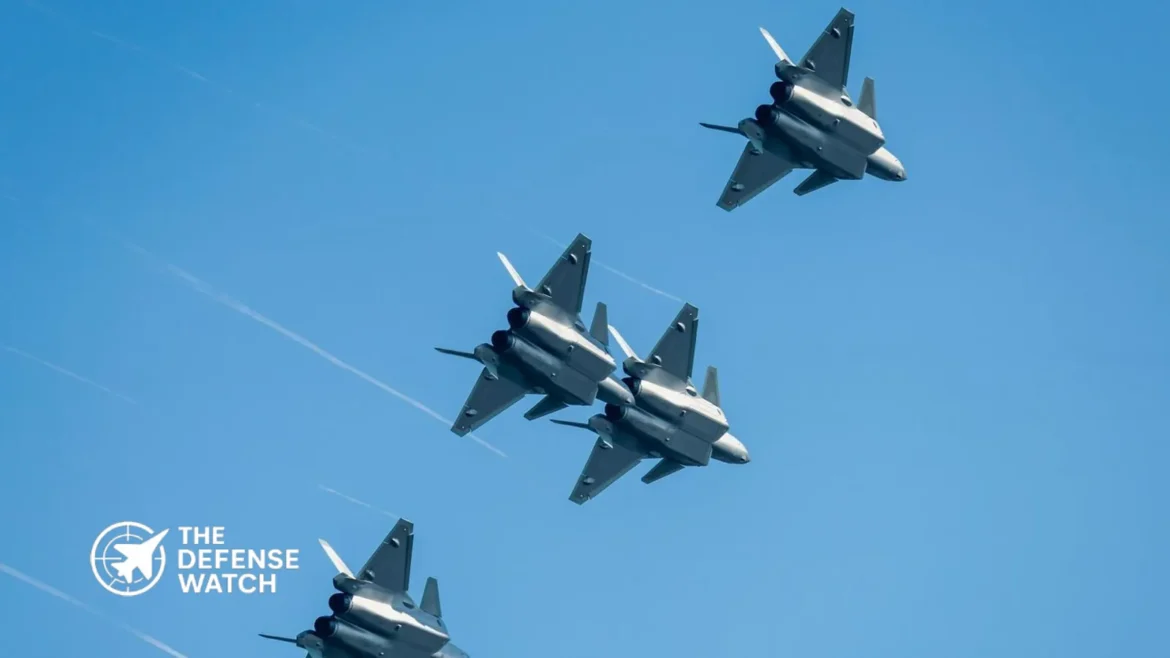
China stealth fighter production is accelerating as Beijing increases manufacturing capacity for both the J-20 and the emerging J-35 programs, signaling a sustained push to expand its fifth-generation combat aircraft fleet.
The Big Picture
China is moving from incremental modernization to large-scale force expansion. The focus is no longer just on fielding advanced platforms, but on producing them in volume.
The United States has long maintained an advantage in fifth-generation aircraft numbers through the F-22 and F-35 programs. China’s current effort suggests a shift toward narrowing that gap, not only in capability but in fleet size.
The Indo-Pacific remains the central theater for this competition. Air superiority, long-range strike, and survivability against advanced air defenses define operational planning for both sides.
What’s Happening
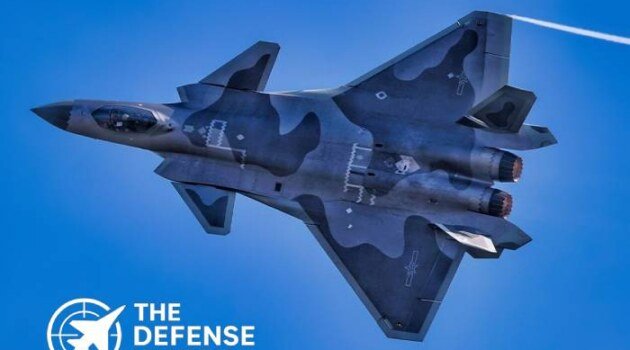
China is increasing production capacity for the J-20, its primary fifth-generation stealth fighter, while also advancing the J-35, a carrier-capable platform under development.
According to Source, new or expanded production lines are enabling higher output rates. The J-20 program, already in serial production, continues to scale, with improved variants and engine upgrades expected to support sustained manufacturing.
The J-35, often compared to U.S. carrier-based stealth fighters, is progressing toward operational deployment. It is expected to serve both the People’s Liberation Army Air Force and the People’s Liberation Army Navy.
Chinese industry appears to be transitioning toward parallel production of multiple stealth aircraft types, a capability historically associated with mature aerospace powers.
Why It Matters
Higher production capacity directly translates into operational mass. Even the most advanced aircraft cannot shape the battlefield if available in limited numbers.
China’s ability to produce the J-20 at scale strengthens its air dominance strategy. The aircraft’s stealth profile, long-range engagement capability, and networked operations make it central to Beijing’s air combat doctrine.
The addition of the J-35 expands flexibility. A carrier-capable stealth fighter enhances naval aviation, supporting power projection beyond China’s immediate coastline.
This dual-track production model reduces reliance on a single platform and creates redundancy in force structure.
Strategic Implications
China’s expanding stealth fighter production affects regional military balance in several ways.
First, it increases pressure on U.S. and allied air forces to maintain qualitative and quantitative advantages. Countries such as Japan and Australia rely heavily on the F-35 program, but production rates and fleet size remain critical factors.
Second, it strengthens China’s anti-access and area denial strategy. A larger stealth fleet complicates adversary planning by increasing the number of survivable strike and interception assets.
Third, it enhances China’s ability to sustain operations in a prolonged conflict. High production capacity suggests resilience, allowing the replacement of losses and continuous force generation.
Competitor View
The United States and its allies are likely to view China’s production surge as a signal of long-term strategic intent rather than a short-term buildup.
Washington has emphasized distributed operations and advanced networking to offset numerical challenges. However, increased Chinese output could erode that advantage over time.
Regional actors may interpret the J-35’s development as a direct response to carrier-based airpower in the Pacific. Its potential export role could also influence defense partnerships, particularly in regions where access to Western systems is limited.
Russia, while a traditional aerospace competitor, may view China’s industrial scaling as a benchmark for its own production challenges.
What To Watch Next
Key indicators will shape how this development unfolds.
Engine maturity remains critical. Indigenous engine programs will determine whether China can sustain high production rates without foreign dependencies.
Operational deployment timelines for the J-35 will also be closely watched, particularly its integration with aircraft carriers.
Production tempo is another factor. If China maintains consistent output growth, it will signal a durable industrial base rather than a temporary surge.
Export activity could further amplify the impact. If the J-35 enters the international market, it could reshape the global fighter landscape.
Capability Gap
China’s push addresses a clear gap in fleet size relative to the United States and its allies.
While the J-20 provides advanced capabilities, earlier production levels limited overall operational impact. Scaling production helps close that gap.
The J-35 addresses another gap, carrier-based stealth aviation. China’s naval air wing has historically relied on non-stealth platforms, limiting survivability in contested environments.
However, challenges remain. Engine performance, pilot training, and integration into joint operations will determine real-world effectiveness.
The Bottom Line
China’s expansion of J-20 and J-35 production marks a shift toward sustained, high-volume stealth fighter output that could reshape the balance of airpower in the Indo-Pacific.
■ KEY FACTS AT A GLANCE- ► NASA completed the first flight of its laminar flow scaled wing design demonstrator.
- ► The test evaluated aerodynamic performance aimed at reducing drag and fuel consumption.
- ► Laminar flow technology keeps airflow smooth over the wing surface to improve efficiency.
- ► The research supports long term goals for quieter, lower emission commercial aircraft.
- ► Data from the flight will guide future aircraft design and potential industry adoption.
NASA Completes First Flight Of Laminar Flow Scaled Wing Design
NASA’s laminar flow wing test reached a new milestone with the first flight of a scale model built to sustain smoother airflow over a wing surface, known in industry circles as laminar flow. That smoother airflow yields lower aerodynamic drag, which translates directly to reduced fuel use and operating costs for aircraft. This flight test matters because drag reduction is a long‑standing goal in aeronautics that affects both commercial and military aviation design competitiveness.
What NASA Tested
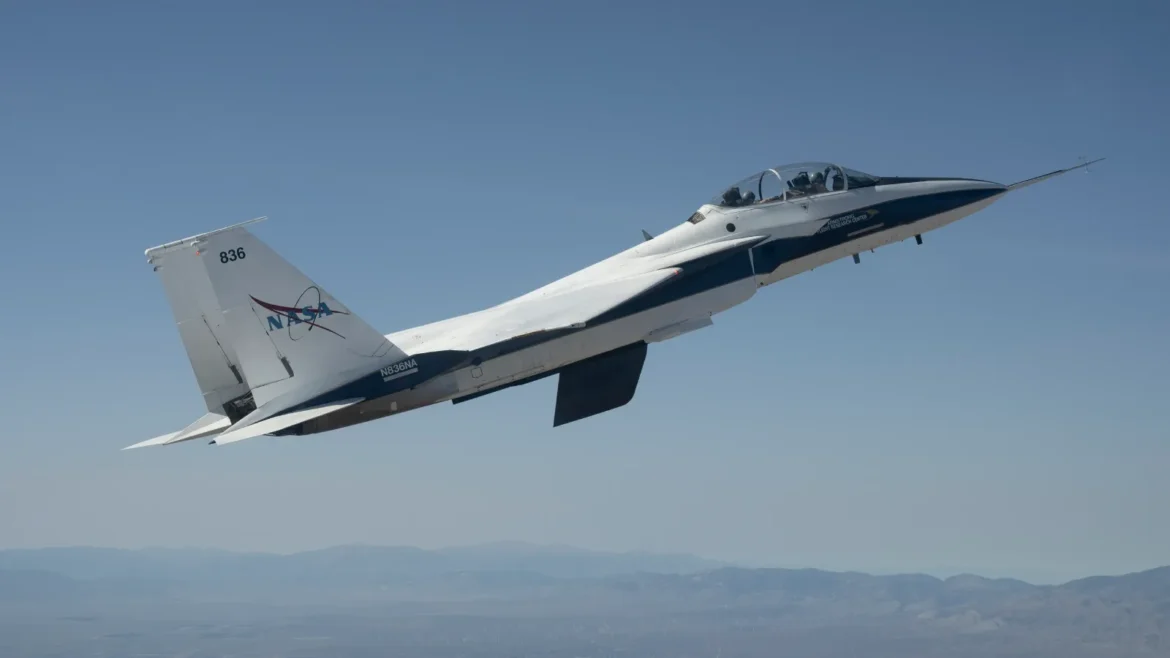
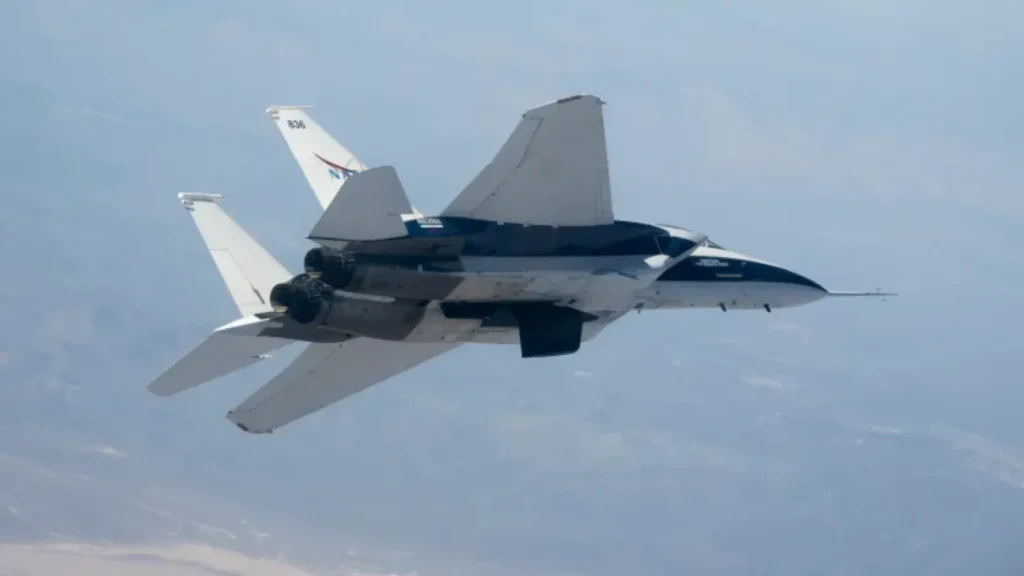
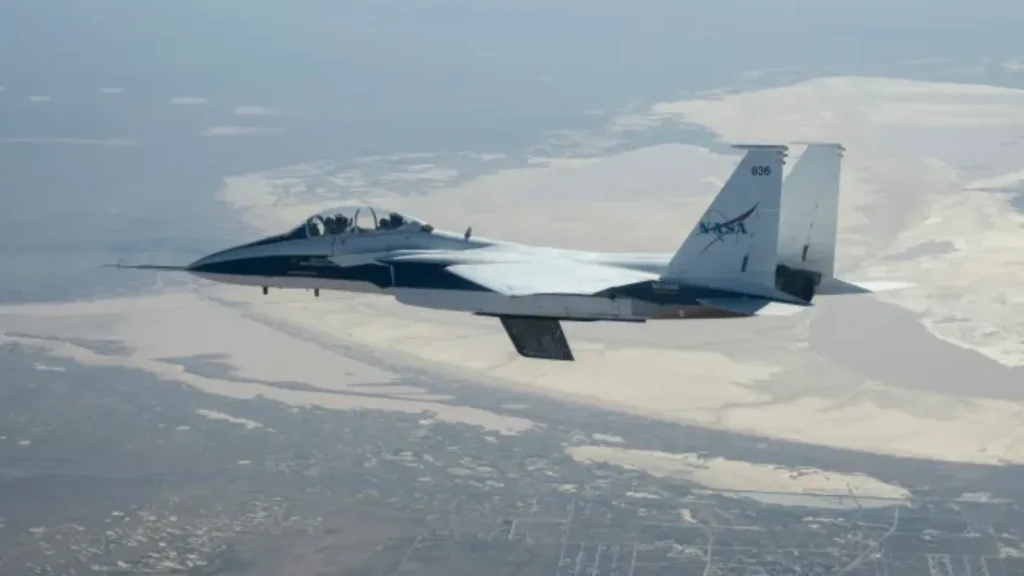
The experiment focused on a Crossflow Attenuated Natural Laminar Flow concept mounted beneath a NASA F‑15 research aircraft. While the test did not involve a full‑size wing on a large transport aircraft, the scaled model’s first flight showed that the CATNLF geometry could be carried in the air and subjected to flight conditions relevant to future designs.
Image : NASA NASA and aerospace researchers have worked on laminar flow technologies for years because the drag created by turbulent flow across a wing surface still accounts for a major share of total aerodynamic resistance. Reducing that drag even a few percent can save millions in fuel for large operators.
Operational Impact
For commercial aviation, laminar flow wings promise tangible fuel efficiency gains. Independent analyses suggest laminar flow treatments on swept wings could reduce drag and fuel burn by about 7 to 10 percent versus conventional wings at cruise. That matters to airlines in a market where fuel remains one of the largest variable costs on long‑haul routes.
From a military perspective, the relevance depends on platform and mission. Transport and tanker aircraft used by the U.S. Air Force could benefit from efficiency gains in range and loiter time. For fighter and bomber fleets, the design challenges are different, but drag reduction still influences range and payload margins. No official U.S. defense program is publicly known to be adopting CATNLF directly, but the broader research can inform aerodynamic refinement in future tactical aircraft.
Strategic Implications
NASA’s aerodynamic research has historically fed into industry and defense innovations. Technologies that enable better fuel efficiency can influence aircraft lifecycle costs, emissions profiles, and logistics planning. In an era of constrained defense and airline budgets, even incremental performance improvements attract attention from program managers.
Comparatively, Airbus and other European aerospace entities have tested laminar flow wings on demonstrator aircraft in the past. Those efforts showed sustainable laminar flow can reduce overall drag, although industrializing such designs remains a challenge given sensitivity to surface imperfections and operational conditions.
Challenges and Next Steps
Laminar flow designs are sensitive to surface contamination, manufacturing tolerances, and environmental effects, such as ice or insect accumulation, which can disrupt the smooth flow and negate benefits. The technologies being tested aim to counter crossflow instabilities that typically force a transition to turbulent air early along the wing.
Image : NASA Future tests will need to demonstrate performance under a broader range of speeds and flight conditions. A scaled model test is a necessary early step but is not sufficient by itself to prove readiness for integration into operational aircraft.
Strategic Assessment
Military Balance: The direct effect on the military balance is limited at this stage. This is fundamental aerodynamic research rather than a new weapons system. However, improved efficiency in large military transports and tankers could subtly enhance operational reach and sustainment.
Defense Logistics: Fuel efficiency affects lifeline platforms such as cargo aircraft and air refueling tankers. Innovations in drag reduction may factor into future U.S. Air Force recapitalization choices if they mature into deployable systems.
Industrial Dimension: NASA’s work could inform U.S. aerospace industry competitiveness against European laminar flow programs. Early adoption of such technologies in commercial airframes strengthens the industrial base and provides a technological edge.
Budget Signals: Funding continued aeronautics research suggests ongoing investment in long‑term efficiency goals even as NASA balances other priorities. Results from CATNLF will shape decisions on scaling and potential partnerships with industry.
KEY FACTS AT A GLANCE■ KEY FACTS AT A GLANCE- ► The US Army tested the XM1225 30×113 mm fuze munition from an AH 64 Apache helicopter.
- ► The munition is designed as an airburst round to counter small unmanned aerial systems.
- ► Engagements were conducted against air to air targets at varying distances.
- ► The round is fired from the Apache’s M230 30 mm chain gun.
- ► The test supports broader US Army counter UAS modernization efforts.
US Army Tests XM1225 Anti Drone Munition From AH 64 Apache
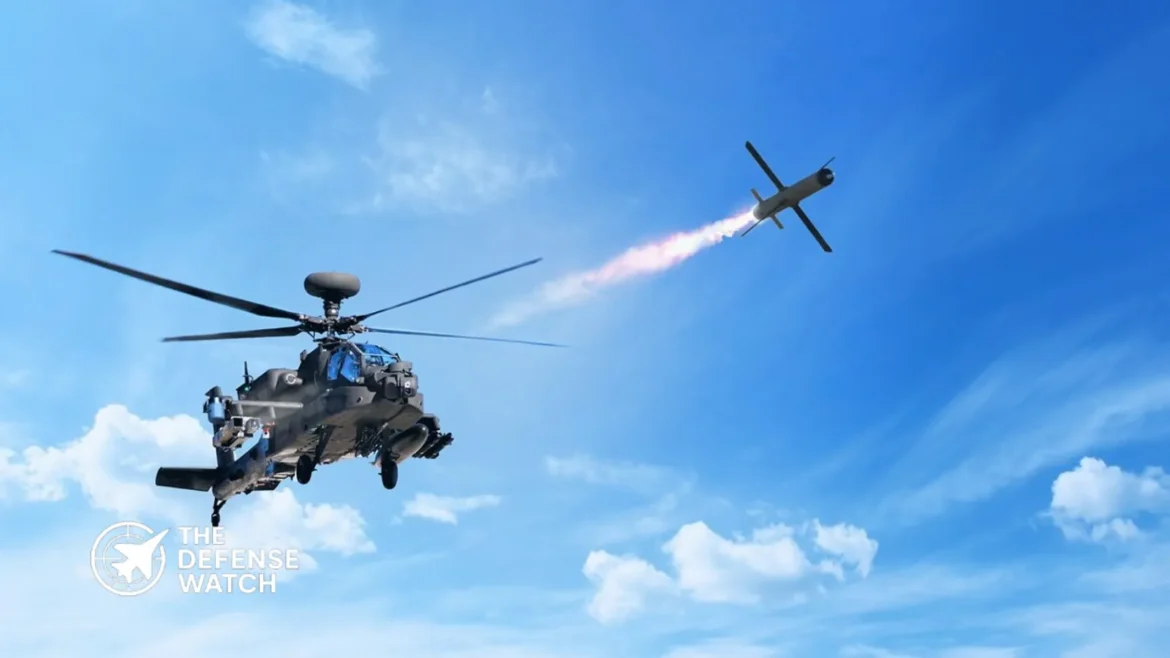
The US Army anti drone munition program took a key step forward as the service tested the 30×113 mm XM1225 fuze round from an Boeing AH-64 Apache helicopter against aerial targets.
According to the United States Army, the live fire event involved engaging air to air targets at varying distances using the Apache’s M230 chain gun. The demonstration focused on validating the performance of the XM1225 programmable fuze round against unmanned aerial systems.
The test reflects the Army’s growing emphasis on counter UAS capability across its aviation and ground formations.
Expanding Apache Counter UAS Capability
The XM1225 is a 30×113 mm high explosive airburst munition designed to detonate at a programmed point in space. Fired from the Apache’s M230 cannon, the round is intended to create a fragmentation pattern effective against small drones.
The US Army anti drone munition effort addresses a clear operational challenge. Small, low cost drones have become a persistent threat in recent conflicts, used for reconnaissance, targeting, and direct attack roles.
Traditionally, the AH 64 Apache has been optimized for close air support, anti armor operations, and armed reconnaissance. By integrating a programmable airburst round, the platform gains an additional air to air capability tailored to counter Group 1 and Group 2 UAS threats.
Army officials have emphasized layered defense against drones, combining electronic warfare, directed energy systems, missiles, and gun based solutions. The XM1225 offers a comparatively low cost per shot option when engaging small aerial targets.
Technical Focus: 30×113 mm XM1225 Round
The 30×113 mm caliber is standard for the Apache’s M230 chain gun. What differentiates the XM1225 is its fuze technology, which enables airburst detonation rather than impact only effects.
Airburst munitions are designed to increase hit probability against small or maneuvering aerial targets. Instead of requiring a direct hit, the round can detonate near the drone, dispersing fragments within a defined radius.
The US Army anti drone munition test evaluated engagements at different ranges, helping determine effective burst timing and lethality envelopes.
Such testing is critical as the Army refines tactics, techniques, and procedures for aviation units facing drone swarms or individual hostile UAS.
Counter UAS In Modern Conflict
The proliferation of small drones in conflicts in Eastern Europe and the Middle East has accelerated US military investment in counter UAS technologies. Senior defense leaders have repeatedly cited the need for scalable and affordable solutions.
The U.S. Department of Defense has prioritized integrated air and missile defense that includes protection against unmanned systems. Aviation assets such as the Apache are increasingly expected to contribute to that mission set.
By testing the XM1225 from the Apache, the Army is exploring how existing platforms can be adapted without requiring entirely new weapon systems.
This approach supports modernization goals while managing cost and integration timelines.
Singapore Prepares For Historic F-35 Stealth Fighter Arrival
Singapore is on track to receive its first F-35 Lightning II stealth fighters later this year, marking a significant milestone in the Republic of Singapore Air Force’s (RSAF) modernization efforts. According to Defense News reporting, the Southeast Asian nation will join an exclusive group of operators flying the world’s most advanced fifth-generation fighter aircraft, strengthening its defense capabilities amid evolving regional security challenges.
(adsbygoogle = window.adsbygoogle || []).push({});The anticipated delivery represents the culmination of Singapore’s 2020 decision to procure the F-35, positioning the city-state as the first Southeast Asian nation to operate the Joint Strike Fighter. This acquisition fundamentally transforms Singapore’s air combat capabilities and reinforces its position as a key U.S. defense partner in the Indo-Pacific region.
Background: Singapore’s F-35 Acquisition Program
Singapore announced its intention to purchase the F-35B and F-35A variants in January 2020, with an initial order reportedly covering up to 12 aircraft in the first phase. The F-35B variant, capable of short takeoff and vertical landing (STOVL), offers unique operational flexibility for Singapore’s space-constrained environment, while the conventional takeoff and landing F-35A provides complementary capabilities.
The procurement decision followed years of evaluation and came after Singapore’s participation in the F-35 program as a Security Cooperation Participant since 2003. This long-standing involvement provided RSAF personnel valuable exposure to the platform’s development and operational concepts well before finalizing the purchase.
Defense officials indicated that the F-35 acquisition aligns with Singapore’s comprehensive fleet modernization strategy, which includes replacing aging F-16C/D Fighting Falcons that have served as the backbone of the RSAF fighter force for decades.
Technical Capabilities And Strategic Implications
The F-35 Lightning II brings transformative capabilities to the Republic of Singapore Air Force, including advanced stealth characteristics, sensor fusion technology, and network-centric warfare capabilities that far exceed fourth-generation platforms. The aircraft’s AN/APG-81 Active Electronically Scanned Array (AESA) radar, Electro-Optical Targeting System (EOTS), and Distributed Aperture System (DAS) create an unprecedented situational awareness picture for pilots.
(adsbygoogle = window.adsbygoogle || []).push({});Singapore’s F-35 fleet will provide critical advantages in contested airspace scenarios, including the ability to detect, track, and engage threats while remaining difficult to detect. The aircraft’s advanced electronic warfare suite and low-observable design enable operations in highly defended environments that would pose significant challenges to conventional fighters.
The stealth fighter’s interoperability with U.S. and allied forces represents another strategic dimension. As tensions in the South China Sea and broader Indo-Pacific region continue, Singapore’s F-35s will enhance coalition operations and information sharing with other F-35 operators including the United States, Australia, Japan, and South Korea.
Training And Infrastructure Development
Preparing for F-35 operations has required substantial investments in infrastructure, training, and support systems. According to industry sources, RSAF pilots and maintainers have been conducting training at U.S. facilities, including Luke Air Force Base in Arizona, which hosts international F-35 training operations.
Singapore has also invested in specialized maintenance facilities, secure communications infrastructure, and Autonomic Logistics Information System (ALIS) — now transitioning to the Operational Data Integrated Network (ODIN) — to support F-35 operations. These systems enable predictive maintenance and global sustainment coordination essential for maintaining the sophisticated fifth-generation platform.
The training pipeline for F-35 pilots typically requires 12-18 months, beginning with academic instruction on aircraft systems, followed by simulator training, and culminating in live flying operations. RSAF personnel have reportedly been progressing through this pipeline in preparation for the aircraft’s arrival.
Regional Context And Balance Of Power
Singapore’s F-35 acquisition occurs against a backdrop of significant military modernization across the Asia-Pacific region. China has deployed its own fifth-generation fighters, including the J-20 and FC-31/J-35, while neighboring countries have pursued advanced fourth-generation-plus platforms.
The arrival of F-35s in Singapore reinforces the nation’s defense deterrence posture without dramatically altering regional military balances. Singapore has historically maintained a policy of active defense and technological superiority to compensate for its small geographic size and limited strategic depth.
(adsbygoogle = window.adsbygoogle || []).push({});Defense analysts note that Singapore’s F-35 fleet will likely focus on air defense, maritime strike, and intelligence, surveillance, and reconnaissance (ISR) missions within the immediate region. The aircraft’s advanced sensors make it particularly valuable for monitoring maritime approaches and contested waters, including critical sea lanes through the Strait of Malacca.
Economic And Industrial Participation
Singapore’s involvement in the F-35 program extends beyond simple procurement. Local defense companies have secured positions in the global F-35 supply chain, providing components and support services for the international fleet of over 1,000 aircraft across multiple operators.
ST Engineering, Singapore’s defense industrial champion, manufactures components including aircraft structures and participates in maintenance, repair, and overhaul activities for the F-35 program. This industrial participation generates economic returns while building domestic expertise in advanced aerospace technologies.
The F-35 program office has emphasized that Security Cooperation Participants like Singapore benefit from technology transfer opportunities, industrial partnerships, and long-term sustainment contracts that extend well beyond initial aircraft deliveries.
Operational Timeline And Fleet Expansion
While the first F-35 deliveries are expected in late 2026, achieving full operational capability will require additional time for pilot training, tactics development, and operational testing under tropical conditions specific to Southeast Asia. Defense sources suggest initial operational capability could be achieved by 2027-2028.
Singapore has indicated that the F-35 acquisition may extend beyond the initial batch, with potential for additional orders as older F-16 fighters reach the end of their service lives. The RSAF currently operates approximately 60 F-16C/D aircraft alongside F-15SG Strike Eagles, and the F-35 is positioned to eventually replace the F-16 fleet entirely.
The phased approach allows Singapore to manage costs, develop operational expertise gradually, and assess the platform’s performance before committing to larger fleet numbers. This measured strategy reflects Singapore’s typically prudent approach to major defense acquisitions.
Challenges And Considerations
Operating the F-35 in Singapore’s tropical environment presents unique challenges, including high temperatures, humidity, and corrosive salt air that can affect aircraft systems and maintenance requirements. The RSAF will need to develop location-specific maintenance procedures and potentially modify existing infrastructure to accommodate the platform’s environmental sensitivities.
The F-35’s operating costs, which remain higher than fourth-generation fighters despite continuous reduction efforts, will require sustained defense budget commitments. Singapore’s robust economy and consistent defense spending — typically 3-4% of GDP — position the nation to sustain F-35 operations long-term.
Cybersecurity considerations also factor prominently, as the F-35’s network-centric design and reliance on software updates require robust information security measures. Singapore has invested heavily in cyber defense capabilities that will support secure F-35 operations.
(adsbygoogle = window.adsbygoogle || []).push({});International Cooperation And Partnerships
Singapore’s F-35 acquisition strengthens defense ties with the United States, already formalized through multiple agreements including the 1990 Memorandum of Understanding on U.S. military access to Singapore’s facilities. The F-35 program includes extensive information sharing, joint training opportunities, and coordinated sustainment activities that deepen bilateral defense cooperation.
The platform also facilitates multilateral cooperation with other regional F-35 operators. Australia, Japan, and South Korea all operate F-35s, creating opportunities for combined exercises, tactics development, and interoperability enhancement across the Indo-Pacific theater.
Singapore’s Defense Minister has emphasized that the F-35 acquisition supports the nation’s commitment to regional stability and its role as a responsible stakeholder in Southeast Asian security architecture. The RSAF regularly participates in multilateral exercises including Red Flag, Cope Tiger, and Pitch Black, where F-35 integration will enhance training value.
Looking Ahead: Future Capabilities
The F-35 program continues evolving through ongoing software upgrades and capability enhancements under the Continuous Capability Development and Delivery (C2D2) process. Singapore’s aircraft will benefit from these improvements, including enhanced weapons integration, improved electronic warfare capabilities, and advanced networking features.
(adsbygoogle = window.adsbygoogle || []).push({});Future Block 4 upgrades promise significant capability expansions, including integration of new weapons, improved radar performance, and enhanced survivability features. As these upgrades become available, Singapore’s F-35 fleet will maintain its technological edge throughout its multi-decade service life.
The RSAF has also expressed interest in unmanned systems and loyal wingman concepts that could operate alongside manned F-35s, potentially including platforms like the MQ-28 Ghost Bat being developed by Australia and Boeing. Such collaborative combat aircraft could multiply F-35 effectiveness while reducing pilot risk in high-threat scenarios.
U.S. Navy Expands Radio Frequency Decoy Defenses
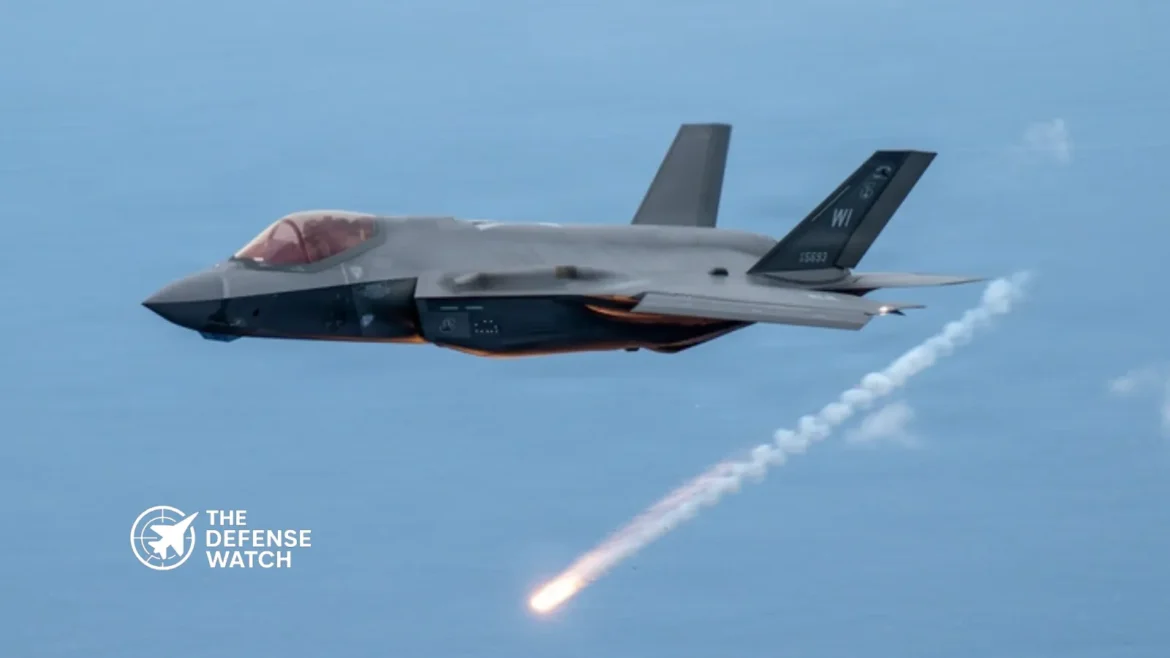
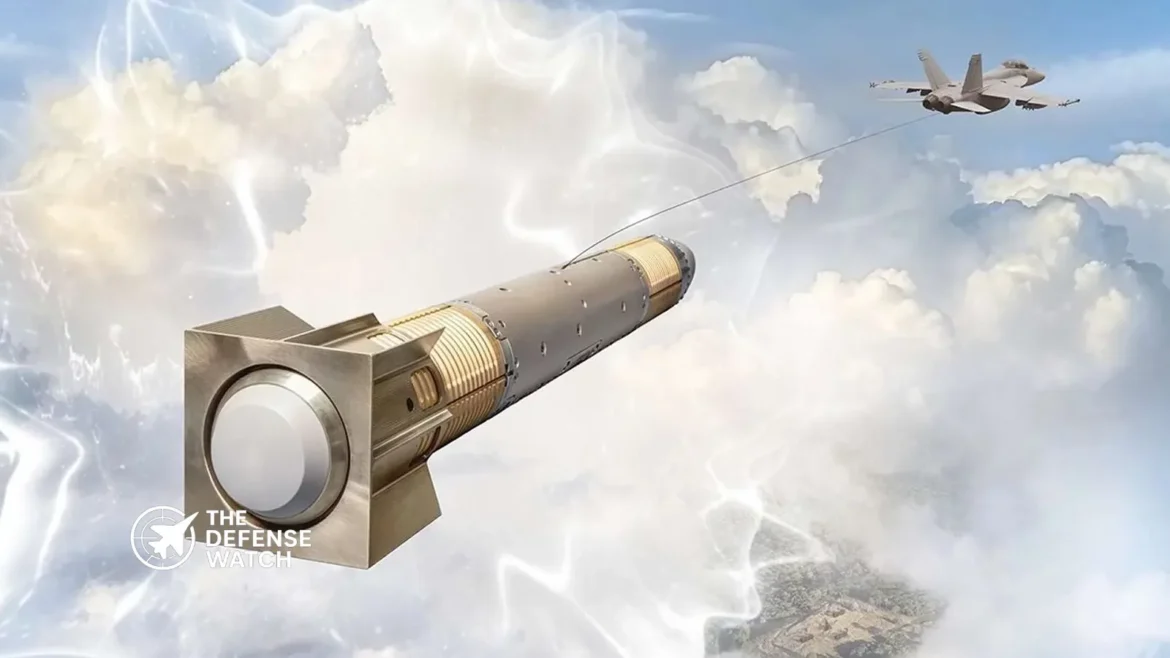
The U.S. Navy has allocated 73.8 million dollars for radio frequency decoys designed to protect fighter aircraft from advanced missile threats, marking a significant step in modernizing airborne self protection systems. The funding supports the continued procurement and sustainment of expendable electronic warfare decoys used to confuse and defeat radar guided air to air and surface to air missiles.
According to reporting by Army Recognition and U.S. defense contracting disclosures, the investment focuses on enhancing survivability for frontline Navy and Marine Corps tactical aircraft operating in contested airspace. These systems form a critical layer of electronic warfare protection as near peer adversaries deploy more capable sensors and missile seekers.
Contract Details and Program Scope
The funding covers production, logistics support, and system sustainment for radio frequency decoys already fielded across multiple U.S. Navy aviation platforms. These decoys emit signals that mimic or distort the radar signature of the host aircraft, drawing incoming missiles away from the target.
Such systems are commonly integrated with onboard electronic warfare suites, allowing pilots to deploy them automatically or manually when a threat is detected. The Navy has emphasized the importance of layered defenses that combine radar warning receivers, jamming, expendable decoys, and tactical maneuvering.
Authoritative defense sources note that radio frequency decoys are particularly effective against modern missiles that use active radar seekers, which are increasingly common in advanced integrated air defense systems.
Growing Threat from Advanced Missiles
The investment reflects the evolving threat environment faced by U.S. naval aviation. Potential adversaries continue to field longer range and more resistant radar guided missiles designed to counter traditional jamming techniques.
Military analysts cited by Aviation Week and Janes have highlighted that expendable decoys provide a cost effective countermeasure against high end missile systems, forcing adversaries to expend expensive interceptors while improving aircraft survivability.
Role in Navy and Marine Corps Aviation
Radio frequency decoys are used across a range of Navy and Marine Corps platforms, including carrier based strike fighters and expeditionary aircraft. Their modular design allows integration without major airframe modifications, supporting rapid deployment across fleets.
The Navy has previously stated that electronic warfare remains a cornerstone of its air superiority strategy, particularly in scenarios involving dense air defense networks and contested maritime regions.
This funding aligns with broader Department of Defense efforts to prioritize survivability, mission assurance, and freedom of maneuver in high threat environments.
Strategic and Budget Context
The 73.8 million dollar allocation fits within a larger pattern of U.S. defense spending focused on electronic warfare, cyber defense, and counter missile technologies. Budget documents and congressional testimony have consistently emphasized the need to stay ahead of rapidly advancing threat systems.
By continuing investment in proven radio frequency decoy technologies, the Navy signals its intent to maintain operational readiness while preparing for future conflicts that demand robust electronic protection.