Executive Summary
- French President Emmanuel Macron said on September 24 that France will send soldiers, radar systems and defense systems to Saudi Arabia to protect the Yanbu energy hub, while emphasizing that the deployment is intended for site protection rather than participation in the wider conflict.
- France has not publicly disclosed the number of personnel, specific radar systems, air defense weapons, deployment timeline or rules governing their use. Those details remain unconfirmed.
- Yanbu has become strategically important because Saudi Arabia uses its Red Sea infrastructure to move crude without relying entirely on the Strait of Hormuz. The East-West pipeline is rated at 5 million barrels per day, with temporary capacity of up to 7 million barrels per day, while IEA data shows Yanbu exports exceeded 5 million barrels per day during periods of heavy rerouting earlier in 2026.
French President Emmanuel Macron said September 24 that France will deploy troops, radar systems and defensive equipment to Saudi Arabia to protect the Yanbu energy complex on the Red Sea, following repeated missile and drone attacks against Saudi territory and energy infrastructure.
Macron described the arrangement as a defensive mission agreed with Riyadh. In a television interview with TF1 and France 2, he said French military resources would be sent to protect the site rather than involve France directly in the wider conflict.
The announcement adds a European military layer to the defense of one of Saudi Arabia’s most important alternative oil-export routes. Yanbu matters because the port is connected to the kingdom’s East-West pipeline system, allowing crude produced and processed in eastern Saudi Arabia to reach the Red Sea without making the full maritime journey through the Persian Gulf and Strait of Hormuz.
France Announces Defensive Mission at Yanbu
Macron did not disclose the size or composition of the French force.
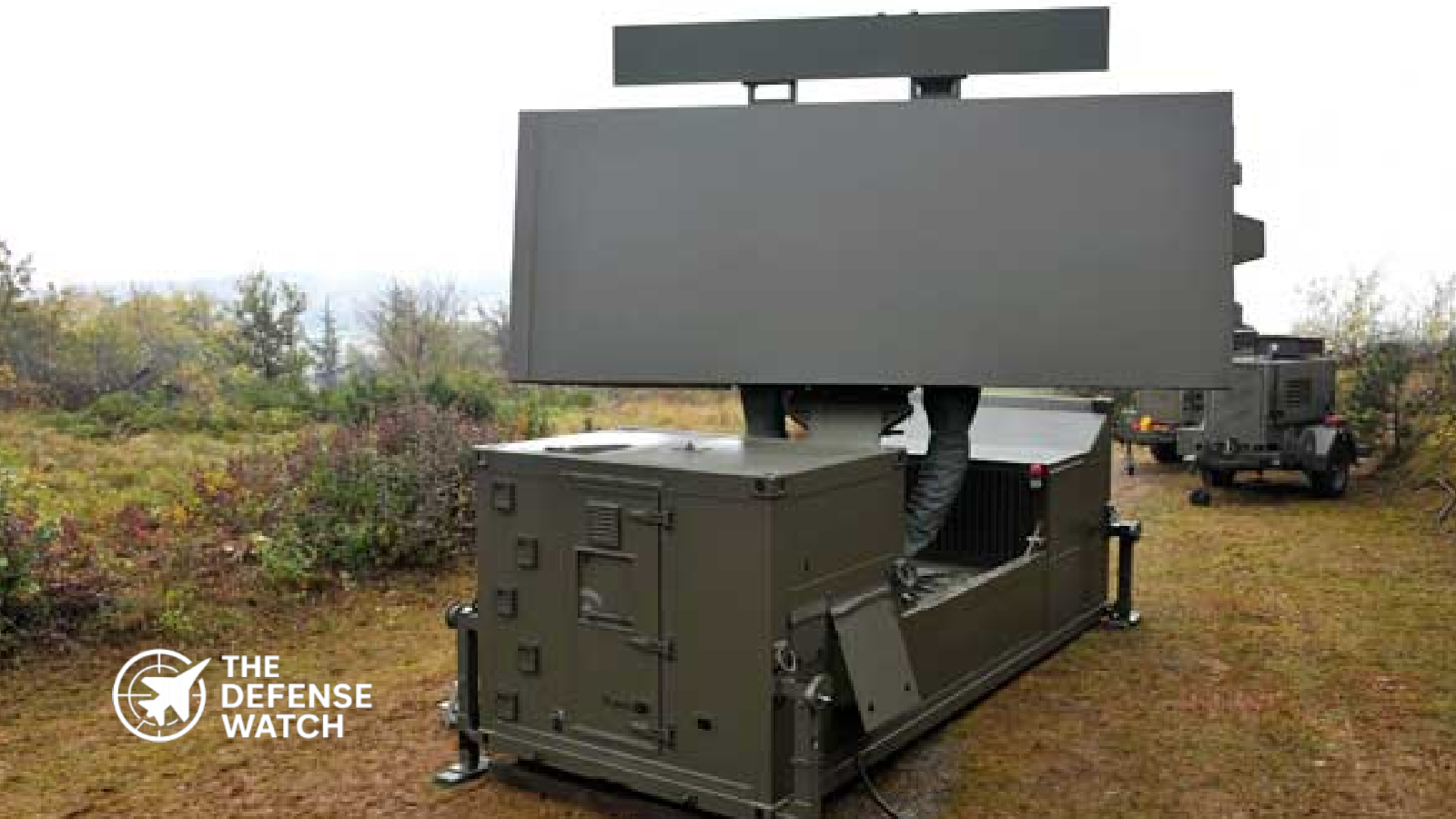
The French president specifically identified three categories of support: soldiers, radar systems and defense systems. That wording establishes the broad structure of the mission, but it does not confirm whether France will deploy a complete air defense battery, short-range counter-drone systems, additional command-and-control equipment, or a combination of capabilities.
The distinction is important because the threat to Yanbu is not limited to one class of weapon.
Saudi Arabia has faced attacks involving ballistic missiles, cruise missiles and unmanned aircraft. Reuters reported that the alternative Saudi export route through Yanbu has come under missile attacks attributed to Yemen’s Iran-backed Houthis.
The War Zone reported that Houthi forces claimed attacks against a Saudi Aramco facility at Yanbu and that Saudi authorities reported intercepting six ballistic missiles directed toward Taif and Yanbu on September 24. Those individual claims have not all been independently verified.
What France Has Confirmed
| Element | Confirmed status |
|---|---|
| French personnel | Confirmed by Macron |
| Radar systems | Confirmed by Macron |
| Defense systems | Confirmed by Macron |
| Exact air defense system | Not disclosed |
| Number of troops | Not disclosed |
| Deployment date | Not disclosed |
| Rules of engagement | Not disclosed |
| Mission purpose | Protection of Yanbu site |
| Participation in wider conflict | Macron said the mission is not intended for that purpose |
The lack of system-level information means it would be premature to identify a specific French interceptor, radar or air defense vehicle as part of the Yanbu deployment.
France does, however, already operate relevant air defense capabilities in the broader Middle East.
The French Defense Ministry said in June that French forces had deployed Mistral very-short-range surface-to-air missile detachments in the Middle East to protect military installations in coordination with partner nations. The ministry said those units provide low and very-low-altitude surveillance and can engage aerial threats within their assigned protection areas.
That establishes an existing French regional capability, but it does not confirm that Mistral systems will be sent to Yanbu.
Why Yanbu Has Become a Strategic Air Defense Problem
Yanbu is more than an oil terminal.
It forms part of a broader energy corridor linking Saudi Arabia’s eastern production infrastructure with the Red Sea. The East-West crude oil pipeline, commonly known as Petroline, provides Saudi Arabia with an alternative to moving all export volumes through the Strait of Hormuz.
The U.S. Energy Information Administration identifies the pipeline’s nominal capacity at 5 million barrels per day and notes that Saudi Arabia temporarily expanded capacity to 7 million barrels per day in 2019.
The importance of that route increased sharply during the 2026 regional disruption.
The International Energy Agency reported that Saudi crude exports through Yanbu increased from roughly 2 million barrels per day before the war to more than 5 million barrels per day in early June as Saudi Arabia rerouted oil through the Red Sea.
That figure should be treated as a period-specific export level rather than a permanent terminal capacity figure.
The distinction matters. Yanbu’s role can expand or contract depending on pipeline availability, tanker movements, storage, refinery requirements and the security situation in the Red Sea.
Layered Defense Is the Central Requirement
The French deployment is significant primarily because it adds another sensor and defensive layer around fixed energy infrastructure.
A modern defense of an oil terminal cannot depend on a single interceptor system. Ballistic missiles, cruise missiles and drones present different detection and engagement problems.
| Threat | Primary defense requirement | Main challenge |
|---|---|---|
| Ballistic missiles | Early warning, tracking and high-end interception | Short engagement timelines |
| Cruise missiles | Persistent radar coverage and layered interceptors | Low-altitude flight profiles |
| Drones | Detection, electronic warfare and low-cost interceptors | Low cost per attacking platform |
| Massed attacks | Integrated sensors and multiple engagement layers | Magazine depth and saturation |
| Low-altitude threats | Distributed sensors and short-range defenses | Terrain, clutter and detection limits |
The value of French radar equipment therefore extends beyond simply detecting an incoming weapon.
Radar data can contribute to the wider command-and-control network, allowing Saudi and partner forces to build a common air picture and assign available interceptors to individual tracks.
That becomes increasingly important when a protected site faces simultaneous or sequential attacks.
France Is Joining an Expanding Regional Defense Effort
France’s decision does not occur in isolation.
The French Defense Ministry said this week that France already maintains two FREMM multimission frigates in the Red Sea and Bab el-Mandeb region under the European EUNAVFOR ASPIDES framework. French Rafale aircraft are also conducting daily air defense missions over the United Arab Emirates in coordination with Emirati air defense forces.
France has therefore already established military infrastructure and operating experience in the wider region.
The United Kingdom has also expanded its contribution. The War Zone reported that the Royal Air Force deployed a Voyager aerial refueling aircraft to support Saudi defensive operations against Houthi attacks.
The British contribution and French deployment serve different immediate functions. A tanker aircraft supports air operations and endurance, while the French announcement specifically identifies radar and defensive systems for protection of a fixed installation.
Together, the moves point toward a broader partner-based approach to protecting critical Saudi infrastructure.
The Operational Challenge: Protecting the Site Without Expanding the Mission
Macron’s wording places a clear emphasis on defensive intent.
That distinction creates an operational constraint as well as a political one.
French personnel deployed around Yanbu would have to detect and respond to incoming threats while operating within a mission designed around protection of the facility. The ability to engage a missile or drone approaching the site is fundamentally different from conducting offensive operations against launch sites or command facilities elsewhere.
The mission’s effectiveness will therefore depend on the quality of the Saudi and partner air picture, the geographic positioning of sensors, available interceptor stocks and the ability to coordinate engagements across national command structures.
France has experience integrating its air defense assets with partner networks. Its Defense Ministry has described the Mistral deployments in the region as being integrated into local command-and-control chains and used as a complementary layer to existing detection capabilities.
However, no public information yet establishes how that model will be applied at Yanbu.
The Energy Security Dimension
The military importance of Yanbu is directly connected to the energy market.
The East-West pipeline gives Saudi Arabia an alternative route around the Strait of Hormuz. When that alternative is disrupted, Saudi exports become more dependent on eastern terminals and maritime routes through the Gulf.
Reuters reported that Saudi Arabia increased exports from eastern Gulf terminals after the East-West pipeline disruption, including significant crude movements through Ras Tanura and ship-to-ship transfers near Oman’s Sohar port.
Those adaptations can keep oil moving, but they do not fully replace the strategic flexibility provided by a functioning Red Sea export route.
This explains why Yanbu has become a military protection priority rather than simply an infrastructure security issue.
The objective is not only to defend tanks, pipelines and loading facilities. It is also to preserve an alternative route through which Saudi Arabia can continue moving crude when other regional routes are constrained.
What Remains Unknown
Several details will determine the military significance of the French deployment.
First is the identity of the radar systems. Macron did not specify the equipment, and no official French announcement reviewed for this article identifies the exact radar.
Second is the interceptor layer. France operates several air defense and counter-drone capabilities, but there is currently no primary-source confirmation that a particular system will be deployed to Yanbu.
Third is force size. The number of French troops will determine whether the deployment represents a small specialist detachment or a more substantial integrated air defense contribution.
Finally, the command structure remains unclear. Effective protection of Yanbu will require coordination between French sensors and weapons, Saudi air defense networks and other allied assets operating in the region.
Those details should be treated as key indicators of the mission’s actual military weight as the deployment develops.
Strategic Implications for Saudi Arabia and Regional Air Defense
The immediate lesson is that protecting energy infrastructure increasingly requires a military architecture rather than isolated point-defense systems.
Saudi Arabia already operates a large air defense network and has extensive experience defending against missile and drone attacks. The latest attacks nevertheless demonstrate the continuing challenge of defending fixed infrastructure across a large geographic area against mixed threats.
French involvement adds another national sensor and weapons contributor to that network.
The broader strategic issue is resilience.
Saudi Arabia’s ability to reroute crude through Yanbu has provided an important hedge against disruption around the Strait of Hormuz. But that hedge is valuable only if the pipeline, terminal, storage facilities and surrounding maritime approaches remain operational.
The attacks have therefore created a dual requirement: restore and maintain the physical energy infrastructure while increasing its protection against another attack.
What to Watch Next
Three developments will clarify the scope of the French mission.
1. French equipment identification: Official French Defense Ministry releases should establish whether the deployment includes Mistral systems, radar vehicles, counter-drone equipment or other air defense assets.
2. Force size and arrival timeline: The number of personnel and the speed of deployment will indicate whether France intends a temporary protection detachment or a larger sustained presence.
3. Integration with Saudi defenses: The most important operational question will be how French sensors and interceptors are connected to Saudi command-and-control architecture and other partner systems.
For now, Macron’s announcement confirms the political decision and broad military contribution, but not the detailed force package.
France is moving to protect Yanbu because the site has become a critical part of Saudi Arabia’s ability to maintain energy flows through an increasingly contested regional environment. The effectiveness of the deployment will depend less on the presence of French troops alone than on how well their radar, command-and-control and defensive systems integrate with the existing Saudi network.