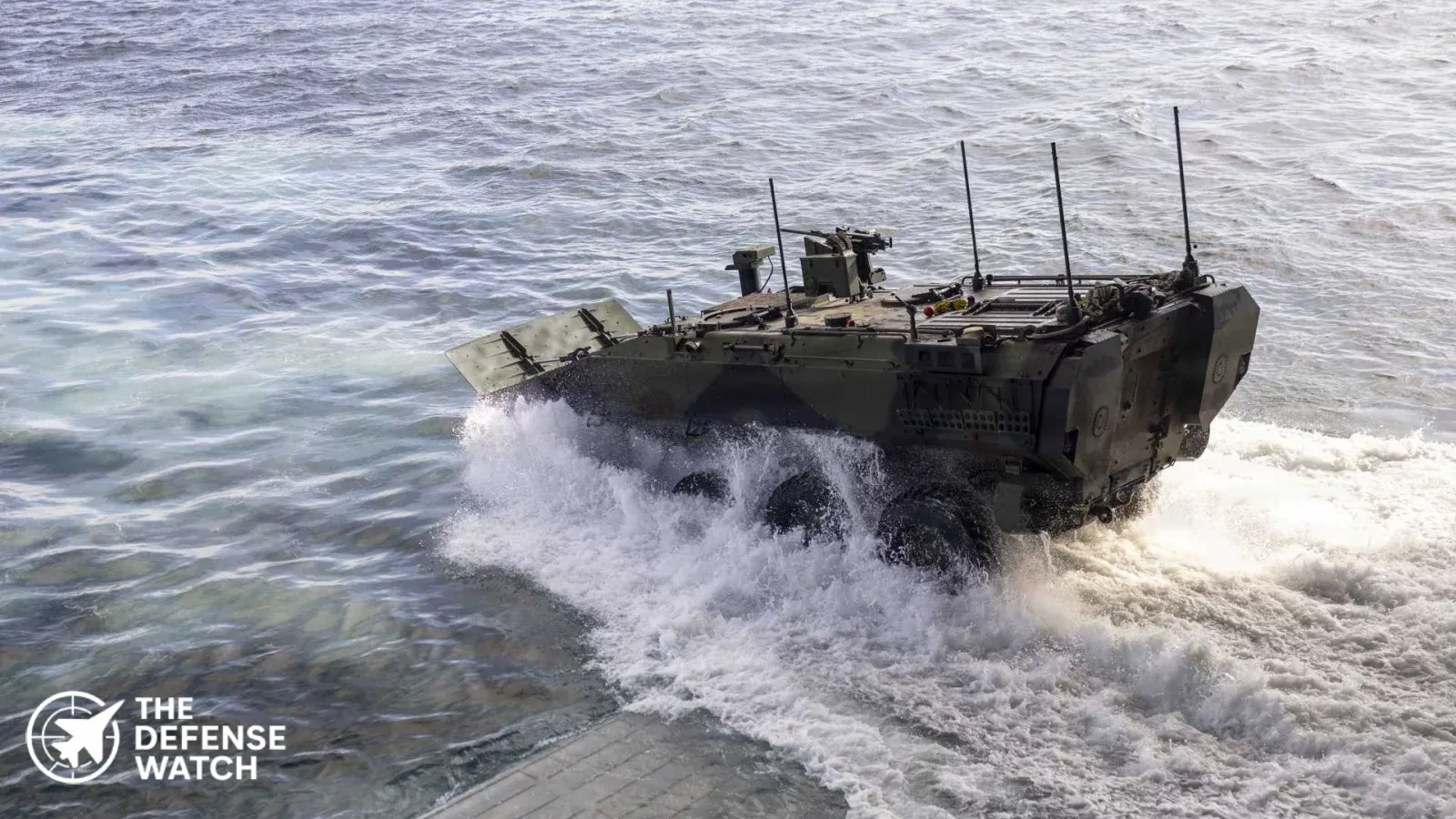
U.S. Marines Demonstrate Advanced Amphibious Capabilities in Pacific Deployment
The U.S. Marine Corps has successfully conducted ship-to-shore operations using its new Amphibious Combat Vehicle (ACV) from the USS Makin Island, marking a significant milestone in the service’s modernization of amphibious assault capabilities. The exercise demonstrates the Marines’ evolving approach to expeditionary operations in the Indo-Pacific region.
According to Army Recognition, the deployment exercise showcased the ACV’s ability to launch from and recover to amphibious assault ships, a critical capability for Marine expeditionary units operating in contested maritime environments. The USS Makin Island, an America-class amphibious assault ship, served as the platform for these operations.
Enhanced Ship-to-Shore Operational Capabilities
The Amphibious Combat Vehicle represents a generational leap in Marine Corps amphibious mobility. The ACV replaces the aging Assault Amphibious Vehicle (AAV), which has been in service since the 1970s. Unlike its predecessor, the ACV features enhanced armor protection, improved sea-state performance, and modern communications systems.
During the exercise, Marines demonstrated the vehicle’s capability to transition from ship to shore while maintaining operational readiness. The ACV can transport up to 13 embarked Marines plus a crew of three, providing protected mobility from sea to land and continuing inland operations.
The vehicle’s design incorporates lessons learned from decades of amphibious operations. Its enhanced survivability features include improved mine and improvised explosive device protection, while maintaining the amphibious performance necessary for ship-to-shore maneuvers.
USS Makin Island’s Role in Amphibious Operations
The USS Makin Island (LHD-8) serves as an ideal platform for amphibious vehicle operations. As an America-class amphibious assault ship, it features a well deck that allows for the launch and recovery of amphibious vehicles and landing craft. The ship can accommodate multiple ACVs simultaneously, enabling company-sized elements to conduct coordinated ship-to-shore movements.
The vessel’s hybrid propulsion system and advanced mission systems support extended operations in the Indo-Pacific theater, where amphibious capabilities remain central to U.S. military strategy. The Makin Island routinely deploys with Marine Expeditionary Units, providing sea-based crisis response and power projection capabilities.
Strategic Implications for Indo-Pacific Operations
This exercise comes as the Marine Corps continues its Force Design 2030 transformation, which emphasizes distributed maritime operations and island-hopping campaigns. The ACV’s successful integration with amphibious assault ships strengthens the service’s ability to conduct expeditionary advanced base operations across the Pacific.
The deployment of advanced amphibious vehicles aligns with the Department of Defense’s focus on maintaining readiness in the Indo-Pacific region. Ship-to-shore capabilities enable rapid response to crisis situations and support distributed operations across vast oceanic distances.
Marine Corps leaders have consistently emphasized the importance of modernizing amphibious capabilities to address evolving threats in contested littoral environments. The ACV program represents a key component of this modernization effort, providing Marines with protected mobility in both amphibious and land operations.
Technical Specifications and Performance
The Amphibious Combat Vehicle features a modular design that allows for multiple mission configurations. The ACV Command variant includes enhanced communications equipment for command and control operations, while the ACV Recovery variant provides battlefield recovery capabilities.
Powered by a 690-horsepower engine, the ACV achieves speeds of over 45 miles per hour on land. In water, it can reach approximately 6 knots, significantly improving transit times from ship to shore compared to legacy vehicles. The vehicle’s suspension system provides superior cross-country mobility while maintaining crew and passenger comfort.
Advanced armor packages protect occupants from small arms fire, artillery fragments, and mine blasts. The vehicle’s remotely operated weapon station can mount various weapons systems, providing defensive firepower during transit and operations ashore.
Ongoing Fleet Modernization Efforts
The Marine Corps is currently fielding ACVs across multiple battalions, with production continuing to replace the legacy AAV fleet. BAE Systems serves as the prime contractor for the ACV program, with vehicles being delivered to operational units on a scheduled timeline.
Training programs have been established to ensure Marines can effectively operate and maintain the new vehicles. Crews undergo comprehensive instruction on amphibious operations, vehicle systems, and tactical employment before deploying with ACVs.
The successful completion of ship-to-shore exercises demonstrates the readiness of both the vehicles and their crews to conduct real-world amphibious operations. These training evolutions validate tactics, techniques, and procedures while building proficiency across the amphibious force.
Future of Marine Corps Amphibious Operations
The integration of the Amphibious Combat Vehicle with amphibious assault ships represents one element of the Marine Corps’ broader modernization strategy. Future developments may include enhanced unmanned systems integration, improved communications networks, and additional mission modules to expand operational capabilities.
As the Marine Corps continues adapting to meet emerging threats in contested maritime environments, exercises like those conducted from USS Makin Island provide essential validation of new capabilities. The service’s focus on maintaining credible amphibious assault capabilities ensures it remains ready to respond to contingencies across the globe.
The successful deployment and recovery of ACVs from USS Makin Island confirms the vehicle’s operational suitability and demonstrates the Marine Corps’ commitment to maintaining the world’s premier amphibious force. These capabilities remain essential for crisis response, power projection, and deterrence operations in an increasingly complex global security environment.