Executive Summary:
The U.S. Air Force and Northrop Grumman completed a critical B-21 Raider flight test campaign in 73 days instead of the planned 180. The accelerated pace highlights progress in America’s next-generation stealth bomber program and could support faster operational deployment.
B-21 Raider Flight Test Campaign Advances Faster Than Expected
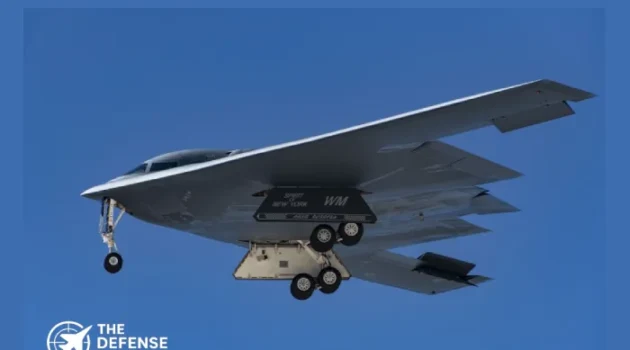
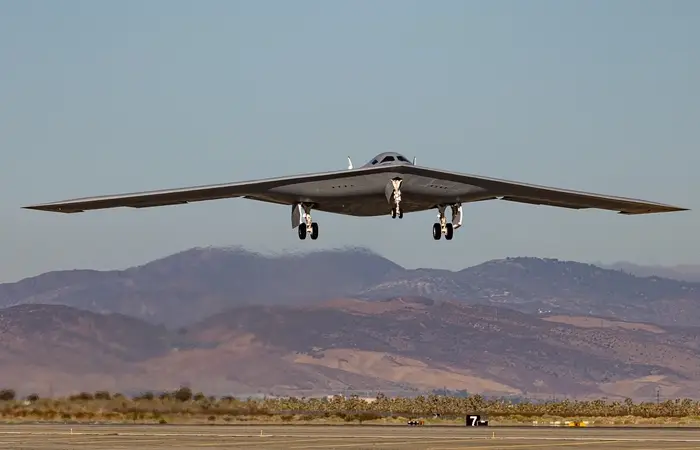
The U.S. B-21 Raider stealth bomber has completed a major developmental flight test campaign significantly faster than initially planned, marking an important milestone for the U.S. Air Force’s next-generation long-range strike program.
Northrop Grumman revealed on May 7, 2026, that the B-21 Raider Combined Test Force reduced a planned 180-day testing schedule to just 73 days.
The accelerated timeline is notable because large-scale military aircraft development programs frequently encounter delays during early flight testing, especially with stealth aircraft integrating advanced sensors, mission systems, and low observable technologies.
The B-21 Raider program appears to be avoiding many of those early setbacks.
Why The Accelerated Testing Timeline Matters
The B-21 Raider is intended to replace portions of the aging U.S. bomber fleet, including the B-1B Lancer and B-2 Spirit, while complementing the B-52 Stratofortress in long-range strike missions.
The faster-than-expected test progress suggests that the aircraft entered flight trials with mature software integration and a relatively stable design baseline. That is a significant achievement for a stealth platform expected to operate in highly contested environments against advanced air defense systems.
Northrop Grumman stated that the Combined Test Force achieved the milestone while completing roughly half of the planned mission objectives connected to an $11.8 billion effort.
Industry analysts view this as evidence that digital engineering and advanced modeling techniques used during development may be reducing traditional flight-test risks. The B-21 program has heavily emphasized digital design and production methods since its earliest phases. Earlier Air Force and Northrop Grumman statements also indicated that flight performance during testing closely matched digital simulations.
That alignment between simulated and real-world performance can shorten troubleshooting cycles and reduce costly redesign work.
Expanding U.S. Long-Range Strike Capability
The B-21 Raider is central to the U.S. Air Force’s future global strike strategy. Designed as a penetrating stealth bomber capable of delivering both conventional and nuclear payloads, the aircraft is expected to operate deep inside heavily defended airspace.
The bomber will eventually support missions across the Indo-Pacific, Europe, and other contested theaters where survivability against modern integrated air defense systems is increasingly important.
Recent testing milestones have included aerial refueling operations with a KC-135 Stratotanker, expanding the bomber’s operational reach and endurance.
The U.S. Air Force has also continued expanding the flight test fleet. A second B-21 Raider test aircraft joined the program in 2025, enabling parallel testing of mission systems, weapons integration, and sustainment procedures.
Officials believe multiple aircraft operating simultaneously will accelerate the path toward operational capability.
Strategic Implications For The United States
The rapid progress of the B-21 Raider program comes amid increasing strategic competition with China and Russia. Both nations continue investing heavily in advanced air defenses, long-range missiles, and next-generation combat aircraft.
For the Pentagon, the B-21 Raider represents more than a new bomber. It is a key part of maintaining credible long-range deterrence and strike flexibility in future conflicts.
The Air Force plans to acquire at least 100 B-21 aircraft, though some defense analysts argue that number may eventually increase depending on operational demands and geopolitical developments.
Unlike previous stealth bomber programs that faced major production and affordability challenges, the B-21 effort has focused heavily on scalable manufacturing and lower sustainment costs from the outset.
That production-focused approach may help the Air Force field the aircraft more rapidly than earlier strategic bombers.
Program Momentum Continues
The B-21 Raider first flew in November 2023 and has steadily expanded its test envelope since then. The aircraft already entered low-rate initial production, another sign of Pentagon confidence in the program’s maturity.
While many technical details remain classified, recent milestones indicate the stealth bomber program is progressing with fewer disruptions than typically seen in next-generation combat aircraft development.
If the current pace continues, the B-21 Raider could enter operational service on schedule and become the backbone of the U.S. Air Force’s future bomber fleet during a period of intensifying global strategic competition.