Executive Summary
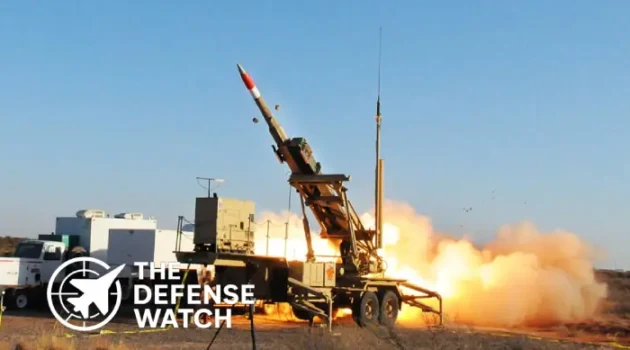
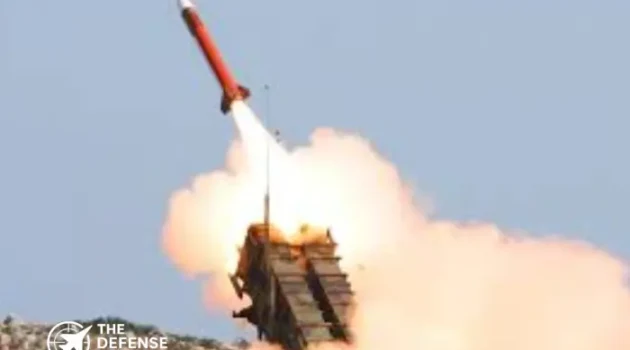
- A Patriot air defense system operated by Greek military personnel intercepted a ballistic missile and a drone near the wider Yanbu region of Saudi Arabia on September 24, according to Reuters, citing Greek security sources. Reuters reported that the Patriot battery launched two interceptors.
- Greece has maintained a Patriot battery in Saudi Arabia since 2021 under a bilateral arrangement focused on strengthening the kingdom’s air and ballistic missile defenses and protecting critical energy infrastructure.
- The engagement highlights the operational importance of layered air and missile defense around Gulf energy infrastructure, while also giving Greece direct experience operating a deployed Patriot system against real-world missile and drone threats.
A Greek-operated Patriot air defense system intercepted a ballistic missile and a drone over the wider Yanbu region of Saudi Arabia on Thursday, September 24, according to Reuters, citing Greek security sources. The area contains major oil refining infrastructure and was among several Saudi regions that received civil defense warnings during the day.
That the Greek Patriot battery launched two missiles and that both incoming threats were destroyed. The report did not identify the launch platform or provide technical details about the intercepted drone or ballistic missile. Those details therefore remain unverified in publicly available primary-source material.
The incident is significant beyond the individual engagement because the Patriot battery represents a sustained European contribution to Saudi Arabia’s integrated air and missile defense architecture.
Greek Patriot Battery Has Been Deployed Since 2021
Greece deployed a Patriot battery to Saudi Arabia in 2021 following a request from Riyadh. The Greek Ministry of National Defence said the mission was intended to reinforce Saudi air defense and ballistic missile defense, particularly around critical energy infrastructure.
The deployment was established through an agreement between Greece and Saudi Arabia. Greek officials described the mission as part of a broader multinational effort to strengthen air defense around critical energy facilities.
The Greek government confirmed in March 2026 that the Patriot battery remained operational in Saudi Arabia. Defense Minister Nikos Dendias said at the time that the Greek Patriot mission had begun in September 2021 and had been extended through November 2026.
That extended deployment has now placed Greek personnel in an unusually direct operational role in the defense of Gulf infrastructure.
Patriot Brings Ballistic Missile Defense Into the Same Defensive Mission
The Patriot family is designed to address both air-breathing threats and tactical ballistic missiles, depending on the interceptor and system configuration.
The U.S. Army identifies PAC-3 Missile Segment Enhancement as a hit-to-kill interceptor used within the Patriot system. It is designed to counter tactical ballistic missiles, cruise missiles and aircraft as part of a layered air and missile defense architecture.
However, the specific Patriot interceptor used in the September 24 engagement has not been publicly identified. The available reporting only states that the Greek battery fired two Patriot missiles. It would therefore be inappropriate to assign the engagement to a particular PAC-3 or PAC-3 MSE configuration without additional official confirmation.
Element Confirmed information System Patriot air defense system Operator Greek military personnel Location Wider Yanbu region, Saudi Arabia Date September 24, 2026 Reported threats One ballistic missile and one drone Interceptors fired Two, according to Reuters Origin of threats Not publicly identified in the Reuters report Specific Patriot interceptor Not publicly identified Mission start 2021 Current mission extension Through November 2026 Why Yanbu Matters to Air Defense Planning
Yanbu is strategically important because it hosts major petroleum processing and export infrastructure on Saudi Arabia’s Red Sea coast.
That makes the area different from a conventional military air defense problem. The defended assets are fixed, economically important facilities whose disruption can have effects well beyond the immediate tactical area.
Greece’s original deployment agreement explicitly linked the Patriot mission to the protection of critical Saudi energy infrastructure.
The September 24 engagement therefore illustrates a broader shift in Gulf air defense requirements. Defending energy infrastructure now involves preparing for combinations of ballistic missiles, drones and other airborne threats rather than relying on a single threat category.
The Operational Value of a European Patriot Deployment
The Greek deployment also provides an important example of how European militaries can contribute specialized air and missile defense capabilities outside their home territory.
The mission is not simply a transfer of equipment. Greek personnel operate the battery, giving the Hellenic Air Force experience with sustained deployment, coalition coordination and live air defense operations in a high-threat environment.
Greek officials have already confirmed that the battery has been used against Iranian ballistic missiles during the current regional conflict. In March, Defense Minister Dendias said the Greek Patriot battery had intercepted two ballistic missiles targeting Saudi refineries.
Prime Minister Kyriakos Mitsotakis subsequently described the March engagement as a defensive action conducted within the framework of the Greek-Saudi agreement.
Reuters now reports that the September 24 engagement was the fifth combat use of the Greek-operated system since the United States and Israel began their war with Iran at the end of February. That count comes from Reuters’ reporting and should be treated separately from the individual engagements publicly confirmed by Greek officials.
Ballistic Missiles and Drones Create Different Defensive Problems
The combination reported near Yanbu is important because ballistic missiles and drones present different detection, tracking and engagement challenges.
A ballistic missile can compress the defender’s reaction timeline because of its speed and trajectory. A drone can present a different problem, particularly when it flies at lower altitude, approaches along complex routes or is employed alongside other threats.
The Patriot system is primarily a high-end air and missile defense capability. The U.S. Army describes PAC-3 MSE as part of a layered architecture rather than a stand-alone solution for every airborne threat.
That distinction matters for Gulf infrastructure defense. A sustainable architecture has to combine long-range surveillance, command and control, ballistic missile interceptors and lower-cost defenses against smaller or slower threats.
Using a high-end interceptor against every low-cost drone can create an unfavorable cost and magazine-management problem, although the September 24 incident does not provide enough public information to determine what engagement logic was used.
The Industrial Challenge Behind Patriot Operations
The operational value of Patriot also depends on interceptor availability.
The U.S. Army has been expanding PAC-3 MSE production in response to growing demand from U.S. forces and international customers. In April 2026, the Army announced a $4.7 billion contract action supporting accelerated PAC-3 MSE production.
The Army had previously reported that a 2024 contracting action was intended to raise Lockheed Martin’s maximum annual PAC-3 MSE production rate from 550 to 650 missiles.
These production figures do not establish the number or type of interceptors available to the Greek battery in Saudi Arabia. They do, however, show why the wider Patriot mission is tied to industrial capacity as well as tactical performance.
Repeated combat use consumes finite interceptor inventories and increases pressure on production, maintenance, resupply and forward logistics.
What the September 24 Engagement Shows
The immediate lesson is that the Greek Patriot deployment has moved beyond a precautionary presence. Greek personnel are operating a deployed air and missile defense system in an environment where ballistic missiles and drones are being used against strategically important infrastructure.
The engagement also reinforces the value of distributed allied air defense. Saudi Arabia retains its own extensive air defense capabilities, while foreign-operated systems can add additional sensors, interceptors, crews and geographic coverage.
At the same time, the incident should not be interpreted as evidence that Patriot alone can provide comprehensive protection against the full range of threats facing Gulf infrastructure. The public record does not disclose the complete sensor network, command architecture, interceptor inventory or engagement sequence involved in the September 24 event.
Those limitations are important when assessing the broader effectiveness of the defense architecture.
A Wider Test for Gulf Integrated Air Defense
The strategic issue is increasingly one of integration rather than individual missile performance.
Saudi energy infrastructure faces a threat environment in which ballistic missiles, cruise missiles and drones can potentially be used in overlapping attack patterns. A layered defense therefore needs to combine systems optimized for different portions of the threat spectrum.
Patriot remains particularly relevant to the ballistic missile defense layer. The U.S. Army describes the system as capable of contributing to both lower-tier ballistic missile defense and air defense, with different Patriot interceptors optimized for different target sets.
The Greek deployment demonstrates how allied contributions can reinforce that architecture while giving participating militaries direct operational experience.
For Greece, the mission has also become a sustained test of expeditionary air defense operations. For Saudi Arabia, the deployment provides an additional allied capability focused on critical infrastructure. For the broader European defense community, it demonstrates how air defense assets can be employed outside Europe when regional partners request assistance.
The September 24 interception therefore matters less as an isolated Patriot engagement than as another data point in the evolution of Gulf integrated air and missile defense.
What Remains Unconfirmed
Several important details have not been publicly disclosed.
These include the exact type and origin of the ballistic missile, the type and origin of the drone, the specific Patriot interceptor used, the engagement distance, the radar track sequence and whether other Saudi or allied systems participated in the engagements.
No such figures should be treated as confirmed unless they are released by an authoritative source.
What is confirmed is that Reuters reported two successful interceptions by the Greek-operated Patriot battery near Yanbu and that Greece has maintained the system in Saudi Arabia since 2021 as part of a mission supporting Saudi air and ballistic missile defense.