

Why This Matters
The history of U.S. battleships and why they were retired matters because it shows how military power shifts when technology and strategy change. Battleships once shaped wars and deterred rivals. Their exit explains why today’s navies favor carriers, submarines, and missiles in global competition.
What It Is
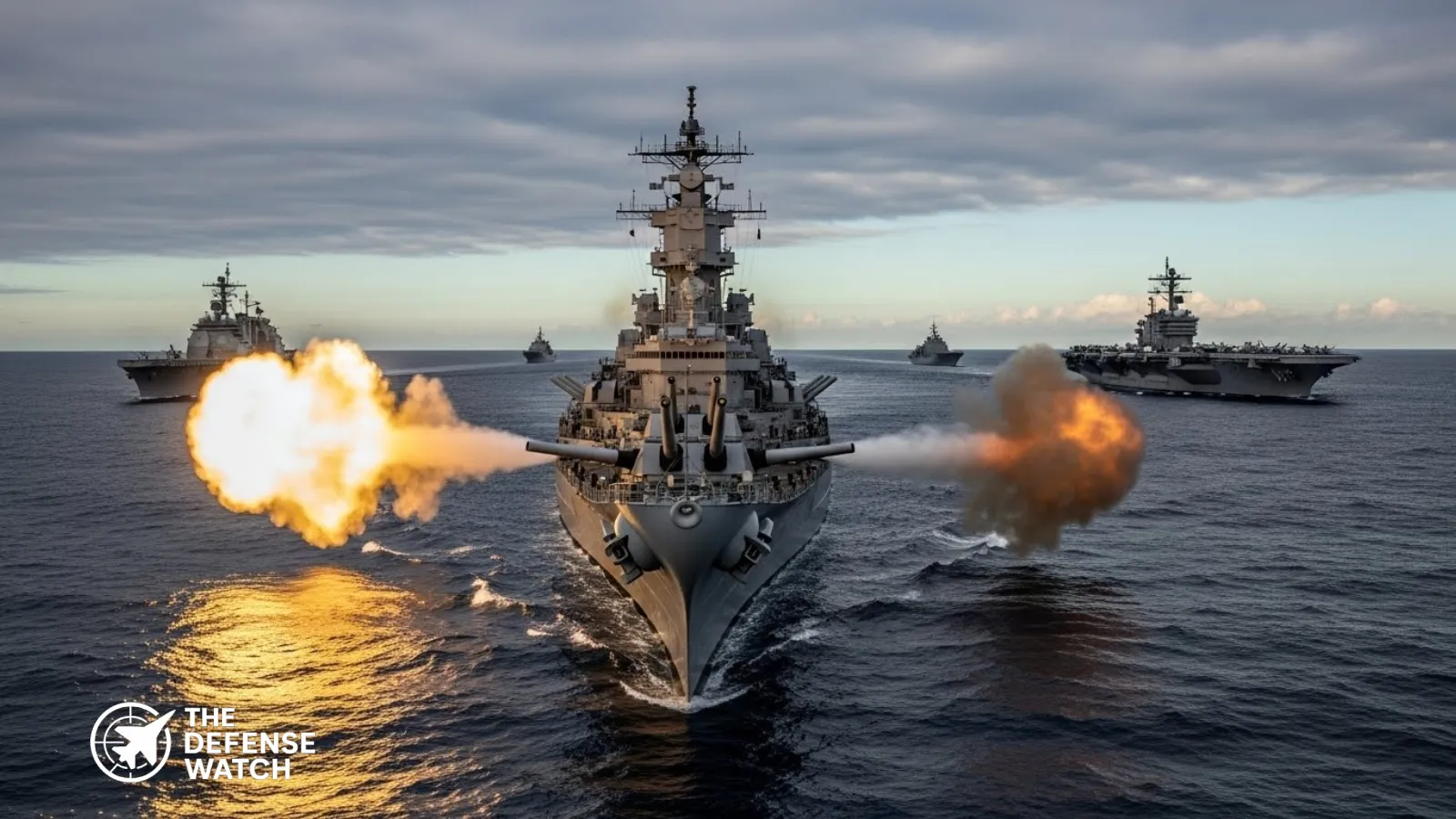
The history of U.S. battleships and why they were retired begins in the late 1800s, when steel hulls and heavy guns replaced wooden fleets. Battleships became the core of U.S. sea power from World War I through World War II. Ships like USS Iowa and USS Missouri carried 16 inch guns, thick armor, and crews of more than 2,500.
They were built to win fleet battles. The idea was simple. Find the enemy fleet, close the range, and destroy it with gunfire. This thinking shaped naval budgets, shipyards, and doctrine for decades.
How Battleships Worked
Battleships combined three traits. Firepower, protection, and endurance. Their main guns could hit targets more than 20 miles away. Armor belts protected vital areas. Large engines gave them long range at sea.
Compared with cruisers or destroyers, battleships were floating fortresses. In World War II, they bombarded beaches, escorted carriers, and fought surface actions. At Leyte Gulf, battleships helped break Japan’s last major naval effort.
The Turning Point
The shift came during World War II itself. Aircraft carriers proved they could strike farther and faster than guns. At Pearl Harbor, planes crippled the battle line. At Midway, carrier air power decided the battle before ships ever saw each other.
After 1945, this lesson hardened. Jets, radar, and long range aircraft made big gun ships vulnerable. A battleship could not shoot down every attacker. It also could not reach targets hundreds of miles inland.
Cold War Reality
During the Cold War, the U.S. Navy kept battleships mostly in reserve. They were expensive to crew and maintain. Nuclear weapons changed the logic of sea control. Submarines with ballistic missiles became the top deterrent.
The Navy still found uses for battleships. They offered heavy shore fire and could absorb damage. But they no longer shaped strategy. Carriers and submarines did.
The Iowa Class Revival
In the 1980s, the Reagan administration brought back the Iowa class. This move is often cited in the history of U.S. battleships and why they were retired. The ships were modernized with Tomahawk cruise missiles and Harpoon anti ship missiles.
This was a stopgap. The battleships added missile tubes, but they were still manpower heavy and limited. They lacked modern air defense compared to cruisers and destroyers. Analysts at the time noted they were impressive symbols, not efficient tools.
Final Retirement
After the Cold War, budgets fell. Precision strike aircraft and cruise missiles could hit targets more accurately and cheaply. In 1991, USS Missouri fired guns and missiles during the Gulf War. Soon after, all U.S. battleships were retired for good.
By the late 1990s, the Navy concluded that no mission required big guns on armored hulls. The cost did not match the gain.
Why They Were Retired
The history of U.S. battleships and why they were retired comes down to five reasons.
First, vulnerability. Missiles and submarines could kill a battleship without warning.
Second, cost. Crews and upkeep were far higher than for modern ships.
Third, range. Aircraft and missiles strike far beyond gun range.
Fourth, flexibility. Carriers and destroyers handle more missions.
Fifth, strategy. The U.S. shifted from fleet battles to power projection and deterrence.
Comparison to Modern Systems
Battleships once played the role that carriers and submarines play today. Carriers project power. Submarines deter rivals and hunt ships. Destroyers provide air and missile defense.
In strategic terms, battleships lost to systems that offered reach, speed, and networked warfare. This mirrors how tanks face drones today. The platform did not fail overnight. The environment changed.
Why It Still Matters Today
The history of U.S. battleships and why they were retired offers lessons for current competition with China and Russia. It warns against clinging to legacy platforms when threats evolve.
Some analysts debate whether large surface ships face the same risk now. That debate echoes past arguments about battleships. The lesson is not that big ships vanish. It is that roles must adapt or fade.
Strategic Impact
For the United States, retiring battleships freed resources for carriers, submarines, and missiles. For rivals, it signaled that naval power would hinge on sensors, networks, and strike range.
The battleship era is over. Its history still shapes how navies think about power, risk, and change.
