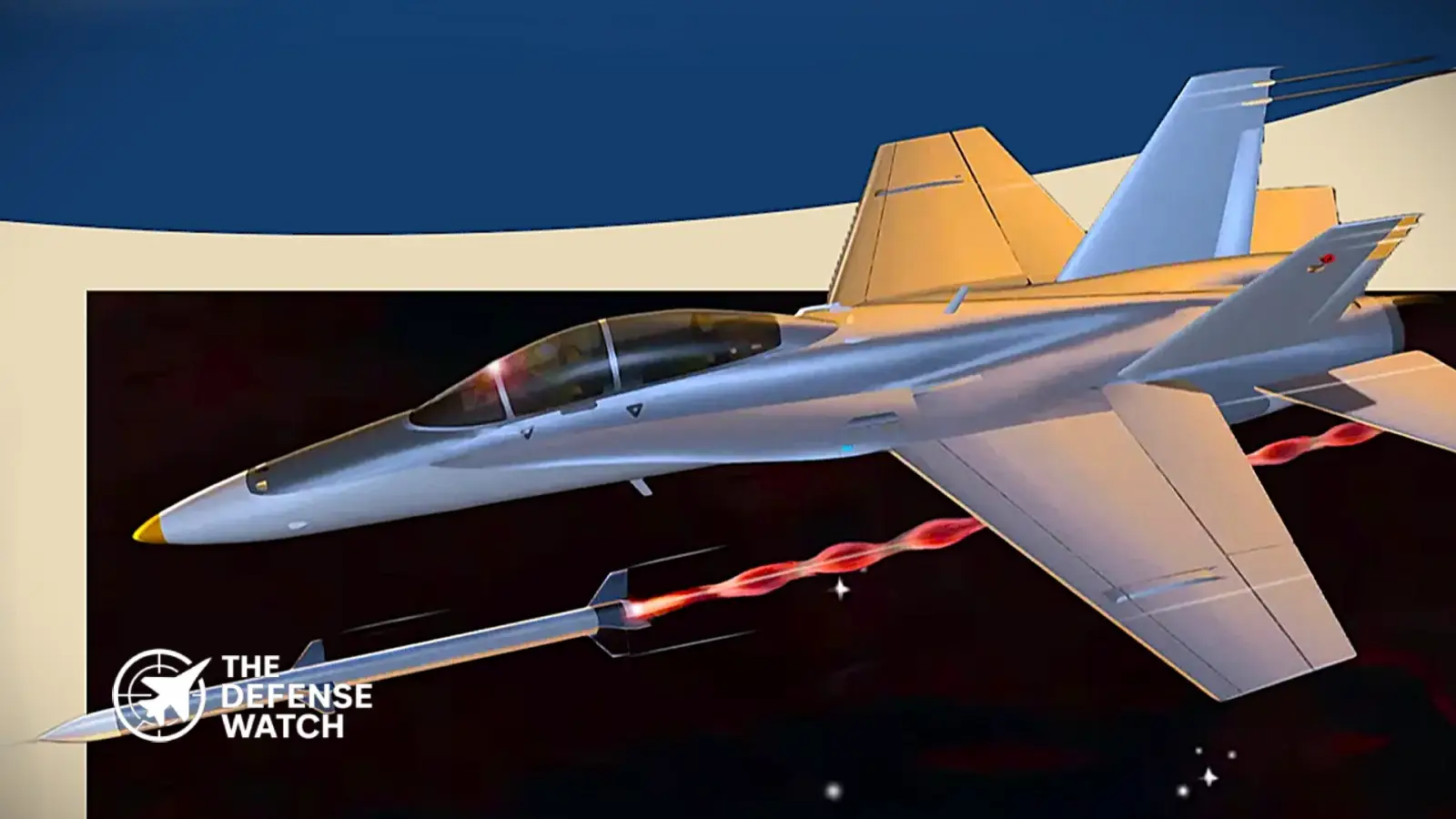
- The U.S. Navy awarded California startup :contentReference[oaicite:0]{index=0} a $105 million contract tied to Blackbeard missile integration on F/A-18 aircraft.
- Blackbeard is designed to exceed Mach 5 and support carrier-based long-range strike missions.
- The program includes flight testing, software and hardware integration, and naval airworthiness certification.
- Pentagon budget documents indicate plans for 4,500 air-launched hypersonic missiles for F/A-18E/F aircraft over five years.
- The move reflects growing U.S. focus on mobile strike options in the Indo-Pacific.
U.S. Navy Blackbeard Hypersonic Missile Program Gains Momentum
The Blackbeard hypersonic missile is moving closer to operational use as the U.S. Navy accelerates integration of the weapon onto Boeing F/A-18E/F Super Hornet aircraft. The effort follows a $105 million award to Castelion to complete the work needed for fleet use, including testing and certification.
The decision matters because it gives the Navy a potential way to place hypersonic strike weapons aboard aircraft carriers rather than relying only on fixed land-based launch systems. A carrier can reposition across wide ocean areas, creating a less predictable launch point and complicating enemy planning.
Why The F/A-18 Platform Matters
Using the Super Hornet offers a faster path to fielding. The aircraft already operates from U.S. carriers, has trained crews, maintenance pipelines, and established weapons handling procedures. That means the Navy may be able to insert new capability without waiting for a future aircraft platform.
For Blackbeard, however, integration is more than attaching a missile to a jet. Carrier weapons must survive catapult launches, arrested landings, vibration, salt exposure, storage constraints, and deck handling procedures. Those demands often delay otherwise promising programs.
Strategic Meaning In The Indo-Pacific
Much of the interest around the Blackbeard hypersonic missile centers on a possible Indo-Pacific scenario. Long distances, dense missile defenses, and mobile maritime targets place a premium on speed and reach.
A weapon launched from an F/A-18 operating from a carrier strike group could threaten radar sites, missile batteries, command nodes, or naval targets faster than conventional cruise missiles. Even limited deployment could force adversaries to dedicate more resources to defense and dispersal.
That strategic pressure can matter as much as actual missile numbers. Deterrence often depends on uncertainty.
Affordability Could Be The Real Breakthrough
Many hypersonic programs have faced criticism for high cost and low production volume. Castelion has publicly emphasized rapid manufacturing and lower-cost components. Reuters reported Pentagon planning documents show an average unit cost near $384,000 for planned buys, unusually low for this class of weapon.
If accurate, that could be the program’s biggest advantage. A missile that can be bought in large numbers changes operational planning far more than a boutique system produced in small batches.
What Comes Next
The next milestones are flight tests, safety certification, and carrier suitability reviews. If successful, the Navy could begin early fielding as soon as next year, according to reporting.
Blackbeard is still an emerging program, but it signals a broader Pentagon shift toward practical, scalable hypersonic weapons that can be deployed on existing combat platforms.
Get real time update about this post category directly on your device, subscribe now.